Small Apartment Privacy Ideas for Couples and Roommates

Sharing a small apartment—whether with a partner or a roommate—comes with an unspoken challenge that square footage alone can never solve: privacy. When every wall is shared, every footstep is heard, and there is rarely a door to close, carving out a pocket of personal space can feel almost impossible.
The good news is that privacy in a small home is far less about adding walls and far more about thoughtful design. With the right dividers, smarter layouts, sound-softening tricks, and a few gentle habits, you can give everyone genuine breathing room—without losing the open, airy feeling that made you fall for the space in the first place.
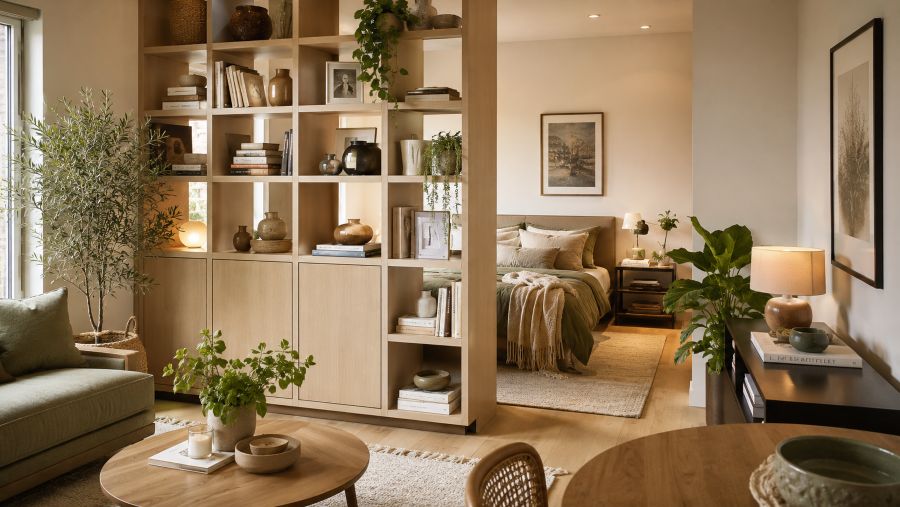
When you live in 400 to 700 square feet with another person, the most precious commodity is not storage or natural light—it is the freedom to be alone for a few minutes without negotiating for it. Privacy shapes how rested you feel, how well you sleep, how productively you work from home, and ultimately how smoothly your relationship runs. Fortunately, almost every small-space privacy problem falls into one of three categories: visual, acoustic, or psychological. Once you understand which type you are solving for, the right solution becomes surprisingly clear. Throughout this guide, we will move from the easiest, renter-friendly fixes to the more involved layout strategies, so you can start small and build up as needed.
Before we dive into the specific solutions, the short walkthrough below shows several of these small apartment privacy ideas in action—watch how a few simple dividers and layout shifts can transform a cramped shared space into two calm, distinct zones.
Why Privacy Matters So Much in Shared Small Spaces
It is tempting to treat privacy as a luxury—something you will worry about once you upgrade to a bigger place. In reality, the lack of personal space is one of the most common reasons couples argue and roommate arrangements fall apart. Human beings are wired to need moments of solitude to decompress, regulate emotions, and recharge. When two people are constantly within arm’s reach, even the most easygoing personalities begin to feel frayed.
In a shared small apartment, privacy is not about secrecy; it is about emotional regulation and respect. A partner who can retreat to a quiet corner to read returns to the shared space calmer and more present. A roommate who has a clearly defined zone of their own feels ownership and is far less likely to resent the arrangement. Designing for privacy, then, is really designing for harmony—and the visual and acoustic tricks below are simply the tools that make that harmony possible.
Visual Privacy: Dividing the Space Without Building Walls
The fastest way to create a sense of separation is to interrupt the sightline. The moment you cannot see straight across the entire apartment, the space immediately reads as having distinct areas. The trick in a small home is choosing dividers that block the view without blocking light or making the room feel boxed in. Below are the approaches that consistently deliver the most privacy for the least visual weight.
Soft Dividers: Curtains and Fabric Panels
For renters and anyone who values flexibility, a ceiling-mounted curtain track is the single most effective privacy upgrade available. Hung from the ceiling rather than a freestanding rod, a floor-to-ceiling curtain reads as an architectural element rather than an afterthought, and it can be drawn shut to create a fully enclosed sleeping nook in seconds. Choose a heavier weave such as linen or velvet for more visual and acoustic blocking, or a sheer panel if you only want to soften the sightline while keeping the space bright.
Fabric dividers shine because they are forgiving. They cost a fraction of a furniture-based divider, install with command hooks or a tension track that leaves no damage, and tuck completely out of the way when you want the open floor plan back. For couples, a curtain around the bed creates an intimate retreat; for roommates, a curtain across a studio can effectively turn one room into two semi-private bedrooms.
Furniture as Dividers
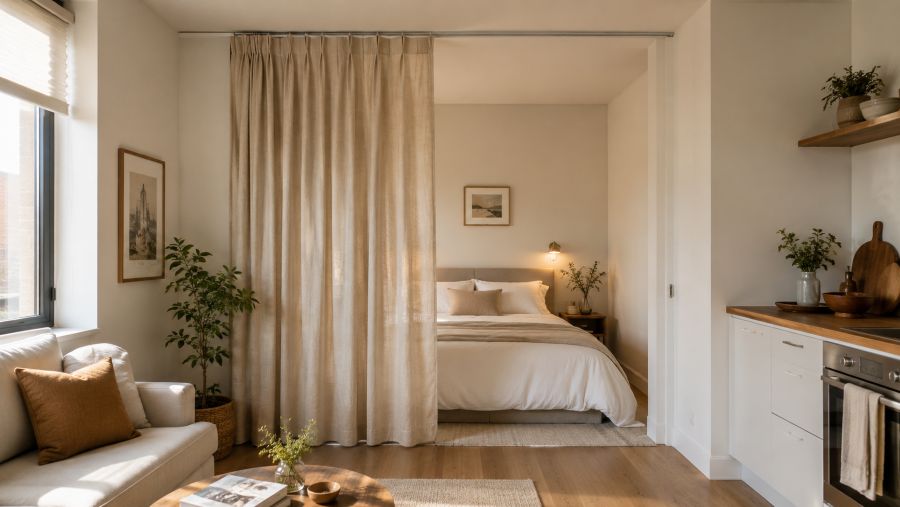
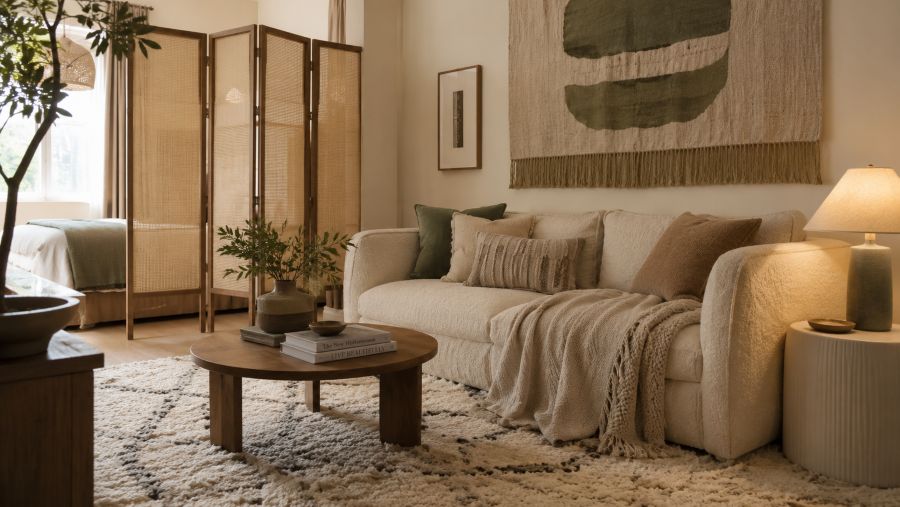
When you want a divider that earns its footprint, let your furniture do double duty. An open bookshelf placed perpendicular to the wall separates two zones while still letting light filter through the gaps, so neither side feels dark or cramped. A tall, slim wardrobe can back onto a bed to create an instant headboard wall, hiding the sleeping area from the living space on the other side. Even a strategically placed sofa, with its back facing the bed, draws a clear invisible line between “lounge” and “rest.”
- Open shelving units divide space, add storage, and keep light flowing—ideal as the centerpiece divider in a studio.
- Folding screens are portable, foldable, and perfect for renters who want privacy on demand without any installation.
- A tall plant cluster creates a soft, living barrier that softens sound slightly and signals a zone change without a hard edge.
- Back-to-back furniture, like a desk behind a sofa, defines two functions in one continuous footprint.
Acoustic Privacy: Managing Sound in Tight Quarters
Visual barriers solve only half the problem. In a small apartment, sound travels freely, and there is nothing more disruptive to a sense of privacy than hearing every phone call, video, or late-night snack run. Acoustic privacy is about both reducing the noise that travels and giving each person a way to create their own quiet bubble.
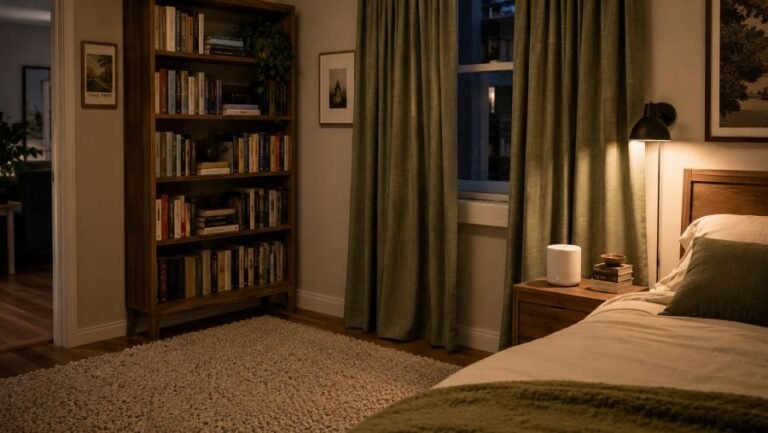
Soft materials are your best friends here. Rugs, upholstered furniture, fabric headboards, heavy curtains, and wall hangings all absorb sound rather than letting it bounce around hard surfaces. The difference between a sparsely furnished apartment and one layered with textiles is genuinely dramatic—every soft surface you add shaves a little more echo and sharpness off the ambient noise. For a noticeable upgrade, a thick area rug under the main living zone and a fabric panel or two on a shared wall will tame the worst of the sound transfer.
Smart Small Space Tip: A small white-noise machine or a fan running on low is one of the cheapest privacy tools you can buy. By raising the background sound floor just slightly, it masks conversations and movement, so a partner working late or a roommate on a call becomes pleasant background hum instead of a distraction. Place one near each sleeping zone for the best effect.
Personal Sound Bubbles
Sometimes the goal is not to silence the apartment but to let each person tune it out. A good pair of noise-cancelling headphones is, in effect, a portable private room—perfect for the partner who needs focus while the other watches a show, or for a roommate joining a video call from the kitchen table. Pairing personal audio devices with agreed-upon “quiet hours” gives everyone reliable windows of calm, which matters far more in a small space than it ever would in a large one.
Creating Personal Zones for Couples
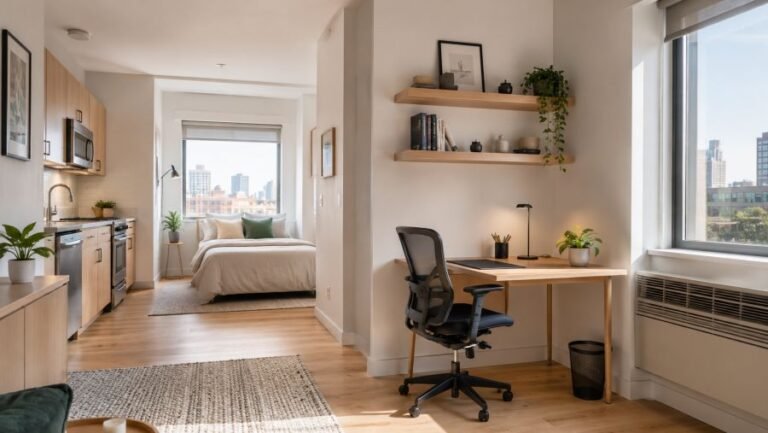
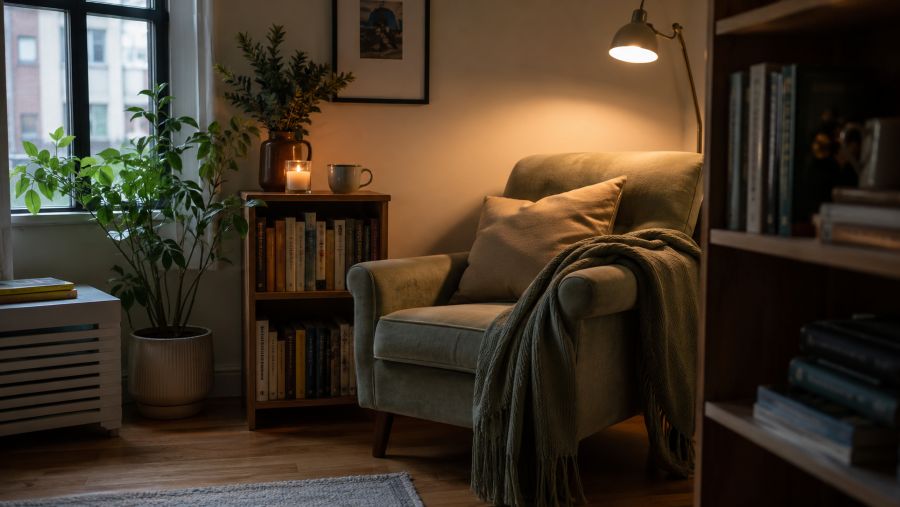
Couples face a unique privacy puzzle: they want closeness, but they also need the occasional retreat from each other. The solution is not separation so much as defined personal territory within the shared home. Even in a one-bedroom, giving each partner a corner that is unmistakably theirs—a reading chair by the window, a dedicated side of the closet, a small desk in an alcove—does wonders for the relationship.
Think of it as designing micro-retreats. One partner might claim a window nook with a comfortable chair, a small shelf, and a reading lamp; the other might take a compact desk zone screened off by a curtain or a plant. These pockets do not need much square footage. What matters is that each person knows there is a spot where they can be alone, recharge, and not feel they are intruding on shared territory. When both partners have a personal zone, the shared spaces feel more generous rather than contested.
Privacy Solutions for Roommates
Roommates have different needs than couples. They generally are not sharing a bed or a daily life, so their priority is clear ownership and the ability to fully retreat when needed. The cornerstone of roommate privacy is a well-defined zone for each person—ideally with a real or improvised door, but at minimum with a divider that creates a genuine sense of “this is mine.”
In a true studio shared by roommates, a floor-to-ceiling curtain or a tall shelving wall down the middle can transform one room into two semi-private bedrooms. Each roommate then personalizes their side, which strengthens the feeling of ownership. Beyond the physical setup, the most successful roommate arrangements rely on a few simple, agreed-upon habits: respecting closed curtains or doors as a “do not disturb” signal, honoring quiet hours, and keeping shared zones neutral so no one feels crowded out. Privacy among roommates is as much about communication as it is about furniture.
Smart Storage to Reduce Visual Clutter
Clutter is the enemy of perceived privacy. When belongings spill across every surface, the apartment feels like a single chaotic shared blob rather than a collection of calm personal zones. Giving each person dedicated, closed storage—their own labeled bins, a personal section of a shelving unit, or a storage ottoman that doubles as seating—keeps possessions contained and reinforces the boundaries between zones. The tidier each person’s territory stays, the more private and distinct it feels.
Comparing the Most Popular Privacy Solutions
With so many options, it helps to weigh them side by side. The table below compares the most common small-apartment privacy solutions by cost, how renter-friendly they are, and what kind of privacy they deliver, so you can pick the right starting point for your space and budget.
| Privacy Solution | Approx. Cost | Renter-Friendly | Best For |
|---|---|---|---|
| Ceiling-track curtain | Low | Yes (tension track) | Enclosing a sleeping nook quickly |
| Open bookshelf divider | Medium | Yes | Dividing while keeping light and adding storage |
| Folding screen | Low to Medium | Yes | On-demand, portable visual privacy |
| White-noise machine | Low | Yes | Masking sound between zones |
| Area rugs & textiles | Low to Medium | Yes | Absorbing echo and softening noise |
| Tall wardrobe as divider | Medium to High | Yes | Solid visual block plus storage |
Putting It All Together: A Simple Privacy Plan
You do not need to do everything at once. The smartest approach is to layer solutions over time, starting with the cheapest, most reversible changes. Begin by adding soft textiles—a large rug and a couple of fabric panels—to soften the sound. Next, introduce one main visual divider, whether a ceiling curtain or an open shelf, to split the apartment into clear zones. Then carve out a personal micro-retreat for each person, however small. Finally, layer in habits: quiet hours, a closed-curtain signal, and personal headphones for focused tasks.
Worked through in that order, even the tightest shared apartment can feel surprisingly spacious and calm. Privacy, it turns out, is less about how many square feet you have and far more about how intentionally you shape the ones you already own.
FAQ: Small Apartment Privacy Ideas
How can couples create privacy in a studio apartment?
Couples can create privacy in a studio by defining zones with a ceiling-mounted curtain or a freestanding bookshelf that separates the sleeping area from the living space. Adding a folding screen, a tall plant cluster, and slightly staggered daily routines gives each partner a sense of personal space without building permanent walls. The key is to make sure each person has at least one small corner that feels unmistakably their own.
What is the best room divider for a small apartment?
The best room divider for a small apartment is usually a ceiling-track curtain or an open bookshelf. Curtains are inexpensive, fully removable, and ideal for renters, while open shelving doubles as storage and lets light pass through, so it divides the space without making it feel cramped or dark. Folding screens are a good portable alternative when you want privacy only some of the time.
How do roommates maintain privacy when sharing a small space?
Roommates maintain privacy by giving each person a clearly owned zone, using headphones and a white-noise machine for sound separation, and agreeing on simple house rules such as quiet hours and a closed-door signal. Visual barriers like screens and shelving units help each roommate feel they have a retreat of their own, and keeping shared areas tidy and neutral prevents anyone from feeling crowded out.
Final Thoughts on Living Privately, Together
Sharing a small apartment with someone you care about—or someone you simply split the rent with—does not have to mean sacrificing your need for solitude. By interrupting sightlines with smart dividers, softening sound with textiles and personal audio, and giving every person a defined zone to call their own, you can transform a cramped, contested space into a home where everyone breathes a little easier. Start with one change this week, add another next month, and watch how quickly a little intentional design turns shared square footage into shared peace of mind.
ADeL A.A
ADeL A.A is a home décor and space optimization writer who believes every square foot matters. He spends his time researching, testing, and comparing smart storage ideas, multi-functional furniture, and practical layout solutions — always searching for the best ways to make compact homes feel bigger, brighter, and better organized.
View all articles by ADeL A.A →