Warm Minimalism at Home: A Calm, Uncluttered Look for Any Space

There is a quiet kind of luxury in walking into a room that feels calm the moment you enter it — clear surfaces, soft light, and just enough beautiful, useful things. That feeling is the heart of warm minimalism, an approach to decorating that keeps the serenity of a pared-back home without the cold, sterile edge that classic minimalism is often accused of. It is minimalism you actually want to live in.
In this complete guide, you’ll learn exactly what warm minimalism is, why it has become one of the most sought-after looks in interior design, and how to create it in your own home step by step. From building a cozy neutral palette to layering natural textures and choosing fewer, better pieces, these ideas work in a sprawling house, a family apartment, or a compact studio alike.
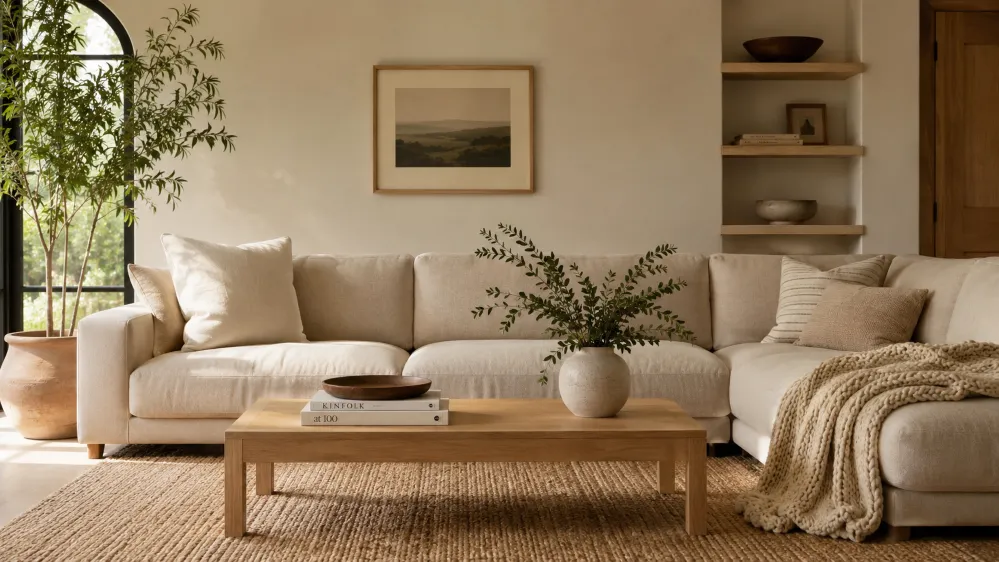
The appeal of warm minimalism is that it solves the biggest complaint people have about minimalist homes: that they can feel like showrooms rather than places to relax. By trading hard whites and chrome for soft creams, honey-toned wood, and tactile fabrics, you keep the visual calm of an uncluttered space while making it feel genuinely welcoming. Throughout this guide, we’ll move from mindset to palette to materials, so by the end you’ll have a clear, practical plan you can begin this weekend.
If you’d like to see warm minimalism in action before you begin, the short video below walks through the palette, textures, and styling choices that define the look, giving you a clear visual reference for everything covered in this guide.
What Is Warm Minimalism, Exactly?
Warm minimalism is best understood as minimalism with the heat turned back on. Traditional minimalism, born from stark modernist ideals, prizes empty space, sharp lines, and a tightly limited palette that often leans cold and white. Warm minimalism keeps the same core discipline — less clutter, intentional choices, and breathing room — but reintroduces the comfort that makes a house feel like a home. It is the difference between a room that looks impressive in a photograph and one that feels good to sit in on a quiet evening.
The philosophy rests on a simple idea: every item that remains should be both useful and beautiful, and the overall effect should soothe rather than impress. Where cold minimalism removes warmth in pursuit of purity, warm minimalism removes only the excess, then layers back softness through color, texture, and natural materials. This makes it far more forgiving and livable, which is exactly why it has resonated with so many people seeking calm in a busy world.
The Core Principles of Warm Minimalism
Before changing anything in your home, keep these guiding principles in mind. They work as a simple checklist for every decision you make:
- Fewer, better things: Choose quality and meaning over quantity, and let each piece have room to breathe.
- Warm, tonal colors: Build on creams, beiges, and wood tones rather than cold whites and grays.
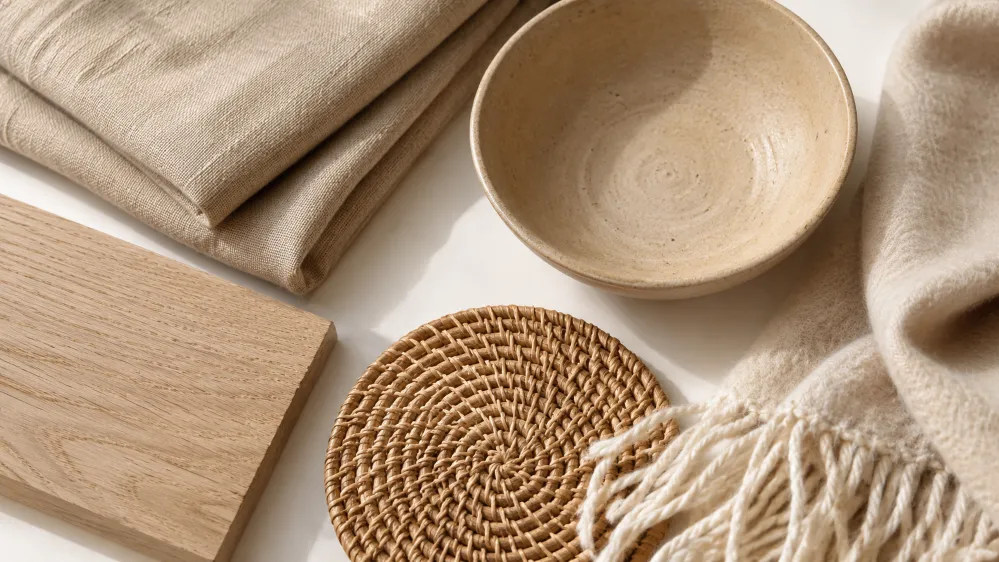
- Natural materials: Favor wood, linen, wool, rattan, clay, and stone over plastic and high gloss.
- Layered texture: Since the palette is quiet, let contrasting textures create the visual interest.
- Calm, clear surfaces: Keep countertops and floors mostly open so the eye can rest.
Building a Warm Minimalist Color Palette
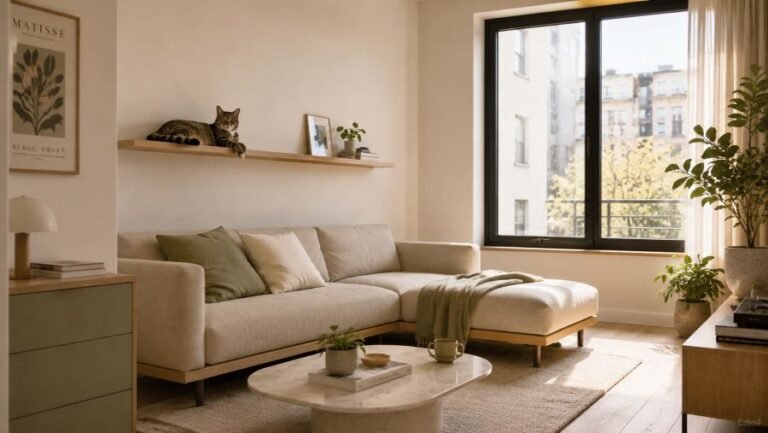
Color is the fastest way to shift a space from cold minimalism to warm. The goal is a tonal, low-contrast palette where every shade feels related to the next, creating a seamless, enveloping calm. Start with a base of creamy white, soft beige, or oatmeal on your walls and largest pieces, then build gentle depth with warm gray, taupe, and the honey tones of natural wood. Because these colors sit close together on the spectrum, the room reads as serene and cohesive rather than busy.
To stop the palette from feeling flat, ground it with a few earthy accents drawn from nature: terracotta, clay, soft ochre, or a muted olive green. Used sparingly — a single cushion, a ceramic vase, a piece of art — these warmer notes add soul and a touch of contrast without breaking the calm. The key is restraint: limit yourself to three or four core tones, and let natural light do the rest as it shifts across the room throughout the day.
Smart Small Space Tip: Swap your cool white light bulbs for warm-white ones around 2700K. Lighting temperature dramatically affects how warm a room feels, and this single inexpensive change instantly makes neutral walls and wood tones glow rather than look flat or gray.
Chunky Knit Wool Throw Blanket (Warm Cream / Beige)
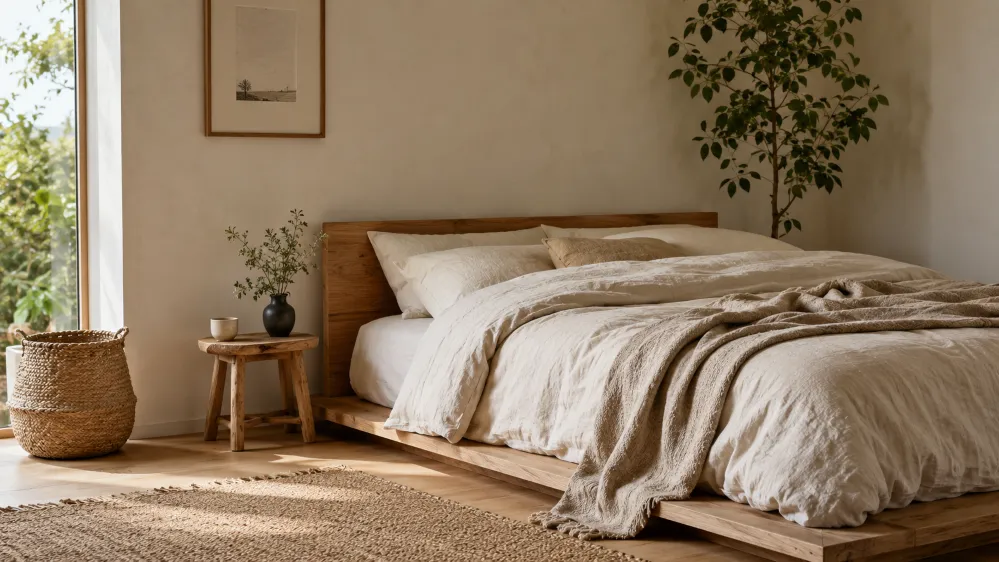
A soft, oversized chunky-knit throw is the quickest way to add cozy texture and warmth to a sofa or bed. Draped casually, it brings instant softness to a minimalist palette and invites you to actually relax in the space.
Check Price on Amazon →Choosing Furniture: Simple Shapes, Natural Warmth
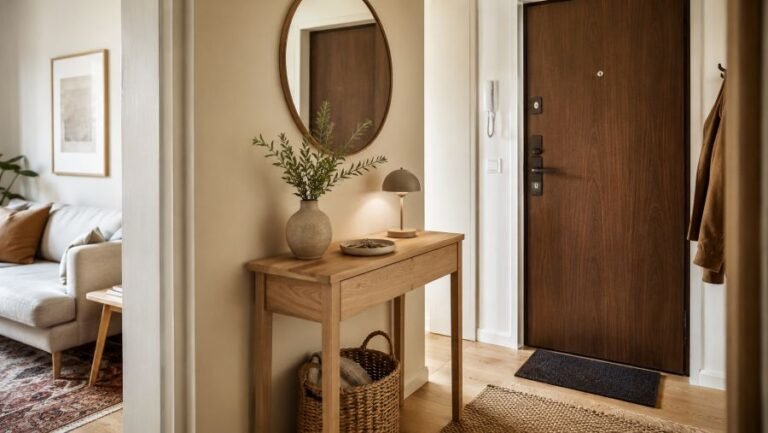
In a warm minimalist home, furniture is defined by clean, simple silhouettes softened by natural materials and gentle curves. Rather than the hard edges and glossy surfaces of cold minimalism, look for rounded corners, solid wood, and upholstery in cozy fabrics like linen, cotton, and boucle. A low oak coffee table, a softly curved armchair, or a sofa in warm oatmeal linen all capture the look while keeping the room feeling open and grounded.
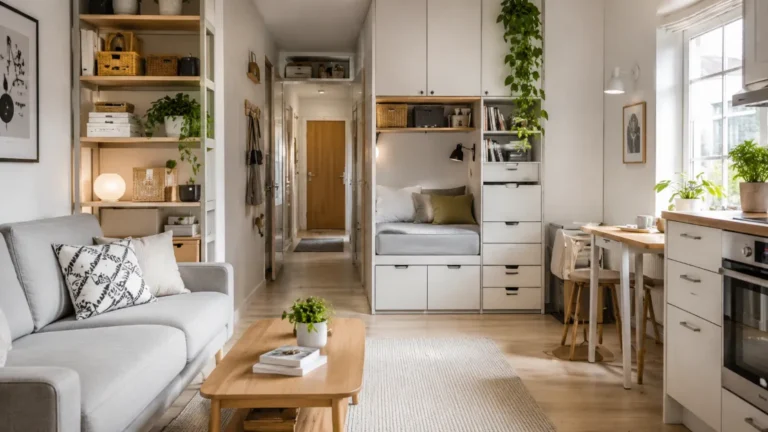
Just as important is leaving space around each piece. Warm minimalism relies on negative space to create its sense of calm, so resist the urge to fill every wall and corner. Choose a few well-made, versatile pieces over many small ones, and favor furniture that doubles as discreet storage — a bench with a lift-up seat, a console with closed drawers — so clutter stays hidden and surfaces stay clear. This balance of warmth and restraint is what makes the style feel both cozy and uncluttered at once.
Set of Woven Seagrass Storage Baskets with Handles
Natural woven baskets are the warm minimalist’s secret weapon: they hide everyday clutter, keep surfaces clear, and add organic texture all at once. Use them for blankets, magazines, or toys to maintain that calm, uncluttered feel.
Check Price on Amazon →Layering Texture and Natural Materials
When a palette is intentionally quiet, texture becomes the star. This is the single most important technique for keeping a warm minimalist room from feeling boring or flat. The trick is to contrast different tactile surfaces within the same tonal family: pair a smooth ceramic lamp with a nubby linen shade, set a soft wool rug against a sleek wooden floor, or place a handmade clay vase on a glossy stone shelf. Each contrast adds richness while the consistent color keeps everything harmonious.
Natural materials carry this warmth most effectively because they bring subtle, organic variation that manufactured surfaces cannot. Solid wood with visible grain, handwoven textiles, raw ceramics, and natural fibers like jute and rattan all introduce gentle imperfection and depth. Bringing in a living element or two — a sculptural branch, a leafy plant, or a small bowl of stones — reinforces the connection to nature that gives warm minimalism its grounded, calming quality.
| Element | Cold Minimalism | Warm Minimalism |
|---|---|---|
| Palette | Stark white, black, cool gray | Cream, beige, taupe, wood tones |
| Materials | Chrome, glass, lacquer | Wood, linen, wool, rattan, clay |
| Lighting | Bright, cool-white | Soft, warm-white, layered |
| Textiles | Minimal, flat, smooth | Layered, tactile, cozy |
| Overall feel | Sleek but clinical | Calm, inviting, lived-in |
Handmade Stoneware Ceramic Vase (Matte Earthy Finish)
A single matte stoneware vase with a few dried stems is a perfect warm minimalist accent. Its handmade, slightly imperfect finish adds organic character and an earthy pop of warmth without cluttering the surface it sits on.
Check Price on Amazon →Decluttering: The Foundation of a Calm Home
No palette or product can deliver a warm minimalist feel if surfaces are crowded and storage is overflowing. Decluttering is the essential first step, and the most rewarding, because it costs nothing and immediately reveals the calm you’re after. Work room by room, keeping only what you use regularly or genuinely love, and be honest about the duplicates, the just-in-case items, and the things you keep out of guilt rather than need.
Once you’ve pared back, the goal is to maintain clear, restful surfaces. Give every remaining item a designated home, ideally behind a closed door or inside a basket, so the visible parts of your rooms stay serene. This does not mean living with nothing; it means curating what’s on display so that the few objects you do show feel intentional and special. A clear coffee table with a single beautiful bowl says far more than a surface crowded with knick-knacks.
Lighting and the Finishing Touches
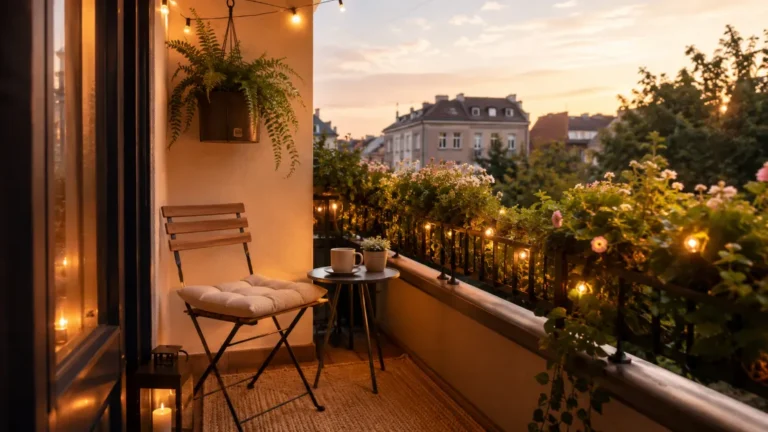
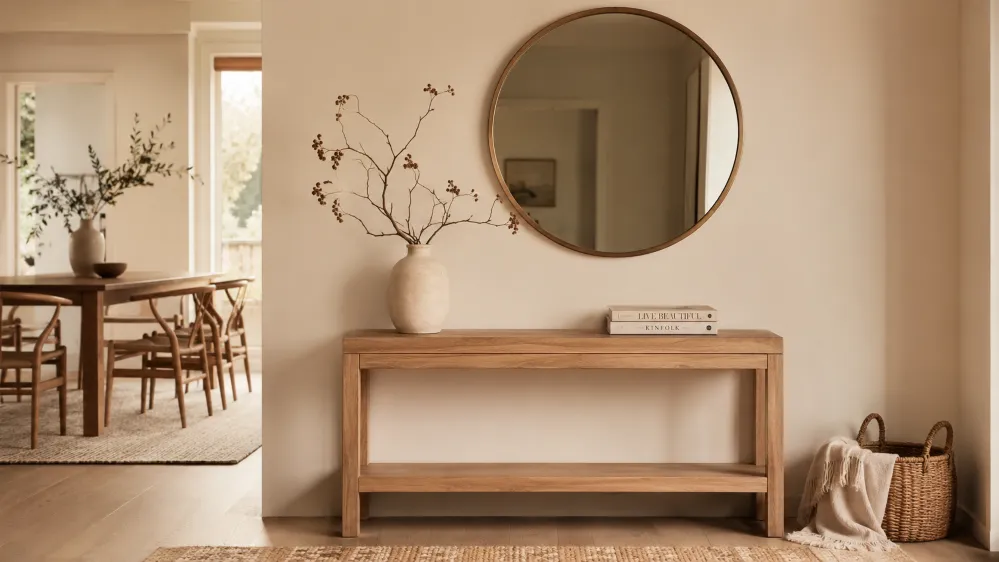
Lighting is the final, often overlooked layer that makes or breaks a warm minimalist home. The aim is soft, warm, and layered illumination rather than one harsh overhead fixture. During the day, keep windows as clear as possible and use light, sheer curtains so natural light can pour in and warm every neutral surface. After dark, combine a few gentle sources — a table lamp, a floor lamp, perhaps a discreet light strip — to create a calm, even glow.
Finishing touches should be chosen with the same restraint as everything else. A single piece of art with warm tones, one or two handmade ceramics, a stack of well-loved books, and a living plant are often all a room needs. Resist the urge to keep adding; in warm minimalism, knowing when to stop is a skill in itself. The reward is a home that feels complete, calm, and quietly beautiful, no matter its size.
Linen-Shade Table Lamp with Warm LED Bulb
A simple table lamp with a natural linen shade casts a soft, diffused glow that captures warm minimalism perfectly. Paired with a 2700K warm bulb, it replaces harsh overhead light with the cozy, layered ambiance the style depends on.
Check Price on Amazon →FAQ: Warm Minimalism at Home
What is warm minimalism in interior design?
Warm minimalism is a softer take on traditional minimalism. It keeps the clean lines, uncluttered surfaces, and fewer-but-better philosophy, but replaces cold white-and-gray palettes with cozy neutral tones, natural materials like wood and linen, and layered textures. The result is a space that feels calm and intentional yet genuinely warm and inviting rather than stark.
How is warm minimalism different from regular minimalism?
Regular minimalism often emphasizes stark white walls, hard surfaces, and near-empty rooms, which can feel clinical. Warm minimalism softens that look with earthy colors, soft textiles, wood tones, and a few meaningful objects, so the space still feels open and pared-back but also comfortable and lived-in.
What colors are used in a warm minimalist home?
Warm minimalism relies on a tonal palette of creamy whites, beige, oatmeal, soft taupe, warm gray, and natural wood, often grounded by gentle earthy accents like terracotta, clay, or muted olive. The colors stay close in tone and low in contrast, which keeps the whole space feeling cohesive and soothing.
How do I start a warm minimalist look on a budget?
Begin by decluttering what you already own, since warm minimalism costs nothing to start and rewards owning less. Then introduce warmth gradually with affordable swaps: a linen throw, a few woven baskets, a warm-toned light bulb, and one or two natural-wood pieces. Replace items slowly with simple, well-made alternatives rather than buying everything at once.
Final Thoughts: Less, but Warmer
Warm minimalism proves that a pared-back home doesn’t have to feel cold or impersonal. By combining the calm of fewer possessions with the comfort of natural materials, cozy neutrals, and layered texture, you can create a space that is both effortlessly tidy and genuinely inviting. It is a style built not around deprivation but around intention — keeping what matters, and letting it breathe.
The beauty of this approach is that anyone can begin today, regardless of budget or square footage. Start by clearing the clutter, warm up your palette and lighting, and add natural texture one thoughtful piece at a time. Whether you live in a large house or a single room, warm minimalism offers a calmer, cozier, and quietly more beautiful way to live — proof that, done right, less really can feel like so much more.
Affiliate Disclosure: As an Amazon Associate, Smart Small Space earns from qualifying purchases. Product links in this article may earn us a small commission at no extra cost to you, which helps support our content.
ADeL A.A
ADeL A.A is a home décor and space optimization writer who believes every square foot matters. He spends his time researching, testing, and comparing smart storage ideas, multi-functional furniture, and practical layout solutions — always searching for the best ways to make compact homes feel bigger, brighter, and better organized.
View all articles by ADeL A.A →