Home Cinema: Projectors vs TVs — Which to Choose?

There is a particular kind of magic in dimming the lights, sinking into your favorite seat, and watching a film stretch across the wall in front of you. For a long time, that feeling belonged to the local theater. Today, the right screen can deliver it straight into your living room — but the road to that big-screen experience splits in two directions: a projector or a television.
Choosing between them is rarely about which device is objectively “better.” It comes down to how you live, how your room behaves with light, how far you sit from the screen, and what kind of movie nights you actually want. This guide walks through both options in plain language, weighs their genuine strengths and trade-offs, and helps you decide which one truly belongs in your home cinema.
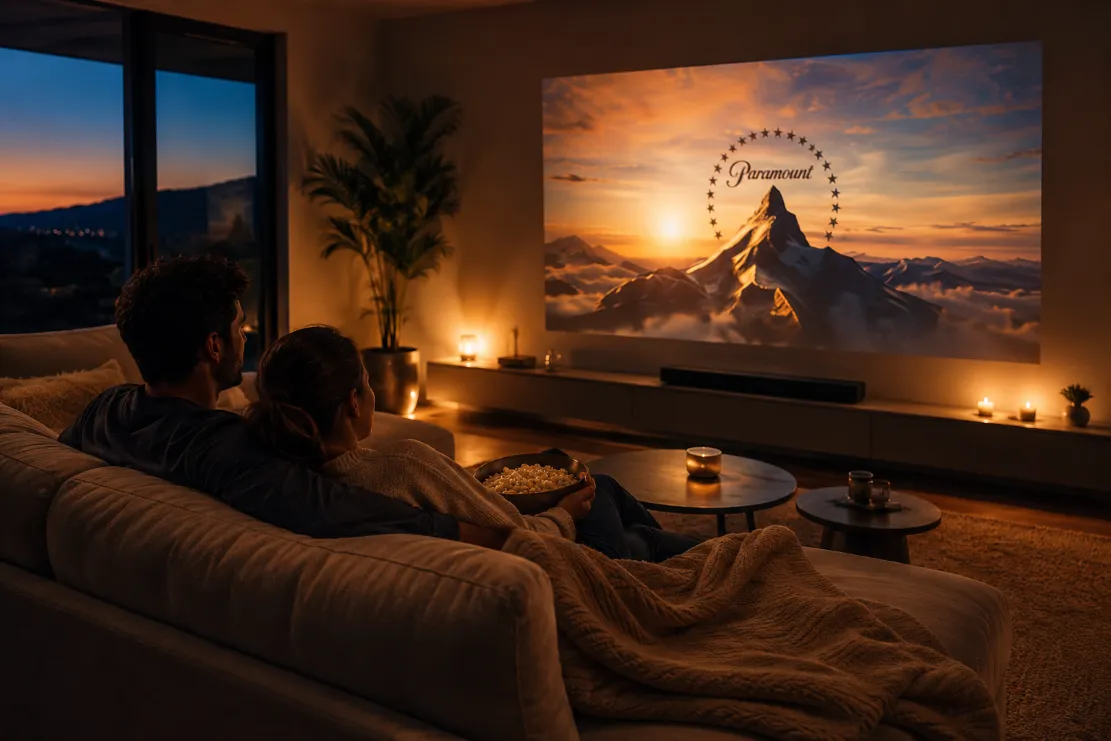
Before comparing specifications, it helps to understand what each technology is genuinely trying to do. A projector throws light onto a surface to build an image that can stretch far larger than any flat panel, recreating the scale and immersion of a movie theater. A television, by contrast, generates its own light from a fixed panel, delivering a brighter, sharper, and more consistent picture in almost any lighting condition. Both can sit at the heart of a wonderful home cinema — the real question is which one fits the way your space and your household actually behave.
Start With the Room, Not the Screen
It is tempting to begin by browsing screens, yet the smartest first step is to study the room itself. Three factors quietly decide whether a projector or a TV will look its best: the amount of light the room receives, the wall and ceiling space you have to work with, and the distance between your seating and the screen. Get these right and almost any device will impress; ignore them and even the most expensive setup can disappoint.
Light is the single most influential factor. A space flooded with afternoon sun behaves very differently after dark, so think about when you watch most often. If your evenings are the main event and you can dim or block daylight with curtains, a projector has room to shine. If, on the other hand, your family gathers to watch throughout the day in a bright, window-lined room, a television will almost always hold up better. Wall space matters next: projectors reward a large, smooth, uninterrupted surface, while TVs need a sturdy mount or a console sized to the panel. Finally, measure your seating distance honestly, because comfortable immersion depends on the relationship between how big the image is and how far away you sit.
Resolution interacts with all of this in a way that is easy to overlook. A sharp 4K image looks stunning on both technologies, yet the larger you stretch a picture, the more those pixels spread out. On a projected wall measuring 120 inches, you sit far enough back that detail still holds beautifully; push a lower-resolution image to that size and softness starts to show. Televisions, with their dense panels packed into a smaller area, keep every detail razor-sharp at close range. As a rule of thumb, the bigger the image you want, the more you should sit back and the more resolution rewards you — another reason to plan around the room before you fall in love with a particular screen.
How Projectors Create a Cinema Feel
A projector earns its reputation through sheer scale. Where a television tops out at a fixed diagonal, a projector can paint a picture that fills an entire wall, easily reaching 100 inches or more. That size is precisely what makes a film feel cinematic: the image wraps into your peripheral vision, and the screen stops feeling like a piece of furniture and starts feeling like a window into another world. For dedicated movie lovers, nothing replicates the theater quite like it.
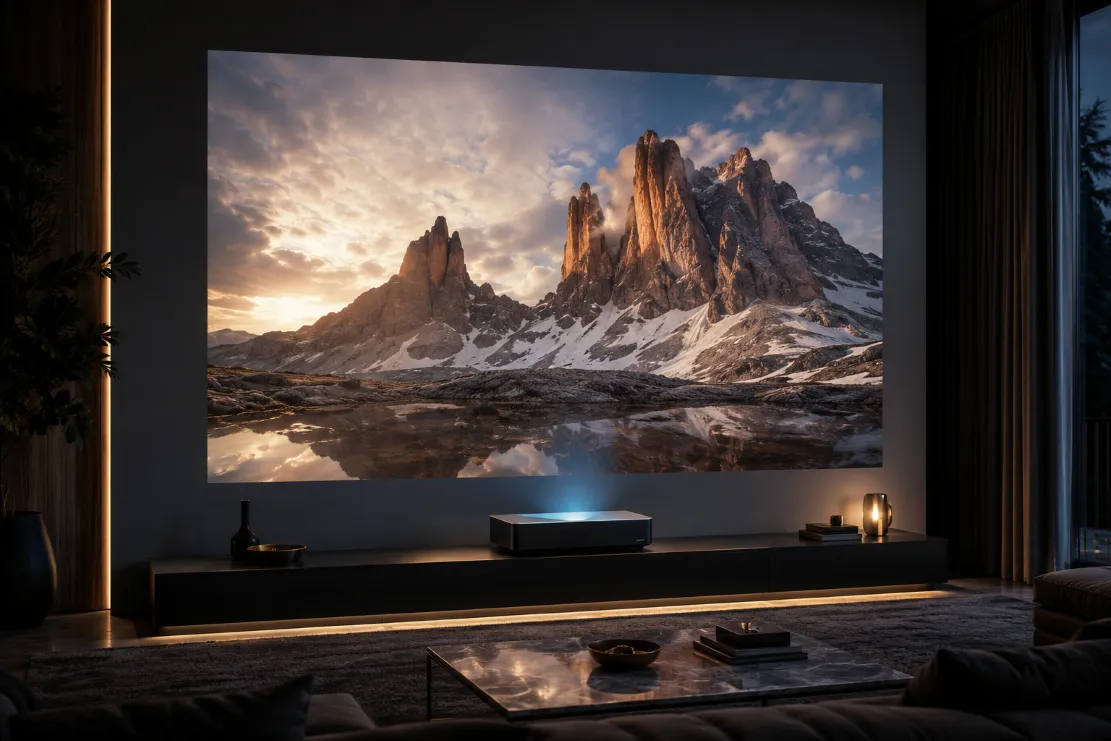
Projectors generally fall into a few families. Long-throw models sit several feet back, often ceiling-mounted, and suit larger rooms where you can place the unit behind the seating. Short-throw and ultra-short-throw models, by contrast, sit just inches or a couple of feet from the wall, casting a giant picture from a low console — a clever solution when floor plans are tight or when running cables across a room is impractical. Modern laser projectors have also transformed the category, replacing fragile, short-lived bulbs with light sources that stay bright for tens of thousands of hours.
When a Projector Shines
- You can darken the room reliably, especially in the evening.
- You crave a genuinely large, immersive, theater-style image.
- You have a clean wall or screen and a place to mount or position the unit.
- You prefer a screen that disappears when it is switched off, leaving a bare wall.
How Modern TVs Deliver Theater Quality
While projectors chase size, today’s televisions chase perfection. The latest OLED, QLED, and Mini-LED panels produce deep blacks, dazzling brightness, and rich, accurate color that a projector struggles to match outside of a fully darkened room. Because a TV emits its own light, the picture stays vivid whether the curtains are open or closed — a decisive advantage for anyone who watches news in the morning, sports in the afternoon, and films at night.
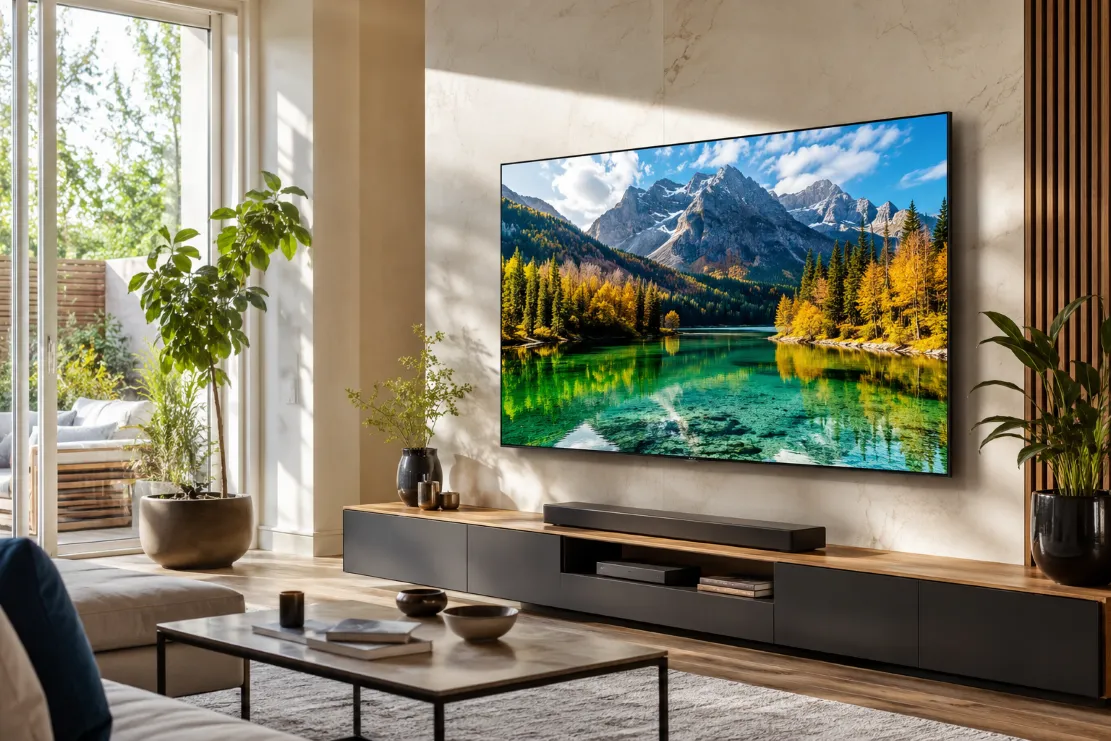
Beyond picture quality, televisions win decisively on convenience. There is no screen to install, no throw distance to calculate, and no lamp to replace; you simply mount the panel, connect your devices, and press play. Smart platforms are built in, response times are excellent for gaming, and the picture looks the same on day one as it will years later. For households that value simplicity and want a dependable centerpiece, a great TV asks very little and gives a lot in return.
When a TV Makes More Sense
- Your room receives plenty of natural or artificial light during viewing.
- You want the brightest, sharpest, most color-accurate image possible.
- You value plug-and-play simplicity with no calibration or screen to manage.
- You game often and want fast response times and low input lag.
Projectors vs TVs: The Head-to-Head Comparison
Specifications rarely tell the whole story, but a side-by-side view does make the core trade-offs easier to see. The table below summarizes how the two technologies compare across the factors that matter most when you are building a home cinema you will actually enjoy night after night.
| Factor | Projector | Television |
|---|---|---|
| Maximum screen size | Enormous — 100 inches and well beyond | Large but fixed — typically up to 85–98 inches |
| Performance in bright rooms | Weaker; needs darkness or a special screen | Excellent; stays vivid in daylight |
| Black levels and contrast | Good in a dark room, limited otherwise | Outstanding, especially OLED and Mini-LED |
| Setup and installation | More involved — placement, screen, alignment | Simple — mount, connect, and watch |
| Immersion and “cinema feel” | Exceptional at large sizes | Strong, but capped by panel size |
| Long-term upkeep | Lamp or laser light source to consider | Essentially maintenance-free |
| Gaming responsiveness | Varies; some lag on cheaper models | Excellent with low input lag |
Smart Small Space Tip: Whichever screen you choose, audio makes or breaks the experience. Built-in speakers are thin by design, so pairing your screen with even a modest soundbar or a compact surround setup will do more for the cinematic feel than almost any picture upgrade. Treat sound as part of the screen budget, not an afterthought.
Matching the Choice to Your Room and Lifestyle
Once you understand the trade-offs, the decision often makes itself. Picture how you really use the space. A film enthusiast with a darker den, blackout curtains, and a love of weekend movie marathons is the natural owner of a projector and a large screen. Someone whose living room is the bright, busy hub of the home — open curtains, mixed daytime viewing, and frequent gaming — will likely be happier with a top-tier television that never needs babysitting.
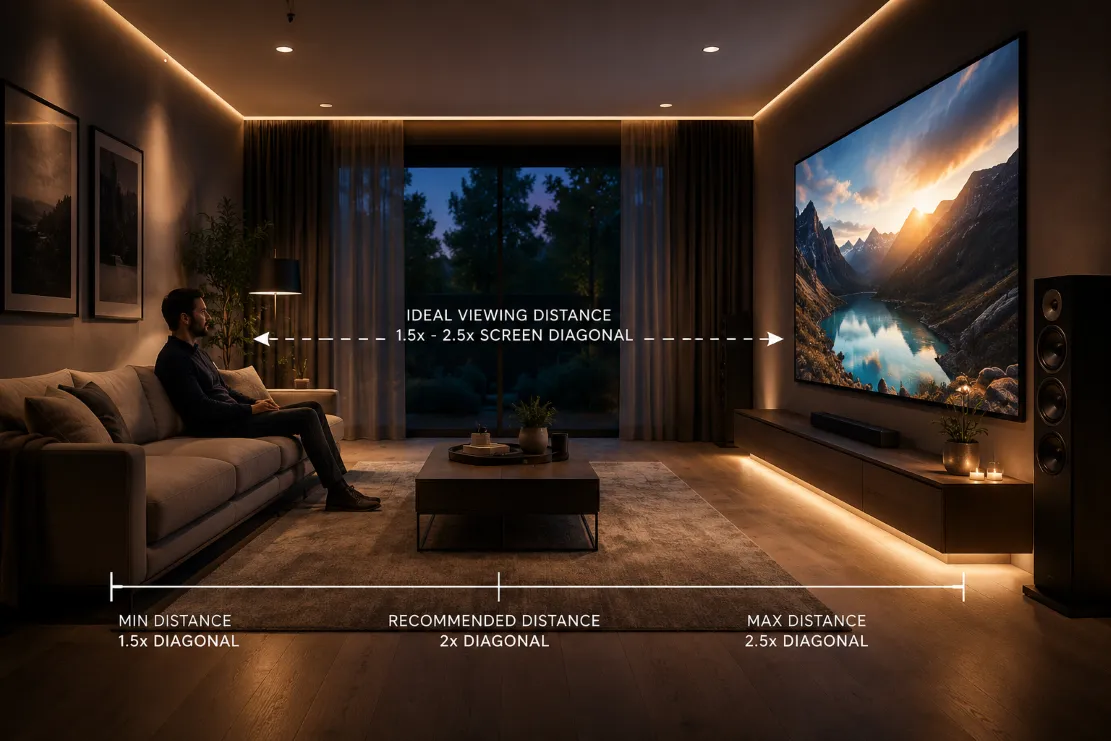
Room size adds another layer to the choice. In compact rooms with shorter viewing distances, an oversized projected image can feel overwhelming and reveal imperfections, while a well-chosen TV delivers a crisp, perfectly scaled picture without dominating the space. In larger, longer rooms — or in a dedicated media area where you can sit well back — a projector finally has the breathing room to stretch out and impress. There is also a middle path worth remembering: many households happily keep a reliable TV for everyday viewing and add a projector purely for occasional big-screen movie nights, enjoying the best of both worlds.
Sound, Setup, and Long-Term Costs
Whatever you decide, plan the full picture rather than fixating on the headline price. A television’s cost is usually self-contained: you buy the panel and you are essentially finished, give or take a soundbar. A projector’s true cost includes the unit, a proper screen or a prepared wall, and a sound solution, since projectors rarely include speakers worth using. Building that complete budget upfront prevents the common disappointment of a brilliant image paired with tinny, distant audio.
Running costs deserve a moment of thought too. Lamp-based projectors gradually dim and eventually need a replacement bulb, an expense that adds up over years of heavy use. Laser and LED projectors largely solve this, lasting tens of thousands of hours with little fuss, though they cost more at the outset. Televisions, meanwhile, are about as low-maintenance as electronics get — no consumables, no alignment, and a picture that performs identically from the first day to the last. Weighing these long-term realities alongside the upfront price gives you a far more honest comparison than the sticker alone.
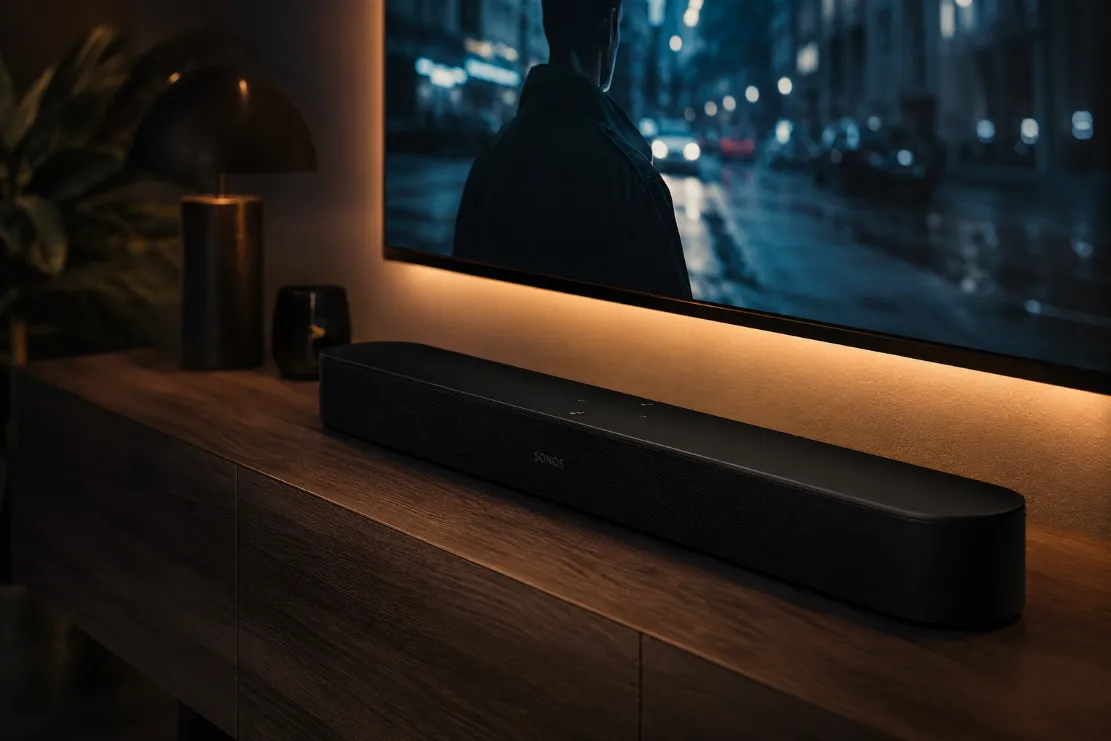
Finally, do not overlook the small touches that turn a screen into a cinema. A strip of soft bias lighting behind the display reduces eye strain and deepens perceived contrast. Tidy cable management keeps the focus on the picture rather than the clutter. A comfortable, well-positioned seat does as much for immersion as any premium feature. These finishing details cost little yet transform an ordinary setup into a space your household will gather in again and again.
FAQ: Home Cinema Projectors vs TVs
Are projectors better than TVs for a home cinema?
Neither is universally better. Projectors win on sheer screen size and immersive, theater-style scale, while TVs win on brightness, sharpness, and consistent picture quality in rooms with daylight. The right choice depends on how much light your room receives, how far you sit, and whether you watch mostly at night or throughout the day.
Do projectors work in rooms with lots of daylight?
Standard projectors struggle in bright rooms because ambient light washes out the image. If you cannot fully darken the room, choose a high-brightness laser projector paired with an ambient-light-rejecting screen, or consider a TV instead. For daytime viewing, a modern TV almost always delivers a clearer, punchier picture.
What screen size do I need for a comfortable home cinema?
A common guideline is that your seating distance should be roughly 1.5 to 2.5 times the screen’s diagonal for a relaxed, immersive view. For a 65-inch TV that means sitting about 8 to 11 feet away, while a 100-inch projected image is most comfortable from around 12 to 15 feet. Measure your room first, then size the screen to match.
Is a projector or a TV cheaper in the long run?
Entry-level TVs are usually cheaper upfront and have no running costs. Projectors can cost more once you add a screen and sound, and lamp-based models need bulb replacements, though modern laser projectors last tens of thousands of hours. Factor in the screen, audio, and light-source lifespan rather than comparing the device price alone.
The Final Verdict for Your Home Cinema
In the end, the projector-versus-TV debate has no single winner because the best screen is the one that matches your room and your habits. If you can control the light, crave an immersive image that fills the wall, and love the ritual of a proper movie night, a projector rewards you with scale that a panel cannot touch. If you want brilliant, effortless picture quality that performs at any hour and asks almost nothing of you, a modern television is hard to beat.
Start by honestly assessing your light, your wall space, and your viewing distance, then let those realities guide the decision rather than the marketing. Budget for the whole experience — screen, sound, and the finishing touches that make a room feel like a theater — and you will end up with a home cinema that turns ordinary evenings into something worth looking forward to, in any room of the house.
ADeL A.A
ADeL A.A is a home décor and space optimization writer who believes every square foot matters. He spends his time researching, testing, and comparing smart storage ideas, multi-functional furniture, and practical layout solutions — always searching for the best ways to make compact homes feel bigger, brighter, and better organized.
View all articles by ADeL A.A →