How to Host Guests in a Small Apartment Without Feeling Crowded

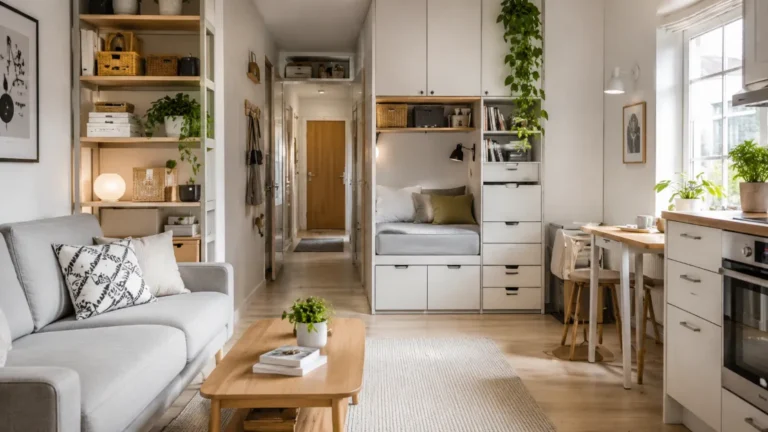
There is a quiet myth that good hosting requires a big home, a formal dining room, and acres of open floor. It does not. Some of the warmest evenings happen in apartments where the walls are close, the kitchen opens onto the living room, and everyone ends up laughing in the same square footage. The trick to hosting guests in a small apartment is not pretending you have more room than you do, but designing the evening so the room you have works harder and feels lighter.
This guide walks through the practical decisions that separate a cramped, awkward gathering from a relaxed one that simply happens to be cozy. From rethinking your layout before anyone knocks, to choosing furniture that earns its place, to setting up food and lighting that keep the space breathing, every section is built around one goal: a full apartment that still feels open, easy, and welcoming.
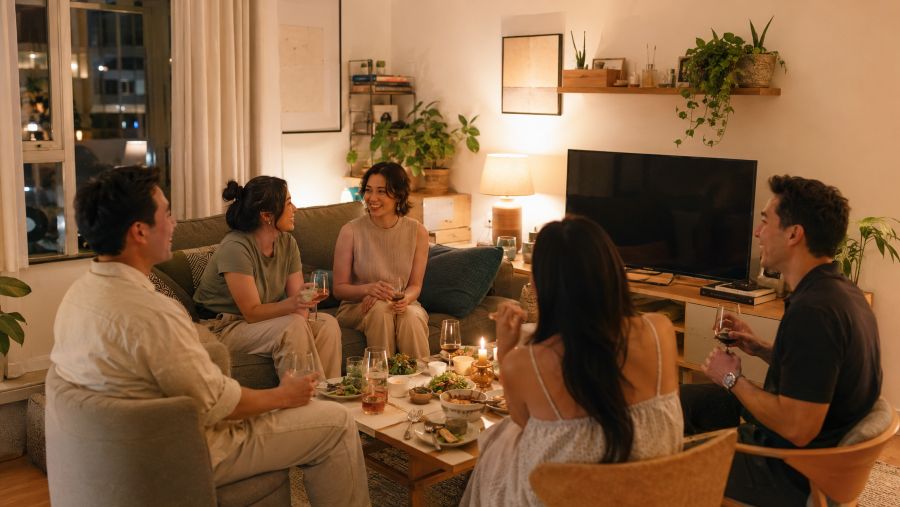
Before buying a single new thing or rearranging a single chair, it helps to reframe the challenge. A small apartment does not have a space problem so much as a flow problem. When guests bump elbows, queue awkwardly for the bathroom, or have nowhere to set a glass down, the room feels crowded regardless of its actual size. Solve the flow, and the square footage almost stops mattering. Everything below is, at heart, about flow, breathing room, and intentional choices that keep your space from feeling like it is shrinking the moment the doorbell rings.
If you prefer to see these small-apartment hosting ideas in action before reading on, the short walkthrough below from our Walk Me Through channel covers the essentials, from layout and flexible furniture to lighting and self-serve food, in under a minute and a half. Watch it first, then dig into each strategy in detail throughout the rest of this guide.
Rethink Your Layout Before Anyone Arrives
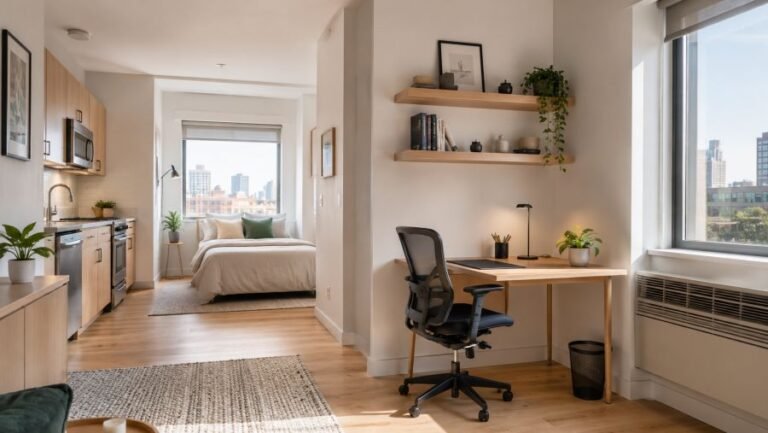
The single biggest improvement you can make costs nothing: edit the room before your guests see it. Look at your space the way a stranger would as they step inside. Where would they naturally stand? Where would a coat go? Where would three people gather without blocking the path to the kitchen? Most small apartments are arranged for daily solo living, with furniture pushed against walls and surfaces colonized by everyday clutter. Hosting asks the room to do something different, so it deserves a deliberate reset rather than a quick tidy.
Start by removing, not adding. Clear the coffee table down to one or two objects, relocate the laundry basket and the stack of mail, and take anything off the floor that does not need to be there. Empty floor space is the most generous gift you can give a small room, because the eye reads open floor as openness in general. A space with clear sightlines from the door through to the window will always feel larger than one of equal size cluttered with low furniture and stray belongings.
Create Clear Traffic Lanes
Once the floor is clear, think in terms of lanes rather than rooms. Guests need an obvious path from the entrance to wherever they will gather, and a separate, unobstructed route to the bathroom and the drinks. When these paths cross or get pinched by a chair leg or a side table, the apartment feels permanently congested even with only a handful of people in it. Pull seating slightly away from walls if you can, angle a chair to suggest a direction, and keep at least one corridor of bare floor running through the main living area.
- Keep a clear walking lane at least the width of two people from the front door to the main gathering area.
- Position the drinks or self-serve station away from the kitchen doorway so it never blocks the cook or the foot traffic.
- Leave the route to the bathroom completely unobstructed, since it is the one path every guest will use.
- Avoid placing low furniture, like poufs or baskets, in walkways where people will step over them in dim light.
Flexible and Multi-Functional Furniture Is Your Best Friend
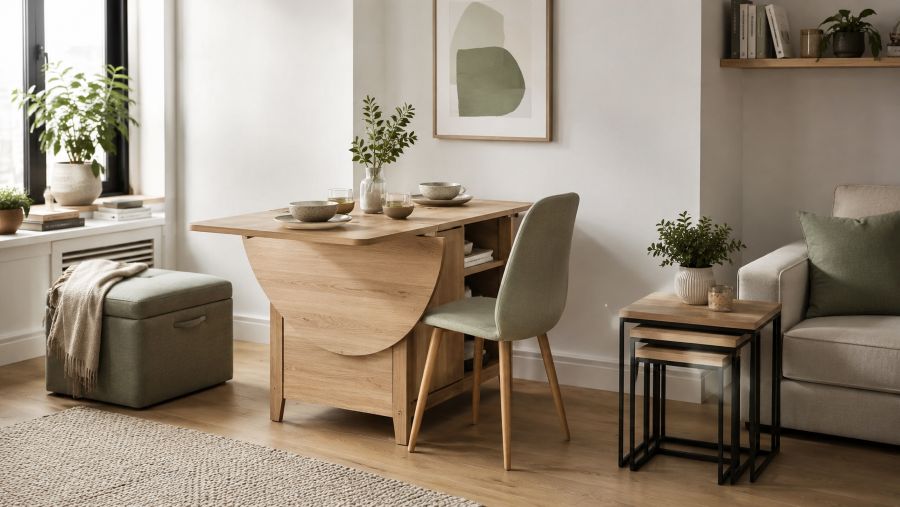
In a small apartment, every piece of furniture should ideally do more than one job, and that principle becomes urgent the moment you host. The dream is furniture that disappears or transforms: a coffee table that lifts to dining height, an ottoman that opens to swallow blankets and then seats a guest, a console that unfolds into a table for six. These pieces let your apartment live as a calm one-or-two-person home most days, then expand on demand without you owning bulky items that sit idle all week.
When you are deciding what to invest in, prioritize pieces that solve the two scarcest resources during a gathering: surfaces to set things on, and places to sit. A few well-chosen flexible items will outperform a room full of single-purpose furniture. The comparison below shows how the most useful small-space hosting pieces stack up, so you can pick what fits your apartment and your typical guest count.
| Furniture Piece | What It Solves | Best For |
|---|---|---|
| Storage ottoman | Extra seat plus hidden storage for blankets or clutter | Living rooms that double as gathering space |
| Nesting tables | Multiple surfaces that tuck into one footprint | Spreading drinks and snacks around the room |
| Folding or drop-leaf table | Full dining surface that collapses flat afterward | Seated dinners in studios or one-bedrooms |
| Stackable stools | On-demand seating that stores in a corner | Flexible guest counts and standing gatherings |
| Lift-top coffee table | Converts to casual dining or work height | Sofa-based, relaxed entertaining |
Notice that none of these pieces require a dedicated dining room or a spare wall. They borrow space when needed and return it when the evening ends, which is exactly the behavior a small apartment rewards. If you can only buy one item, a storage ottoman is the most forgiving starting point, because it earns its keep every single day and quietly becomes extra seating the moment company arrives.
Master the Art of Vertical and Hidden Storage
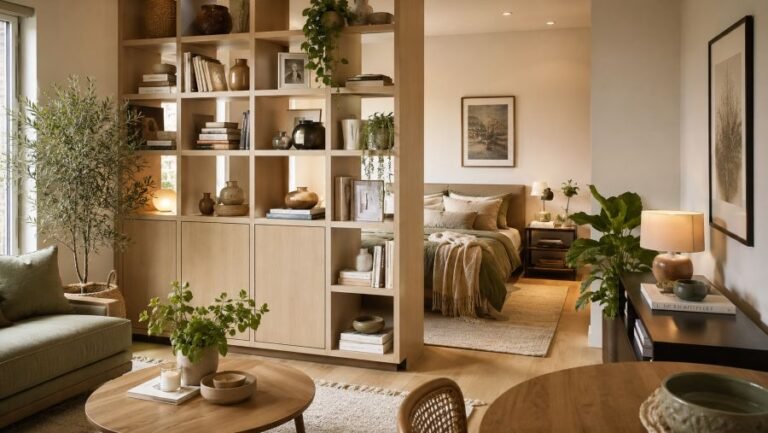
A room reads as crowded when its surfaces are full and its corners are stuffed, so the night before guests arrive, the goal is to get everyday life out of sight. This is where vertical and hidden storage quietly does the heavy lifting. Wall shelves, over-door organizers, and tall narrow units move your belongings up and off the floor, freeing the horizontal space that makes a room feel open. The eye travels upward in a well-shelved room, which has the pleasant side effect of making low ceilings feel taller.
Hidden storage matters just as much for the psychology of hosting. When you can sweep the visible clutter of daily life into a closed ottoman, a basket, or a cabinet, the apartment instantly looks composed without you having to genuinely organize anything in the moment. Guests do not see the chaos behind the cabinet door; they see a calm room. Build a few of these catch-all spots into your apartment now, and your pre-guest reset shrinks from an hour of frantic tidying to a five-minute sweep.
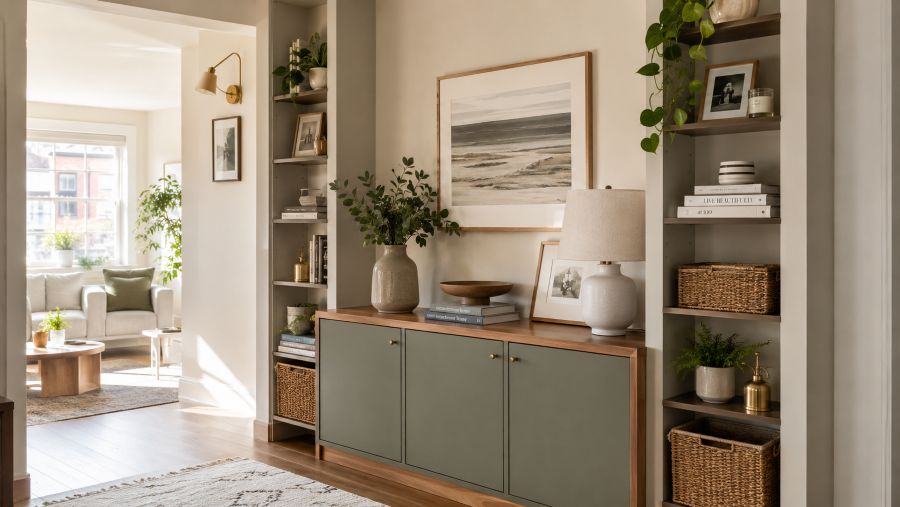
Smart Small Space Tip: Designate one closed storage spot, an ottoman, a cabinet, or even a large lidded basket, as your “hosting drawer.” Twenty minutes before guests arrive, do a single lap of the apartment and drop every stray item into it. The room transforms instantly, and you deal with the contents tomorrow.
Set the Mood with Lighting and Ambiance
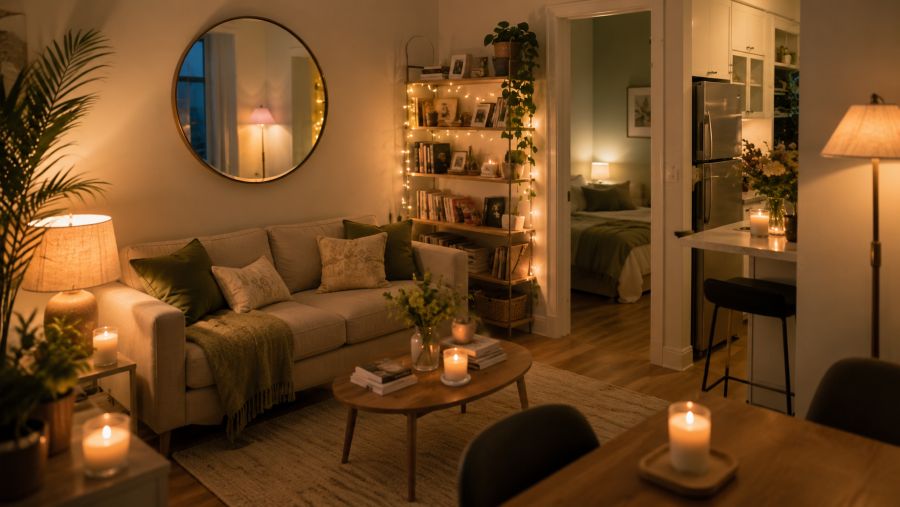
Lighting changes a small space more dramatically than almost anything else, and it costs little to get right. A single bright overhead light flattens a room and exposes every corner, which makes a small apartment feel exactly as small as it is. Layered, warmer light does the opposite: it draws the eye to pools of glow rather than the boundaries of the room, so the walls seem to recede into soft shadow. The space feels larger, calmer, and considerably more flattering for everyone in it.
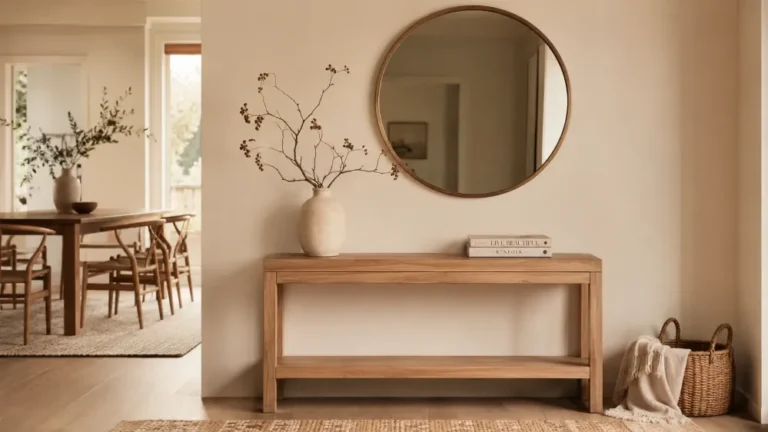
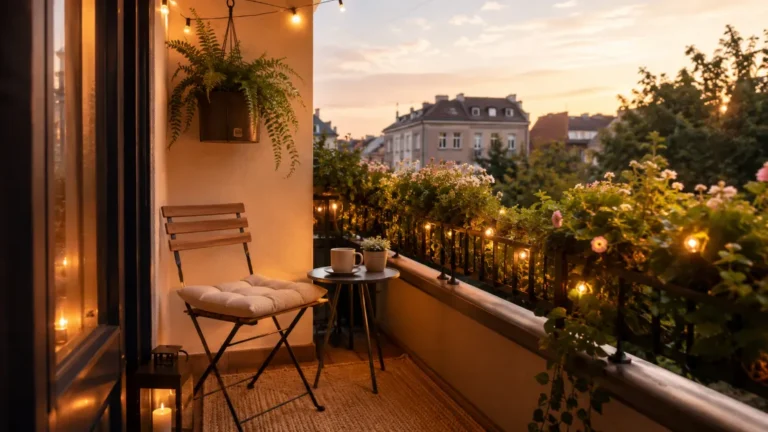
Aim for several smaller light sources at different heights instead of one big one. A table lamp, a floor lamp, a string of warm fairy lights, and a few candles will transform the same room your harsh ceiling fixture made feel clinical. Warm-toned bulbs in the 2700 to 3000 kelvin range read as cozy rather than cold, and a single well-placed mirror opposite a light source will bounce that glow around and visually double the sense of space. Ambiance is not decoration here; it is a genuine small-space tool.
Plan Food and Drinks for Small-Space Realities
Hosting in a small apartment means accepting that you do not have a sprawling dining table or a generous kitchen island, and then building your menu around that reality rather than fighting it. The most reliable approach is to abandon the formal seated-dinner model in favor of a self-serve setup. A buffet line on a console, a grazing board on the coffee table, or a few platters spread across nesting tables lets guests serve themselves and graze at their own pace, which removes the need to seat everyone in one place at one moment.
Equally important is timing. In a tiny kitchen, you cannot juggle multiple last-minute dishes while also greeting guests, so lean heavily on make-ahead food that needs little or no final cooking. Dishes you can prepare in the afternoon and simply set out keep your limited counter space free and keep you out of the kitchen and in the room with your guests. The less active cooking your menu demands once people arrive, the more your small apartment feels like a relaxed gathering rather than a crowded staging area.
- Choose a grazing board or buffet over a plated dinner to avoid needing a large table for everyone at once.
- Favor make-ahead and room-temperature dishes that free up your counters and oven during the gathering.
- Set up a self-serve drinks station away from the kitchen so guests pour their own and you avoid bottlenecks.
- Use vertical serving, like tiered stands, to fit more food into a smaller footprint.
Seating Solutions That Don’t Overwhelm
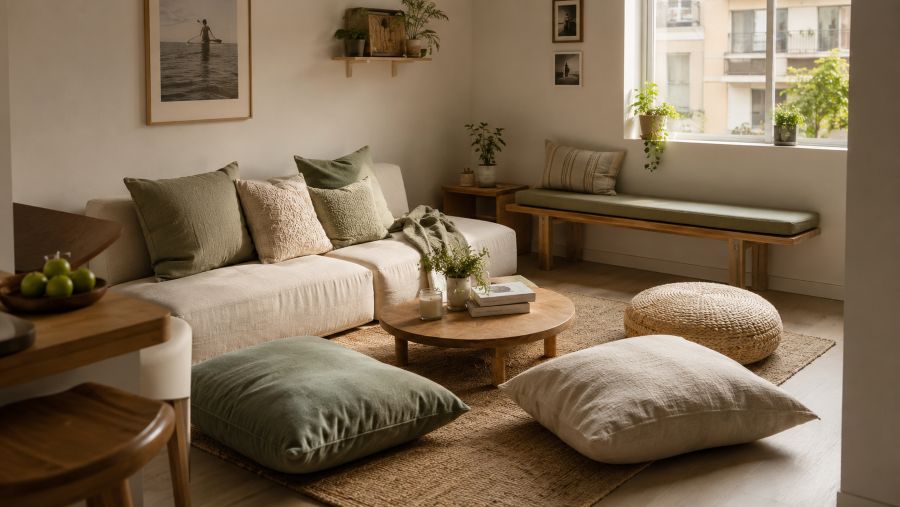
Seating is where small-apartment hosts most often overcorrect, dragging in every chair they own until the room becomes an obstacle course. More seats are not always better. A handful of comfortable, flexible perches usually beats a crowded ring of mismatched chairs that traps guests in place and blocks every walkway. Remember that not everyone needs a formal seat at the same time; people naturally drift between sitting, standing, and leaning over the course of an evening, and a small space works best when it allows that movement.
Lean on seating that can appear and disappear. Floor cushions and poufs add casual spots without permanent bulk and stack away afterward. Stackable or folding stools live in a corner until needed. A bench against one wall seats two or three in the footprint of a single armchair and tucks fully out of the way. The aim is enough comfortable options to keep everyone at ease, paired with the flexibility to clear the floor again the moment your gathering winds down, so your apartment returns to its everyday calm without a major reorganization.
Your Quick Pre-Guest Reset Checklist
When the doorbell is twenty minutes away, you do not need a deep clean, you need a fast, repeatable reset that makes the apartment feel composed and open. Keep this short routine handy and run through it before every gathering. Because you have already built in hidden storage and flexible furniture, this final sweep is quick rather than stressful, and it is the moment all your earlier planning pays off.
- Clear the floor and all visible surfaces, dropping stray items into your closed hosting storage.
- Set up the flexible furniture, unfolding tables and pulling out stools or cushions for the expected guest count.
- Switch off harsh overhead lights and turn on your warm lamps, candles, and string lights.
- Lay out the self-serve food and drinks station along the planned traffic lane, away from doorways.
- Open a window briefly to refresh the air, then add a subtle scent like a candle so the space feels cared for.
- Do one final walk from the front door inward, checking that every path is clear and nothing blocks the way.
FAQ: Hosting in a Small Apartment
How many guests can you realistically host in a small apartment?
For a seated dinner, a small apartment comfortably handles four to six people, while a standing or grazing-style gathering can stretch to eight or ten. The key is to match the format to your space: fewer people for sit-down meals, more for mingling layouts where guests move freely between zones rather than all crowding around a single table.
What is the best furniture for hosting in a small space?
Multi-functional pieces work best, including storage ottomans that double as seating, nesting tables, folding or extendable dining tables, and stackable stools. These items provide extra surfaces and seating when guests arrive, then fold away or tuck out of sight once the gathering ends, so your apartment stays calm and open during everyday life.
How do I make my small apartment feel bigger when guests come over?
Clear the floor of clutter, create open walking paths, use layered warm lighting instead of one bright overhead light, and add a mirror to bounce light around the room. Keeping surfaces tidy and sightlines open from the door through to the window makes the space read as larger and far more relaxed.
What food setup works best in a tiny apartment?
A self-serve buffet or grazing board is ideal because it removes the need for a large dining table and lets guests serve themselves at their own pace. Choose make-ahead dishes that do not require last-minute cooking, so your limited counter space stays clear and you can spend the evening with your guests rather than in the kitchen.
A Small Apartment Can Be the Best Place to Gather
Hosting in a small apartment is not about disguising your space as something bigger; it is about working with what you have so well that the size stops being the story. When the floor is clear, the furniture flexes, the storage hides the everyday mess, the lighting glows warm, and the food serves itself, a tiny room does something a sprawling one often cannot. It pulls everyone close, keeps the energy in one warm circle, and turns proximity into intimacy. Plan the flow, lean on flexible pieces, and trust that a full, cozy apartment is not a compromise but one of the most welcoming ways there is to gather.
ADeL A.A
ADeL A.A is a home décor and space optimization writer who believes every square foot matters. He spends his time researching, testing, and comparing smart storage ideas, multi-functional furniture, and practical layout solutions — always searching for the best ways to make compact homes feel bigger, brighter, and better organized.
View all articles by ADeL A.A →