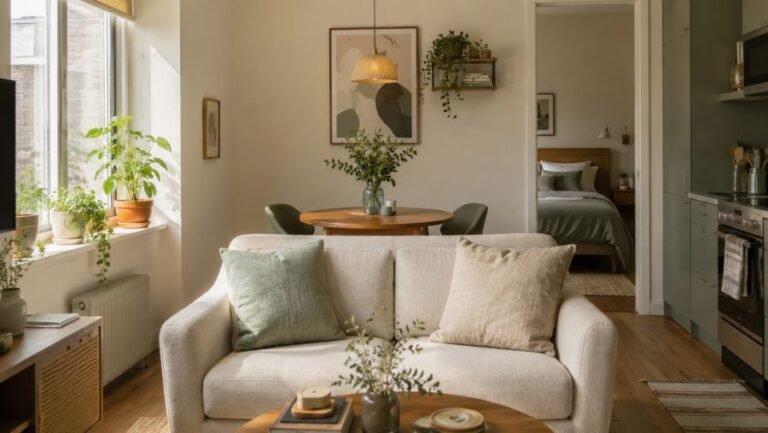
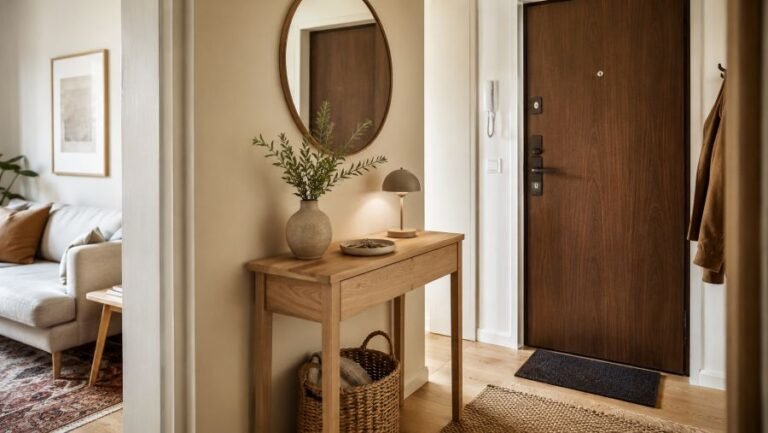
Small Apartment Setup Ideas for Night-Shift Workers

Living on a reversed clock is hard enough without your apartment working against you. For nurses, security staff, warehouse crews, hospitality workers, and anyone else who sleeps while the world is wide awake, a small apartment can either protect your rest or quietly sabotage it. The good news is that a thoughtful small apartment setup for night-shift workers does not require a bigger home or a costly renovation, only a smarter use of light, sound, and zoning.
In this guide, you will find practical, rental-friendly ideas to turn even the tightest studio into a daytime sleep sanctuary. We will cover how to build a true blackout zone, quiet a noisy unit without construction, divide a single room into rest and living areas, and layer in the small tech and routines that make a night-shift lifestyle genuinely sustainable.
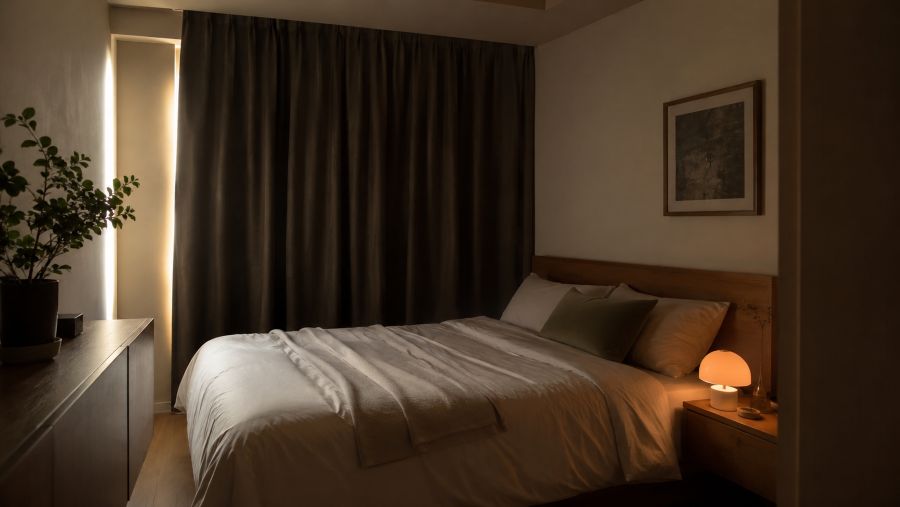
The core challenge for night-shift workers is simple to state and surprisingly difficult to solve: you need to recreate night during the day, inside a space that was never designed for it. Sunlight pours through thin curtains, neighbors vacuum and chat, delivery trucks rumble past, and the apartment heats up exactly when you are trying to wind down. A small footprint makes each of these problems more intense, because there is nowhere to retreat to. Yet that same compactness is also an advantage, since you only have a handful of square meters to optimize. Get those few meters right and your entire day changes.
Before we break down each upgrade, the short walkthrough below shows what a fully optimized night-shift apartment setup looks like in practice, from the blackout layer to the way the sleeping zone is positioned. Watch it first to see the principles in action, then use the sections that follow as your step-by-step checklist.
With that overview in mind, let’s start where the biggest difference is made, because the order in which you tackle these changes matters as much as the changes themselves.
Why a Night-Shift Lifestyle Demands a Smarter Small-Space Layout
When you sleep against the natural light-dark cycle, your body has to be convinced that it is genuinely nighttime. Daylight is the single strongest signal that tells your internal clock to stay alert, which is why even a thin beam of light slipping past a curtain can fragment your rest. Standard apartment setups assume people sleep when it is dark outside, so the default curtains, thin doors, and open layouts that work fine for a nine-to-five schedule become real obstacles for someone on nights.
There is also a layering problem unique to small homes. In a larger place, the bedroom sits far from the kitchen, the front door, and the street-facing windows, so daytime activity stays naturally separated from the sleeping zone. In a studio or compact one-bedroom, all of that life happens within a few steps of where you rest. That means your setup has to do double duty: it must support normal living during your waking hours and transform into a dark, quiet retreat the moment you need to sleep.
The Hidden Cost of a Mismatched Space
Poor daytime sleep is not just an inconvenience. Over time, fragmented rest chips away at concentration, mood, and physical health, and for night workers that fatigue compounds shift after shift. The encouraging part is that the fixes are almost entirely environmental. Unlike your schedule, which your job dictates, your apartment is something you can fully control. Investing a weekend and a modest budget into the right adjustments often delivers a bigger improvement in sleep quality than any supplement or app ever will.
Building a True Blackout Zone in a Small Bedroom
Light control is the highest-impact upgrade for any night-shift worker, so it deserves your attention first. The mistake most people make is relying on a single product, usually one set of blackout curtains, and then wondering why they still wake up early. Real darkness comes from layering, because light leaks in around the edges, through the fabric, and under the door, not just through the center of the window.
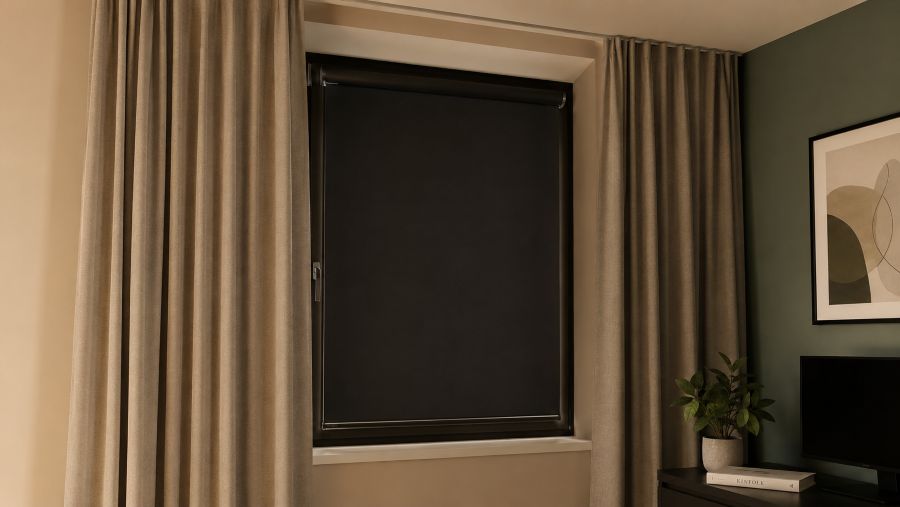
Start at the window itself with a blackout roller blind that fits inside the frame, sitting flush against the glass to block the bulk of incoming light. On top of that, add floor-length blackout curtains mounted on a ceiling-height track that extends six to ten inches beyond the window on each side. That overhang is what kills the bright halo that normally glows around the curtain edges. Where light still sneaks through, a magnetic or velcro panel along the sides creates a final seal, and a simple draft strip across the bottom handles the floor gap.
Layering Light Control Without Drilling Holes
Renters do not have to sacrifice darkness for their deposit. Tension rods, adhesive ceiling hooks rated for the weight, and removable velcro strips let you build the entire system without a single permanent hole. For an instant fix on a tight budget, blackout window film or even foam panels cut to size and pressed into the frame can transform a room in minutes. Here is a quick priority order for assembling your blackout stack:
- Inside-frame blackout blind: the workhorse layer that blocks the central window and sits closest to the glass.
- Ceiling-track blackout curtains: extend well past the window edges to erase the side glow.
- Edge and bottom seals: magnetic or velcro strips plus a draft guard close the remaining gaps.
- Door light blocker: a draft sweep under the bedroom door stops hallway light from creeping in.
- A backup sleep mask: a contoured, comfortable mask for the rare leaks you cannot reach.
Quieting a Small Apartment Without Renovation
Once the room is dark, sound becomes the next enemy of daytime sleep. You cannot stop your neighbors from living their lives at noon, but you can dramatically reduce how much of it reaches your ears. The strategy splits neatly into two halves: blocking the noise you can, and masking the noise you cannot. Together they handle the vast majority of disruptions a small apartment throws at you.
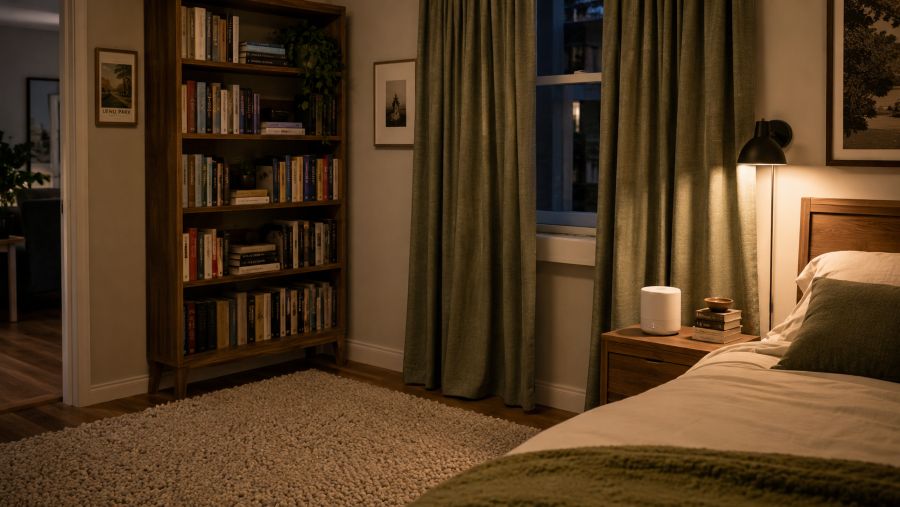
Blocking sound in a rental is mostly about sealing gaps and adding mass and softness. The bedroom door is the biggest leak, so fit it with weatherstripping around the frame and a sweep along the bottom. On shared walls, a tall bookshelf filled with books acts as a surprisingly effective sound barrier, while heavy fabric, whether curtains, tapestries, or upholstered headboards, absorbs the echoes that make a small room feel loud. Underfoot, a thick rug with a dense underlay stops sound from bouncing and softens footsteps from the unit above.
Masking covers what blocking cannot. A white-noise machine, a fan, or a quality app paired with comfortable earplugs creates a steady, predictable background hum that hides sudden noises like a slamming door or a passing siren. The trick is consistency: a constant gentle sound is far less disruptive than intermittent silence broken by random bangs. Many night workers find that masking alone, layered on top of basic blocking, is enough to sleep soundly through a busy afternoon.
Smart Small Space Tip: Position your bed against an interior wall shared with another quiet room, such as a closet or a neighbor’s hallway, rather than against the wall facing the street or the elevator shaft. In a small apartment, simply choosing the right wall for your headboard can cut perceived noise more than any gadget, and it costs nothing to rearrange.
Zoning a Studio for Day Sleep and Evening Living
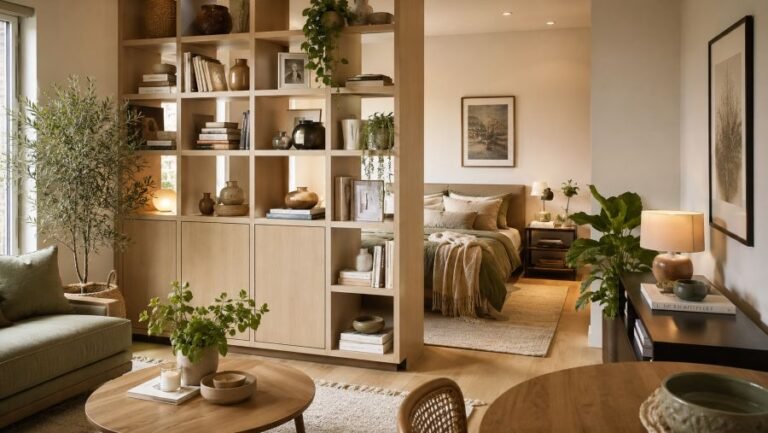
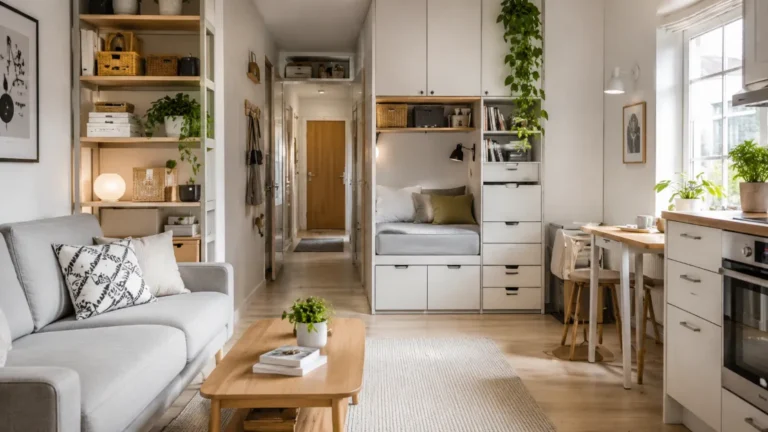
If you live in a studio, your single room has to be both a bedroom by day and a living space by night, which is the defining puzzle of the night-shift lifestyle in a small home. The solution is zoning: creating clear visual and functional boundaries so your brain associates one corner with rest and the rest of the space with activity. This separation matters psychologically as much as practically, because it helps you switch off when it is time to sleep.
The most effective dividers do triple duty. An open-backed bookshelf separates the bed from the living area while storing your belongings and letting a little air circulate. A freestanding folding screen offers instant flexibility, folding away when you want the room to feel open. For the strongest separation, a ceiling-mounted curtain track lets you draw a soft wall around the bed zone, turning your sleeping nook into a near-private alcove during the day. Pairing any of these with a dedicated rug under the bed reinforces the boundary the moment you step onto it.
| Zoning Solution | Best For | Privacy & Darkness | Rental-Friendly? |
|---|---|---|---|
| Open bookshelf divider | Studios needing storage | Visual only, lets light through | Yes, freestanding |
| Folding room screen | Flexible, changing layouts | Moderate, easily moved | Yes, fully portable |
| Ceiling curtain track | Maximum sleep separation | High, can use blackout fabric | Yes, with adhesive mounts |
| Loft or platform bed | Very tight footprints | Defines a distinct sleep zone | Depends on the unit |
Whichever divider you choose, place the bed in the darkest, quietest corner, ideally the one furthest from the front door and the kitchen. Reserve the brighter, busier side of the room for cooking, eating, and relaxing in your evening hours. This deliberate arrangement means that when you finally lie down after a shift, you are stepping into a space your mind already recognizes as off-limits to the noise and light of the day.
Climate, Air, and the Sleep-Friendly Micro-Environment
Daytime sleep faces an obstacle that night sleepers never deal with: the sun is actively heating your apartment while you try to rest. A room that drifts too warm makes deep sleep nearly impossible, so managing temperature is a genuine part of any serious night-shift setup. Closing your blinds and curtains before the sun reaches your windows keeps the heat out preemptively, which is far more effective than trying to cool a room that has already baked all afternoon.
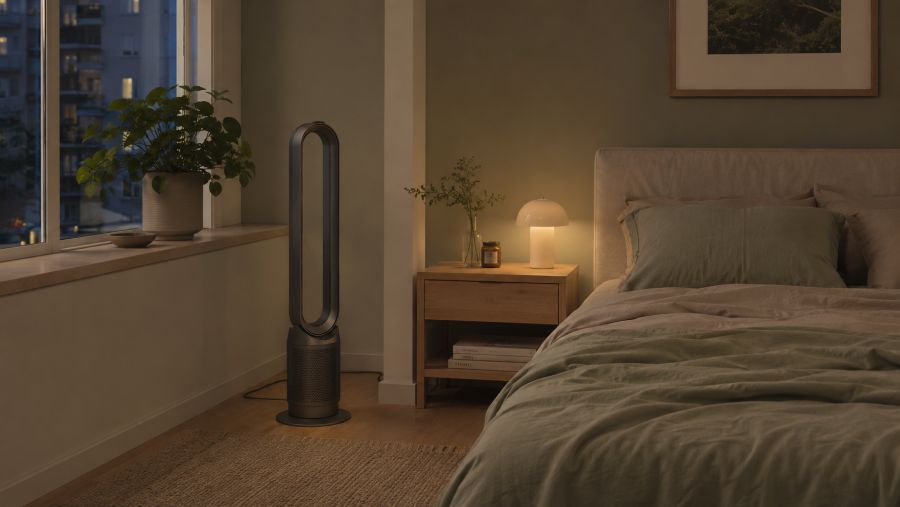
Aim for a cool room, somewhere between sixteen and nineteen degrees Celsius, and let breathable bedding do part of the work. Cotton and linen sheets wick away heat far better than synthetics, which trap warmth and make you restless. A quiet fan is one of the best investments a night worker can make, since it cools the air, keeps it moving, and doubles as a gentle source of masking noise. If your apartment runs stuffy, a small air purifier or even a single trailing plant can freshen the micro-environment around your bed and make the whole space feel more restful.
Smart Tech and Gentle Routines for the Reversed Clock
With the physical environment handled, a few well-chosen tools and habits tie everything together. Technology should serve your sleep rather than steal it, so the goal is to automate the boring transitions and remove decisions from your tired post-shift brain. The right setup makes winding down almost effortless, which is exactly what you want when you arrive home as everyone else is starting their day.
Smart bulbs that shift to a warm, dim amber tone signal your body that rest is coming, and a smart plug on a timer can power down distractions automatically. Place your charging station outside the sleep zone so the temptation to scroll never reaches the pillow. On the routine side, treat your pre-sleep ritual exactly as a night sleeper would treat bedtime: dim the lights an hour before, avoid bright screens, keep meals light, and follow the same wind-down sequence every day so your body learns the cue regardless of what the clock says.
Consistency is the quiet superpower of a sustainable night-shift lifestyle. The more reliably your apartment goes dark, quiet, and cool at the same point in your routine, the faster your body adapts to sleeping on demand. None of these touches are expensive on their own, but stacked together they transform a small apartment from a place you merely survive between shifts into a genuine refuge that restores you.
FAQ: Small Apartment Setup for Night-Shift Workers
How can I block out daylight in a small apartment without permanent renovations?
Layer your light control instead of relying on one solution. Combine a no-drill blackout roller blind clipped inside the window frame with floor-length blackout curtains mounted on a ceiling track that extends past the window edges. Seal the remaining gaps with a magnetic or velcro blackout panel and a draft-style edge strip. This rental-friendly stack removes the light leaks around the sides that usually keep night-shift workers awake.
What is the cheapest way to soundproof a small bedroom for daytime sleep?
The most cost-effective improvements target gaps and soft surfaces. Add a door sweep and weatherstripping to your bedroom door, hang heavy curtains over both windows and noisy walls, place a thick rug with an underlay on the floor, and fill a bookshelf along a shared wall. Pair these passive fixes with a white-noise machine to mask the sounds you cannot fully block, which delivers most of the benefit without any construction.
How do I separate a sleeping area from living space in a studio apartment?
Create a visual and acoustic boundary using a tall open bookshelf, a freestanding folding screen, or a ceiling-mounted curtain track that you can draw closed for sleep. Position the bed in the quietest, darkest corner away from the entry door and kitchen. A small rug under the bed zone reinforces the separation and signals to your brain that this corner is for rest, not activity.
What temperature is best for sleeping during the day after a night shift?
Most people sleep best in a cool room between sixteen and nineteen degrees Celsius, and this matters even more during daytime sleep when outdoor heat works against you. Use breathable cotton or linen bedding, run a quiet fan for both cooling and gentle background noise, and close blinds before the sun hits your windows to keep the room from heating up while you rest.
Bringing It All Together for Better Daytime Rest
A small apartment does not have to be an obstacle to thriving on the night shift. By controlling light with layered blackout solutions, taming noise through a mix of blocking and masking, zoning your space so rest and living stay distinct, and keeping the room cool and well ventilated, you can engineer a daytime sleep sanctuary out of even the most modest footprint. Add a few smart, gentle routines on top, and your home starts working with your schedule instead of against it. Start with the single change that will help you most, usually the blackout layer, and build from there. Your future, well-rested self will thank you for every adjustment you make today.
ADeL A.A
ADeL A.A is a home décor and space optimization writer who believes every square foot matters. He spends his time researching, testing, and comparing smart storage ideas, multi-functional furniture, and practical layout solutions — always searching for the best ways to make compact homes feel bigger, brighter, and better organized.
View all articles by ADeL A.A →