How to Make a Small Apartment Cat-Friendly Without Clutter

Sharing a small apartment with a cat can feel like a constant negotiation over space. The scratching post crowds the hallway, the litter box hides in the only free corner, and a scatter of toys somehow ends up under every piece of furniture. Yet the truth is reassuring: cats and small spaces are a surprisingly natural match, as long as you design with intention rather than simply adding more “stuff.”
This guide shows you how to make a small apartment cat-friendly without clutter, using vertical territory, hidden litter solutions, and multi-functional furniture that serves both you and your cat. By the end, your home will feel calmer, cleaner, and more spacious, while your cat enjoys the climbing, lounging, and observing it was built to do.
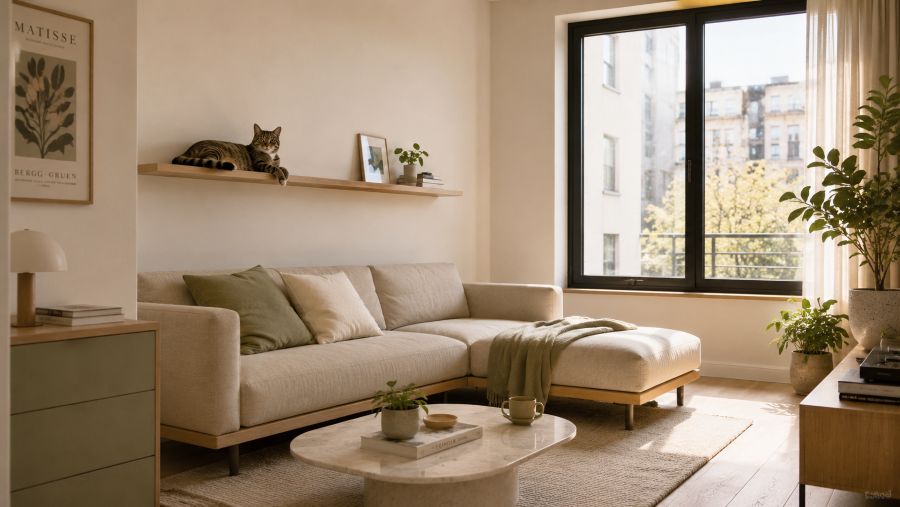
Before buying a single product, it helps to shift how you think about the space. A small apartment does not need to shrink your cat’s world; it needs to be reorganized so that the world expands upward and inward. With that mindset in place, every decision below becomes easier and far less cluttered.
If you prefer to see these ideas in action before you read on, the short walkthrough below covers the core principles, from going vertical to hiding the litter box, in just over a minute.
With the visual overview in mind, let’s break down each strategy in detail so you can apply it to your own space.
Why Small Apartments and Cats Work Better Than You Think
Cats are not impressed by square footage. In the wild, a cat’s sense of a “good territory” is defined by safe vantage points, escape routes, hiding spots, and a reliable place to rest, not by how many open floor meters surround it. This is excellent news for anyone living in a compact home, because it means you can deliver a rich feline environment without sprawling cat furniture taking over your living room.
In fact, smaller spaces often make cats feel more secure. A tightly defined territory is easier for a cat to patrol, scent-mark, and understand. The key is to give your cat the three things it truly values: height to survey the room, soft places to retreat, and a predictable daily routine. When those needs are met, a studio or one-bedroom apartment can feel as enriching to a cat as a much larger house.
The Three Needs Behind Every Cat-Friendly Design
Almost every clever small-space cat idea you will read about traces back to one of three core needs. Keeping these in mind prevents impulse purchases that only add clutter:
- Vertical territory: Cats feel safest when they can climb and observe from above, so building upward instantly multiplies usable space.
- Privacy and retreat: A quiet hideaway lets a cat decompress, which reduces stress-driven behaviors that often create mess.
- Stimulation and routine: Predictable play, feeding, and resting spots keep a cat content and discourage destructive boredom.
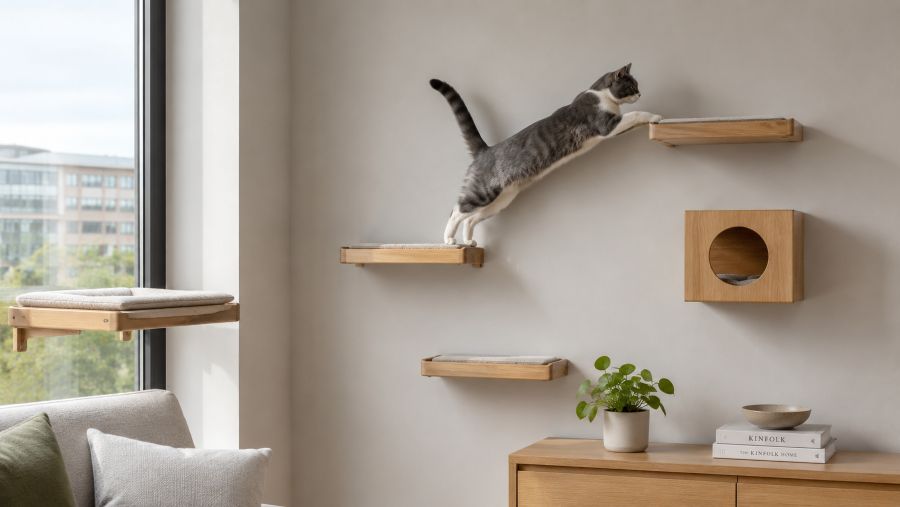
Go Vertical: The Golden Rule of Cat-Friendly Small Spaces
If you remember only one principle from this guide, let it be this: when floor space is limited, build upward. Vertical territory is the single most effective way to make a small apartment cat-friendly without clutter, because it adds entire layers of usable space without consuming any of your walking room.
Wall-mounted shelves, floating steps, and cat bridges transform a blank wall into a climbing route and lookout tower. Cats instinctively gravitate toward high perches where they can watch the room below, so a few well-placed shelves often replace a bulky floor-standing cat tree entirely. The result is a clean, gallery-like wall that happens to double as feline infrastructure.
Smart Ways to Use the Walls
Vertical solutions only work when they feel like part of your décor rather than an obvious pet accessory. The following approaches keep the look intentional and the floor clear:
- Arrange floating shelves in a gentle staircase pattern so your cat can climb from a low entry point up to a high resting shelf.
- Place a padded perch beside a window so your cat gets sunlight, fresh air, and hours of “cat TV” watching the world outside.
- Choose shelves in wood tones or colors that match your existing furniture, so the climbing route blends seamlessly into the room.
- Always include a clear exit route, because cats prefer paths they can navigate in both directions without feeling trapped.
Because these elements live on the wall, they free up precious floor space and instantly reduce the visual clutter that bulky pet furniture tends to create. A vertical system also keeps a curious cat busy, which in turn means fewer knocked-over objects and less mess to tidy at the end of the day.
Multi-Functional Furniture That Hides the “Cat Stuff”
The fastest route to a cluttered small apartment is owning separate, single-purpose items for every human and feline need. The smarter approach is to choose furniture that quietly serves double duty, hiding your cat’s essentials inside pieces you would own anyway.
Consider an ottoman that opens to store toys and grooming supplies, a side table designed with a built-in cat cave underneath, or a bench with a cushioned top your cat naps on while shoes and blankets live in the storage below. Each of these pieces earns its footprint twice, which is exactly the kind of efficiency a compact home demands.
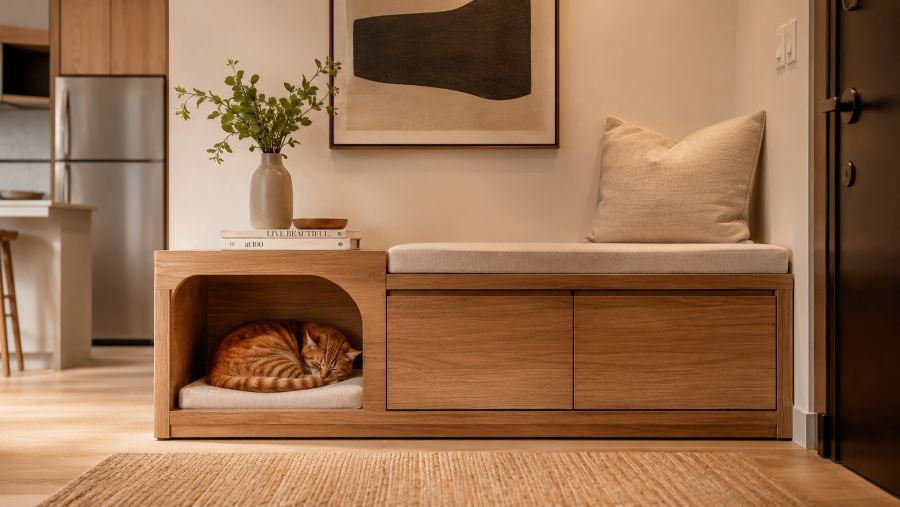
Smart Small Space Tip: Before buying any new cat product, ask one question: “Can something I already own do this job, or can this item do two jobs at once?” This single filter prevents most small-apartment clutter before it ever enters your home.
Scratchers and Beds Without the Bulk
Scratching is non-negotiable for cats, but a hulking carpeted scratching post does not have to dominate your space. Slim wall-mounted scratchers, vertical sisal panels, and door-hanging scratchers protect your furniture while taking up almost no room. Likewise, a soft bed tucked into an existing shelf, basket, or window nook removes the need for yet another floor-standing item. The goal is always the same: meet the need, lose the bulk.
Taming the Litter Box in a Tiny Footprint
For most small-apartment cat owners, the litter box is the single biggest clutter and odor challenge. Fortunately, a little planning solves both problems at once. The first decision is location: cats want a quiet, low-traffic spot, separated from where they eat and drink, and always accessible without a closed door blocking the way.
In a compact home, the best candidates are a ventilated bathroom corner, a section of a closet with the door left ajar or fitted with a cat flap, or a dedicated litter-box enclosure that looks like a cabinet or side table. These furniture-style enclosures are especially valuable in small apartments because they conceal the box completely while giving you a usable surface on top.
Odor control matters even more when square footage is limited, since smells travel quickly in a small space. Scooping daily, using a high-quality clumping litter, and keeping a small covered bin nearby for waste will do more for your apartment’s freshness than any air freshener. A quiet exhaust fan or a cracked window in the litter area helps the space stay neutral throughout the day.
Choosing Cat Gear That Doesn’t Scream “Pet Store”
One reason cat supplies create so much visual clutter is that many products are loud, plastic, and brightly colored. When you deliberately choose gear that matches your home’s palette and materials, the same items practically disappear into the décor. This is one of the easiest small space cat ideas to apply, and it instantly elevates how tidy a room feels.
To make smart choices, compare your options not only by function but by how well they fit a compact, design-conscious home. The table below summarizes the trade-offs of common cat solutions for small apartments.
| Solution | Space Impact | Best For |
|---|---|---|
| Wall-mounted shelves & perches | Zero floor space; uses vertical walls | Climbing, observing, and replacing a floor cat tree |
| Litter-box cabinet enclosure | Same footprint as a small side table | Hiding the box while adding a usable surface |
| Storage ottoman or bench | Replaces existing furniture; no added items | Concealing toys, supplies, and a resting spot |
| Slim wall or door scratcher | Minimal; mounts flat against a surface | Protecting furniture without a bulky post |
| Window hammock perch | Attaches to glass; uses no floor area | Sunbathing and long hours of outdoor watching |
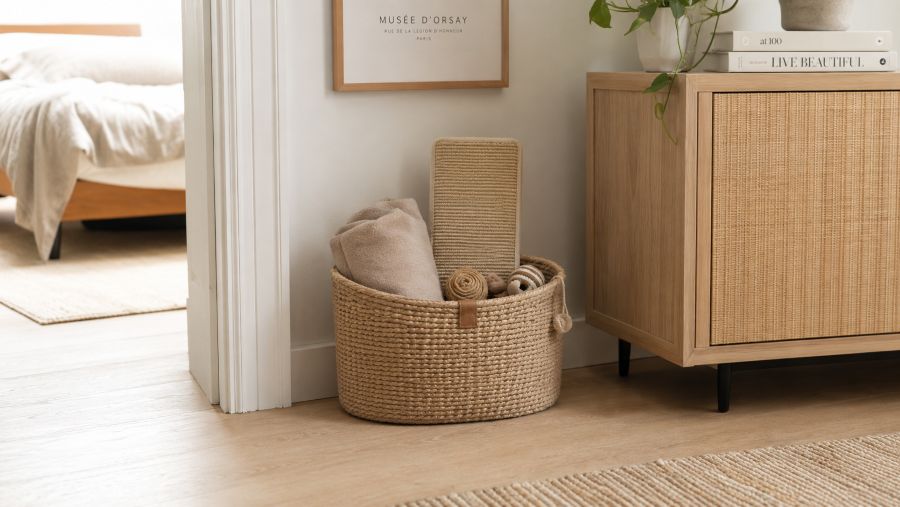
Notice how every option above either uses space you are already not using, such as walls and windows, or replaces an item you would own anyway. That dual logic is the heart of keeping a cat-friendly small apartment free of clutter.
Daily Habits That Keep Clutter Away for Good
Even the best furniture cannot keep a home tidy on its own; small daily habits do the real work. The most powerful one is rotation. Instead of leaving every toy out at once, keep most of them stored and rotate just two or three at a time. Your cat enjoys the novelty of “new” toys each week, and your floor stays clear of a permanent toy pile.
It also helps to establish one designated “cat zone” where supplies live, rather than letting items drift into every room. When the scratcher, the toy basket, and the feeding station share a defined area, clutter has nowhere to spread. A two-minute evening reset, returning toys to their basket and giving surfaces a quick wipe, prevents small messes from snowballing into a chaotic weekend cleanup.
Feeding habits deserve the same intentional approach. In a small apartment, a sprawling feeding station with multiple bowls and bags of food on the counter quickly becomes an eyesore. Instead, choose a compact feeding mat that defines the area, store food in a single sealed container tucked inside a cabinet, and elevate bowls on a small raised stand that is easy to wipe clean. Consider feeding on a consistent schedule rather than free-feeding, which keeps the space tidy and gives your cat a reassuring routine to anchor its day.
Finally, build enrichment into your routine through short, regular play sessions. A cat that gets ten focused minutes of chasing and pouncing twice a day is far less likely to create mischief out of boredom. In a small space, a tired and contented cat is your best ally in keeping the home both peaceful and clutter-free.
FAQ: Cat-Friendly Small Apartments
Can you keep a cat happy in a small apartment?
Yes. Cats care more about vertical territory, hiding spots, and routine than raw square footage. A small apartment with wall shelves, a window perch, daily play, and a clean litter area can be more enriching than a large but empty home.
Where should I put a litter box in a tiny apartment?
Choose a quiet, low-traffic corner away from food and water, such as a bathroom nook, a ventilated closet, or inside a litter-box cabinet that doubles as furniture. Keep it accessible at all times and scoop daily to control odor in a small space.
How do I stop cat supplies from cluttering a small space?
Use multi-functional furniture that hides cat gear, store toys in a single closed basket, mount scratchers and shelves on walls to free the floor, and rotate toys instead of leaving them all out. One designated cat zone keeps supplies from spreading.
Are wall-mounted cat shelves safe for apartments?
When anchored into studs or with proper heavy-duty wall anchors, cat shelves are safe and reliable. Add non-slip pads, keep spacing comfortable for jumping, and include a low entry and exit point so older or heavier cats can climb without strain.
A Calm Home for You and Your Cat
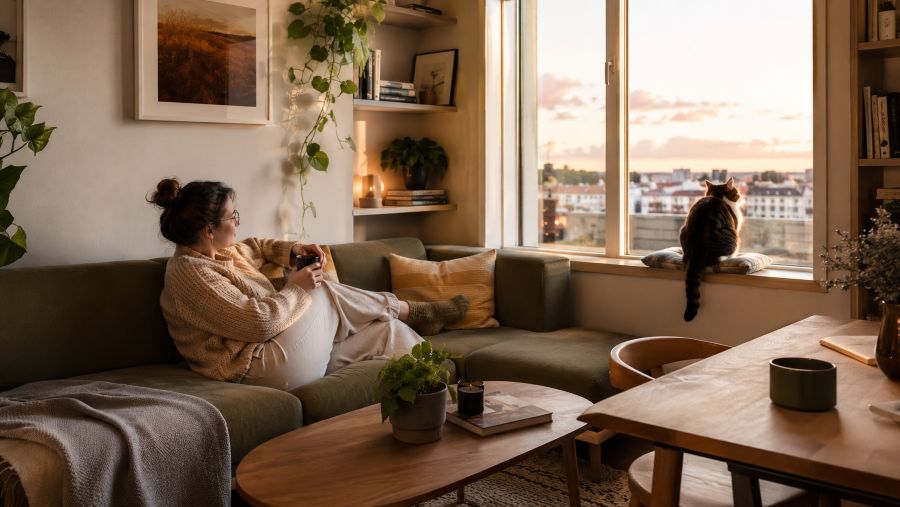
Making a small apartment cat-friendly without clutter is not about choosing between your style and your cat’s happiness; it is about designing a space where both can thrive. By building upward, hiding supplies inside furniture you already need, managing the litter box with intention, and leaning on a few simple daily habits, you create a home that feels open and calm rather than crowded.
Start with one change, perhaps a single floating shelf or a litter-box enclosure, and notice how quickly the room begins to feel lighter. As each small-space cat idea falls into place, you will end up with an apartment that works beautifully for your cat and feels like a true sanctuary for you. That balance, more than any product, is what a cat-friendly small space is really about.
ADeL A.A
ADeL A.A is a home décor and space optimization writer who believes every square foot matters. He spends his time researching, testing, and comparing smart storage ideas, multi-functional furniture, and practical layout solutions — always searching for the best ways to make compact homes feel bigger, brighter, and better organized.
View all articles by ADeL A.A →