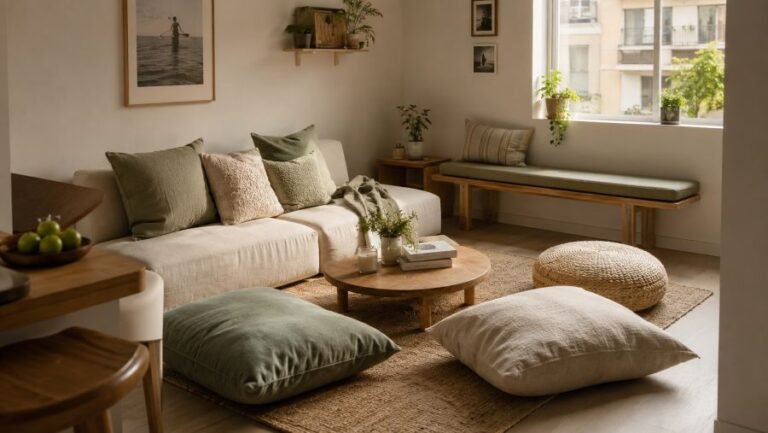
How to Set Up a Productive Home Office Corner in a Studio Apartment

Living in a studio does not mean giving up a real place to work. With the right layout, a single corner can become a focused, comfortable home office that keeps your job and your living space pleasantly separate, even when every square meter counts.
This guide walks you through choosing the spot, selecting space-smart furniture, lighting it properly, organizing storage upward, and building daily habits that keep your studio apartment office productive long after move-in day.
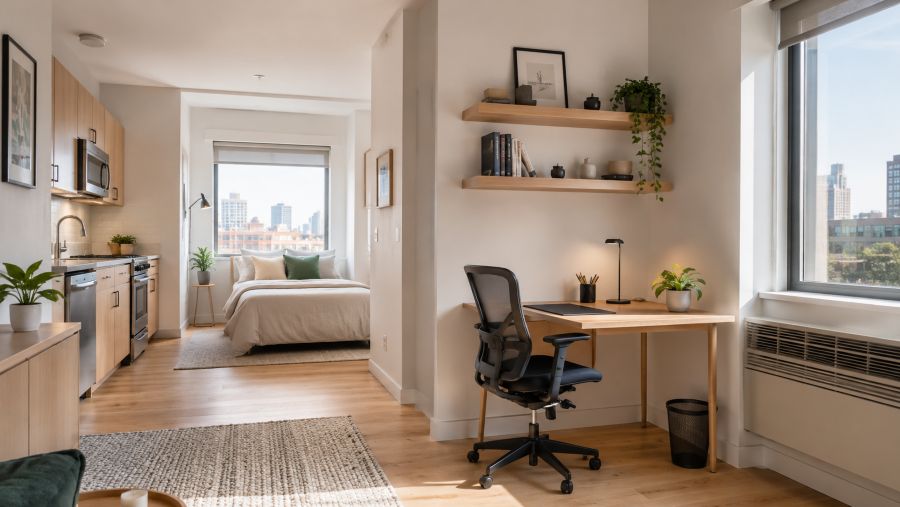
Before diving into the written walkthrough, the video above shows the full studio apartment home office corner setup in action, from choosing the spot to the finished workspace. Below, we break down every step in detail so you can adapt the ideas to your own small space.
When your bed, kitchen, and living room all share the same four walls, the line between “off” and “on” blurs quickly. Working from the couch or the edge of the bed feels convenient at first, but it slowly trains your brain to associate every surface with work, which makes genuine rest harder to reach. A dedicated home office corner solves this by giving your workday a clear physical home.
Why a Dedicated Office Corner Matters in a Studio
Even a corner measuring just one square meter creates a psychological anchor. The moment you sit down at that desk, your mind shifts into work mode, and when you stand up and step away, the workday symbolically ends. This separation is one of the most powerful productivity tools available to anyone living in a compact space, and it costs almost nothing to set up.
Beyond focus, a defined corner protects your posture and your equipment. Instead of hunching over a laptop on soft furniture, you get a proper surface, a supportive chair, and a place where cables, chargers, and notebooks live permanently. That consistency removes the daily friction of setting up and packing away, which is often the hidden reason small-space workers feel scattered.
Smart Small Space Tip: Before buying anything, spend two days noticing where natural light falls and where you naturally drift to work. The best corner is often the one your habits already favor.
Choosing the Right Spot for Your Office Corner
The ideal location balances three factors: light, traffic, and distraction. Start by walking your studio at the times you usually work. A spot near a window gives you daylight that boosts mood and reduces eye strain, but be careful about screen glare and afternoon heat that can make a corner uncomfortable by mid-afternoon.
Next, think about foot traffic. A corner tucked away from the kitchen and entry door keeps interruptions low, especially if you share your studio with a partner or roommate. Corners behind a sofa, beside a bookshelf, or in an unused nook near a closet tend to work beautifully because they feel tucked-away without sacrificing access.
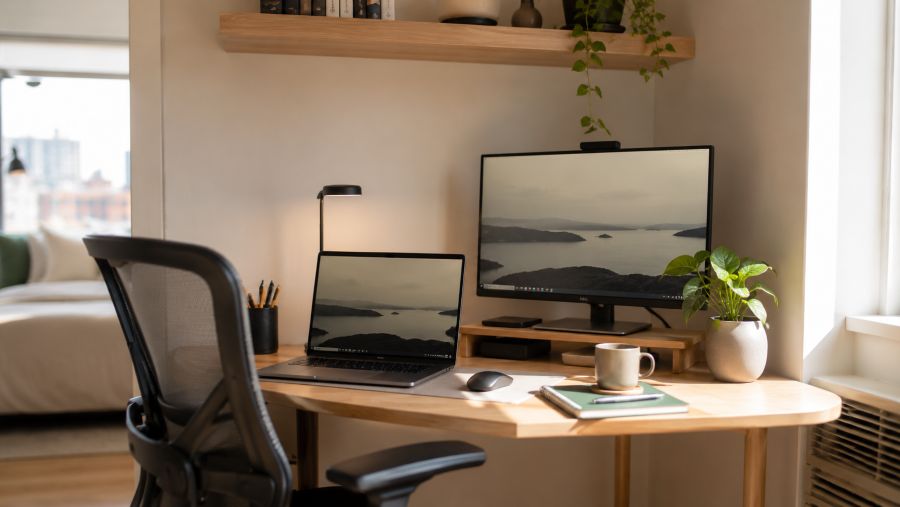
Make the Most of “Dead” Space
Studios are full of overlooked zones: the wall beside a window, the area under a loft bed, the gap between a wardrobe and a wall, or the space behind a door. These spots rarely serve a purpose, which makes them perfect candidates for a slim desk. A corner desk in particular can transform two short walls into a surprisingly generous work surface while leaving the rest of the room open.
If floor space is truly tight, look up. A wall-mounted folding desk drops down when you need it and tucks flat against the wall when you do not, reclaiming the footprint entirely for the rest of your day.
Selecting Space-Smart Furniture
Furniture is where studio offices succeed or fail. The goal is to choose pieces that earn their footprint by being slim, multi-functional, or both. A desk that is too deep eats into walking space, while a chair that is too bulky dominates the room visually and physically.
For the desk surface, aim for a depth of around 45 to 55 centimeters. That is enough for a laptop, an external monitor, and a notebook, without claiming the floor a fuller desk would. Wall-mounted and floating desks free up the area beneath them, which makes the corner feel lighter and easier to clean. If you need storage, a desk with a single slim drawer keeps essentials within reach without adding bulk.
Smart Small Space Tip: Your eyes should meet the top third of your screen, your forearms should rest roughly parallel to the floor, and your feet should sit flat. A laptop riser plus an external keyboard fixes most posture problems for the price of a nice dinner.
The chair deserves serious thought. A folding chair saves space but punishes your back during long sessions. A compact ergonomic chair on casters is a better long-term choice; it rolls out of the way when not in use and supports you properly when it counts. Some studio dwellers prefer a stool or a saddle seat that tucks fully under the desk, leaving the corner visually clear.
Compare Common Desk Options
| Desk Type | Footprint | Best For | Trade-Off |
|---|---|---|---|
| Corner desk | Uses two short walls | Maximizing surface in a true corner | Fixed location, harder to move |
| Floating wall desk | Zero floor footprint | Open, airy feel and easy cleaning | Needs solid wall anchors |
| Fold-down desk | Disappears when closed | Ultra-tight studios, occasional work | Limited surface, must clear daily |
| Ladder / leaning desk | Slim with shelves above | Combining desk and storage | Less deep work surface |
| Standing desk converter | Sits on existing surface | Posture variety in a fixed spot | Occupies vertical space when raised |
Lighting Your Workspace for Focus and Comfort
Good lighting is the difference between a corner you enjoy and one you avoid. Aim for layered light: daylight when possible, a focused task lamp for detail work, and gentle ambient light so your screen is not the only bright object in a dim room. Staring at a glowing monitor surrounded by darkness strains your eyes and tires you out faster.
Position your desk so daylight comes from the side rather than directly in front of or behind your screen. Light in front creates glare; light behind throws your face into shadow on video calls. A side angle gives you brightness without the distractions.
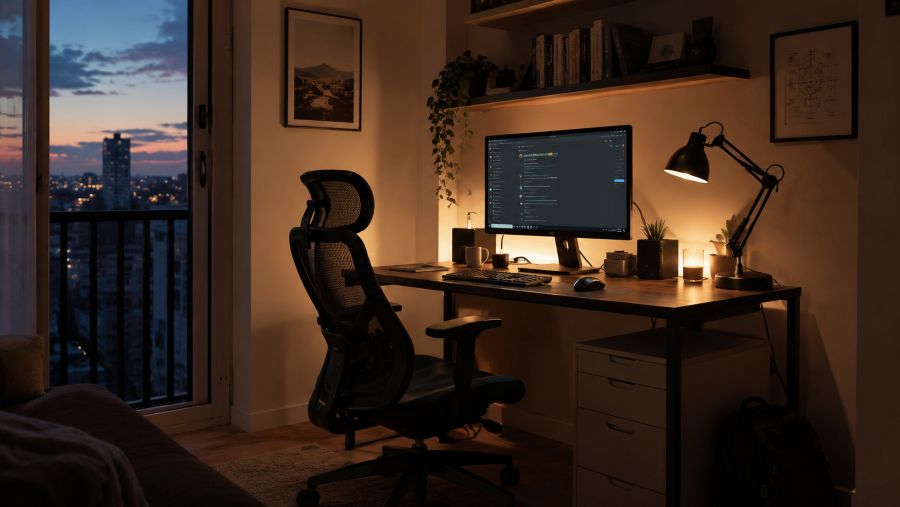
For task lighting, choose an adjustable lamp with a warm-to-neutral color temperature around 3500 to 4500 Kelvin. This range stays alert without feeling clinical. If your corner doubles as an evening relaxation spot, a smart bulb that shifts to warmer tones after work helps your body wind down and reinforces the boundary between working and resting.
Vertical Storage and Organization Solutions
In a studio, the floor is precious, so storage should climb the walls. Floating shelves above the desk hold books, supplies, and a few decorative items without consuming any footprint. A pegboard is even more flexible; it lets you hang headphones, cables, small baskets, and a calendar, then rearrange them whenever your needs change.
- Floating shelves: Keep references and supplies off the desk surface while staying within arm’s reach.
- Pegboard or grid panel: Endlessly reconfigurable storage for tools, chargers, and stationery.
- Drawer organizers: Divide a single slim drawer into zones so nothing turns into a tangle.
- Cable trays under the desk: Lift wires off the floor for a cleaner look and easier vacuuming.
- Rolling cart: A two-tier cart parks beside the desk and rolls into a closet when you need the floor back.
The guiding principle is simple: everything you touch daily should live within one arm’s reach, and everything else should move up or out. When your corner holds only what you actually use, it stays clear, and a clear desk is far easier to sit down at each morning.
Creating Visual Separation Between Work and Living
Even the best corner needs a sense of boundary, otherwise the office quietly spreads across the whole studio. Zoning tools draw that line without building a wall. A slim bookshelf placed perpendicular to the wall, an open shelving unit, or a folding screen all signal “this is the office” while keeping the room airy.
Color and texture do quiet work here too. Painting the wall behind your desk a slightly different shade, or hanging a single framed print, tells your brain it has entered a different zone. A small rug under the desk and chair does the same on the floor, defining the area and softening the sound of casters rolling on hard surfaces.
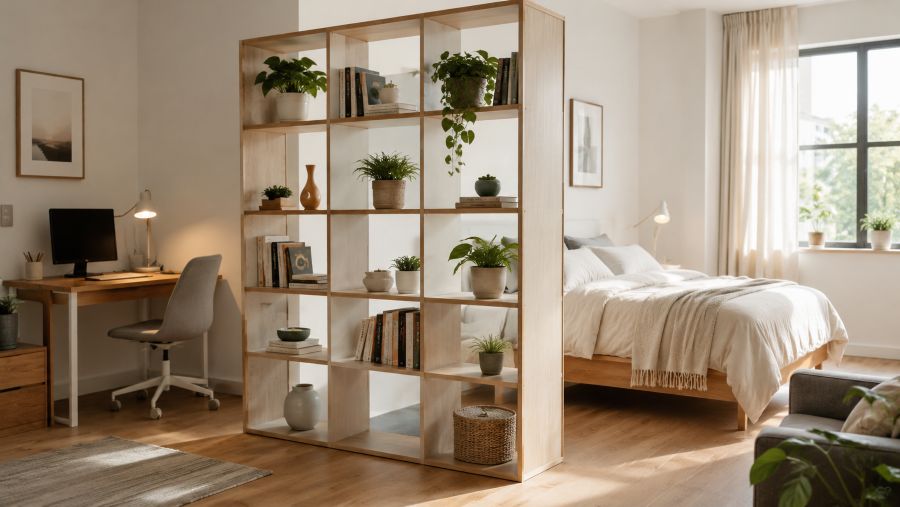
Smart Small Space Tip: Sound matters as much as sight. Soft surfaces like a rug, a fabric chair, or a wall hanging absorb echo and keep your video calls crisp in an otherwise hard-surfaced studio.
Tech Setup and Cable Management
Nothing makes a small office feel cluttered faster than a nest of cables. Start by mounting a power strip to the underside of the desk or the wall so cords route upward instead of sprawling across the floor. Use adhesive clips to guide each cable along a clean path, and label both ends of anything you unplug often.
Wireless peripherals reduce clutter dramatically. A wireless keyboard, mouse, and a single charging pad can eliminate half the wires on a typical desk. If you rely on a laptop, a docking hub lets you connect a monitor, power, and accessories through one cable, so packing up for a coffee-shop session takes seconds.
Think vertically with your monitor too. A monitor arm clamps to the desk edge and floats the screen above the surface, freeing the space a traditional stand would occupy and letting you tuck the keyboard underneath when you are done for the day.
Adding Personality Without Clutter
A productive corner does not have to feel sterile. The trick is to add character intentionally rather than letting objects accumulate. Choose two or three meaningful items: a small plant that thrives in your light conditions, one piece of art that you genuinely enjoy looking at, and perhaps a textured desk mat that ties the palette together.
Greenery is especially worthwhile. A compact plant like a pothos, snake plant, or small succulent adds life, softens the hard lines of tech, and gives your eyes something restful to rest on between tasks. Keep it modest in scale so it complements the desk rather than crowding it.
Stick to a tight color story that echoes the rest of your studio. When the office corner shares tones with your living space, it reads as a natural extension of the room rather than a bolted-on workstation, which keeps the whole studio feeling calm and cohesive.
Daily Habits That Keep Your Corner Productive
A well-designed corner only stays productive if your routines support it. The most useful habit is a daily reset: take two minutes at the end of each workday to clear the surface, close the laptop, and tuck the chair in. This small ritual signals that work is finished and presents you with a fresh, inviting space the next morning.
Define clear start and stop times, and physically leave the corner during breaks. Stepping away to stretch, refill your water, or look out the window protects both your focus and your relationship with the rest of your studio. The corner stays “the office” precisely because you do not linger there off the clock.
- Two-minute reset: Clear and tidy the desk at day’s end so mornings start clean.
- Fixed hours: Begin and end at consistent times to train your focus.
- Break elsewhere: Leave the corner during breaks to keep work and rest distinct.
- Weekly edit: Once a week, remove anything that has crept onto the desk and does not belong.
Common Mistakes to Avoid
The most frequent error is choosing furniture that is too large for the space, which makes the whole studio feel cramped and the corner unwelcoming. When in doubt, size down; a slim desk you actually want to sit at beats a grand one you have to squeeze past.
Another common pitfall is ignoring lighting until it becomes a problem. People often set up their corner during the day and discover only later that it is gloomy and glare-prone by evening. Plan for both daylight and after-dark conditions from the start.
Finally, resist the urge to let the office bleed into the bedroom or living zone. Without a visual boundary, the workspace expands, and the sense of rest that makes a studio feel like home slowly disappears. A single shelf, screen, or rug is usually enough to hold the line.
FAQ: Home Office Corner in a Studio Apartment
How much space do I really need for a home office corner in a studio?
As little as one square meter can work. A desk around 100 by 50 centimeters with a compact chair fits comfortably in most studio corners, and a fold-down or floating desk can shrink the footprint even further when you are not working.
What is the best desk type for a very small studio apartment?
A floating wall-mounted desk or a fold-down desk usually wins, because both free up floor space when not in use. Corner desks are ideal if you have a true unused corner, since they turn two short walls into a generous surface.
How do I separate my work area from my sleeping area without a wall?
Use a slim bookshelf, an open shelving unit, or a folding screen placed perpendicular to the wall. Adding a small rug and a different wall color behind the desk reinforces the boundary visually without closing off the room.
How can I keep cables tidy in a small workspace?
Mount a power strip under the desk, route cords upward with adhesive clips, and switch to wireless peripherals where possible. A docking hub for a laptop reduces everything to a single cable, keeping the surface clean.
Will a home office corner make my studio feel smaller?
Not if you keep furniture slim, use vertical storage, and tie the corner into your existing color palette. Floating desks and clear surfaces actually make the space feel more open and intentional rather than crowded.
Bringing Your Studio Office Corner Together
A productive home office corner in a studio apartment is less about square footage and more about intention. Choose a spot your daylight and habits already favor, furnish it with slim and multi-functional pieces, light it in layers, send your storage up the walls, and draw a soft boundary between work and rest. Add a touch of greenery and a single piece of art, then protect the space with a two-minute daily reset. Do that, and your corner will keep earning its place: focused enough to get real work done, and quiet enough to step away from when the day is over.
ADeL A.A
ADeL A.A is a home décor and space optimization writer who believes every square foot matters. He spends his time researching, testing, and comparing smart storage ideas, multi-functional furniture, and practical layout solutions — always searching for the best ways to make compact homes feel bigger, brighter, and better organized.
View all articles by ADeL A.A →