How to Improve Air Quality in a Small Apartment

When you live in a compact home, every square foot does double duty — and so does the air you breathe. In a small apartment, cooking fumes, dust, off-gassing furniture, and everyday moisture have nowhere to disperse, so pollutants build up faster and linger longer than they would in a larger house. The good news is that you do not need a renovation or a big budget to fix it.
This guide walks you through practical, space-friendly ways to improve air quality in a small apartment, from smarter ventilation and the right air purifier to air-purifying plants and simple daily habits. Each strategy is chosen specifically for tight rooms, low light, and renters who cannot make permanent changes — so you can breathe cleaner air starting today.
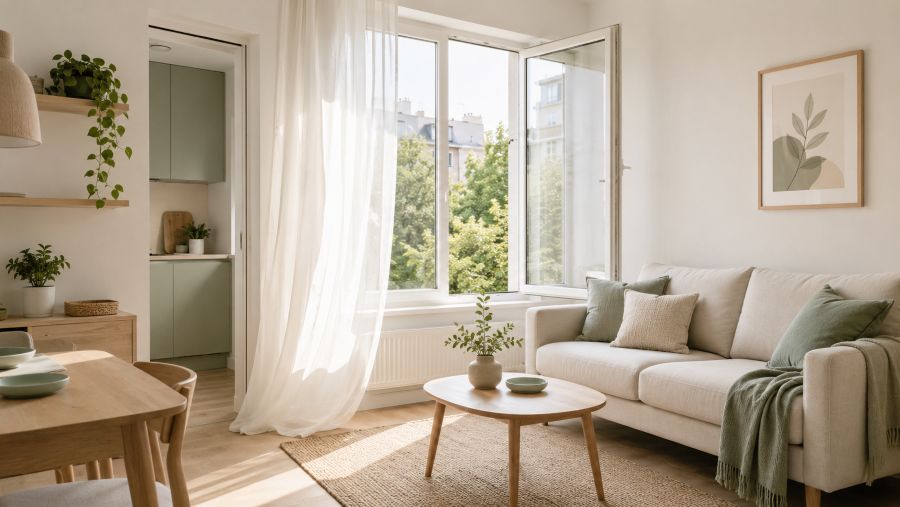
Air quality is one of those invisible details that quietly shapes how you feel at home. Stale, stuffy air can leave you tired, congested, and unable to concentrate, while fresh, well-circulated air supports better sleep and clearer thinking. Because small apartments concentrate everything — people, pets, cooking, and clutter — into a tight footprint, they reward a thoughtful approach far more than larger spaces do. Let us start with why this matters so much in a small home.
Before we dive into the details, here is a quick visual overview of the most effective ways to freshen the air in a compact home. The short video below summarizes the core strategies — ventilation, plants, purifiers, and humidity control — so you can see how they work together before reading each one in depth.
With that overview in mind, let us break down each strategy so you can apply them to your own space step by step.
Why Air Quality Matters More in a Small Apartment
The science here is simple: the less air volume a room contains, the faster any pollutant raises its concentration. In a studio or one-bedroom, a single pan of seared food or a freshly opened bottle of cleaning spray can noticeably change the air in minutes. Add in poor cross-ventilation — common in apartments with windows on only one wall — and those particles and gases have very little room to escape. Over time, this trapped air can affect everything from your allergies to your energy levels.
There is also a comfort dimension that small-space dwellers feel acutely. When your living room, kitchen, and sometimes your bedroom share the same volume of air, odors travel instantly and humidity from cooking or showering spreads throughout the apartment. Improving air quality is therefore not just a health upgrade — it directly improves how pleasant and restful your home feels every single day.
Common Indoor Air Pollutants in Apartments
Before you can clean your air, it helps to know what you are actually dealing with. Most indoor air problems in small apartments come from a handful of everyday sources:
- Cooking particles and gases: Frying, searing, and gas stoves release fine particulate matter and nitrogen dioxide directly into a tight kitchen.
- Volatile organic compounds (VOCs): New furniture, paint, flooring, candles, and many cleaning and beauty products slowly off-gas chemicals into the air.
- Dust and pet dander: Carpets, upholstery, and soft furnishings trap allergens that get stirred up with every movement in a small room.
- Excess humidity and mold: Showers, cooking, and drying laundry indoors raise moisture levels, encouraging mold and dust mites.
- Outdoor pollution leaking in: Traffic, smoke, and pollen enter through gaps, windows, and ventilation, especially in city-center apartments.
Ventilation Strategies for Tight Spaces
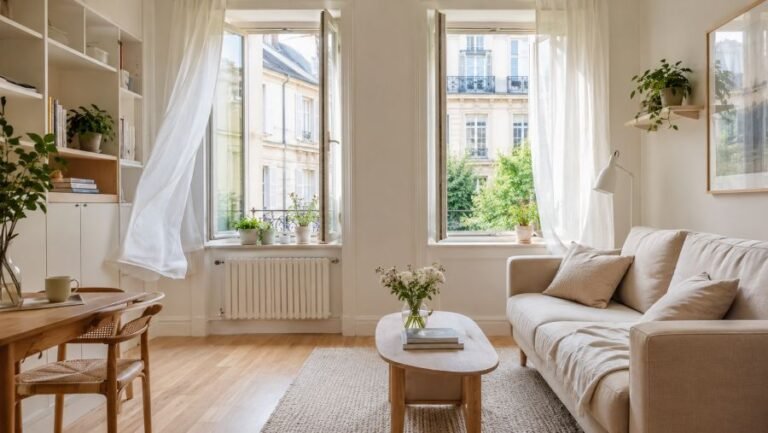
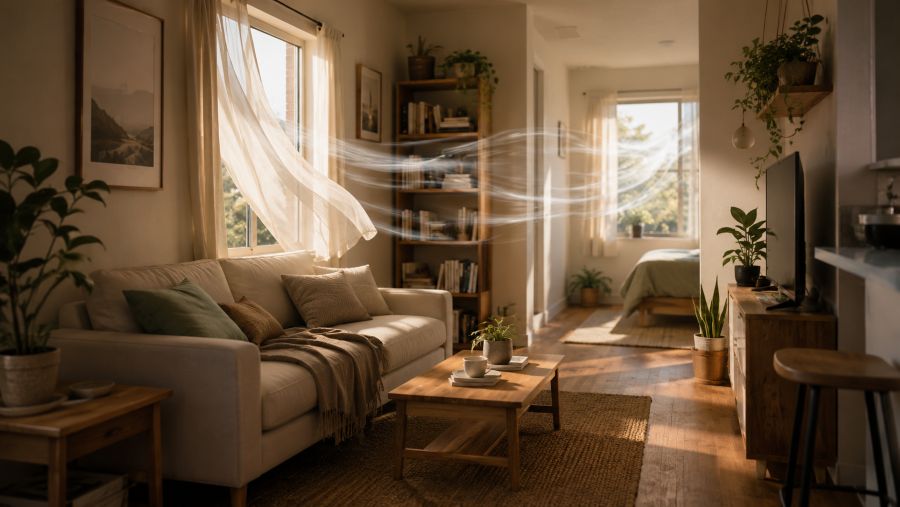
Ventilation is your single most powerful and most affordable tool. The goal is to replace stale, pollutant-heavy indoor air with fresher air from outside — and in a small apartment, you can do this surprisingly effectively even without fancy equipment. The principle is to create movement, because still air is what allows pollutants and moisture to accumulate.
Start with cross-ventilation whenever your layout allows it. If you have windows or doors on opposite or adjacent walls, opening both creates a current that flushes the entire apartment in just a few minutes. Even a short, deliberate airing session — five to ten minutes, twice a day — clears far more pollutants than leaving a single window cracked all day. Aim to do this in the morning and again in the evening to reset the air before sleep.
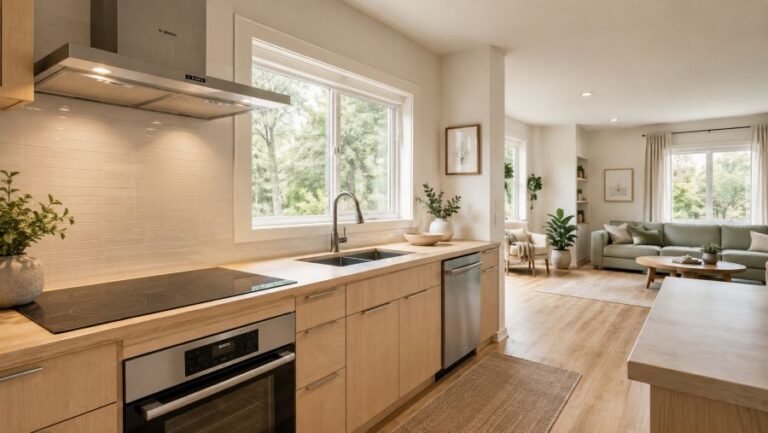
Your existing exhaust fans are the second pillar. Run the kitchen hood every time you cook, not just when there is visible smoke, and keep it on for a few minutes afterward to capture lingering particles. Likewise, run the bathroom fan during and after every shower to pull humid air out before it spreads. If your apartment lacks a vented hood, a window fan placed to blow air outward during cooking is a practical workaround that renters can set up in seconds.
Smart Habits for Single-Window Apartments
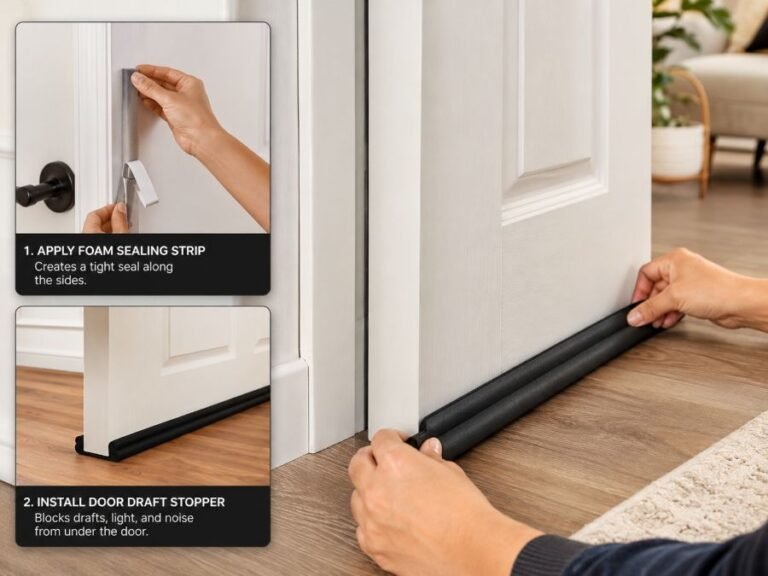
Many compact apartments only have windows on one wall, which makes cross-ventilation harder but not impossible. A small fan positioned to push indoor air toward the open window helps drive the exchange. Keeping interior doors open encourages air to move between zones, and using a doorway draft to pull fresh air deeper into the space can make a noticeable difference. When outdoor air quality is poor, rely more on filtration than open windows.
Air-Purifying Plants That Thrive in Small Apartments
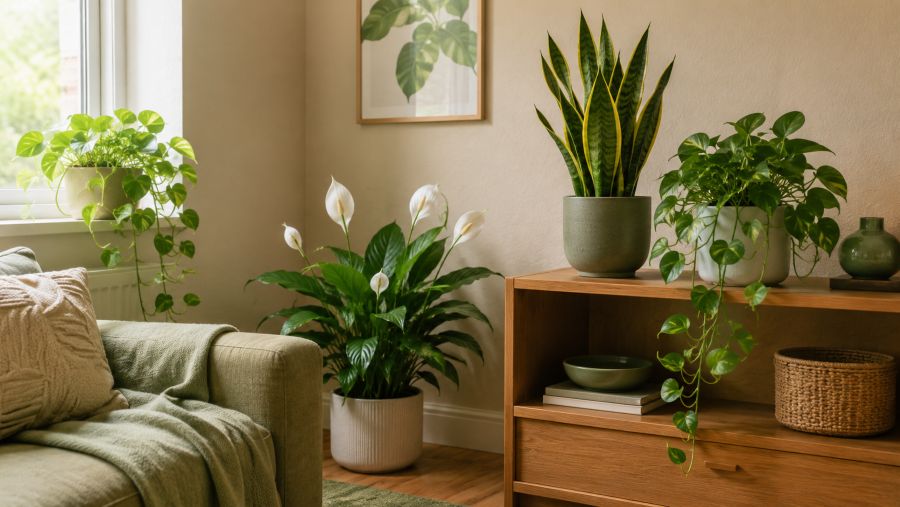
Houseplants will not replace a purifier, but they bring quiet, compounding benefits: they add gentle humidity, absorb some pollutants, soften hard surfaces, and reliably lift mood — a real factor in small-space wellness. The trick is choosing varieties that tolerate the low light and limited footprint typical of apartments. Below are dependable options that stay manageable in size and forgive the occasional missed watering.
| Plant | Light Needs | Why It Suits Small Apartments |
|---|---|---|
| Snake Plant | Low to bright indirect | Nearly indestructible, grows upright to save floor space, releases oxygen at night. |
| Pothos | Low to medium | Trails from shelves and hooks, so it adds greenery without using surface area. |
| Peace Lily | Low to medium | Tolerates shade, signals thirst by drooping, and adds gentle humidity. |
| Spider Plant | Medium indirect | Compact, fast-growing, and safe around curious pets and children. |
| ZZ Plant | Low | Thrives on neglect and dim corners where almost nothing else survives. |
Smart Small Space Tip: Go vertical with your greenery. Wall-mounted planters, hanging pots, and tall narrow plants like the snake plant give you the air-cleaning and mood benefits of multiple plants without sacrificing precious floor space — a perfect strategy when every square foot counts.
Choosing the Right Air Purifier for a Small Space
For trapping the particles that ventilation and plants cannot fully handle — fine dust, smoke, pollen, and pet dander — a dedicated air purifier is the most reliable investment you can make. In a small apartment, the right unit runs quietly in a corner and noticeably improves the air within an hour. The key is matching the device to your space rather than overspending on features you will never use.
Look first for a true HEPA filter, which captures the vast majority of microscopic particles, and ideally an activated carbon layer to absorb odors and gases from cooking and VOCs. Pay close attention to the Clean Air Delivery Rate (CADR): a useful rule of thumb is to choose a CADR at least two-thirds the size of your room in square feet. For most studios and one-bedrooms, a compact unit rated for 200 to 350 square feet is more than enough.
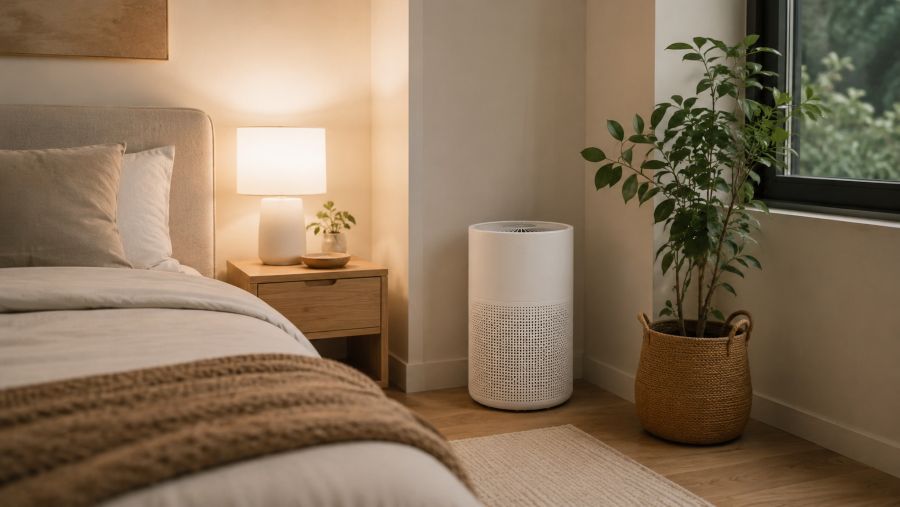
Placement matters as much as the purifier itself. Position the unit in the room where you spend the most time — usually the bedroom or living area — and keep it away from walls and furniture so air can circulate freely around it. Avoid ozone-generating “ionizers” marketed as purifiers, since ozone is itself a lung irritant. Finally, set a recurring reminder to replace the filter on schedule, because a clogged filter quietly stops doing its job.
Daily Habits That Keep Indoor Air Clean
Equipment and plants set the stage, but your everyday routines determine whether your air stays fresh. The most effective habits cost nothing and take only minutes, yet they prevent pollutants from building up in the first place — always easier than removing them later. Build these into your week and the difference compounds quickly.
- Take shoes off at the door: Shoes track in dust, pollen, and chemical residues that settle into floors and rugs.
- Dust and vacuum with a HEPA filter weekly: Trapping allergens rather than scattering them keeps the air measurably cleaner.
- Swap synthetic air fresheners for ventilation: Many “fresheners” add VOCs rather than removing odors; airing out works better.
- Dry laundry outside or near a vented window: Indoor drying releases significant moisture that feeds mold and dust mites.
- Wash bedding and soft furnishings regularly: Fabrics are reservoirs for dust and dander in tight living spaces.
- Keep clutter down: Fewer surfaces and stacks mean fewer places for dust to gather and circulate.
Controlling Humidity and Preventing Mold
Humidity is the hidden driver of many small-apartment air problems. Too much moisture invites mold, mildew, and dust mites; too little dries out your airways and skin. The sweet spot for healthy indoor air sits between roughly 40 and 50 percent relative humidity. Because cooking, showering, and even breathing all add moisture to a compact space, managing it deliberately is essential rather than optional.
An inexpensive hygrometer takes the guesswork out of it by showing your current humidity at a glance. If readings climb too high, a small dehumidifier — or simply running exhaust fans and opening windows after moisture-heavy activities — brings levels back down. If your air is too dry, especially in winter with the heating on, a compact humidifier or a few extra plants restores balance. The table below summarizes how to read and respond to your humidity levels.
| Humidity Level | What It Means | What To Do |
|---|---|---|
| Below 30% | Too dry — irritated airways, dry skin, static | Add a small humidifier or more plants; reduce heating intensity. |
| 40–50% | Ideal — comfortable and healthy | Maintain with regular ventilation and exhaust fans. |
| Above 60% | Too humid — mold and dust mite risk | Run a dehumidifier or exhaust fan; air out after showers and cooking. |
FAQ: Improving Air Quality in a Small Apartment
How can I improve air quality in a small apartment without windows that open?
Focus on mechanical solutions. Run a HEPA air purifier sized for your room, use your kitchen and bathroom exhaust fans consistently, and cut pollutant sources such as scented candles and synthetic air fresheners. Add a few low-light air-purifying plants and keep humidity between 40 and 50 percent to limit mold and dust mites. Together these compensate well for limited natural ventilation.
Do air-purifying plants really improve indoor air quality?
Plants offer modest air-cleaning benefits in real homes, and you would need a great many to match a purifier. Even so, they help by adding humidity, absorbing some pollutants, and improving your sense of wellbeing. In a small apartment they work best as a complement to ventilation and a HEPA air purifier, rather than as a standalone solution.
What size air purifier do I need for a small apartment?
Match the purifier’s CADR rating to your room size, aiming for a clean air delivery rate of at least two-thirds of the room area in square feet. For most studio and one-bedroom apartments, a compact HEPA unit rated for 200 to 350 square feet is enough when placed in the room where you spend the most time.
How often should I ventilate a small apartment?
Air out your apartment for five to ten minutes, two or three times a day, ideally in the morning and evening. Cross-ventilate by opening windows on opposite sides when your layout allows, and always run exhaust fans while cooking, showering, or cleaning with strong products.
Breathe Easier in Your Small Home
Improving air quality in a small apartment is not about owning the most gadgets — it is about working with your space intelligently. By combining regular ventilation, a correctly sized HEPA purifier, a handful of resilient plants, balanced humidity, and a few low-effort daily habits, you can transform stuffy, stale air into a fresh and restorative environment. Each step is renter-friendly, budget-conscious, and designed for the realities of compact living.
Start with the change that feels easiest — perhaps a twice-daily airing routine or taking your shoes off at the door — and build from there. Clean air is one of the most overlooked upgrades you can make to a small home, and once you feel the difference in your sleep, focus, and comfort, you will never go back to ignoring it.
ADeL A.A
ADeL A.A is a home décor and space optimization writer who believes every square foot matters. He spends his time researching, testing, and comparing smart storage ideas, multi-functional furniture, and practical layout solutions — always searching for the best ways to make compact homes feel bigger, brighter, and better organized.
View all articles by ADeL A.A →