How to Make Your Home Calmer and Less Stressful: A Simple Guide

Your home should be the one place that lowers your shoulders the moment you walk in. Yet for many of us, the spaces we live in quietly work against us — buzzing with clutter, harsh lighting, background noise, and visual chaos that keeps the nervous system on edge without our ever noticing why. The good news is that a calmer, less stressful home rarely requires renovation or a big budget. It requires small, intentional changes to the things your senses absorb all day long.
In this guide, you’ll learn practical, science-informed ways to make your home feel genuinely calmer and less stressful, from decluttering and softening your lighting to using scent, sound, color, and nature to soothe the senses. These ideas work in a large house, a family apartment, or a single rented room, and most of them you can start applying today.
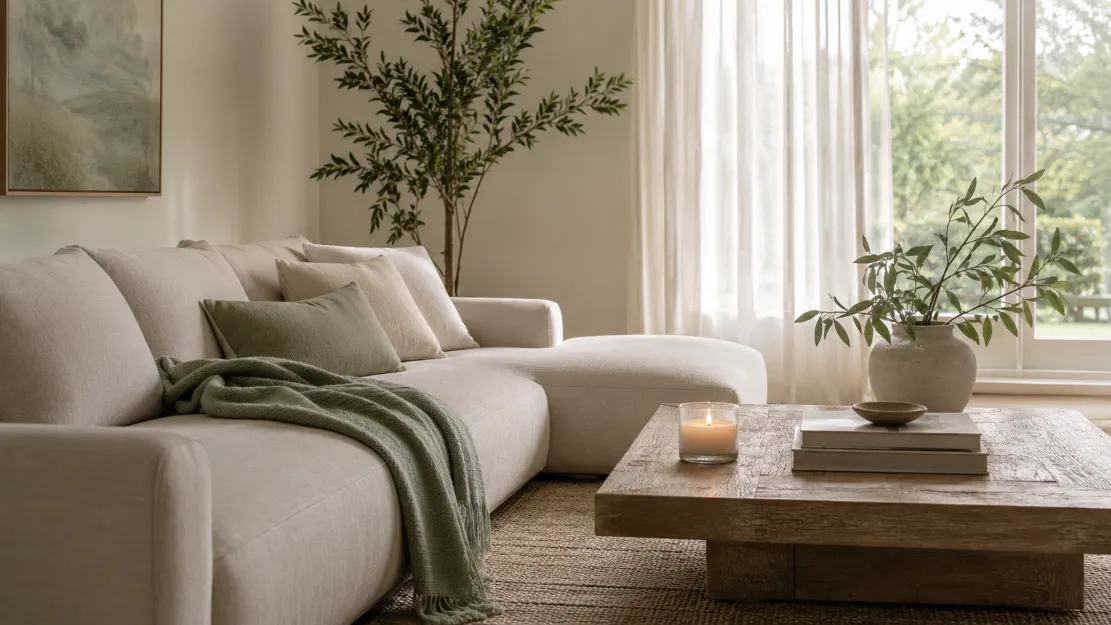
It helps to understand why our surroundings affect us so deeply. The human nervous system is constantly scanning the environment for signals of safety or threat, a process that runs below conscious awareness. A pile of unopened mail, a flickering cool-white bulb, or the low hum of a cluttered room all register as tiny, ongoing demands on your attention. Remove enough of those demands and the body finally receives the signal it has been waiting for: you are safe here, you can rest. That is the real goal of a calm home.
If you’d like a quick visual overview before diving in, the short video below walks through the core ideas of a calmer home, from clearing clutter to softening light, scent, and sound, so you can see how the small changes come together.
Start With Clutter: Clear Space, Clear Mind
If you do only one thing from this guide, reduce visible clutter. Research has connected messy, disorganized home environments with elevated levels of cortisol, the body’s primary stress hormone, because the brain treats every out-of-place object as an unfinished task competing for attention. A room full of visual loose ends keeps you subtly busy even when you are trying to relax, which is why a cluttered space so often feels draining without an obvious reason.
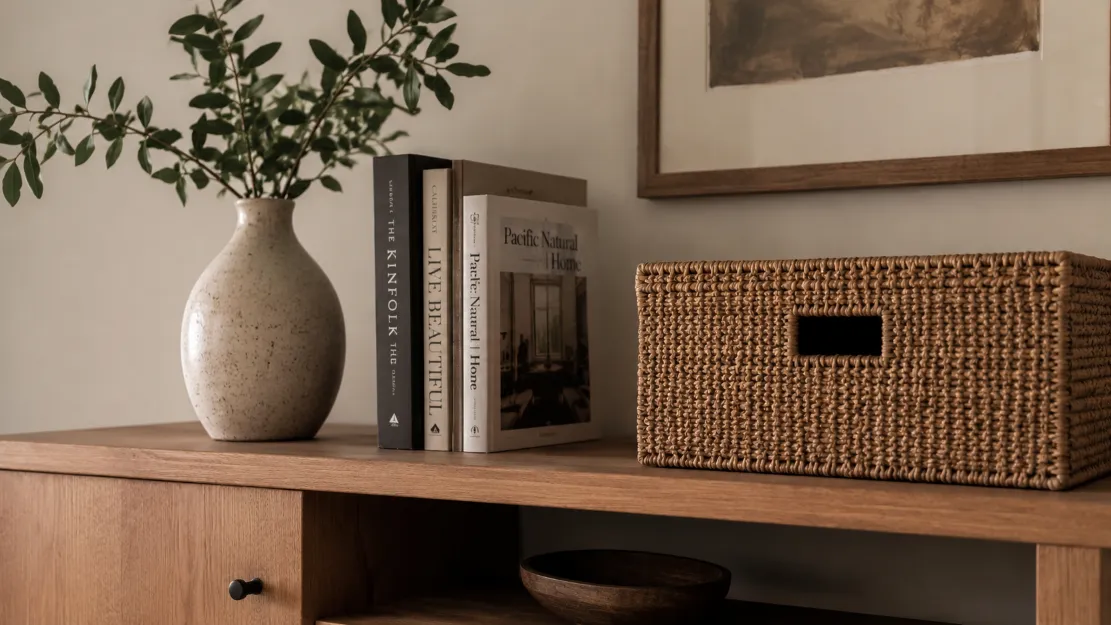
The fix is not extreme minimalism but intentional clearing. Work in short sessions, one surface or drawer at a time, and ask of each item whether it is useful, loved, or simply there out of habit. Give everything that stays a designated home, ideally out of sight in a basket, drawer, or cabinet, so your visible surfaces stay open and restful. The aim is a room where the eye can land softly and rest, rather than darting from one demand to the next.
A Simple Decluttering Order That Works
Overwhelm is the enemy of decluttering, so follow a sequence that builds momentum rather than exhausting you:
- Start with flat surfaces: Tables, counters, and nightstands deliver the biggest visual calm for the least effort.
- Then tackle the floor: Clear anything that doesn’t belong there so the room instantly feels more open.
- Contain what remains: Use baskets and boxes to group loose items so they read as tidy, not scattered.
- Finish with one drawer a day: Hidden clutter still weighs on you, so chip away at it gradually.
Set of Woven Storage Baskets with Lids
Lidded woven baskets are the simplest way to make clutter disappear while adding warm, natural texture. Keep one in each room for the items that always pile up, and your surfaces stay calm and clear with almost no effort.
Check Price on Amazon →Soften Your Lighting
Lighting may be the most underrated factor in how stressful or soothing a home feels. Bright, cool-white overhead light mimics midday sun and signals the brain to stay alert, which is the opposite of what you want in the evening. Harsh, single-source lighting also casts hard shadows that make a room feel stark and tense. Swapping that one bright ceiling fixture for several softer, warmer sources is one of the fastest ways to transform the mood of any space.
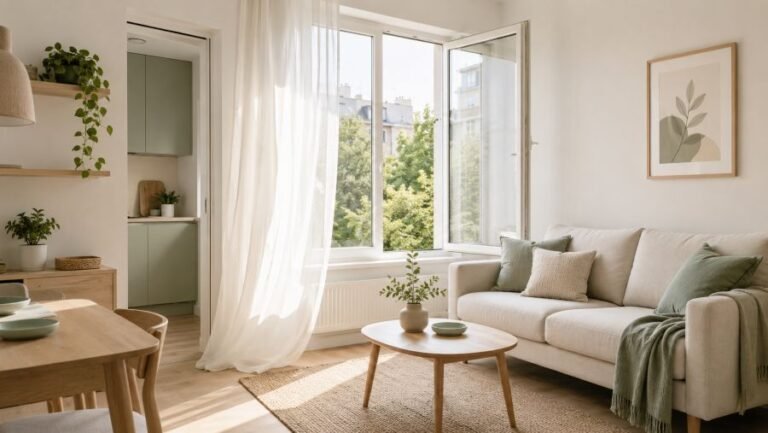
Aim for warm-toned bulbs around 2700K and layer your light at different heights: a table lamp, a floor lamp, and perhaps a small candle or two. This creates gentle pools of light rather than a single flat glare, mimicking the warm, low light of sunset that naturally tells the body to wind down. During the day, do the reverse and maximize natural light, since daylight supports mood and a healthy sleep-wake rhythm. Keep windows clear and swap heavy drapes for sheer curtains that let light filter softly through.
Smart Small Space Tip: Put your main lights on a smart plug or a simple dimmer. Being able to lower the brightness in the evening with one tap makes it effortless to shift the whole room into a calmer mode, and it trains your brain to associate that softer light with winding down.
Engage the Senses: Scent and Sound
A truly calm home soothes more than just the eyes. Scent has a direct line to the brain’s emotional centers, which is why a familiar, pleasant aroma can settle you almost instantly. Gentle, natural scents such as lavender, chamomile, sandalwood, and cedar are widely associated with relaxation. A reed diffuser, a soy candle, or an essential-oil diffuser can fill a room with calm without any clutter, and the simple ritual of lighting a candle in the evening becomes a cue that the day is winding down.
Sound matters just as much, though we often ignore it. The low drone of traffic, appliances, or a television left on can keep the nervous system quietly activated for hours. Counter it intentionally: soft instrumental music, a white-noise machine, or natural sounds can mask jarring noise and create a gentle audio backdrop. Even adding soft materials like rugs, curtains, and upholstered furniture helps, because they absorb harsh echoes and make a room feel acoustically softer and more enveloping.
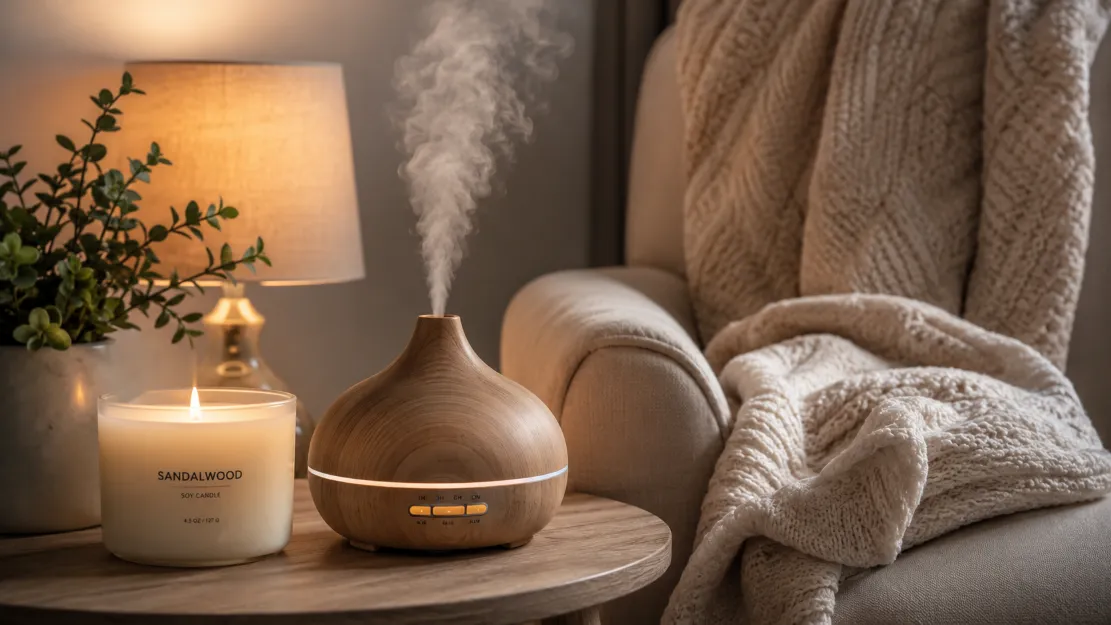
Essential Oil Diffuser with Soft Ambient Light
A quiet ultrasonic diffuser fills a room with calming scent and a soft glow at the same time. Pair it with lavender or cedar oil in the evening to create an instant wind-down ritual that engages both smell and sight.
Check Price on Amazon →Choose a Calming Color Palette
Color shapes mood more powerfully than most people realize. High-contrast, highly saturated schemes feel energetic and stimulating, which is wonderful for a gym but draining for a home meant to restore you. To dial down the visual intensity, lean into soft, muted tones with low contrast between them. Gentle blues and greens are especially calming because they echo the sky, water, and nature, while warm neutrals like beige, cream, and soft taupe feel grounding and cozy.
You don’t need to repaint everything to benefit. Because textiles, art, and accessories carry a great deal of a room’s color, you can shift the whole mood by swapping loud, busy items for softer, more harmonious ones. Keep your palette limited to a few related tones so the eye glides smoothly across the room rather than snagging on jarring contrasts. The result is a space that feels cohesive, quiet, and visually restful.
| Stress Trigger | Why It Affects You | Calming Fix |
|---|---|---|
| Visible clutter | Keeps the brain in low-level alert | Clear surfaces, hide items in baskets |
| Harsh cool lighting | Signals alertness, casts hard shadows | Warm 2700K bulbs, layered lamps |
| Background noise | Quietly activates the nervous system | Soft music, rugs, white noise |
| Loud, busy colors | Feel stimulating rather than restful | Muted, low-contrast palette |
| No nature indoors | Disconnects you from natural calm | Add plants and natural materials |
Bring Nature Indoors
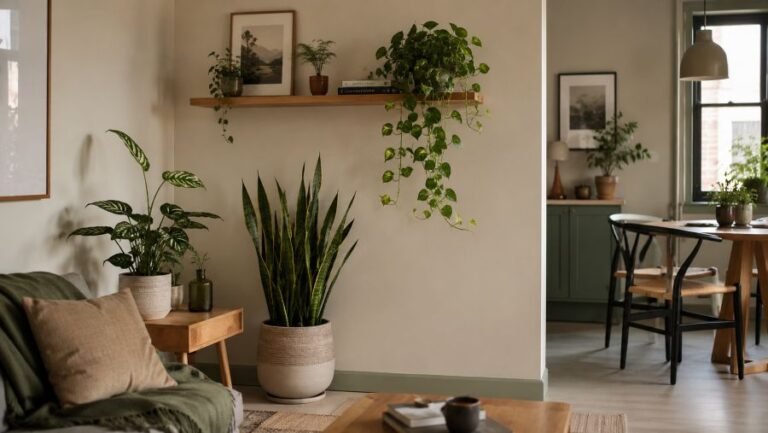
Few things calm a home as reliably as a living connection to nature. Our affinity for the natural world is deeply rooted, and studies suggest that being around plants and natural materials can lower stress, ease mental fatigue, and lift mood. Indoors, plants do double duty: they soften hard architectural lines, add gentle organic texture, and give you something living to nurture, which is itself a quietly grounding daily ritual.
You don’t need a jungle. Even one or two easy, low-maintenance plants placed where you’ll see them often can shift how a room feels. Beyond greenery, lean on natural materials throughout the space: wood, linen, wool, rattan, stone, and clay all carry subtle warmth and imperfection that manufactured surfaces lack. A wooden bowl, a linen cushion, a woven basket, or a stone coaster each adds a small, tactile reminder of the natural world that helps the whole home feel more settled.
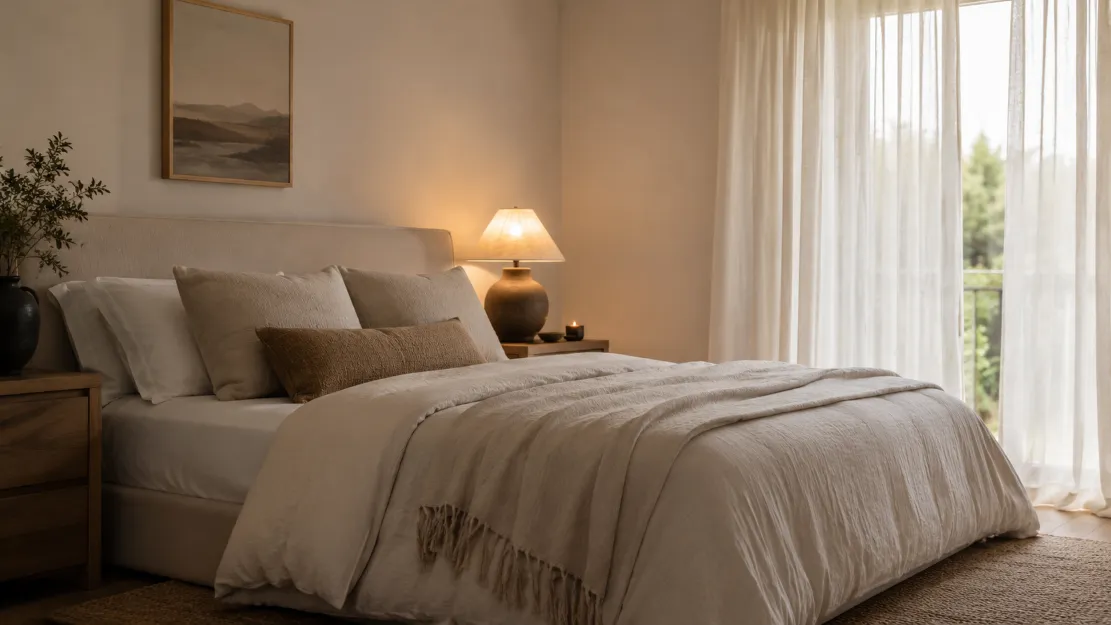
Stonewashed Linen Throw Blanket (Soft Neutral)
A breathable linen throw adds instant softness and natural texture to a sofa or bed. Its gentle, slightly wrinkled drape invites you to relax and brings a tactile, grounding warmth that helps any room feel more restful.
Check Price on Amazon →Create a Dedicated Calm Zone
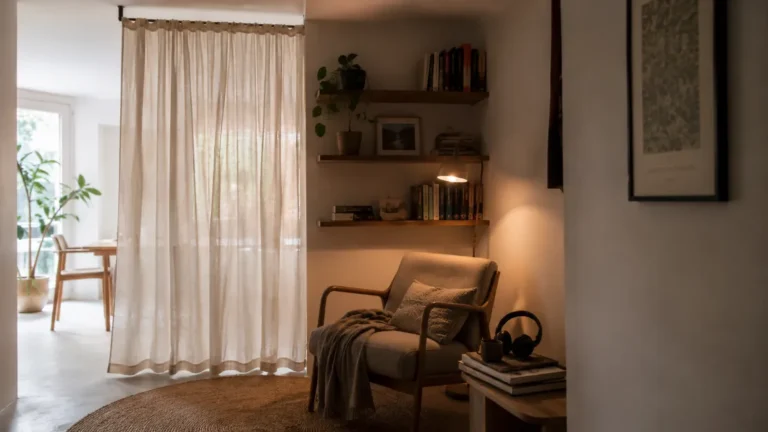
Even the busiest home benefits from one small spot reserved purely for rest. This doesn’t require a spare room; a single armchair by a window, a corner of the bedroom, or a cushion on the floor can become your designated calm zone. The point is to have one place your brain learns to associate with slowing down, so that simply sitting there begins to trigger relaxation through habit.
Set it up with intention: a comfortable seat, soft lighting, a plant or a view, and perhaps a candle, a book, or whatever helps you unwind. Keep it free of work, screens, and clutter so it stays mentally separate from the demands of the day. Over time, this little sanctuary becomes a reliable reset button you can return to whenever stress builds, no matter how small your home is.
Scented Soy Candle (Lavender or Sandalwood)
A clean-burning soy candle in a calming scent anchors your calm zone with soft light and soothing aroma. Lighting it becomes a simple evening ritual that signals to your mind it’s finally time to slow down and rest.
Check Price on Amazon →FAQ: Making Your Home Calmer and Less Stressful
How can I make my home feel calmer quickly?
Start with the three fastest changes: clear one cluttered surface, switch a harsh overhead light for a soft warm-toned lamp, and remove background noise or add gentle sound. These three adjustments cost little, take minutes, and noticeably lower the visual and sensory stress in a room before you make any bigger changes.
Does clutter really cause stress?
Yes. Research has linked cluttered, disorganized home environments to higher levels of the stress hormone cortisol, because visible mess keeps the brain in a low-level state of alert. Clearing surfaces and giving items a designated home reduces that constant background stimulation and helps the space feel restful.
What colors make a home feel more relaxing?
Soft, muted tones tend to feel the most calming: gentle blues and greens echo nature and lower visual intensity, while warm neutrals like beige, cream, and soft taupe feel cozy and grounding. The key is low contrast and a limited palette, since busy, high-contrast color schemes feel more stimulating than restful.
How do plants help reduce stress at home?
Indoor plants support calm in several ways: studies suggest that caring for and being around greenery can lower stress and improve mood, while plants soften hard edges, add natural texture, and bring a living connection to nature indoors. Even one or two low-maintenance plants can make a room feel more soothing.
Final Thoughts: A Home That Helps You Rest
Making your home calmer and less stressful is not about achieving a flawless, magazine-perfect interior. It is about gently removing the small sources of friction your senses absorb all day, and replacing them with cues of safety and ease: clear surfaces, soft warm light, soothing scent and sound, a quiet palette, and a living touch of nature. Each change is modest on its own, but together they reshape how your home makes you feel.
Begin with whatever feels easiest, whether that’s clearing a single surface tonight or swapping one harsh bulb for a warmer one. Notice how the space and your body respond, then build from there at your own pace. Whatever the size of your home, you have more power than you think to turn it into a genuine refuge, a place that quietly lowers your stress and helps you rest the moment you walk through the door.
Affiliate Disclosure: As an Amazon Associate, Smart Small Space earns from qualifying purchases. Product links in this article may earn us a small commission at no extra cost to you, which helps support our content.
ADeL A.A
ADeL A.A is a home décor and space optimization writer who believes every square foot matters. He spends his time researching, testing, and comparing smart storage ideas, multi-functional furniture, and practical layout solutions — always searching for the best ways to make compact homes feel bigger, brighter, and better organized.
View all articles by ADeL A.A →