How to Prevent Mold and Humidity in a Compact Home

Few things undermine the comfort of a compact home faster than that telltale musty smell, fogged-up windows on a winter morning, or a shadowy patch creeping along a bathroom ceiling. In a tight floor plan, every shower, every pot of pasta, and every load of indoor laundry releases moisture into a limited volume of air — and that moisture has far fewer escape routes than it would in a sprawling house.
The good news is that mold and excess humidity are almost entirely preventable, even in the snuggest studio. This guide walks you through why pint-sized living spaces are uniquely vulnerable, how to read the early warning signs, and the exact ventilation strategies, daily habits, and affordable tools that keep your air dry, your walls clean, and your lungs happy.

Prefer to watch before you read? The short video below condenses the core of this guide into ninety seconds: the ideal humidity targets to aim for, how shock ventilation works in tight quarters, and the daily moisture-control habits that stop mold before it ever gets started.
Once you have the big picture from the video, the sections that follow dig into the details: why condensation forms where it does, which tools are actually worth buying for humidity control, and exactly what to do — room by room — to keep every corner of your cozy dwelling dry and healthy.
Mold is not just a cosmetic nuisance. Prolonged exposure to mold spores and damp indoor air is linked to respiratory irritation, allergy flare-ups, headaches, and worsening asthma — and the World Health Organization has repeatedly flagged indoor dampness as a genuine health risk. Because cozy urban dwellings concentrate moisture sources into fewer square meters, residents of studios and one-bedroom flats are statistically more likely to encounter condensation problems than people in larger homes. Understanding the mechanics behind that vulnerability is the first step toward fixing it for good.
Why Compact Homes Are More Prone to Mold and Humidity
Think of your living space as a container of air. The same morning shower that raises humidity by a barely noticeable amount in a 200-square-meter house can push a 35-square-meter studio straight into the danger zone. Moisture production — cooking, bathing, breathing, drying clothes, even houseplants — is roughly the same per person regardless of home size, but the air available to absorb that moisture shrinks dramatically in a tight footprint.
Beyond simple volume, several structural factors stack the deck against snug city flats. Many are located in older buildings with single-glazed windows or weak extractor fans. Others occupy basement or ground-floor units where rising damp adds to the load. Open-plan layouts mean steam from the kitchenette drifts freely into the sleeping area, settling on cool surfaces overnight. And because storage is scarce, furniture often sits flush against exterior walls — creating cold, airless pockets where condensation collects unseen.
Temperature swings make matters worse. When warm, moisture-laden indoor air touches a cold surface — a window pane, an uninsulated corner, the wall behind a wardrobe — the air cools below its dew point and water condenses out. That thin film of moisture is all mold needs. Spores are everywhere in the air already; they simply wait for a damp surface, a little warmth, and something organic to feed on, such as paint, wallpaper paste, dust, or fabric.
Know Your Numbers: Ideal Humidity Levels and Warning Signs
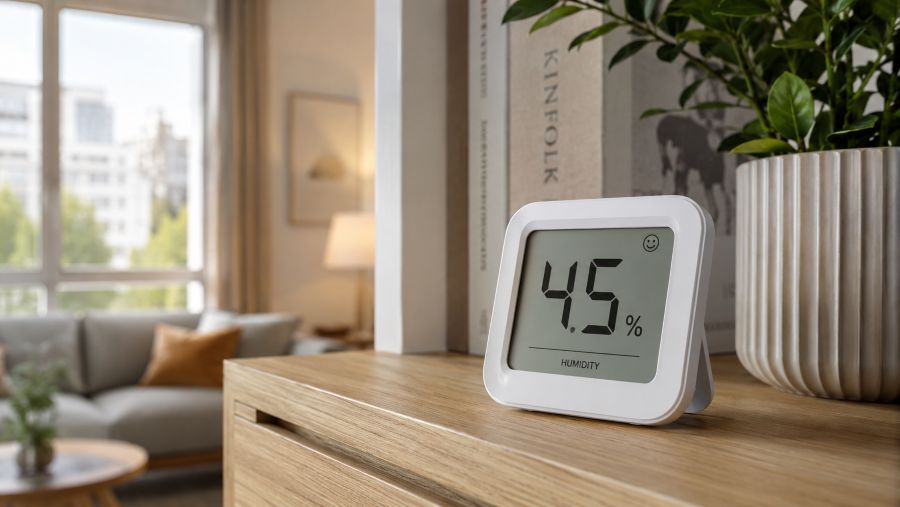
You cannot manage what you do not measure, and humidity is invisible until it becomes a problem. Indoor relative humidity should stay between 30% and 50%. In that band, the air feels comfortable, dust mites struggle to reproduce, and mold cannot establish itself. Above 60%, conditions tip decisively in mold’s favor; sustained readings above 70% practically guarantee growth within weeks.
A digital hygrometer costs less than a takeaway dinner and removes all the guesswork. Place one in the room where you spend the most time, and consider a second unit in the bathroom or any corner that has caused trouble before. Check readings in the morning, when overnight moisture accumulation peaks, and after high-steam activities like cooking or showering.
Early Warning Signs Your Space Is Too Damp
- Persistent window condensation — droplets or fog on the inside of glass most mornings, especially in cooler months.
- A musty, earthy odor — often the very first clue, noticeable when you return home after several hours away.
- Peeling paint or bubbling wallpaper — moisture trapped in walls pushes finishes away from the surface.
- Dark spots in corners and grout lines — gray, green, or black speckling on silicone seals, ceiling corners, or behind furniture.
- Damp-feeling textiles — bedding, towels, or clothes in closets that never feel completely dry.
- Worsening allergies indoors — sneezing, itchy eyes, or congestion that improves when you leave home.
Ventilation Strategies That Work in Tight Quarters
Ventilation is the single most powerful weapon against indoor humidity, and it costs almost nothing. The goal is simple: regularly replace moist indoor air with drier outdoor air before condensation can form. In a modest footprint, this happens remarkably fast — which is actually an advantage larger homes do not have.
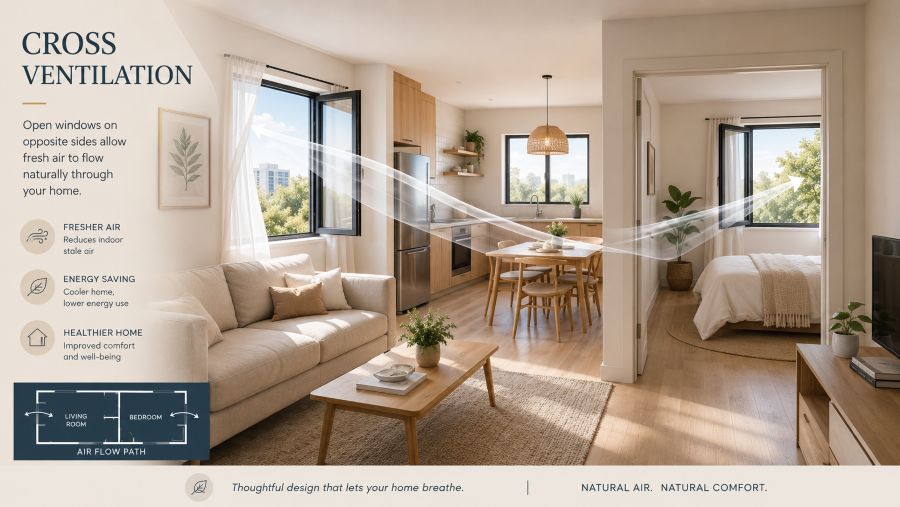
The gold standard is cross-ventilation: opening windows or vents on opposite sides of your home for five to ten minutes, two or three times a day. This short, sharp burst — sometimes called shock ventilation — exchanges nearly all the indoor air without cooling down walls and furniture, so your space reheats quickly afterward. It is far more effective than leaving one window cracked all day, which loses heat continuously while barely moving air.
If your layout has windows on only one side, create your own airflow path. Open the window fully, then open interior doors and switch on the bathroom extractor fan at the far end of the flat. The fan pulls fresh air through the entire space. A small, quiet desk fan pointed toward a problem corner can also keep air moving across surfaces that would otherwise stay cold and stagnant.
Timing matters more than most people realize. Ventilate immediately after showering, while cooking, and right after waking up — overnight breathing alone adds surprising amounts of moisture to a sleeping area. In humid summer climates, ventilate during the cooler early morning and late evening hours, when outdoor air carries less moisture than midday air.
Smart Small Space Tip: Pair your ventilation routine with existing habits so it becomes automatic. Open windows the moment you switch on the kettle in the morning, and close them when your coffee is ready — that is almost exactly the ideal shock-ventilation window, and you will never have to remember it again.
Room-by-Room Moisture Control for a Compact Dwelling
Every zone of a snug home produces and traps moisture differently, so a one-size-fits-all approach leaves gaps. Here is how to address each area systematically, starting with the biggest offenders.
Bathroom: The Humidity Epicenter
A ten-minute hot shower can release half a liter of water into the air. Run the extractor fan during every shower and for at least twenty minutes afterward — or keep the window open for the same period. Squeegee the shower walls and glass after use; those thirty seconds remove most of the water that would otherwise evaporate into your air. Keep the bathroom door closed while showering so steam cannot migrate into the bedroom, and leave shower curtains spread out rather than bunched so they dry fully. Wash or replace silicone seals at the first sign of dark speckling, because mold rooted in silicone is nearly impossible to remove completely.
Kitchen Zone: Tame the Steam at the Source
Always cook with lids on pots — this cuts steam output dramatically and saves energy at the same time. Use the range hood if you have one, on its highest setting, and keep it running a few minutes after you finish. In kitchenettes without external extraction, open the nearest window while boiling or frying. Empty and dry the area behind and under the refrigerator occasionally; the drip tray and coils can harbor hidden dampness in tight kitchen corners.
Sleeping Area: Protect the Place You Breathe All Night
Air out bedding every morning by folding the duvet back rather than making the bed immediately — a body releases moisture all night, and trapped warmth in bedding feeds mites and damp. Keep the bed and wardrobe at least five centimeters away from exterior walls to let air circulate behind them. If your sleeping nook has no window, leave its door open during your daily ventilation bursts and consider a small circulating fan.
Closets and Storage: The Forgotten Danger Zones
Packed closets against cold walls are classic mold incubators. Avoid overfilling, leave gaps between garments, and never store clothes that are even slightly damp. Moisture-absorber boxes or rechargeable silica-gel dehumidifier pods work well inside wardrobes and under-bed storage. Once a season, open all storage doors during a ventilation session to flush out accumulated humidity.
Tools and Habits: Choosing the Right Humidity Solution
Habits handle most of the battle, but the right equipment closes the gap — especially in humid climates, basement units, or older buildings with weak ventilation. The comparison below helps you match the solution to your situation and budget without wasting money on overkill.
| Solution | Best For | Typical Cost | Effort Level |
|---|---|---|---|
| Digital hygrometer | Every compact home — monitoring is step one | $10–$25 | None after setup |
| Shock ventilation routine | All climates; the foundation of moisture control | Free | 5–10 minutes, 2–3× daily |
| Moisture absorber boxes / silica pods | Closets, under-bed storage, windowless nooks | $5–$20 | Replace or recharge monthly |
| Compact electric dehumidifier (10–12L/day) | Humid climates, basement flats, indoor laundry drying | $120–$250 | Empty tank; minimal upkeep |
| Extractor fan upgrade (humidity-sensing) | Bathrooms with chronic condensation | $60–$150 + install | Fully automatic once fitted |
| Window trickle vents / insulation film | Older single-glazed windows with heavy condensation | $15–$50 | One-time installation |
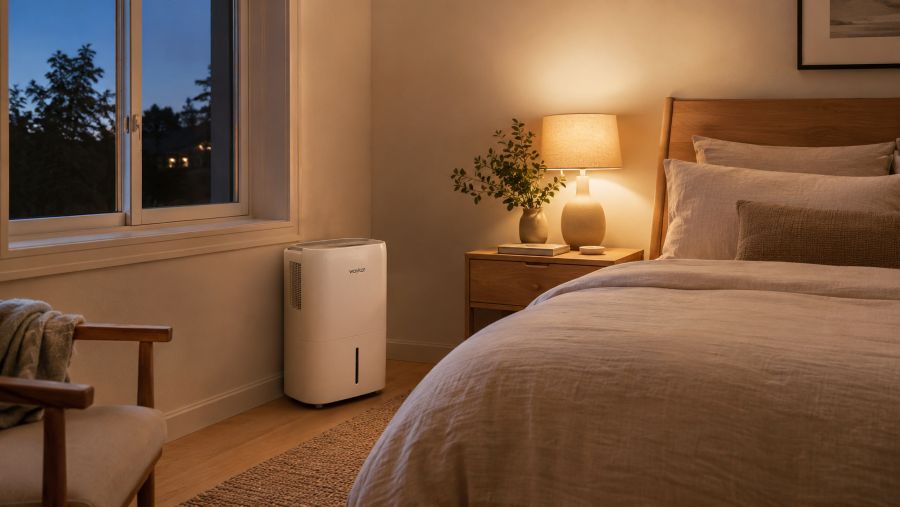
If you choose an electric dehumidifier for a petite floor plan, prioritize three features: a quiet night mode (under 40 dB) since the unit will run near where you sleep, a built-in humidistat that switches off automatically at your target level, and continuous-drain capability if you plan to run it in a bathroom or utility corner. A 10–12 liter-per-day capacity comfortably covers most studios and one-bedroom layouts; anything larger wastes energy and space.
Everyday Habits That Quietly Add Up
Beyond the headline strategies, a handful of small adjustments compound into a permanently drier, healthier micro-home. None of them takes more than a minute, and together they often eliminate the need for expensive interventions entirely.
- Wipe window condensation every morning with a squeegee or microfiber cloth — removing the water removes the food source for mold on frames and sills.
- Dry laundry strategically. Whenever possible, dry clothes outdoors or in a closed room with the window open and door shut. A drying load releases up to two liters of moisture into your air.
- Mind your houseplants. Greenery is wonderful for wellbeing, but a dozen thirsty plants in a tiny footprint act like slow humidifiers. Group them near a window and avoid overwatering.
- Keep a gentle baseline of heat in winter. Walls that never fully cool resist condensation. A consistently mild temperature beats cycling between cold and hot.
- Leave interior doors open when you are out (except during showers and cooking) so air and temperature equalize across the whole flat.
- Inspect hidden zones monthly — behind the headboard, under the sink, inside the wardrobe against the exterior wall. Catching a coin-sized spot early is a five-minute fix; a colonized wall is a renovation.
What to Do if Mold Has Already Appeared
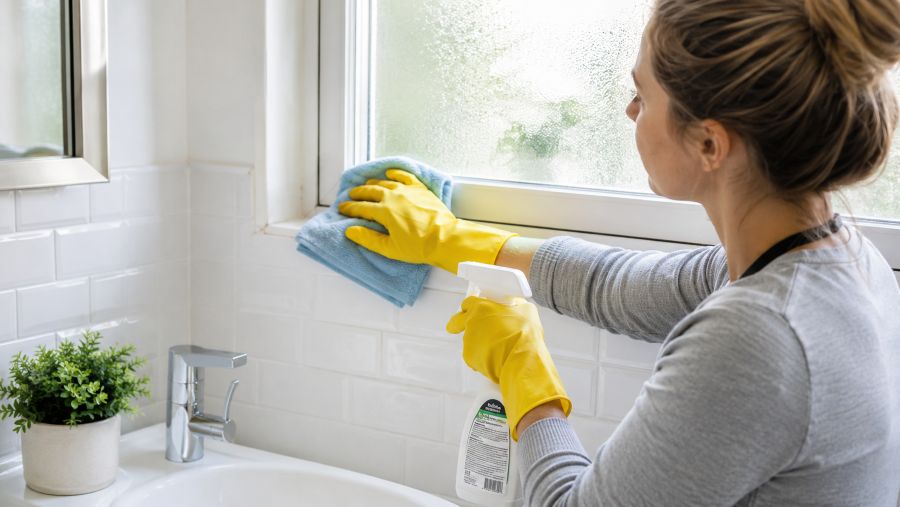
Found a patch despite your best efforts? Do not panic, and do not reach for dry scrubbing — that releases spores into the air. For surface mold smaller than about half a square meter, ventilate the room, wear gloves and ideally a mask, and clean the area with a dedicated anti-mold spray or a solution of white vinegar, letting it sit before wiping with a disposable cloth. Dry the surface thoroughly afterward and fix whatever moisture source allowed the growth, or it will simply return.
Larger infestations, mold inside walls, recurring growth in the same location, or any patch accompanied by water staining points to a structural issue — a leak, failing damp-proofing, or thermal bridging — that requires a professional assessment. Renters should document the problem with dated photos and notify the landlord in writing, since persistent damp in many jurisdictions is a habitability issue the property owner must resolve.
FAQ: Mold and Humidity Control in Compact Living Spaces
What is the ideal humidity level for a compact home?
The ideal indoor relative humidity sits between 30% and 50%. Below 30%, the air feels dry and irritating; above 60%, mold spores find the moisture they need to colonize walls, fabrics, and window frames. A simple digital hygrometer placed in the most lived-in room helps you monitor and stay within this healthy range year-round.
Can I prevent mold in a compact home without a dehumidifier?
Yes, in many climates consistent habits do most of the work: cross-ventilate twice a day, run the extractor fan during and after showers, dry laundry near an open window, keep furniture a few centimeters away from exterior walls, and wipe condensation off windows each morning. A dehumidifier becomes important in humid climates, basement units, or homes with persistent condensation despite good habits.
Why does mold keep coming back in the same corner of my studio?
Recurring mold in one spot usually points to a cold surface combined with stagnant air — typically an exterior corner behind furniture or curtains. Warm indoor air condenses on the cold wall, and without airflow the moisture never dries. Pull furniture away from that wall, improve air circulation with a small fan, treat the area with an anti-mold cleaner, and check for hidden leaks if the problem persists.
Is drying laundry indoors really a problem in tight living quarters?
A single load of wet laundry can release up to two liters of water into your indoor air. In a compact dwelling, that moisture has nowhere to go and quickly pushes humidity past 60%. If you must dry clothes inside, place the rack near an open window or extractor fan, close the door to that room, and run a dehumidifier nearby until the laundry is fully dry.
Final Thoughts: A Dry Home Is a Healthy Home
Preventing mold and humidity in a petite living space is not about expensive renovations or constant vigilance — it is about understanding how moisture behaves in a limited volume of air and building a few effortless routines around that knowledge. Measure your humidity so you are never guessing, ventilate in short, decisive bursts, control steam at its source in the bathroom and kitchen, and give your walls room to breathe behind furniture and inside closets.
Layer in a moisture absorber here or a compact dehumidifier there only where your hygrometer tells you it is genuinely needed, and treat any early spots immediately rather than hoping they fade. Within a few weeks of consistent habits, the fogged windows clear, the musty edge disappears from the air, and your cozy dwelling becomes what it should be: a fresh, healthy retreat where small square footage never means compromised wellbeing.
ADeL A.A
ADeL A.A is a home décor and space optimization writer who believes every square foot matters. He spends his time researching, testing, and comparing smart storage ideas, multi-functional furniture, and practical layout solutions — always searching for the best ways to make compact homes feel bigger, brighter, and better organized.
View all articles by ADeL A.A →