How to Make a Small Apartment Smell Fresh Naturally

A small apartment can feel cozy and effortless to maintain, yet there is one challenge that catches almost every compact-living resident off guard: lingering odors. With less square footage and limited airflow, the smell of last night’s dinner, a damp bathroom, or a closed-up bedroom tends to settle in and stay. The good news is that you do not need a shelf full of chemical sprays to fix it.
In this guide, you will learn how to make a small apartment smell fresh naturally using ventilation tricks, odor-eliminating ingredients you already own, simple DIY air fresheners, and a handful of purifying plants. Each method is affordable, beginner friendly, and designed specifically for tight spaces where every square foot counts.
Before you reach for an air freshener, it helps to understand why compact homes hold onto smells so stubbornly. Once you know what you are working against, the natural solutions below make far more sense and last much longer than a quick spray that only masks the problem for an hour.
If you prefer to see these natural freshening methods in action, the short video below walks you through the key steps, from cross-ventilation to making a simple simmer pot. Watch it first, then follow along with the detailed guide underneath for the full breakdown of every technique.
Now that you have seen the natural approach in action, let us dig into exactly why small apartments hold onto odors and how each method works to keep your air consistently fresh.
Why Small Spaces Trap Odors So Easily
The core issue is simple physics. A small apartment contains a much lower volume of air than a larger home, so any odor that enters the space becomes concentrated almost immediately. When you cook a meal in a studio, those aromas are not diluted across hundreds of square feet; they cling to a single open-plan room where the kitchen, sofa, and bed often share the same air. As a result, fabrics, upholstery, and even your clothing absorb and re-release scents long after the source is gone.
Poor ventilation compounds the problem. Many compact apartments have windows only on one side, which prevents the cross-breeze needed to flush out stale air. Moisture adds another layer, since bathrooms and kitchens release humidity that feeds mildew and musty smells when it has nowhere to escape. Understanding these three factors, namely low air volume, limited airflow, and trapped moisture, points you directly toward the most effective natural remedies.
Step One: Eliminate Odors at the Source
The single most important principle in natural air care is this: remove the odor before you try to add a pleasant scent. Spraying fragrance over a bad smell simply creates a confusing blend that often makes the air feel heavier. Instead, treat the underlying cause first, and the fresh result will hold for days rather than minutes.
Start with a quick audit of the usual culprits. The kitchen bin is the most common offender, so empty it frequently and rinse it with a mix of warm water and white vinegar. Damp towels and gym clothes should never be left in a pile, since fabric holds moisture and bacteria that quickly turn sour. Check the refrigerator for forgotten leftovers, clean the drains with baking soda and hot water, and wash bedding and throws regularly, because soft surfaces are the biggest scent sponges in any small home.
Ventilate Strategically Every Day
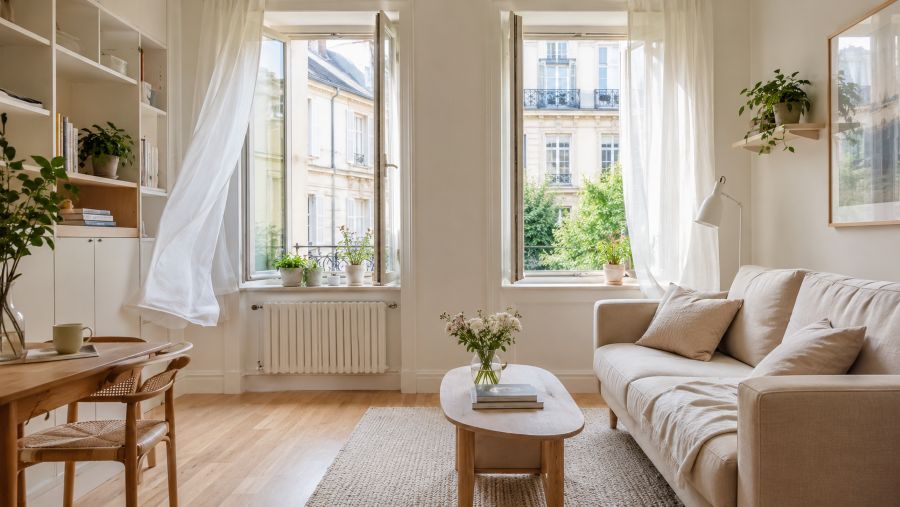
Fresh air is free, and it is the fastest reset button you have. Even in winter, opening windows for ten to fifteen minutes a day exchanges the stale indoor air for clean outdoor air and dramatically lowers the concentration of trapped odors. If your apartment has windows on opposite walls, open both to create a cross-breeze that pulls air straight through the space.
- Ventilate first thing in the morning to clear overnight stuffiness from the bedroom.
- Always run the exhaust fan or crack a window while cooking and showering.
- Open windows briefly after vacuuming to remove disturbed dust from the air.
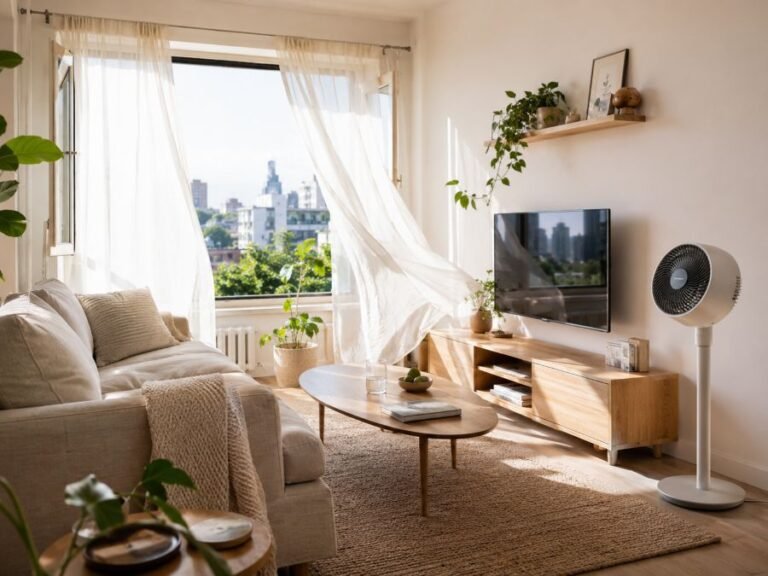
- Use a small fan to push air toward an open window when natural breeze is weak.
Natural Ingredients That Actually Absorb Odors
Once the obvious sources are handled, a few inexpensive natural absorbers will keep your air consistently clean. Unlike sprays that mask, these ingredients genuinely capture and neutralize odor molecules. They work quietly in the background, which makes them ideal for small apartments where you want fresh air without clutter or constant effort.
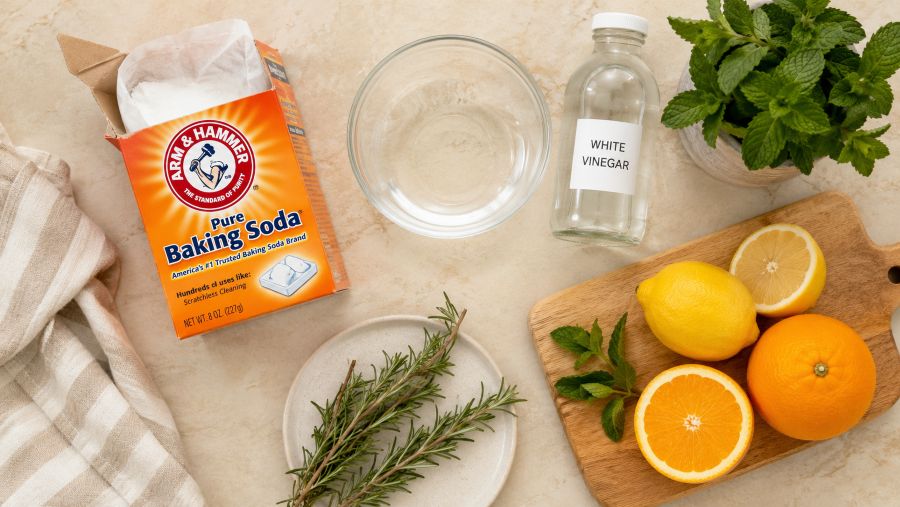
Baking soda is the classic choice for a reason. Left in an open container, it absorbs acidic and food-related smells from the air around it. Activated charcoal works even more powerfully, trapping odor particles in its porous surface, and a small linen bag of it tucked into a closet or shoe rack can stay effective for weeks. White vinegar, placed in a shallow bowl, neutralizes lingering cooking and smoke odors overnight, and the vinegar smell itself disappears as it dries.
| Natural Absorber | Best For | Where to Place It | How Often to Replace |
|---|---|---|---|
| Baking soda | Refrigerator and food odors | Fridge, near bins, in shoes | Every 30 days |
| Activated charcoal | Musty and moisture smells | Closets, bathrooms, drawers | Every 2 to 3 months |
| White vinegar | Cooking and smoke odors | Kitchen counter overnight | After each use |
| Coffee grounds (dried) | Strong lingering smells | Small bowl in stuffy corners | Every 1 to 2 weeks |
| Dried citrus peels | Light freshening and scent | Decorative bowls, drawers | Every 2 weeks |
Smart Small Space Tip: Group your odor absorbers near the three biggest culprits in any compact home, namely the kitchen bin, the bathroom, and the closet. Treating these zones directly is far more effective than scattering scent throughout the whole apartment.
DIY Natural Air Fresheners You Can Make Today
With the air now genuinely clean, you can layer in pleasant fragrance using simple homemade methods. These cost a fraction of store-bought products, contain no synthetic chemicals, and let you customize the scent to match the season or your mood. Best of all, most use ingredients already sitting in your kitchen.

The Stovetop Simmer Pot
A simmer pot is the most rewarding natural air freshener for compact living, because the steam carries scent into every corner of an open-plan space. Fill a small saucepan with water, add citrus slices, a couple of cinnamon sticks, and a sprig of rosemary or a few cloves, then let it simmer gently on low heat. Within minutes the whole apartment smells warm and inviting, and you can refrigerate the mixture and reuse it several times before composting it.
Essential Oil Reed Diffuser
For continuous, fuss-free fragrance, make a reed diffuser by combining a light carrier oil with fifteen to twenty drops of your favorite essential oil in a small glass bottle, then inserting a few bamboo reeds. The reeds wick the scented oil upward and release it slowly into the air. Lavender encourages calm in a bedroom, while lemon or eucalyptus brings a clean, energizing note to a living area or entryway.
Baking Soda Carpet and Fabric Refresher
Because soft surfaces hold the most odor in a small home, a fabric refresher is invaluable. Mix a cup of baking soda with a few drops of essential oil, sprinkle it lightly over rugs, sofa cushions, or mattresses, leave it for fifteen minutes, then vacuum it up. This pulls trapped smells out of the fibers rather than covering them, leaving fabrics genuinely fresh.
Air-Purifying Plants for Small Apartments
Plants do double duty in a compact space: they add life and color while quietly improving air quality. Several common houseplants help filter the air and reduce stuffiness, and they thrive in the modest light most small apartments offer. Choosing compact, low-maintenance varieties means you gain the benefits without sacrificing precious floor space.
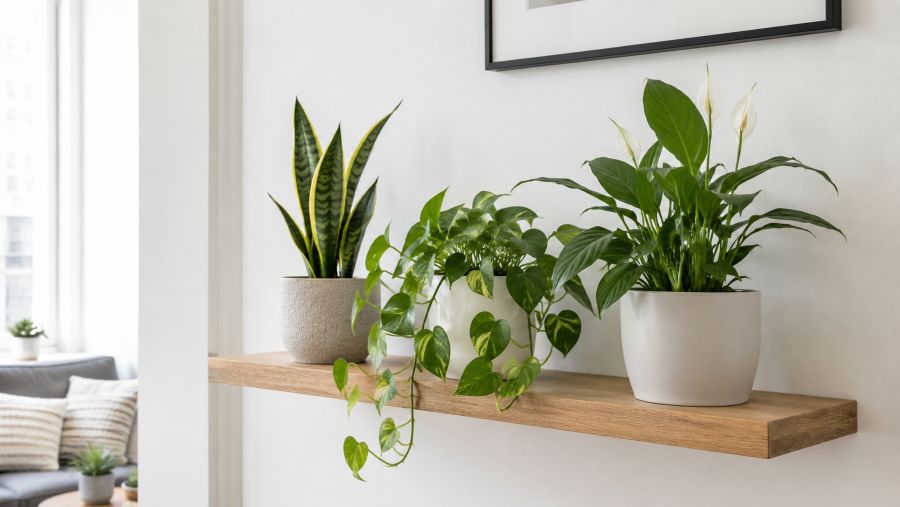
The snake plant is nearly indestructible, tolerates low light, and releases oxygen at night, making it perfect for a bedroom. Pothos trails beautifully from a high shelf and helps filter common indoor pollutants. The peace lily not only freshens the air but also signals when it needs water by drooping its leaves, which suits beginners well. For a scented bonus, a small pot of fresh mint, basil, or lavender on a sunny windowsill releases a gentle natural fragrance every time you brush past it.
Smart Small Space Tip: In tight quarters, go vertical with your greenery. Wall-mounted planters, hanging pots, and a single tall floor plant deliver air-purifying benefits while keeping counters and floors clear for everyday living.
Daily and Weekly Habits That Keep Air Fresh
Natural freshness is far easier to maintain than it is to recover, so a few small routines will keep your apartment consistently pleasant. The goal is to stop odors from building up in the first place, which means staying ahead of moisture, fabric, and waste before they take hold. None of these habits takes more than a couple of minutes, yet together they make a remarkable difference in a compact space.
- Open windows for at least ten minutes every morning to exchange stale air.
- Take out the kitchen bin daily rather than waiting for it to fill up.
- Hang damp towels to dry fully instead of leaving them bunched on hooks.
- Wash bedding and throws weekly, since fabrics absorb the most odor.
- Wipe kitchen surfaces and the stovetop after cooking to stop grease smells.
- Refresh your baking soda or charcoal absorbers on a regular schedule.
- Run a small dehumidifier in humid months to prevent musty mildew odors.
By weaving these steps into your routine, you create a baseline of clean air that makes any added fragrance shine. A simmer pot or diffuser then becomes a finishing touch rather than a desperate attempt to cover up something unpleasant.
FAQ: Making a Small Apartment Smell Fresh Naturally
Why does my small apartment smell stuffy even when it is clean?
Small apartments have less air volume and often poor cross-ventilation, so everyday odors from cooking, fabrics, and humidity concentrate quickly. Even a spotless space can smell stale if the trapped air is never exchanged, which is why regular ventilation and odor absorbers matter more in compact homes than in larger ones.
What is the fastest natural way to freshen a small apartment?
Open two windows on opposite sides of the room for ten minutes to create cross-ventilation, then place a small bowl of baking soda near the source of the odor. For instant fragrance, simmer citrus peels and cinnamon in water on the stove while the air circulates through the space.
Are natural air fresheners safer than commercial sprays?
Natural options such as baking soda, simmer pots, essential oils, and houseplants do not release the synthetic fragrances and aerosols found in many commercial sprays. They tend to be gentler for people sensitive to chemicals, more budget friendly over time, and better suited to small enclosed spaces where the air is harder to refresh.
How do I keep a small apartment smelling fresh without ventilation?
If you cannot open windows, focus on absorbing odors at the source with activated charcoal or baking soda, use a small dehumidifier to control moisture, run an exhaust fan when cooking or showering, and add air-purifying plants. Diffusing diluted essential oils then adds pleasant fragrance once the underlying odors are managed.
Bringing It All Together
Making a small apartment smell fresh naturally comes down to a clear, repeatable rhythm: remove odors at their source, ventilate every day, place natural absorbers where smells gather, and finish with gentle homemade fragrance and a few purifying plants. None of these steps requires expensive products or harsh chemicals, and each one works with the realities of compact living rather than against them.
Start with just one or two changes this week, perhaps a daily morning airing and a bowl of baking soda in the kitchen, then build from there. Within a short time you will notice that your small space feels lighter, cleaner, and genuinely welcoming, proving that a fresh-smelling home has far less to do with square footage and everything to do with smart, consistent habits.
ADeL A.A
ADeL A.A is a home décor and space optimization writer who believes every square foot matters. He spends his time researching, testing, and comparing smart storage ideas, multi-functional furniture, and practical layout solutions — always searching for the best ways to make compact homes feel bigger, brighter, and better organized.
View all articles by ADeL A.A →