Best Low-Light Indoor Plants for Homes and Apartments

A home with dim windows can still feel alive, calm, and beautifully green. If you have ever assumed your low-light living room or shaded studio simply cannot keep plants happy, this guide is here to change your mind. The best low-light indoor plants for homes and apartments are remarkably forgiving, space-friendly, and able to thrive in exactly the conditions most people worry about.
Greenery does more than decorate a room. It softens hard corners, brings a sense of calm to any home, and gives you something living to care for in a space that might otherwise feel flat. Below, you will find the easiest low-light houseplants to grow, how to match each one to your home’s light zones, and the simple care habits that keep them looking their best all year round.
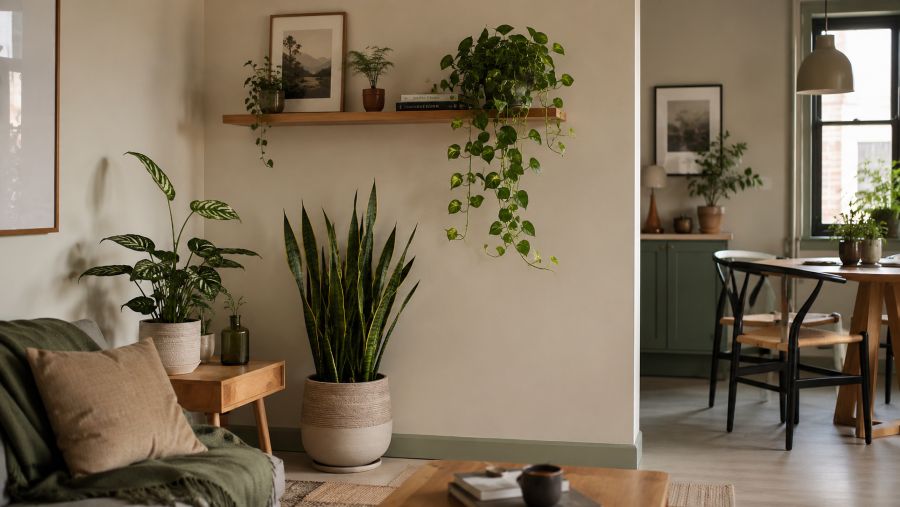
The secret is choosing plants that evolved for shade rather than fighting your home’s natural limits. Many of the most popular houseplants originally grew on rainforest floors or in the dappled understory of larger trees, where strong direct sun never reaches. In your home, those same species treat a north-facing window or a softly lit interior wall as perfectly comfortable. Once you stop trying to grow sun-lovers in the shade and start working with plants that prefer it, success becomes almost automatic.
The quick walkthrough below shows several of these low-light plants growing happily in real low-light conditions, along with how each one is placed and cared for. Watch it first to see what healthy growth looks like, then use the sections that follow to choose and style your own.
With those examples in mind, let’s look at why dim rooms are far more plant-friendly than most people expect.
Why Low Light Doesn’t Mean No Greenery
Low light is one of the most misunderstood phrases in plant care, and that confusion causes a lot of unnecessary disappointment. In practice, the interior of most homes offers more usable light than people assume, especially during the brighter half of the year. The difference between a thriving plant and a struggling one usually comes down to picking the right species for the conditions you actually have, rather than the conditions you wish you had.
It also helps to remember that plants are flexible within limits. A pothos in a dim hallway will simply grow a little slower and a touch leggier than one near a bright window, but it will still grow. By contrast, a fiddle-leaf fig or a succulent placed in that same hallway will decline no matter how carefully you water it. Matching the plant to the place is the single most important decision you make, and it costs nothing.
Understanding “Low Light” in Your Home
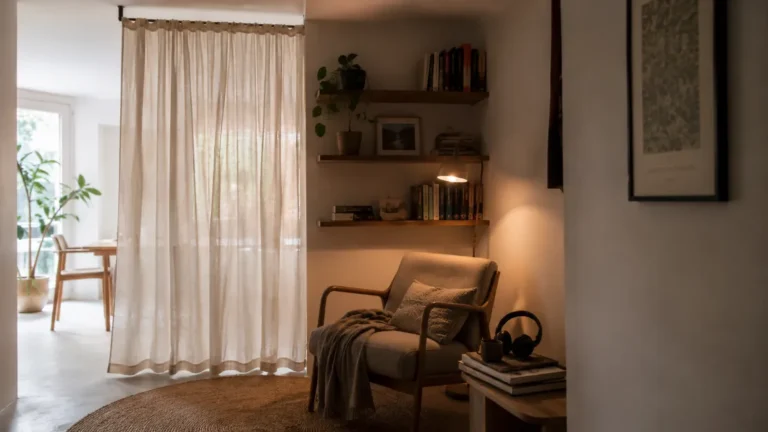
Designers and growers generally describe low light as a spot where you could read a book during the day but would not want to sit for long without a lamp. Think of a north-facing window, an interior wall a few steps back from any window, or a corner that gets bright reflected light rather than direct rays. These are exactly the places where the plants in this guide perform best. True darkness, such as a room with no windows and the lights usually off, is the only condition where you will need to add a small grow light to keep plants healthy.
The Best Low-Light Plants for Compact Spaces
The plants below are the proven champions of dim rooms, and they shine especially in compact homes. Each one tolerates irregular care, fits comfortably on a shelf or a small table, and rewards you with steady greenery despite minimal light. Together they cover a range of shapes and styles, so you can build a varied indoor garden that still respects limited floor space.
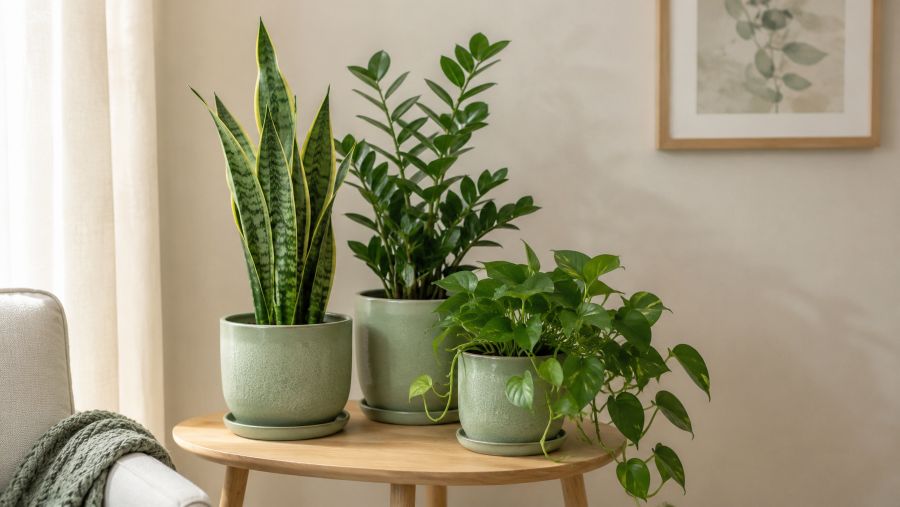
Snake Plant (Sansevieria)
The snake plant is the unofficial mascot of low-light, low-effort houseplants. Its stiff, upright leaves take up almost no floor space, making it ideal for narrow corners and shelf edges, and it can go weeks between waterings thanks to its succulent-like foliage. It tolerates everything from bright indirect light to genuinely dim interiors, which is why it tops nearly every list of easy houseplants.
ZZ Plant (Zamioculcas zamiifolia)
If you want glossy, vibrant green leaves in a spot that barely sees daylight, the ZZ plant is hard to beat. It stores water in thick underground rhizomes, so it shrugs off the occasional missed watering and actually prefers to dry out between drinks. Its waxy leaves reflect what little light reaches them, keeping the plant looking lush even in dim conditions.
Pothos (Epipremnum aureum)
Pothos is the trailing plant that makes any space feel intentional and styled. Set it on a high shelf and let the vines cascade down to draw the eye upward, freeing valuable surface area below. It grows happily in low to moderate indirect light and tells you clearly when it is thirsty by letting its leaves droop slightly, making it a wonderful first plant for beginners.
Peace Lily, Parlor Palm, and Chinese Evergreen
For a little more variety, the peace lily brings elegant white blooms and lush leaves to shaded rooms, while the parlor palm adds a soft, tropical silhouette that stays compact. The Chinese evergreen, available in striking silver and green patterns, tolerates neglect beautifully. Each of these handles low light with ease, letting you mix flowers, fronds, and patterned foliage in a single small collection.
Matching Plants to Your Home’s Light Zones
Before buying anything, spend a day noticing how light moves through your home. Most homes contain several distinct zones, from the relatively bright area near a window to the genuinely dim back of a hallway. Mapping these zones lets you place each plant where it will thrive, which is far more reliable than hoping a single species adapts to every spot.
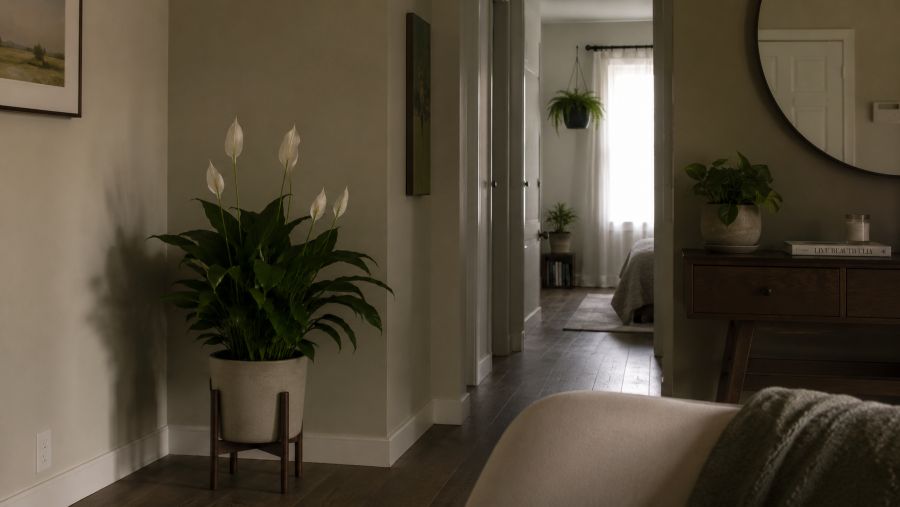
Reserve your brightest indirect spots, usually within a few feet of a window, for the plants that will reward extra light with faster growth and occasional flowers, such as the peace lily or pothos. Push the toughest survivors, the snake plant and ZZ plant, into the dimmer corners where nothing else would last. This simple hierarchy means every plant lands in the right place from day one, and you spend far less time troubleshooting later.
Smart Small Space Tip: Rotate your plants a quarter turn every couple of weeks so they grow evenly instead of leaning toward the brightest side. In any room where light comes from one direction, this tiny habit keeps your plants symmetrical and full, which makes the whole space look more polished.
Care Basics: Keeping Low-Light Plants Alive
The wonderful thing about low-light plants is that they ask for very little, but the little they ask for matters. Because they grow slowly in dim conditions, they use water and nutrients at a relaxed pace, which means the usual instinct to water often actually works against them. Learning to do less, and to do it on the plant’s schedule rather than the calendar’s, is the heart of keeping them healthy.
Overwatering is by far the leading cause of houseplant death. Always check that the top inch or two of soil is dry before watering, use pots with drainage holes, and tip out any water that collects in the saucer. Wipe dust off broad leaves now and then so they can absorb what light is available, and feed sparingly during the brighter months. The comparison below summarizes how to care for the standout picks at a glance.
| Plant | Light Tolerance | Watering | Pet-Safe? |
|---|---|---|---|
| Snake Plant | Very low to bright indirect | Every 2–3 weeks | No, toxic if chewed |
| ZZ Plant | Very low to moderate | Every 2–3 weeks | No, toxic if chewed |
| Pothos | Low to moderate indirect | Weekly when topsoil dries | No, toxic if chewed |
| Peace Lily | Low to moderate indirect | When leaves start to droop | No, toxic if chewed |
| Parlor Palm | Low to moderate indirect | When topsoil feels dry | Yes, non-toxic |
| Spider Plant | Low to bright indirect | Weekly, keep lightly moist | Yes, non-toxic |
Styling Compact Spaces With Low-Light Plants
Once you know which plants will thrive, the fun part begins: arranging them so they enhance your home rather than crowd it. In a compact home, the goal is to add greenery without sacrificing precious floor and surface space, and the answer almost always lies in thinking vertically. Walls, shelves, and the tops of furniture become prime real estate for plants that would otherwise eat into your living area.
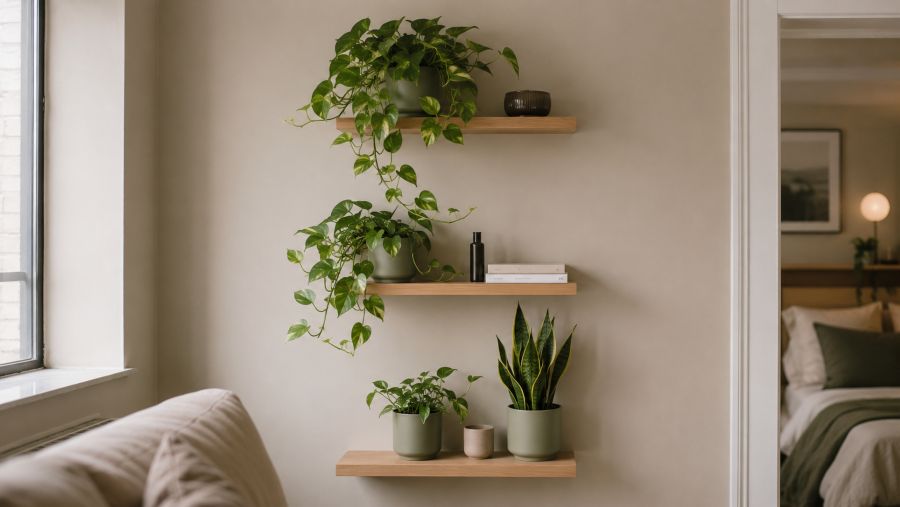
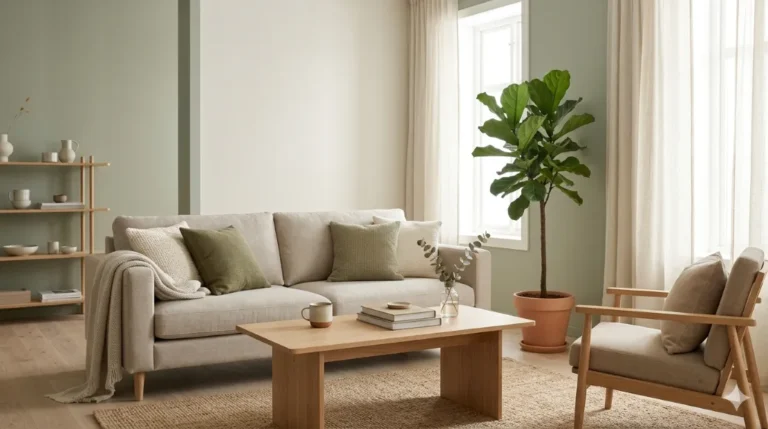
Hang trailing pothos from floating shelves or a wall-mounted planter so the vines draw the eye upward and make ceilings feel higher. Group two or three plants of varying heights together to create a small, intentional cluster rather than scattering single pots that look like afterthoughts. Use the tops of bookcases and the corners of windowsills, and choose pots in a consistent palette of neutral or sage-green tones so the collection reads as styled rather than cluttered. A few well-placed plants will transform a room far more effectively than a dozen crammed onto every surface.
FAQ: Low-Light Indoor Plants
Which indoor plant survives best with almost no natural light?
The ZZ plant and the snake plant are the two toughest choices for very dim rooms. Both store water in their thick stems and leaves, tolerate weeks of neglect, and keep growing in spots that get only weak, indirect light or steady artificial light. If you want a true set-and-forget plant for a windowless corner, start with one of these before trying anything more demanding.
Can indoor plants really grow without any sunlight at all?
No plant survives in total darkness, because all plants need some light to photosynthesize. However, many low-light houseplants thrive on the indirect daylight that reaches the interior of a home, and several do well under ordinary LED room lighting. For a genuinely windowless room, a small full-spectrum grow light running a few hours a day lets even leafy plants flourish.
How often should I water low-light plants indoors?
Low-light plants use water slowly, so overwatering is the most common way they die. As a rule, let the top inch or two of soil dry out completely before watering again, which often means every one to three weeks rather than on a fixed schedule. Always check the soil with your finger first, and make sure every pot has a drainage hole so roots never sit in standing water.
Which low-light plants are safe for cats and dogs?
If you share your home with pets, choose non-toxic options such as the parlor palm, spider plant, cast iron plant, calathea, or peperomia, all of which handle low light well. Avoid pothos, peace lily, philodendron, snake plant, ZZ plant, and Chinese evergreen, which are toxic if chewed. When in doubt, place any new plant out of a pet’s reach until you confirm it is safe.
Bringing Green Life Into Your Low-Light Home
You do not need a sun-drenched home to enjoy the calm and beauty that plants bring. By choosing forgiving low-light champions like the snake plant, ZZ plant, and pothos, mapping your home’s light zones, and watering with a gentle, soil-first approach, you can keep greenery thriving in even the dimmest corner. Start with one easy plant in your darkest spot, watch how it settles in, and add to your collection as your confidence grows. Before long, your home will feel a little more alive, a little calmer, and unmistakably yours.
ADeL A.A
ADeL A.A is a home décor and space optimization writer who believes every square foot matters. He spends his time researching, testing, and comparing smart storage ideas, multi-functional furniture, and practical layout solutions — always searching for the best ways to make compact homes feel bigger, brighter, and better organized.
View all articles by ADeL A.A →