Space-Saving Ideas for Tiny Apartment Kitchens

Living in a tiny apartment doesn’t mean you have to sacrifice a functional, beautiful kitchen. Whether you’re working with a studio apartment, a compact one-bedroom, or a kitchenette, there are countless creative solutions to maximize your cooking space. The key is thinking strategically about every square inch and choosing multi-functional solutions that serve double duty.
In this comprehensive guide, we’ve compiled 20+ proven space-saving ideas that transform cramped kitchens into efficient, organized culinary spaces. From clever storage hacks to smart appliance choices, you’ll discover practical strategies that work in any tiny kitchen layout.
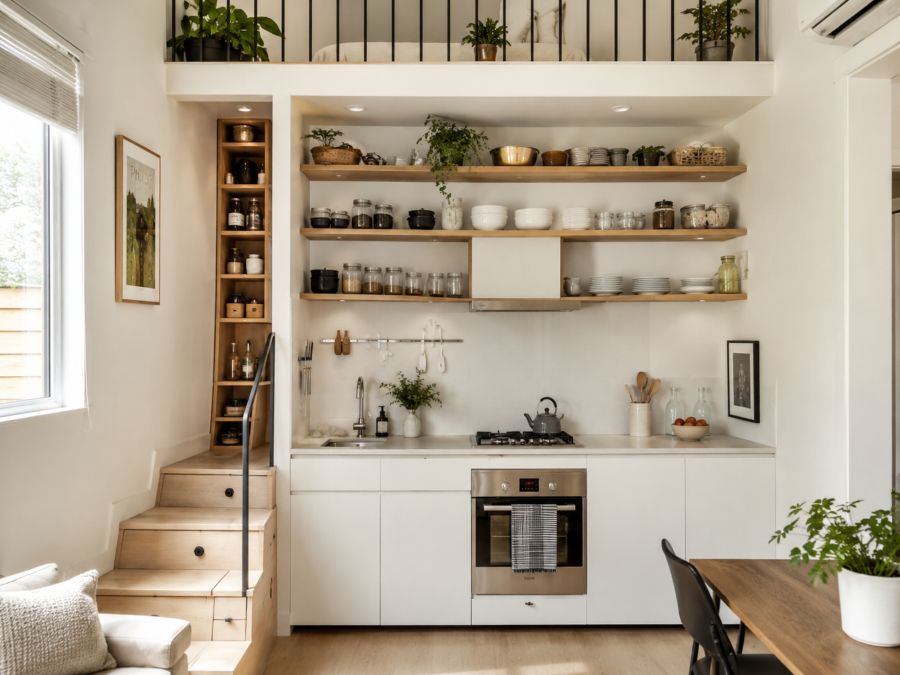
The transformation of a tiny kitchen begins with understanding your space. Take time to measure your kitchen accurately, identify your workflow, and assess what you actually need versus what’s simply taking up valuable real estate. Many people find that removing items they rarely use creates surprising amounts of space without any renovations. The psychology of small space living embraces intentionality—every item should have a clear purpose and dedicated location.
Vertical Storage: Your Secret Weapon for Tiny Kitchens
When floor space is limited, look up. Vertical storage is absolutely transformative in small kitchens because it uses wall space that would otherwise go to waste. The vertical dimension of your kitchen offers enormous untapped potential that most people overlook. Professional chefs and designers consistently emphasize that vertical organization is non-negotiable in compact spaces.
Wall Shelves and Open Shelving
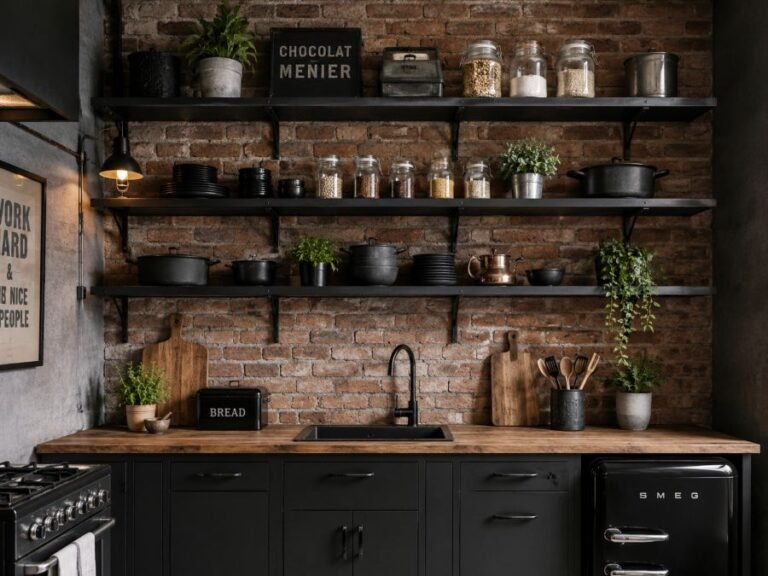
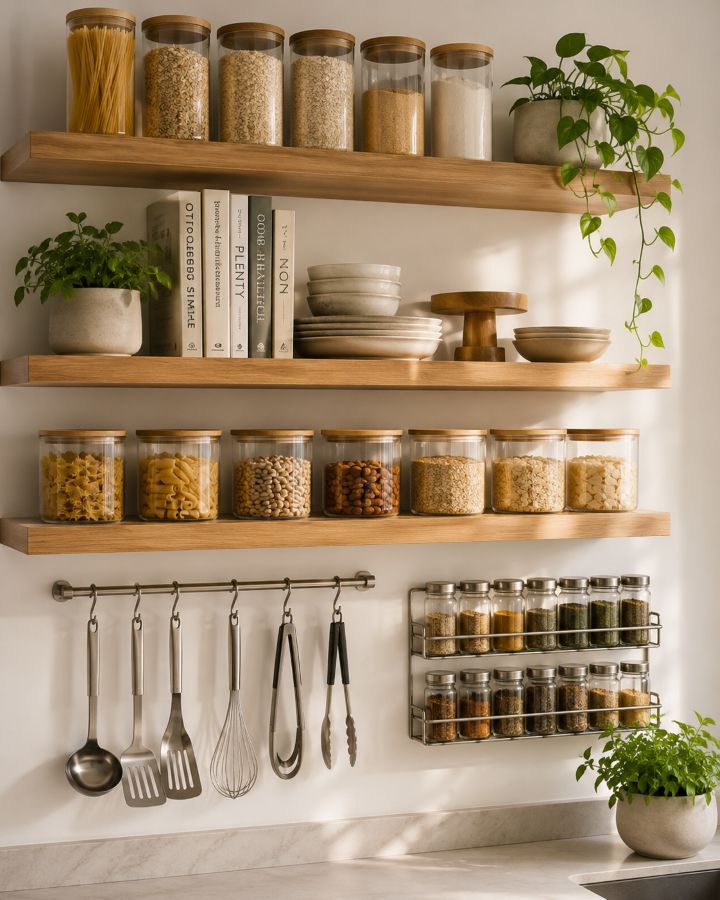
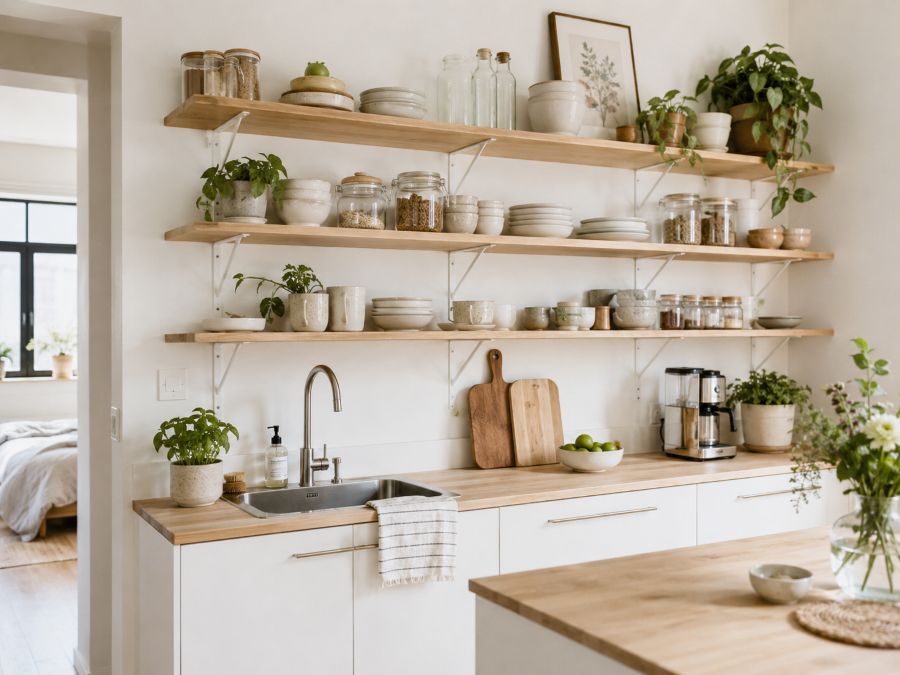
- Floating shelves above the counter, sink, or stove provide instant storage without a bulky footprint. Install them at various heights to maximize visual interest and functionality while keeping frequently used items within arm’s reach.
- Corner shelves capture dead space in corners that cabinet doors can’t reach. These triangular or L-shaped shelves are perfect for displaying small appliances, cookbooks, or decorative items while maintaining an open, airy feel.
- Over-the-door organizers add significant storage capacity in a single moment. Install these on cabinet doors, pantry doors, or even the kitchen entry door to store spices, oils, cleaning supplies, or lightweight cooking tools.
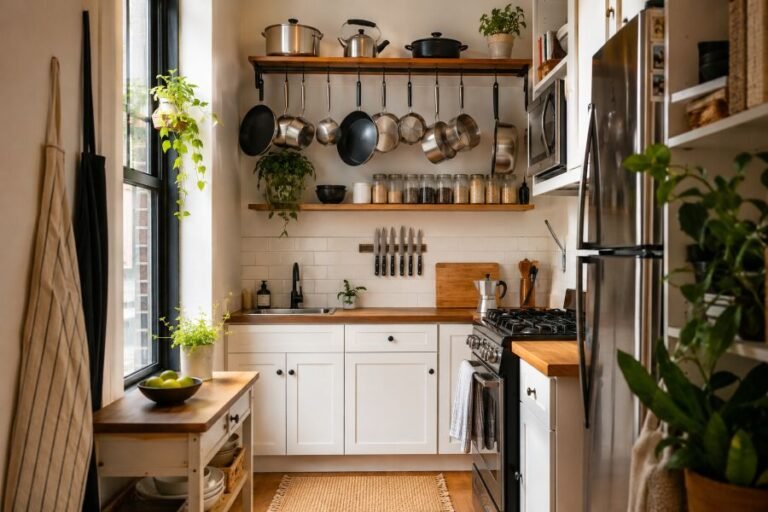
- Magnetic strips mounted on walls keep knives, scissors, and metal tools organized and accessible. These simple installations free up valuable drawer and counter space while adding a modern design element.
Smart Small Space Tip: When using open shelving, maintain visual balance by grouping items by color and size. Store plates and bowls upright rather than stacked, and use attractive containers for bulk items. This approach makes your small kitchen feel intentional and curated rather than cramped.
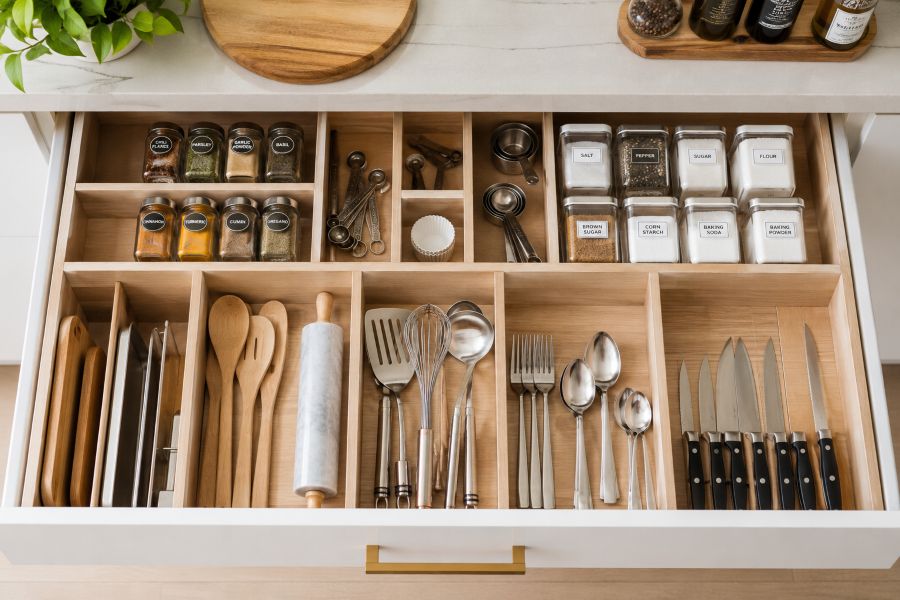
Drawer Organization and Dividers
Drawers are precious real estate in tiny kitchens, so maximizing their potential is crucial. Without proper organization, drawers become chaotic black holes where valuable items get lost. Strategic dividers transform drawers from cluttered catch-alls into organized systems that maximize capacity while keeping everything visible and accessible.
Invest in adjustable drawer dividers that expand to fit your specific drawers. These compartments should be customized to your actual cooking habits. Store utensils, measuring tools, and small gadgets in separate sections so you can find what you need instantly. Vertical storage within drawers works similarly to vertical wall storage—using the full depth of your drawers means more items in the same footprint.
Maximizing Drawer Potential
- Tiered drawer organizers stack items vertically within drawers, doubling or tripling capacity without adding width or depth to cabinet footprints.
- Utensil caddies keep cooking utensils, spatulas, and wooden spoons corralled in one compact spot on the counter or in a drawer.
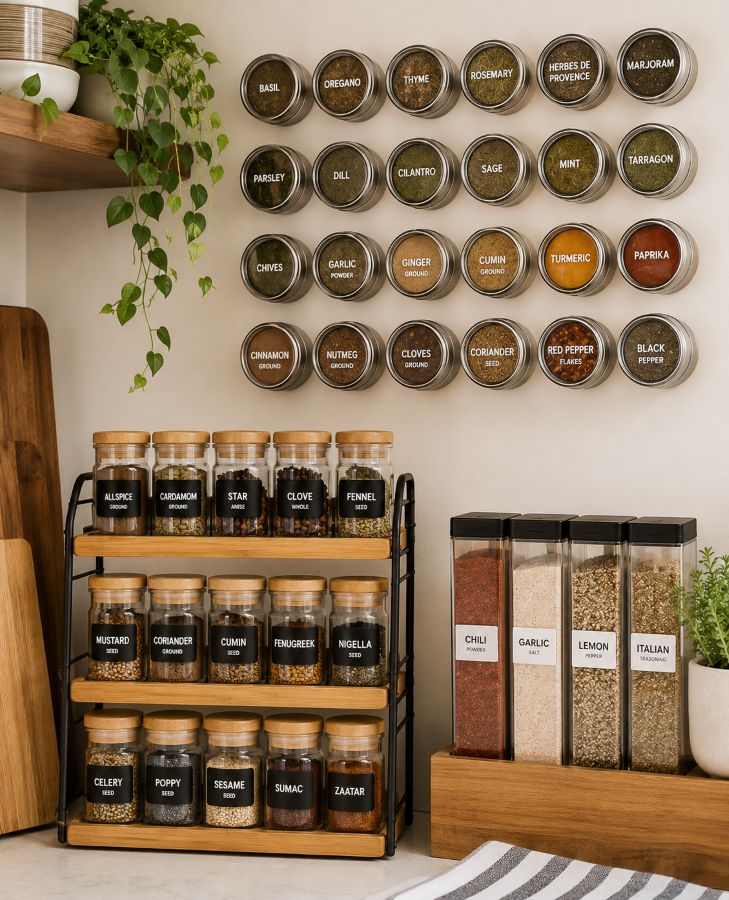
- Spice drawer inserts organize jars in a grid pattern, making spices easy to locate and fitting more into limited storage space than traditional cabinet storage.
- Knife blocks in the corner of a drawer or on the counter keep sharp knives safe while using vertical space efficiently.
Multi-Functional Furniture and Appliances
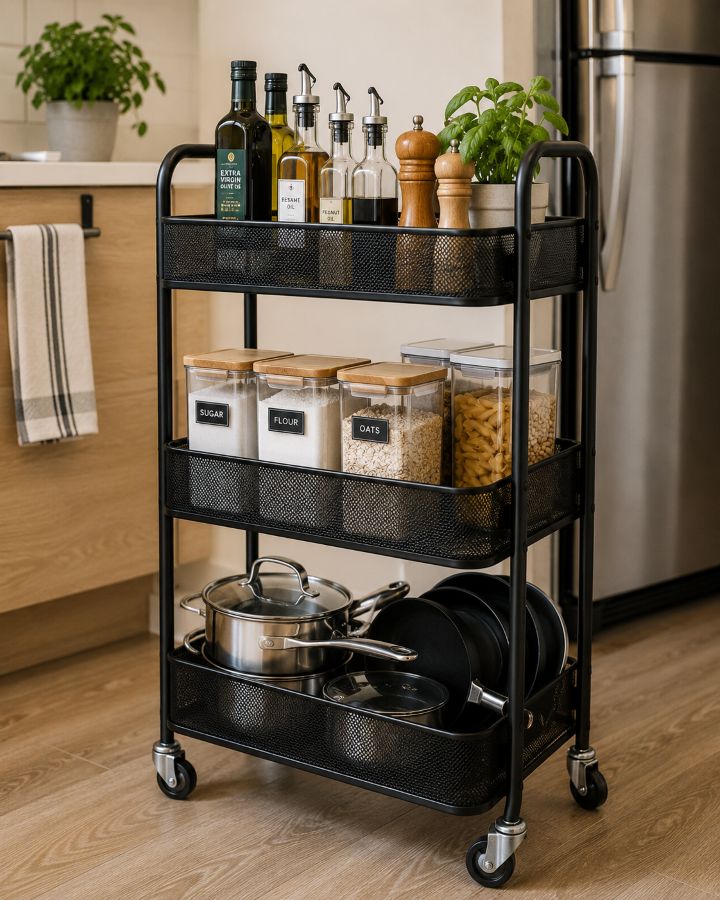
In tiny kitchens, every piece of furniture and every appliance must earn its place by serving multiple purposes. Kitchen islands have traditionally been the domain of spacious kitchens, but scaled-down versions are absolute game-changers for compact spaces. A narrow kitchen island or cart provides additional counter space, storage underneath, and can even serve as casual seating with tall bar stools tucked underneath.
Kitchen tables with storage underneath offer dining functionality plus hidden storage for pantry items, mixing bowls, or small appliances. Wall-mounted tables that fold down when not in use provide dining space that completely disappears when you need counter workspace. These solutions transform your kitchen’s functionality without permanent renovations.
Space-Saving Appliance Choices
Choosing the right appliances makes an enormous difference in tiny kitchens. Rather than a traditional full-sized oven and stovetop, consider these alternatives:
| Appliance Type | Space Advantage | Best For |
|---|---|---|
| Toaster Oven | Takes 1/3 the space of a full oven, uses less electricity, heats faster | Roasting vegetables, baking small batches, reheating leftovers |
| Portable Induction Cooktop | Completely portable, heats quickly, safer than gas or electric coils | Cooking, meal prep, extra burner capacity during entertaining |
| Compact Refrigerator | Dramatically reduces footprint, uses less energy and water | Single occupants, studios, supplementary fridge for extra storage |
| Instant Pot or Multi-Cooker | Replaces multiple appliances, extremely versatile, one-pot meals | Cooking rice, beans, soups, stews, meal prep, pressure cooking |
| Microwave Combination | Microwave-convection or microwave-grill in one unit | Cooking, reheating, grilling, and baking in a single appliance |
Door and Wall Space Utilization
Your kitchen doors and walls are valuable real estate that often remains underutilized. Cabinet doors themselves can hold additional storage through simple adhesive hooks, magnetic strips, or purpose-built organizers. A single cabinet door can store 10–15 items with the right organizational system, significantly reducing pressure on counter and shelf space.
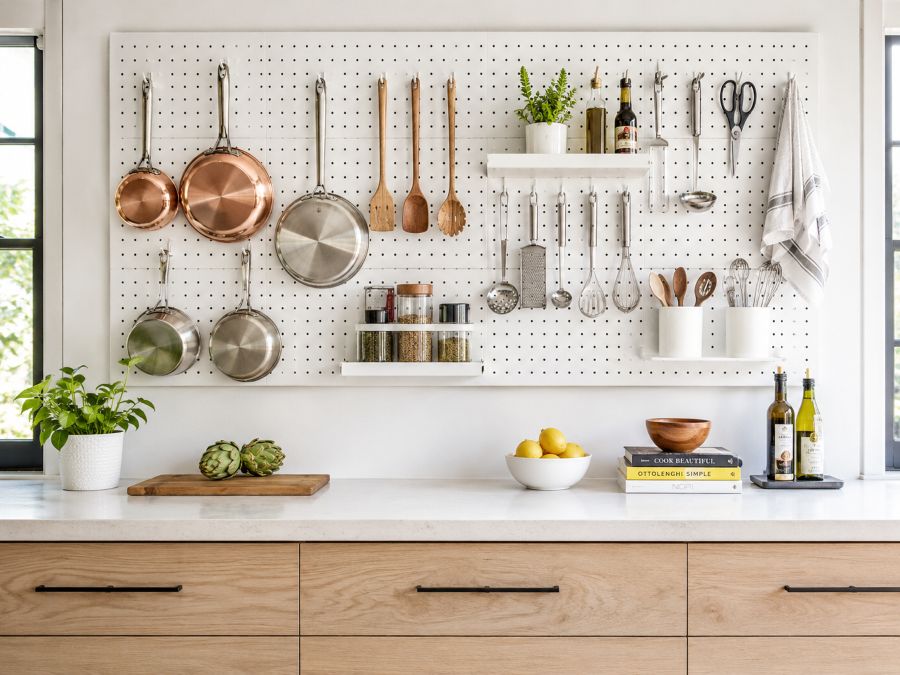
The wall above your stove or sink is ideal for a pegboard system. Pegboards allow complete customization of hooks, shelves, and baskets to accommodate your specific tools and cooking style. Unlike fixed shelving, pegboards can be rearranged as your needs change, making them perfect for renters or anyone hesitant about permanent modifications.
Counter Space Strategies
Counter space is perhaps the most precious commodity in a tiny kitchen. Clear counters visually enlarge your space while providing psychological comfort and actual functional workspace. Every item on your counter should be something you use daily or something decorative that adds genuine value to your kitchen’s aesthetic.
Appliances you use daily can remain on the counter, but seasonal items, backup appliances, and occasional-use gadgets should find homes in cabinets, under-sink storage, or on high shelves. A simple rule: if you haven’t used it in three months, it doesn’t belong on your counter. This mindset creates breathing room that makes your tiny kitchen feel significantly larger.
Counter Organization Essentials
- Minimize appliances to the essentials you use daily. Store backup appliances and seasonal tools elsewhere, and consider combo appliances that replace multiple devices.
- Use vertical containers for utensils and cooking tools rather than drawer dividers that consume counter surface area.
- Mount a magnetic spice rack on a wall or side of the refrigerator to free up cabinet and counter space.
- Install a hanging pot rack if you have ceiling clearance, transforming this overhead space into functional storage while maintaining a light, open feeling.
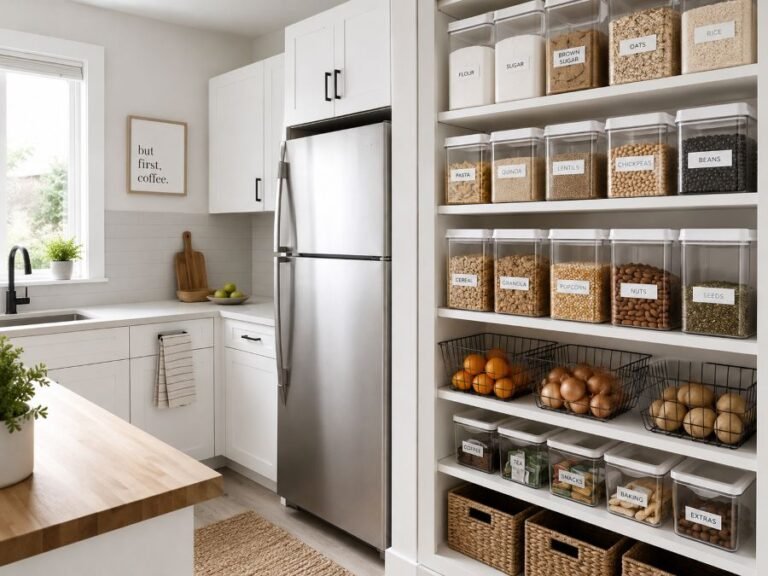
- Use clear containers for frequently accessed items like flour, sugar, pasta, and cereals. Clear containers stack efficiently and let you see what you need without opening them.
Smart Small Space Tip: Create “zones” on your limited counter space. A cooking zone with your stovetop and prep space, a beverage zone with your coffee maker and cups, and a cleanup zone near the sink help you work efficiently and keep counter items intentionally grouped.
Under-Sink Storage and Plumbing Solutions
The space under your sink is another often-wasted area in tiny kitchens. While plumbing takes up real estate, clever organization makes this space productive. Under-sink shelving systems stack vertically to maximize this awkward space, creating multiple shelves where you might normally store just two or three items.
Store cleaning supplies, trash liners, and less-frequently-used items under the sink. Tension rods create hanging storage for spray bottles, freeing up valuable shelf space. Sliding baskets organize items and make everything visible and accessible rather than having things disappear in the back of the cabinet.
Dining Solutions for Tiny Kitchens
The challenge of fitting dining functionality into a tiny kitchen requires creative thinking. Wall-mounted tables that fold down when not needed can seat two to four people with barely any footprint. These solutions look like simple shelves until you need them, making them perfect for studio apartments and tight galley kitchens.
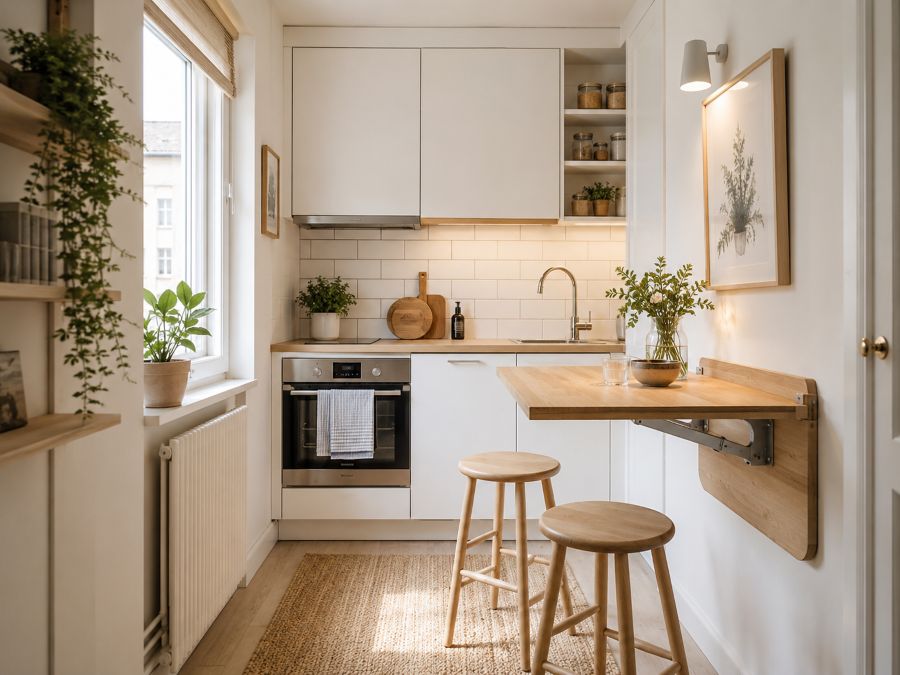
Bar-style seating along a counter offers another excellent alternative to traditional tables. Tall chairs with small footprints tuck entirely under the counter when not in use. Kitchen islands with integrated seating serve triple duty as counter space, storage, and dining area. Round tables occupy less visual space than rectangular ones and allow better flow in tight areas.
Color and Lighting Strategies
While not strictly about storage, the colors you choose and the lighting in your tiny kitchen dramatically affect how spacious it feels. Light, neutral colors on walls make small spaces feel significantly larger and brighter. Whites, creams, soft grays, and pale pastels visually expand the space while providing a clean backdrop for your personality and style.
Lighting is equally critical. Good lighting makes spaces feel larger, safer, and more inviting. Layer your lighting with overhead fixtures, under-cabinet lighting, and task lighting over work areas. Under-cabinet LED strips illuminating your countertop add brightness while maintaining a sleek, modern aesthetic that doesn’t require any additional counter space.
FAQ: Space-Saving Tiny Apartment Kitchens
How can I maximize storage in a tiny apartment kitchen?
Maximize storage by using vertical space with wall shelves, installing magnetic strips for knives, using drawer dividers, hanging pots and pans, utilizing the space above the door, and choosing multi-functional furniture. Over-the-door organizers, corner shelves, and under-sink storage solutions are also highly effective for creating surprising amounts of storage without expanding your kitchen’s footprint.
What are the best space-saving kitchen appliances for small apartments?
The best space-saving appliances include compact refrigerators, toaster ovens, portable induction cooktops, mini food processors, and combination microwave-convection ovens. These appliances provide full functionality without taking up excessive counter or cabinet space. An Instant Pot or multi-cooker is particularly valuable because it replaces multiple appliances with a single unit.
Can I fit a dining table in a tiny apartment kitchen?
Yes! Consider wall-mounted drop-leaf tables, small round tables, kitchen islands with built-in seating, or bar stools along the counter. Foldable tables are also excellent options that can be stored away when not in use, completely disappearing from your space until mealtimes.
What color schemes work best for small kitchens?
Light colors like white, cream, pale gray, and soft pastels make small kitchens feel larger and more open. Pair light walls with darker accents or consider a monochromatic color scheme to create visual continuity and spaciousness. The goal is creating as few visual “breaks” as possible to maintain the illusion of expanded space.
Conclusion: Creating Your Perfect Tiny Kitchen
Transforming a tiny apartment kitchen into a functional, beautiful, and organized space is absolutely achievable with strategic planning and creativity. The key is approaching your limited square footage as a design opportunity rather than a limitation. Every space-saving solution you implement compounds with others, multiplying your functionality without expensive renovations or moving to a larger apartment.
Start with the organizational solutions that will have the biggest immediate impact—vertical shelving, drawer dividers, and removing items you don’t actually use. Add multi-functional furniture and space-saving appliances as your budget allows. Pay attention to color and lighting to make your space feel larger and brighter. Most importantly, maintain intentionality about every item in your kitchen, keeping only tools and decorative pieces that truly serve your lifestyle and make you happy. Your tiny kitchen will become a place you love spending time, proving that good design has nothing to do with square footage and everything to do with thoughtful planning.
ADeL A.A
ADeL A.A is a home décor and space optimization writer who believes every square foot matters. He spends his time researching, testing, and comparing smart storage ideas, multi-functional furniture, and practical layout solutions — always searching for the best ways to make compact homes feel bigger, brighter, and better organized.
View all articles by ADeL A.A →