How to Organize a Small Kitchen With Limited Cabinets

A small kitchen with limited cabinet space might feel like a challenge, but with the right organizational strategies and storage solutions, you can create a functional kitchen that’s actually easier to navigate than larger spaces. When every inch counts, smart organization becomes essential. The key to successfully organizing a small kitchen is combining ruthless decluttering, vertical storage solutions, and multi-functional furniture that maximizes every available space without creating visual clutter.
This comprehensive guide explores proven techniques for organizing small kitchens with limited cabinets. You’ll learn how to declutter effectively, implement smart storage solutions, and create systems that keep your kitchen functional and beautiful despite space limitations. Whether you’re working with a studio kitchen, a galley kitchen, or a compact galley layout, these strategies will help you make the most of what you have.
Small kitchen organization begins with an honest assessment of what you actually need and use. Many people hold onto kitchen items out of obligation or someday scenarios that rarely materialize. Gadgets that promised to revolutionize cooking, duplicate tools, and expired pantry items take up valuable space without adding value. By creating a lean, purposeful kitchen where every item has a reason for being there, you immediately free up space and create a kitchen that functions better because everything you use regularly is easily accessible.
Declutter Your Small Kitchen Ruthlessly
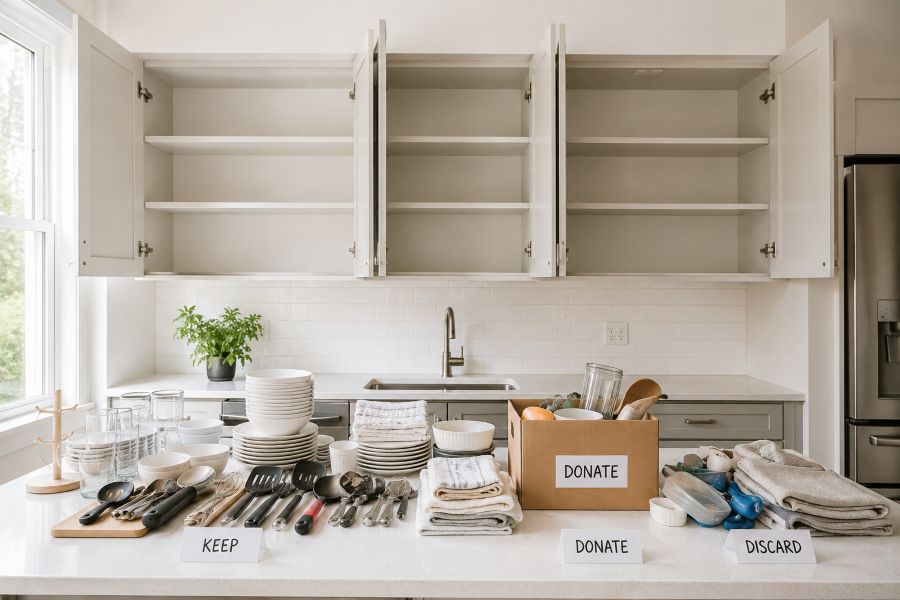
The foundation of small kitchen organization is removing items you don’t actually use. This process feels uncomfortable initially because it requires questioning long-held habits and beliefs about kitchen tools and foods. But the payoff is immense. A decluttered kitchen not only has more functional storage space but also feels less stressful to work in. You can find items quickly, your cooking process is more efficient, and you spend less time navigating around unnecessary clutter. Be honest about single-use gadgets, duplicate tools, and items taking up premium cabinet space.
Categories to Declutter First
- Single-use gadgets and appliances that don’t earn their storage space with regular use
- Duplicate tools like multiple spatulas, wooden spoons, or measuring cups when you only use one
- Expired foods in your pantry and expired spices in your cabinets or drawers
- Broken items like chipped dishes, broken gadgets, or leaking containers that you’ve been meaning to replace
- Kitchen towels, pot holders, and linens that are stained, worn, or unused
- Cookware and dishes in styles or sizes you never actually cook with or use
Maximize Vertical and Wall Space
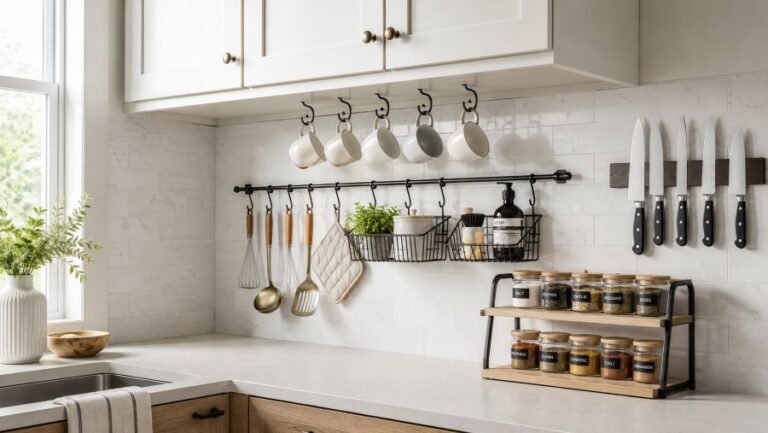
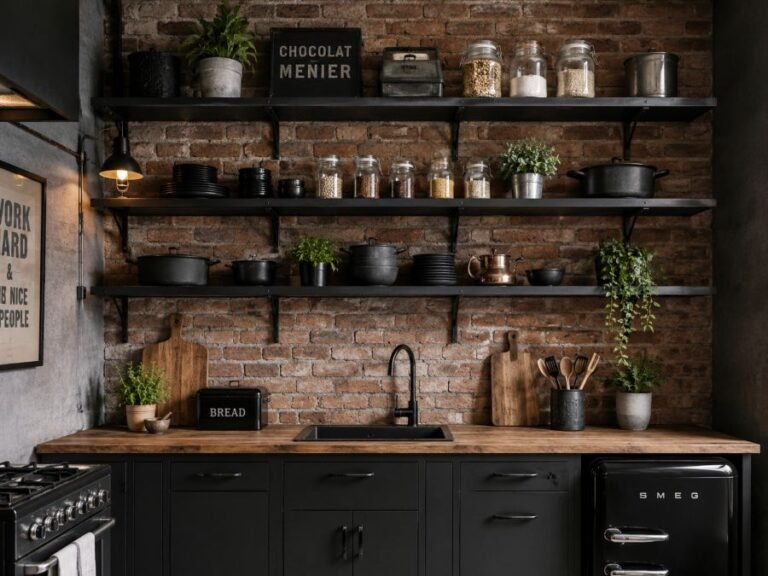
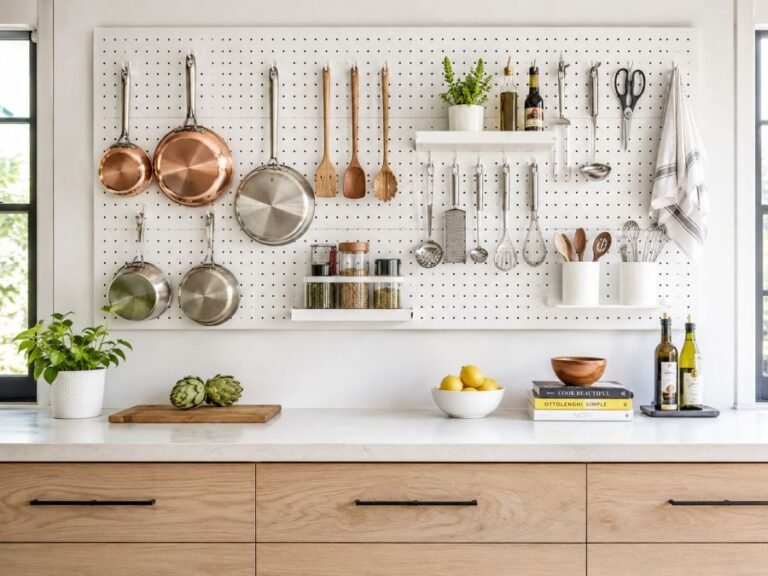
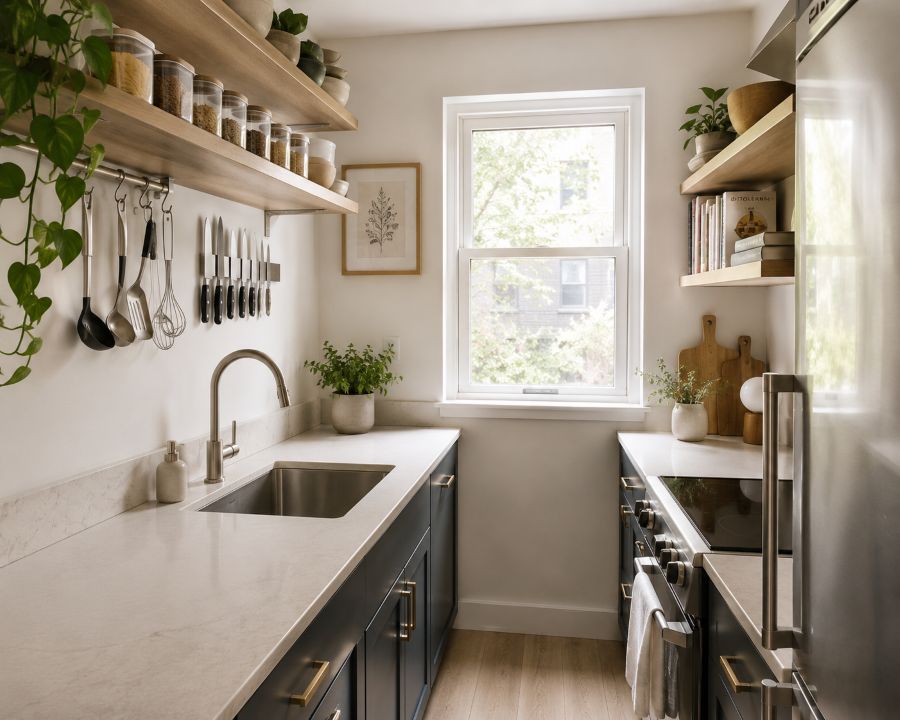
In small kitchens with limited cabinet space, vertical and wall space becomes as valuable as cabinet real estate. Floating shelves mounted on walls provide open storage for frequently used items while visually expanding the kitchen. Wall-mounted magnetic strips hold knives and metal utensils safely while keeping drawer space free. Over-cabinet racks and hanging organizers make use of otherwise wasted space above cabinet doors. The key is using these solutions strategically to keep your kitchen from looking cluttered while making efficient use of available space. Balance open shelving with closed cabinet storage to prevent visual overwhelm.
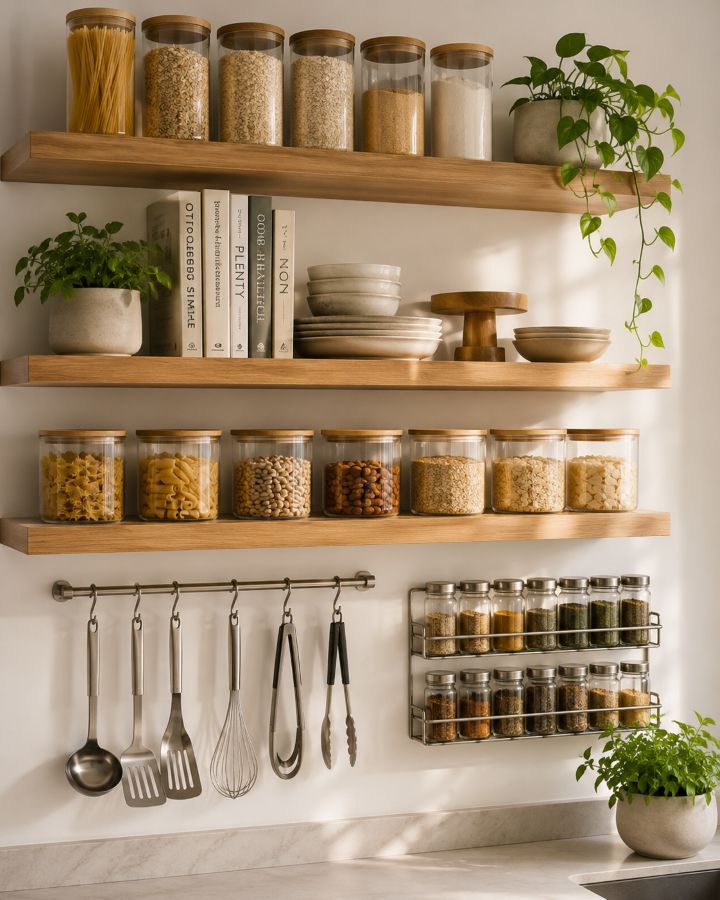
Smart Small Space Tip: Before drilling holes for permanent wall storage, try removable options like adhesive strips and tension rods. These allow you to test layouts and adjust as needed without damaging walls. Many small apartments don’t allow permanent modifications, so removable solutions provide flexibility.
Implement Cabinet Organization Systems
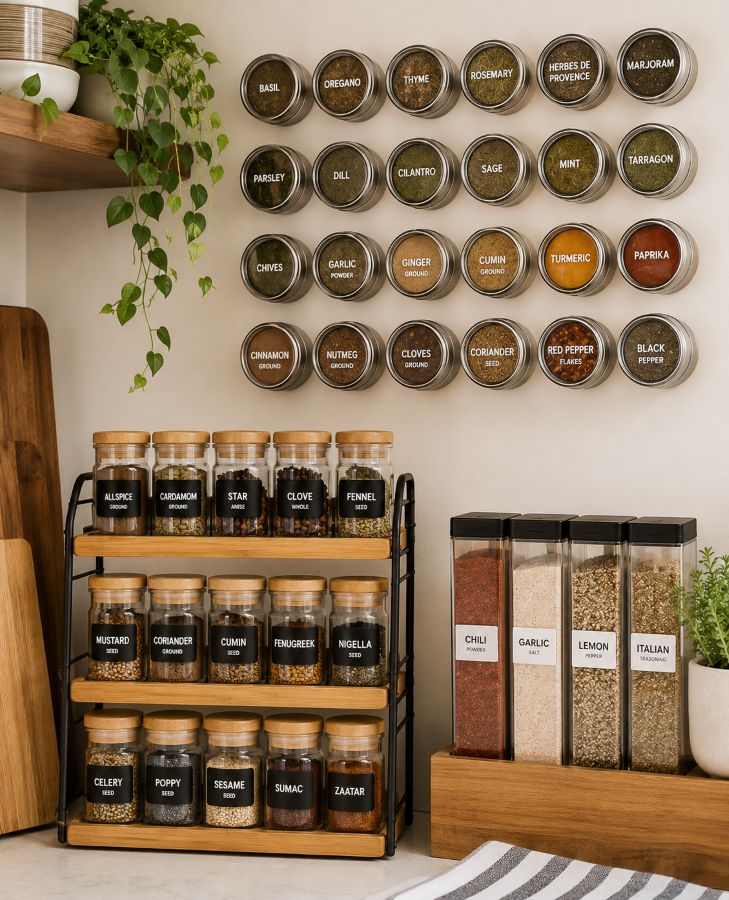
Every inch of existing cabinet space must be optimized in small kitchens. Stackable shelf dividers transform single-level shelves into double-level storage. Pull-out drawers and sliding organizers make accessing items at the back of deep cabinets easier. Under-sink organizers with tiered shelving maximize that often-wasted space. Door-mounted spice racks and small organizers use interior cabinet door space that would otherwise go unused. Lazy Susans in corner cabinets make accessing items in hard-to-reach spaces much easier. Each of these solutions costs just a few dollars but dramatically improves kitchen functionality.
Cabinet Organization Priorities
Focus your organizational efforts on the cabinets you use most frequently. Your everyday dishes, most-used cooking utensils, and frequently accessed foods should be in the easiest-to-reach locations. Assign every item a specific home so you and anyone else using the kitchen knows exactly where things belong. This system makes unloading groceries and cleaning up after cooking much faster because everything has a designated spot. Items used infrequently can occupy less-accessible spaces like the highest shelves or deepest corners.
| Storage Solution | Best Uses | Space Efficiency |
|---|---|---|
| Stackable shelf dividers | Plates, bowls, baking pans | Excellent – doubles shelf capacity |
| Pull-out sliding organizers | Items in deep cabinets, pots and pans | Very good – improves access |
| Over-cabinet racks | Paper towels, small appliances, spices | Good – uses wasted above-cabinet space |
| Door-mounted organizers | Spices, small containers, bags | Very good – maximizes door space |
| Wall-mounted magnetic strips | Knives, metal utensils | Excellent – frees drawer space |
| Stackable containers and bins | Pantry items, leftovers, produce | Very good – vertical stacking |
Organize Your Pantry Efficiently
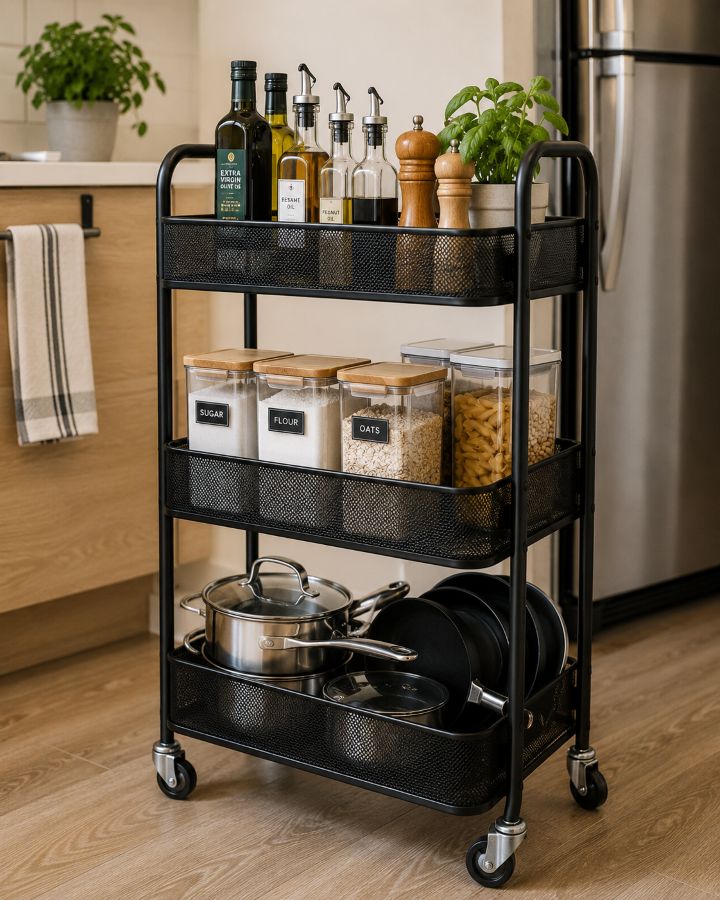
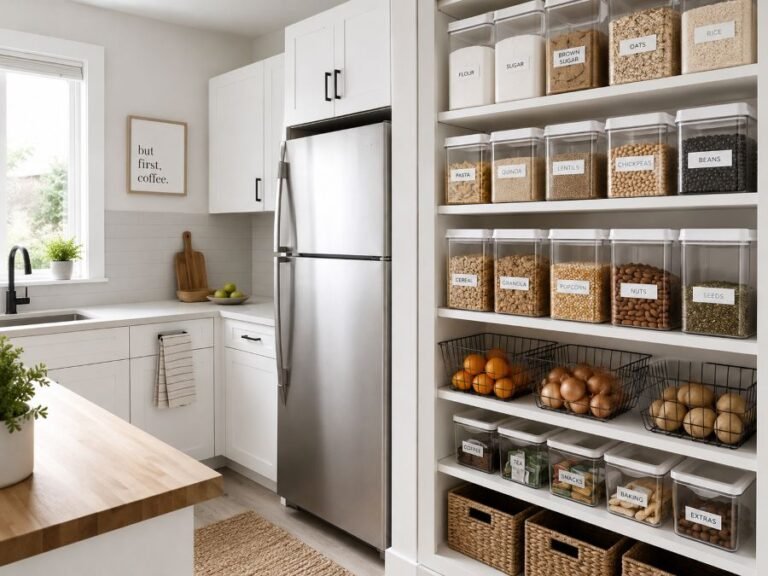
Pantry organization in small kitchens requires a different approach than traditional large pantries. Stackable clear containers let you see contents without opening them and make better use of shelf space than original boxes. Label everything so you know when items expire and can avoid buying duplicates. Group items by category: baking supplies together, snacks together, canned goods together, and so on. This system helps you use ingredients before they expire and makes meal planning and shopping easier because you know exactly what you have on hand.
Smart Appliance and Equipment Storage
Small kitchens rarely have counter space to spare for multiple appliances. Evaluate each appliance honestly: do you use it regularly enough to justify the space it occupies? Items used weekly deserve counter space, while items used monthly or less often should be stored in less-accessible spaces or removed entirely. For the appliances you keep, use vertical storage like wall-mounted knife blocks or countertop shelving to stack items efficiently. Under-cabinet mounted shelves create storage without consuming floor or counter space.
FAQ: Small Kitchen Organization
How do I organize a small kitchen with limited cabinet space?
Start by ruthlessly decluttering to keep only essential items. Use vertical storage solutions like stackable shelves, wall-mounted racks, and over-cabinet organizers. Maximize cabinet space with dividers and door-mounted racks. Consider portable storage solutions for items used less frequently. Every surface counts in small kitchens, so think creatively about unused wall space and vertical opportunities.
What kitchen items should I declutter first?
Prioritize removing duplicate gadgets, single-use appliances you rarely use, broken items, and expired foods. Keep only cookware and utensils you actually use regularly. Ask yourself if you’ve used something in the past year, and if not, it deserves the donate pile. This honest assessment immediately frees up valuable space.
What are the best storage solutions for small kitchens?
Wall-mounted magnetic strips for knives, stackable containers for pantry items, under-sink organizers with sliding shelves, over-door racks for spices, and vertical wall shelving are among the most effective solutions. Choosing multi-functional storage items helps maximize limited cabinet space while maintaining visual clarity.
Create Your Organized Small Kitchen
Organizing a small kitchen with limited cabinets requires a strategic combination of ruthless decluttering, smart storage solutions, and efficient systems. By implementing these proven techniques, you can create a kitchen that functions beautifully despite space limitations. Remember that small kitchens often become easier to work in than large ones once properly organized because everything is within arm’s reach and systems are simpler to maintain. Start with decluttering, then layer in storage solutions that match your space and needs. Your organized small kitchen will reward your effort with efficiency and ease every single day.
ADeL A.A
ADeL A.A is a home décor and space optimization writer who believes every square foot matters. He spends his time researching, testing, and comparing smart storage ideas, multi-functional furniture, and practical layout solutions — always searching for the best ways to make compact homes feel bigger, brighter, and better organized.
View all articles by ADeL A.A →