How to Arrange Furniture in a Small Bedroom

A small bedroom doesn’t have to feel cramped or uncomfortable. With thoughtful furniture arrangement and strategic design choices, you can transform even the most compact sleeping space into a cozy, functional retreat. This comprehensive guide explores practical layouts, space-saving techniques, and expert tips to help you maximize every square inch of your bedroom while maintaining comfort and style.
Understanding Your Small Bedroom Space
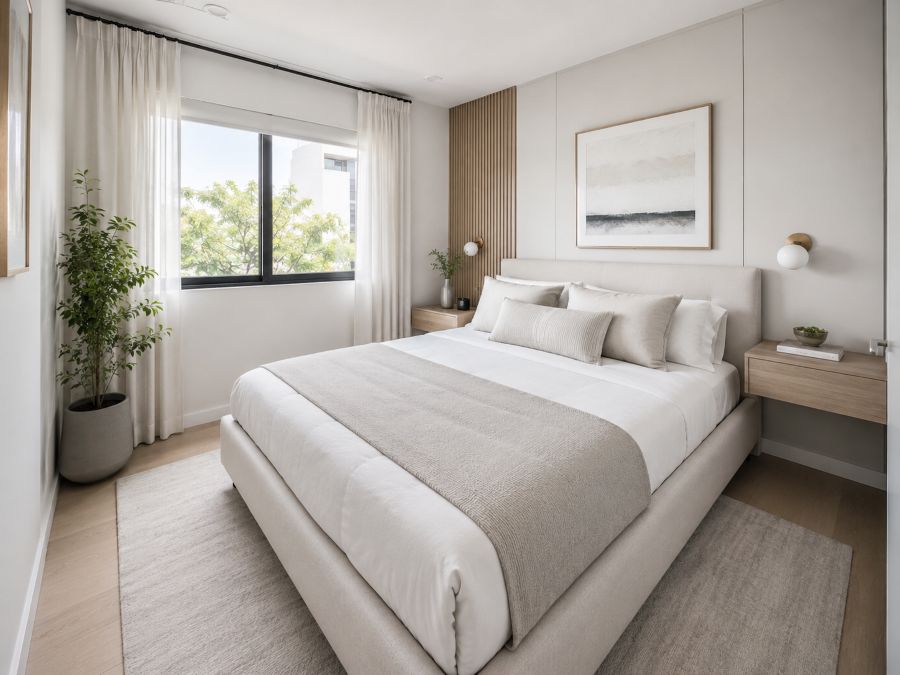
Before you begin rearranging your furniture, take time to understand the unique characteristics of your small bedroom. Measure your room dimensions, note the location of windows and doors, and identify any architectural features like sloped ceilings or closets that may affect furniture placement. Understanding these elements is crucial for creating a layout that works with your space rather than against it.
Every small bedroom presents different challenges. A room measuring 10×12 feet requires different solutions than one measuring 8×10 feet. Consider traffic flow, natural light patterns, and how you’ll use the space during different times of day. Will you work from bed? Exercise in the room? Do you need a dedicated workspace? These questions should guide your furniture arrangement decisions.
The Golden Rules of Small Bedroom Furniture Arrangement
Successful small bedroom design follows several fundamental principles that work together to create functional, beautiful spaces. These guidelines have been tested across countless bedrooms and consistently deliver impressive results.
1. Make the Bed Your Focal Point
In most small bedrooms, the bed will be your largest and most important furniture piece. Making it your focal point helps organize the entire room around this anchor. The bed should typically go against the longest wall, which maximizes floor space and creates a sense of balance. This placement draws the eye to the headboard, making it an ideal spot for a feature wall or decorative elements.
Positioning the bed against the longest wall also creates better sight lines through the room, making the space feel larger. Avoid placing the bed in the center of the room or floating it, as this consumes precious square footage and disrupts the flow of a small space.
2. Maintain Clear Pathways
Pathways are essential in small bedrooms. Keep at least 24-30 inches of clear space for walking, and ensure you can easily access your closet, door, and other essential areas. Well-planned pathways create psychological space—even if your bedroom is small, clear movement routes make it feel more open and less cluttered.
When planning pathways, consider how you move through the room throughout the day. You need clear access from the door to the bed, from the bed to the closet, and to any other furniture pieces you use regularly. Blocked pathways don’t just waste space; they create frustration and make the room feel cramped.
3. Choose Furniture with Legs
Furniture with legs allows sight lines under pieces, making the room feel more spacious and less weighed down. Beds with storage underneath, nightstands with open frames, and dressers with visible legs all contribute to an airier feel. Avoid bulky pieces that sit directly on the floor, as they visually anchor themselves and make spaces feel smaller.
4. Utilize Vertical Space
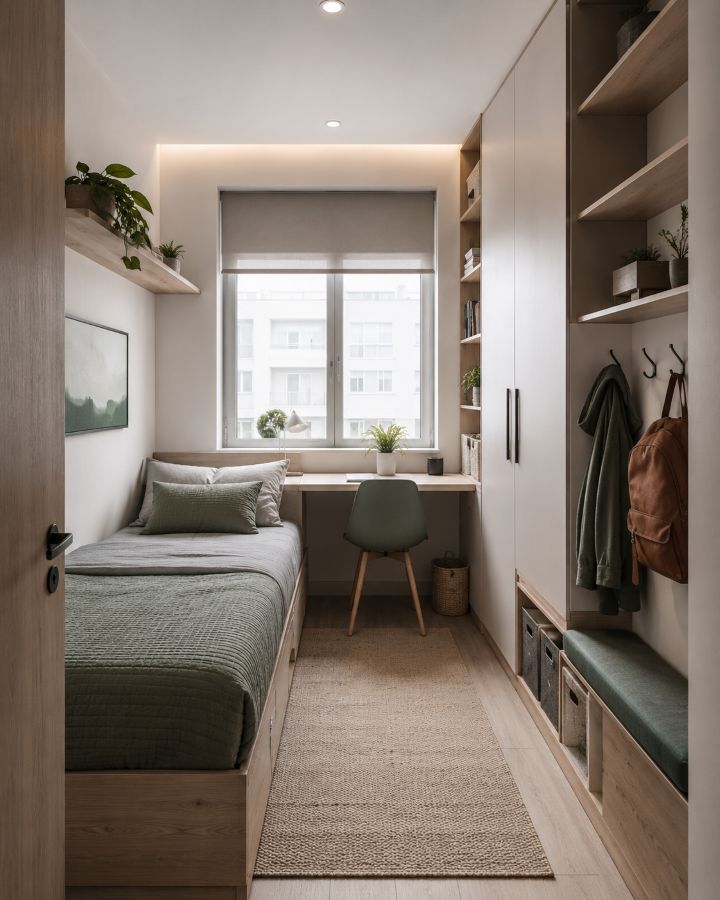
Small bedrooms should prioritize vertical storage over horizontal. Wall-mounted shelves, tall bookcases, and vertical storage solutions draw the eye upward, making ceilings feel higher. This vertical emphasis creates an illusion of spaciousness that horizontal furniture cannot achieve.
Proven Small Bedroom Layouts
Different room shapes and sizes work best with different layouts. Here are four proven arrangements that work exceptionally well in small spaces.
The Classic Against-the-Wall Layout
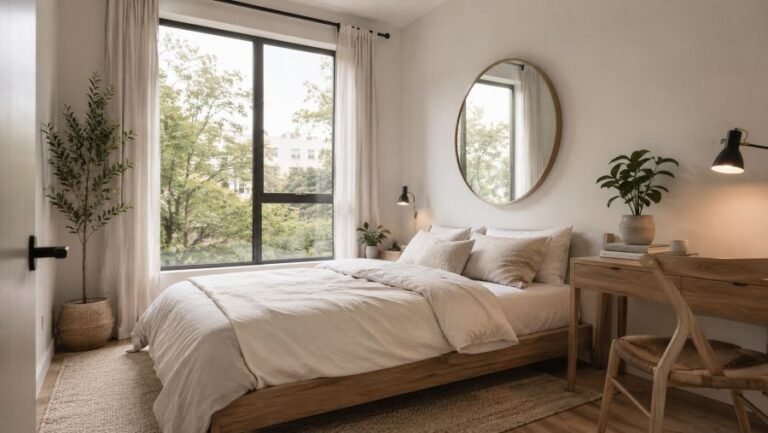
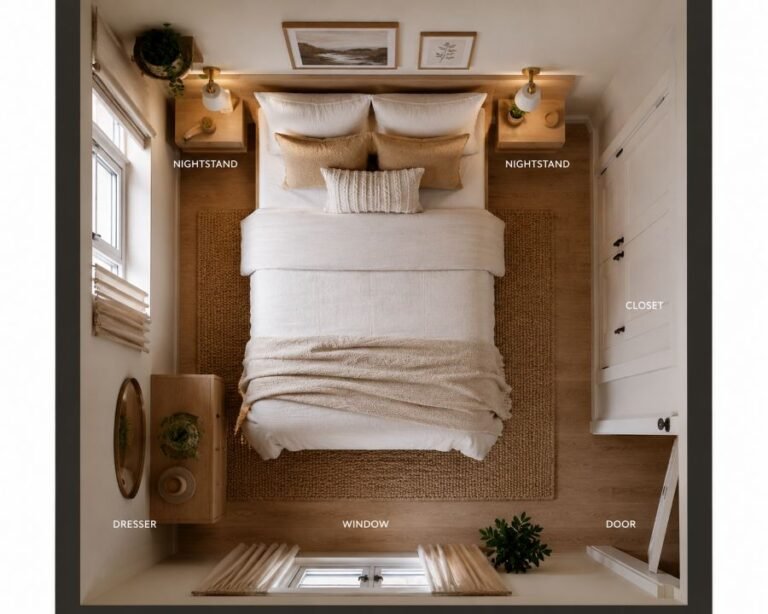
This is the most popular and often most successful layout for small bedrooms. Place the bed against the longest wall, position nightstands on either side, and arrange other furniture along the remaining walls. This layout maximizes floor space, creates clear pathways, and allows for optimal use of corners and alcoves. In this arrangement, place your dresser or chest opposite the bed for symmetry and balance. A desk or reading chair can fit nicely along a perpendicular wall. The beauty of this layout is its flexibility—you can adjust furniture positions without major structural rearrangement.
The Corner Bedroom Configuration
For rooms with an odd shape or architectural features, corner placement can be ideal. Position your bed in a corner to make the most of limited space and create a cozy nook. This arrangement works particularly well in rooms with sloped ceilings or unusual wall angles. When using a corner layout, ensure you have adequate access to both sides of the bed if possible, or at minimum, comfortable access to nightstands. Add decorative elements above and around the corner bed to create a defined sleeping area that feels intentional rather than cramped.
The Multi-Zone Layout
Small bedrooms often serve multiple purposes—sleeping, working, and getting ready. Create distinct zones within your space to serve these functions. A small desk in one corner becomes a work zone, the bed area is the sleep zone, and a mirror with a small vanity handles the grooming zone. Use area rugs, lighting, and furniture arrangement to visually separate these zones. This creates functionality without adding extra furniture that would overwhelm the space.
The Minimalist Linear Layout
For the smallest bedrooms, a linear arrangement works beautifully. Arrange all major furniture along opposite walls to create maximum central floor space. The bed goes on one wall, the dresser or desk on the opposite side, creating a balanced, streamlined look that feels spacious despite limited dimensions.
Smart Small Space Tip: Sketch your room layout on graph paper before moving furniture. This visualization helps you test different arrangements without physical effort and prevents costly mistakes.
Selecting the Right Furniture for Small Bedrooms
Not all furniture is created equal when it comes to small spaces. The pieces you choose significantly impact how your bedroom functions and feels.
Bed Selection for Compact Rooms
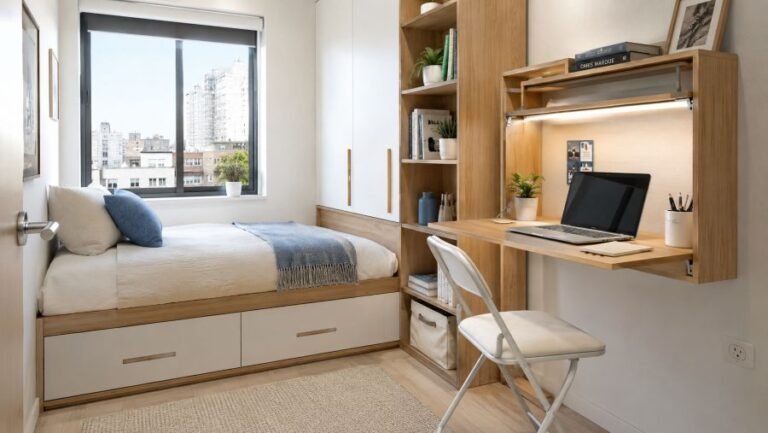
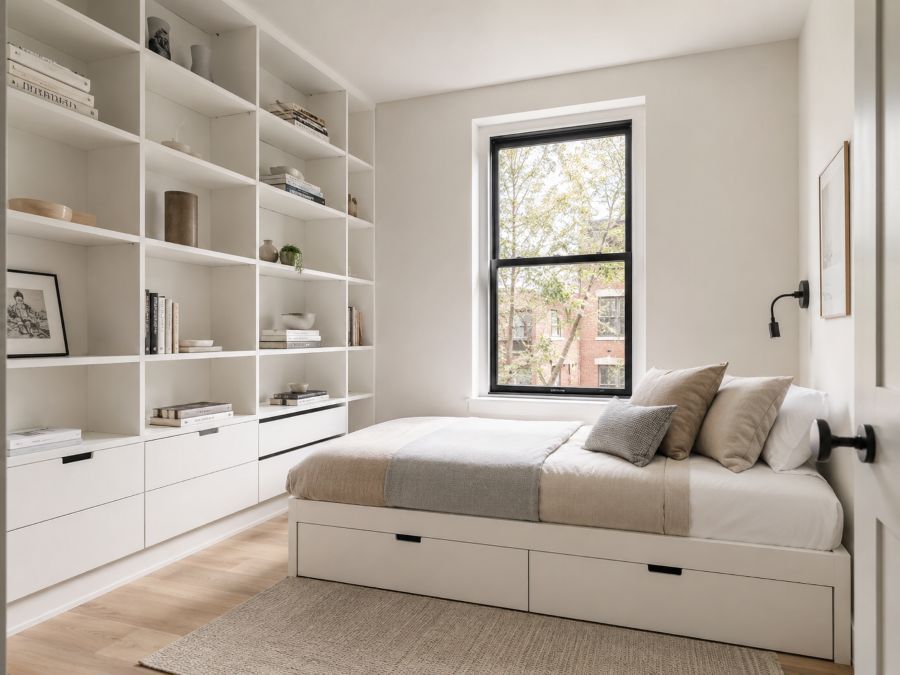
Choose a bed frame that complements your small space. Platform beds work well because they’re low-profile and visually lighter than traditional frames. Beds with built-in storage drawers underneath maximize functionality—you gain storage without adding furniture. Adjustable beds or futons that serve double duty as seating are excellent for multi-functional bedrooms. If possible, avoid bed skirts and heavy frame details that visually bulk up the piece. Sleek, simple bed frames make the biggest visual impact in small spaces.
Nightstands and Bedside Solutions
Small bedrooms don’t require full-sized nightstands. Wall-mounted shelves serve as nightstands while taking up zero floor space. Floating nightstands or small wall-hung tables provide surface area for lamps and essentials without the footprint of traditional pieces. If you prefer traditional nightstands, choose ones with open shelving rather than solid sides—they’ll feel less heavy and space-consuming.
Dresser and Storage Options
Tall dressers use vertical space more efficiently than wide, squat models. A tall dresser with a smaller footprint stores just as much while occupying less precious floor space. Alternatively, use wall-mounted shelving or a combination of floating shelves and open storage to create a distributed storage solution that doesn’t feel overwhelming in any one location.
Desk and Work Surface Solutions
If you need a desk for work or study, choose a wall-mounted option that folds away when not in use, or a slim floating desk that takes minimal space. Murphy desks that mount on the wall and fold down are perfect for bedrooms that serve multiple purposes. A simple writing desk rather than a full-sized work table provides necessary function without overwhelming a small space.
| Furniture Type | Best for Small Bedrooms | Space-Saving Features |
|---|---|---|
| Bed Frame | Platform with storage drawers | Low-profile, double functionality |
| Nightstands | Wall-mounted or floating options | Zero floor footprint, airy appearance |
| Dresser | Tall, narrow design | Vertical storage, minimal footprint |
| Desk | Wall-mounted or Murphy style | Folding or compact design, multi-functional |
| Seating | Ottoman with storage | Doubles as storage and occasional seating |
| Storage | Floating shelves and wall organizers | Uses vertical space, no floor space needed |
Design Strategies to Expand Your Space Visually
Beyond furniture arrangement, several design strategies make small bedrooms feel significantly larger and more comfortable.
Color Psychology and Light Palettes
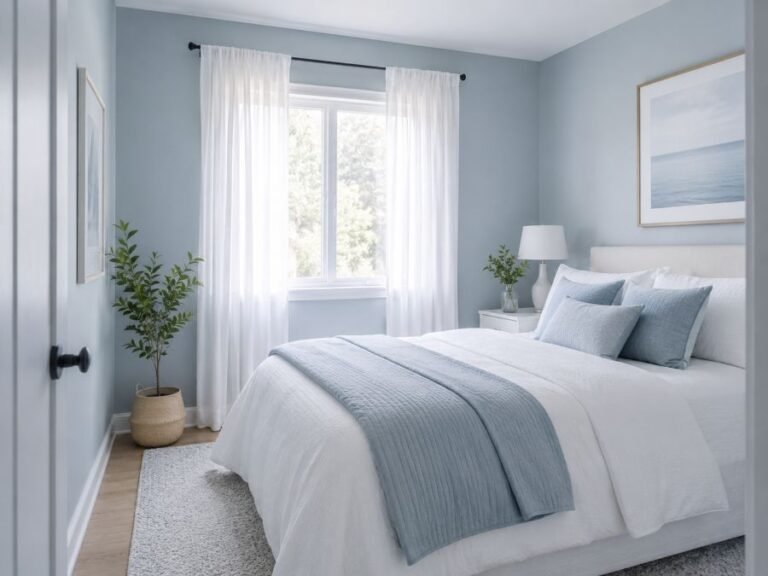
Light, neutral colors make spaces feel larger. Soft whites, pale grays, warm beiges, and gentle pastels reflect light and create an airy atmosphere. You can still add personality through accent colors—introduce warm tones through bedding, artwork, and accessories rather than painting walls in deep, dark colors that absorb light and close in space. A feature wall in a subtle color can add visual interest without overwhelming the space. Keep the feature color muted and use it behind the headboard or on an accent wall rather than on all four walls.
Strategic Mirror Placement
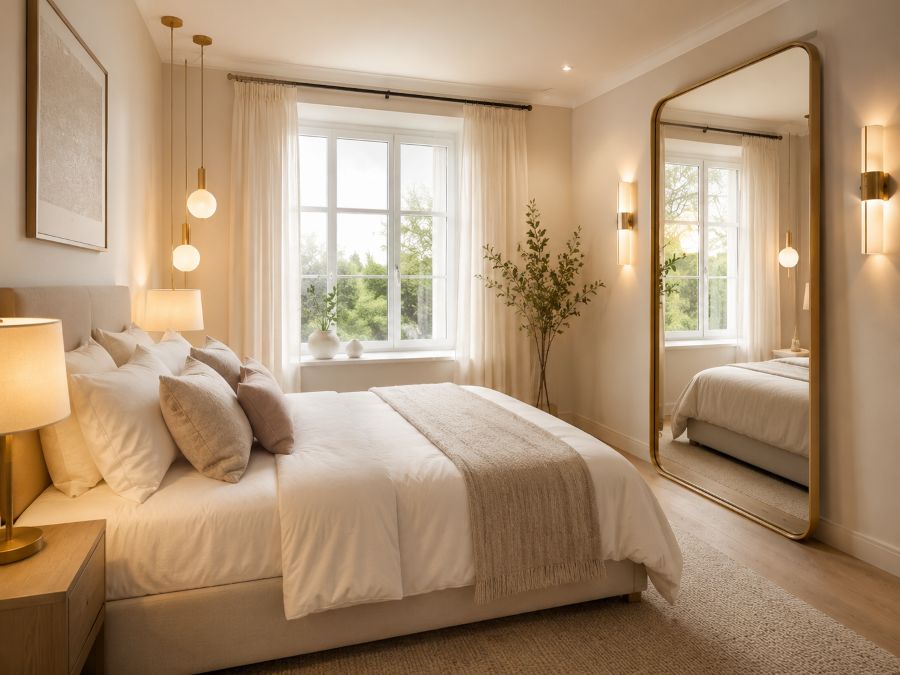
Mirrors are magic in small spaces. They reflect light, create visual depth, and make rooms feel instantly larger. Place a large mirror opposite a window to bounce natural light throughout the room. Avoid small mirrors scattered about; instead, invest in one large statement mirror or a set of two mirrors positioned to maximize light reflection.
Lighting Layering
Multiple light sources create flexibility and make spaces feel larger. Combine overhead lighting with bedside lamps, wall sconces, or accent lighting. Good lighting eliminates dark corners that make rooms feel cramped and creates a warm, welcoming atmosphere.
Window Treatments
Heavy curtains and dark window treatments make small bedrooms feel closed in and dark. Opt for sheer curtains, light-colored roller shades, or minimal window treatments that allow maximum light penetration. If privacy is essential, layer sheer curtains with pull-down shades that you can open during the day to flood your room with natural light.
Decluttering and Minimalism
In small spaces, every item takes on visual weight. Ruthlessly edit your belongings and keep only what you truly need and love. Each decorative item should serve a purpose or bring you genuine joy. A bedroom with minimal clutter automatically feels more spacious and peaceful.
Maximizing Closet and Storage Spaces
Bedroom storage is often at a premium in small spaces, making smart organizational systems essential. Before adding more furniture, maximize existing closet and storage areas.
Closet Organization Systems
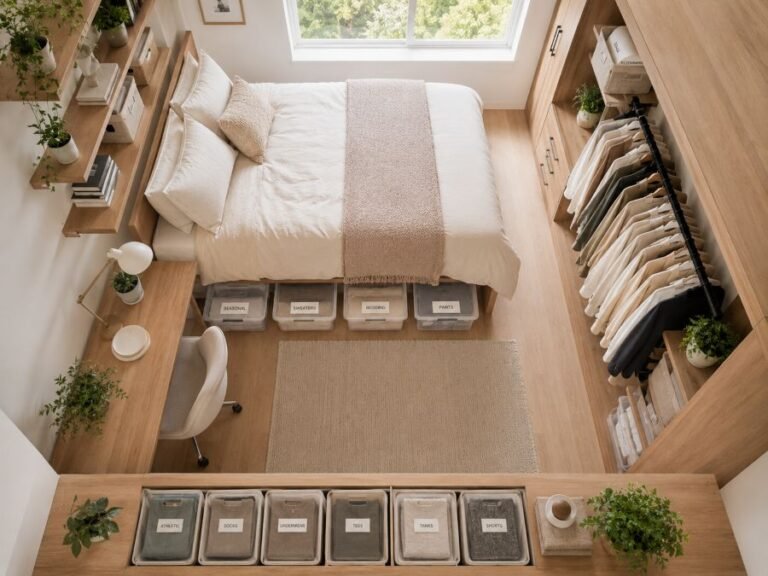
Install closet organizers, drawer dividers, and shelf separators to maximize your existing closet space. Vertical dividers allow you to see all clothing at a glance. Double hanging rods double your closet’s capacity. Over-the-door organizers add storage without taking floor space.
Under-Bed Storage Solutions
If your bed has legs rather than a solid base, use the space underneath for storage. Low-profile storage boxes slide easily under the bed and keep seasonal items, extra bedding, and other necessities out of sight. Beds with built-in drawers maximize this often-wasted space.
Wall-Mounted Storage
Shelves, pegboards, and wall-mounted organizers keep items accessible while freeing up floor space. Install shelves above the desk, beside the bed, or along any available wall space. This vertical storage is particularly useful for books, decorative items, and everyday essentials.
Smart Small Space Tip: Use the inside of your closet door for additional storage. Install hooks, shelves, or a shoe organizer to maximize this often-overlooked space.
Common Small Bedroom Layout Mistakes to Avoid
Understanding what doesn’t work is just as important as knowing what does. Avoid these common mistakes that make small bedrooms feel cramped and dysfunctional.
Floating Furniture in the Center
Floating your bed in the middle of the room might create a luxurious feel in a spacious master suite, but in a small bedroom, it wastes precious space and creates unnecessary pathways. Keep furniture pushed against walls to maximize open floor area.
Oversized Furniture Pieces
A queen-sized bed in a 10×10 room leaves little space for anything else. Be honest about what size bed you need and what proportions work for your space. Sometimes a full-sized bed and strategic furniture choices create more functionality than a queen-sized bed that dominates the room.
Too Many Pieces
Every item you add takes space. Fight the urge to include accent chairs, side tables, and decorative pieces that compete for limited space. Choose only essential furniture and supplement with smart storage solutions.
Ignoring Vertical Space
Many small bedroom owners place all their furniture horizontally, creating a squat, crowded feeling. Look up! Use your vertical space for shelving, storage, and visual interest. This simple shift instantly makes rooms feel more spacious.
Poor Lighting Choices
Relying solely on overhead lighting creates harsh shadows and makes spaces feel smaller. Inadequate lighting makes a bedroom feel gloomy and cramped. Invest in multiple light sources to create warmth and brightness throughout the space.
Step-by-Step Furniture Arrangement Process
Follow this systematic approach to arrange your small bedroom furniture effectively:
- Measure and Map: Measure your room and create a to-scale floor plan. Include window locations, door swings, and any fixed architectural elements. Use graph paper or a digital tool to sketch potential layouts.
- Place the Bed First: Position your bed against the longest wall, centering it if possible. The bed is your largest piece and should anchor the entire room layout.
- Add Nightstands: Position nightstands (or floating shelves) on either side of the bed, ensuring they don’t block pathways or doorways.
- Position Storage: Place dressers or storage furniture along walls, preferably opposite the bed for visual balance. Ensure closet and door accessibility remains unobstructed.
- Include Additional Furniture: Add a desk, seating, or other pieces along remaining walls, always maintaining clear pathways.
- Test and Adjust: Live with your arrangement for a few days. Make adjustments based on traffic flow and how the space actually functions in daily use.
Budget-Friendly Ideas for Small Bedroom Furniture
Designing a small bedroom doesn’t require an enormous budget. Focus on quality essentials and supplement with affordable solutions. Multi-functional furniture offers the best value in small spaces. An ottoman with storage costs less than separate pieces while providing seating, storage, and a footrest. A daybed serves as both seating and sleeping space. Invest in quality pieces that serve multiple purposes rather than single-function items.
Wall-mounted solutions are often more affordable than traditional furniture while providing better space efficiency. Floating shelves, wall-mounted desks, and hanging organizers cost less than dressers and standalone storage units while actually creating more usable space. Consider second-hand options for large pieces like beds and dressers. Quality vintage furniture often costs less than new pieces and adds character to your space. Focus your new furniture purchases on pieces that provide the most impact—a beautiful headboard or quality mattress makes a bigger difference than numerous smaller items.
Seasonal Adjustments and Flexibility
Small bedrooms may require seasonal adjustments. During winter months when you spend more time indoors, ensure your layout supports comfortable use. During summer, prioritize airflow and natural light. Keep your furniture arrangement flexible enough to accommodate these changing needs.
Lightweight, mobile furniture pieces help facilitate these seasonal shifts. Furniture on wheels allows easy repositioning without heavy lifting. Modular furniture can be reconfigured to accommodate different seasonal needs and uses.
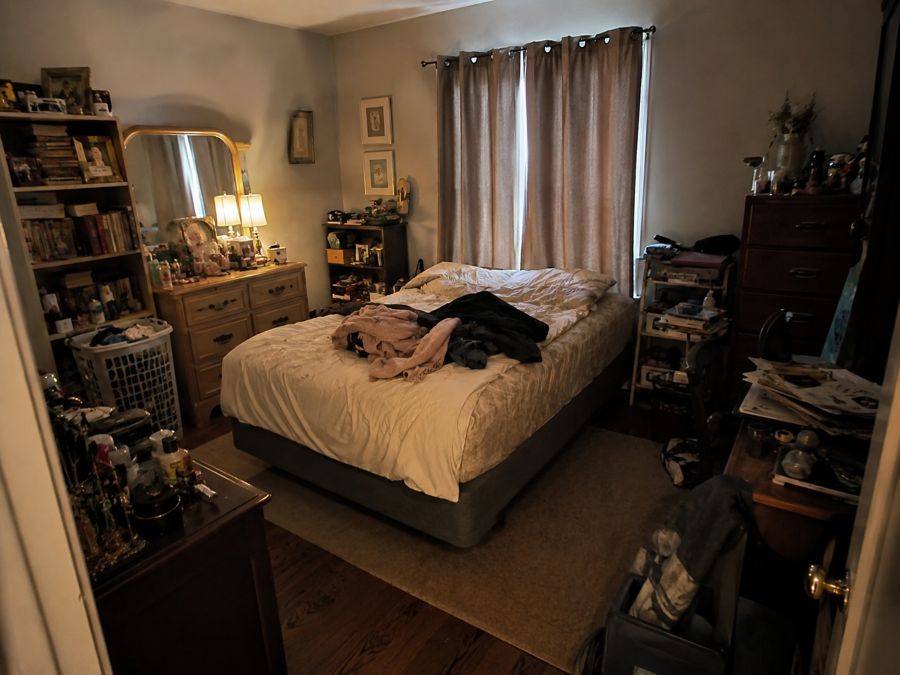
Real-World Small Bedroom Examples
Learning from real examples provides valuable inspiration. Many people successfully create beautiful, functional small bedrooms using the principles outlined in this guide. Whether your space is 8×10 feet, 10×12 feet, or even smaller, thoughtful furniture arrangement and strategic design choices transform your bedroom into a space you love. The key is understanding your space’s unique characteristics and working with them rather than against them. What works beautifully in one small bedroom might need adjustment in another. Use these guidelines as a foundation, then customize based on your specific room dimensions, natural light, architectural features, and personal needs.
Final Thoughts on Small Bedroom Furniture Arrangement
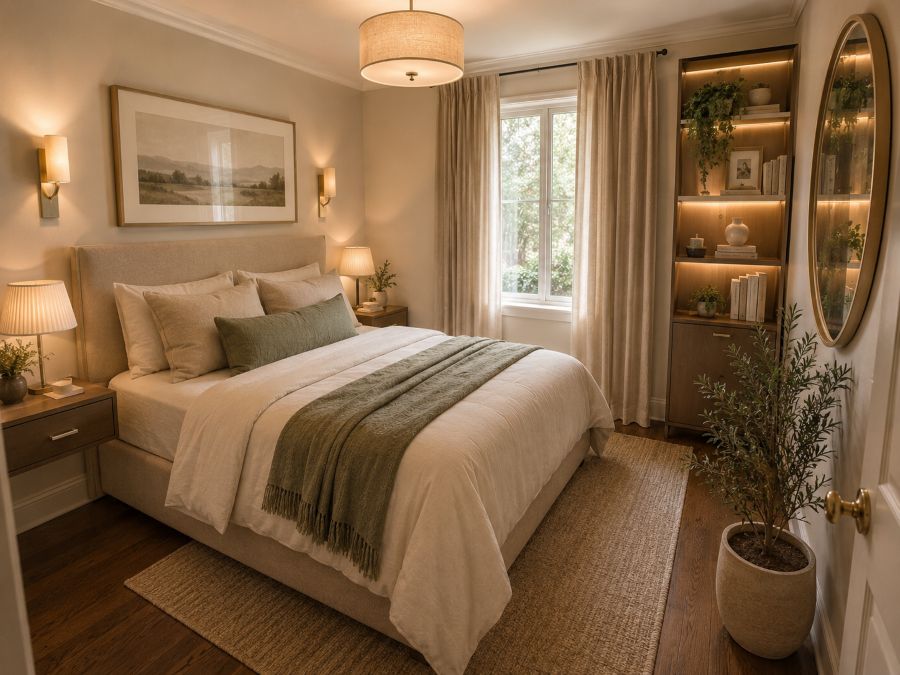
A small bedroom is an opportunity to create an intentional, thoughtfully designed space rather than simply a limitation to overcome. When you focus on quality over quantity, choose multi-functional pieces, and arrange furniture strategically, even compact bedrooms become comfortable, beautiful retreats.
Take time to plan your layout before moving furniture. Consider your daily needs and how you want your space to function. Prioritize clear pathways, good lighting, and vertical storage. These fundamentals, combined with careful furniture selection and smart design choices, transform small bedrooms into spaces that feel larger, more open, and infinitely more pleasant. Remember that perfect arrangements aren’t static. As your needs change, your furniture arrangement can evolve. The most successful small bedroom layouts are those that work for you and adapt as your life changes. Use this guide as a starting point, then make adjustments based on what works best in your unique space and lifestyle.
FAQ: Small Bedroom Furniture Arrangement
What is the best furniture arrangement for a small bedroom?
The most effective arrangement places the bed against the longest wall as the focal point, positions nightstands on either side, and arranges other furniture along remaining walls while maintaining clear pathways. This maximizes usable floor space while creating a balanced, functional layout.
How can I make a small bedroom look bigger?
Use light colors, install a large mirror to reflect light and create depth, choose furniture with visible legs to allow sight lines, utilize vertical storage to draw eyes upward, and keep the space clutter-free. Good lighting throughout also makes a significant visual difference.
What furniture is best for small bedrooms?
Multi-functional furniture works best—beds with storage drawers, wall-mounted desks, ottomans with hidden storage, floating nightstands, and tall narrow dressers. Choose pieces with visible legs and minimal visual weight to maintain an open, airy feeling.
Should I put my bed against the wall in a small bedroom?
Yes, placing your bed against a wall is recommended for small bedrooms as it maximizes floor space, creates better traffic flow, and makes the room feel larger and more organized. The longest wall is typically the best location.
How do I arrange furniture in a small bedroom with multiple windows?
Keep window areas unobstructed to maintain natural light flow. Position furniture to the sides of windows rather than blocking them, and use light window treatments that don’t reduce light penetration. Windows are assets in small spaces—don’t cover them with bulky furniture.
ADeL A.A
ADeL A.A is a home décor and space optimization writer who believes every square foot matters. He spends his time researching, testing, and comparing smart storage ideas, multi-functional furniture, and practical layout solutions — always searching for the best ways to make compact homes feel bigger, brighter, and better organized.
View all articles by ADeL A.A →