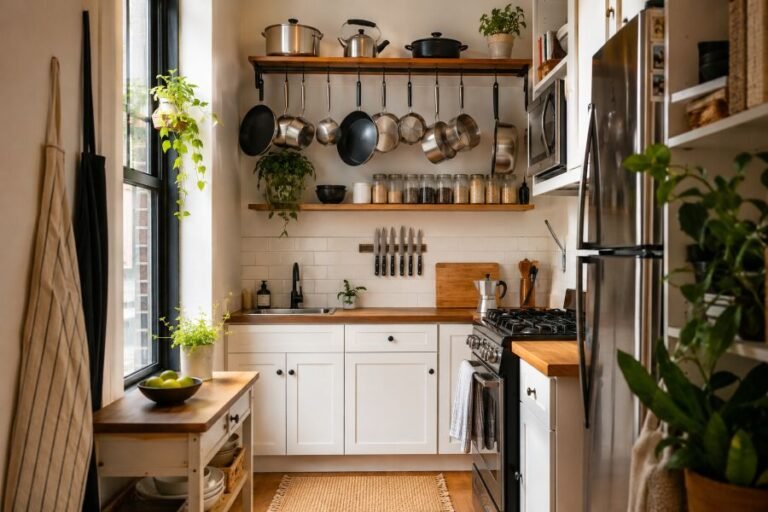
Small Kitchen Storage Ideas Without a Pantry

One of the biggest challenges of apartment living is managing a small kitchen without a dedicated pantry. Where do you store groceries, cooking equipment, and all those small items that seem to multiply? Without careful planning, a tiny kitchen quickly becomes overwhelmingly cluttered.
The good news is that you don’t need a pantry to organize your kitchen efficiently. With strategic solutions—from wall-mounted shelves to smart container systems—you can create a functional kitchen that stores everything you need. This comprehensive guide explores practical, stylish alternatives that transform small kitchens into organized, pleasant spaces.
Maximizing Cabinet Space
Most small apartments have at least a few kitchen cabinets. Rather than using these spaces inefficiently, implement organizational systems that maximize every cubic inch. The key is vertical organization using shelf risers, stackable containers, and dividers that create multiple storage levels within each cabinet.
Begin by removing everything from your cabinets and reassessing their contents. Keep everyday items at eye level, frequently used items at arms reach, and infrequently used items on higher or lower shelves. This approach makes cooking more efficient while maximizing storage capacity.
Shelf Risers and Stackable Organizers
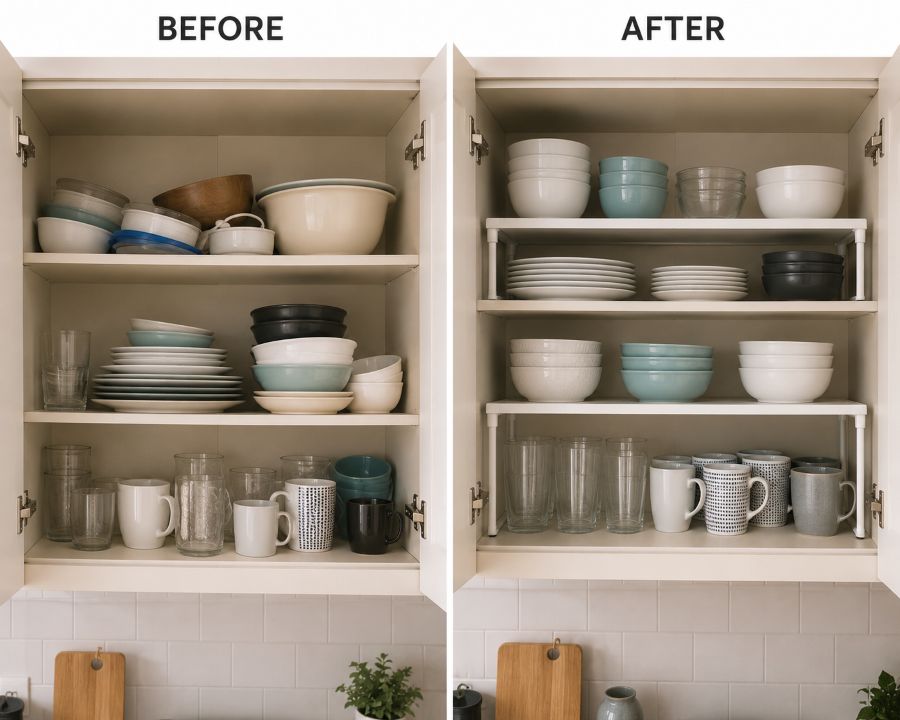
Shelf risers are game-changers for small kitchen storage. These simple devices instantly double your cabinet storage capacity by creating two levels where one existed. Stack plates, bowls, and cups vertically, creating space below for additional items. Drawer-style organizers and stackable shelves work similarly, fitting additional storage into existing cabinet space.
Cabinet Organization Strategies
- Install shelf risers to create two storage levels per shelf
- Use stackable containers to group similar items together
- Install vertical dividers to keep items from toppling
- Hang wire baskets inside cabinet doors for small items
- Use tiered shelf organizers for spices, oils, and condiments
Wall-Mounted Shelving Solutions
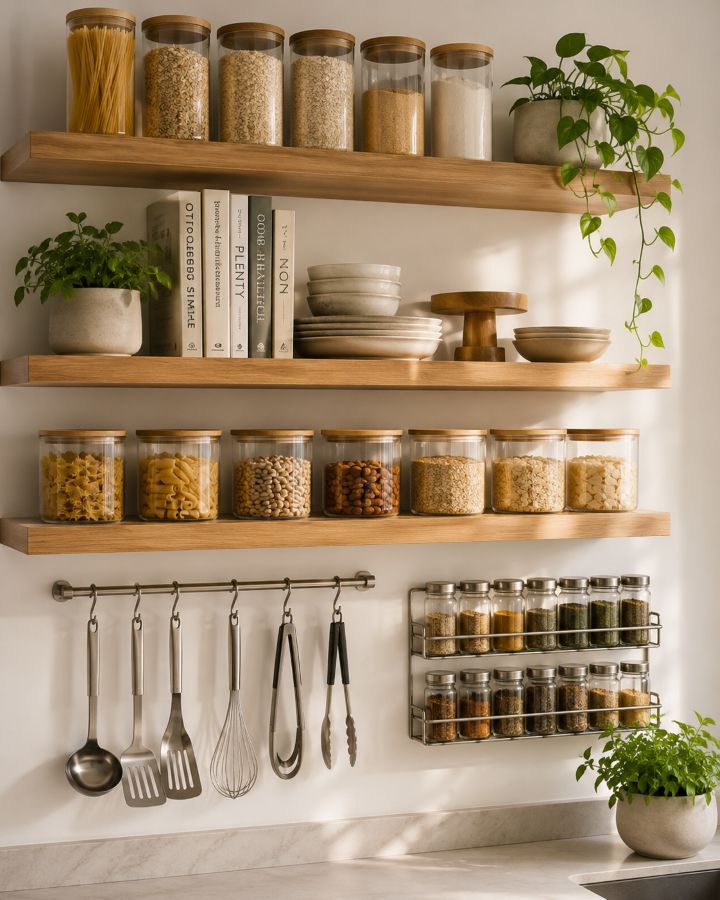
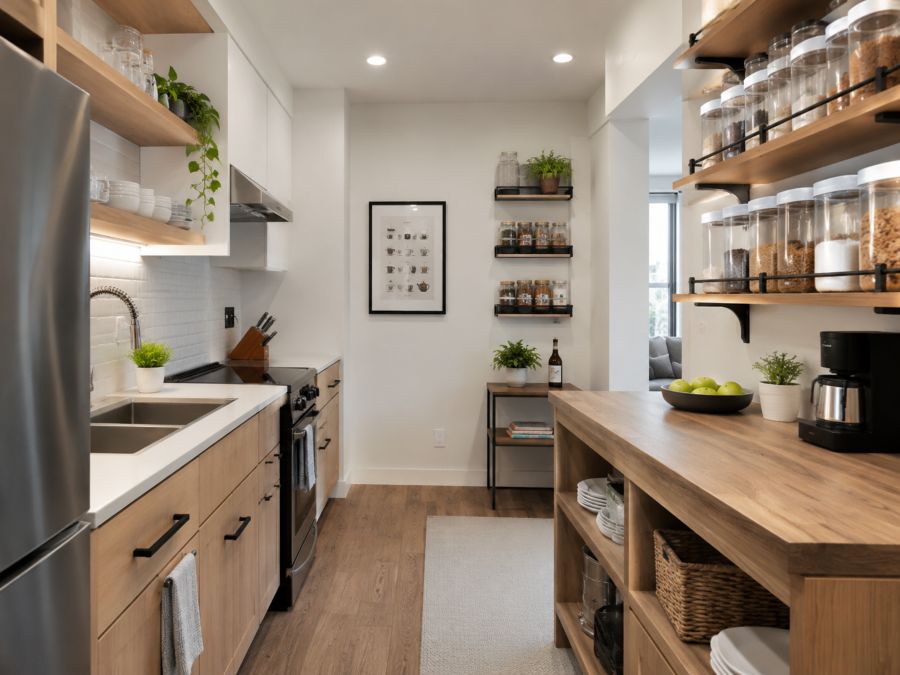
Wall space is underutilized real estate in most small kitchens. Installing floating shelves above countertops, beside windows, or in corners provides significant storage capacity without consuming floor space. Floating shelves work beautifully for displaying attractive dishes, storing cookbooks, or organizing cooking supplies.
When installing floating shelves, position them between 12 and 15 inches apart to allow room for most kitchen items. Use open shelving for items you use frequently and that look attractive displayed. This approach combines function with decoration, creating a kitchen that’s both organized and visually appealing.
Over-Door Organizers
The back of your kitchen door or pantry door offers prime storage real estate. Over-door organizers with clear pockets or shelves store spices, oils, condiments, and small cooking tools without taking up cabinet or counter space. These organizers are particularly effective because they’re accessible and keep frequently used items visible and organized.
Choose over-door organizers that match your kitchen aesthetic. Some have clear pockets for easy visibility, while others feature shelves for larger items. This solution works especially well for apartment renters since most over-door organizers hang without damaging walls or doors.
Rolling Kitchen Cart: Your Mobile Pantry
A rolling kitchen cart serves as a mobile pantry in small apartments. Use the cart to store dry goods, cooking supplies, snacks, and overflow items from cabinets. The mobility allows you to position the cart where it’s needed—beside your stove for cooking, in the corner for storage, or even wheeled out of sight when not needed.
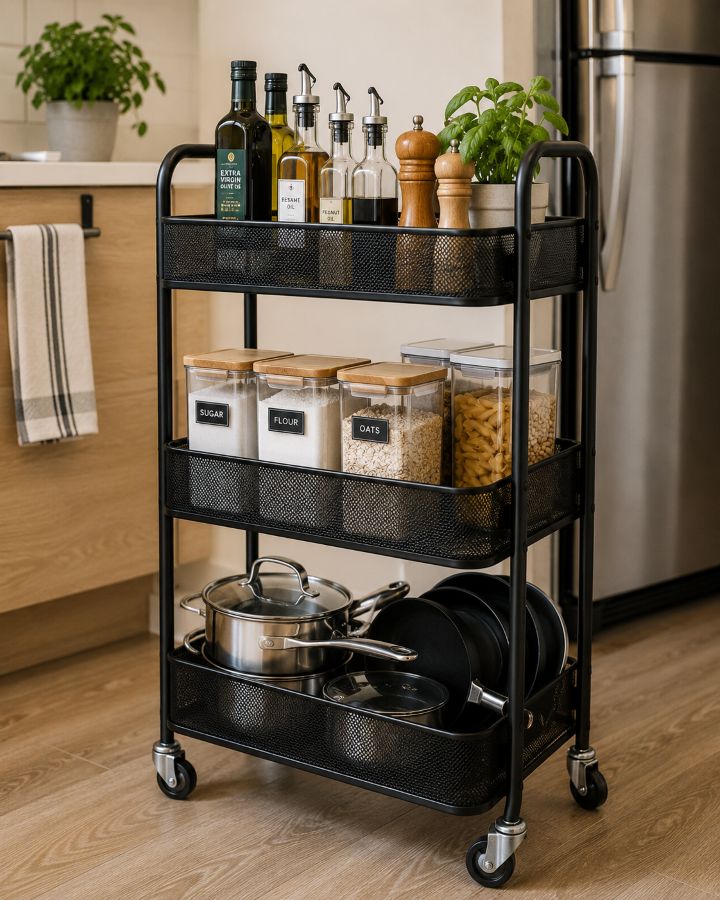
Choose a cart with drawers or baskets to keep items hidden and contained. Label drawers for easy identification of contents. A rolling cart with a cutting board top becomes both storage and food preparation space, maximizing its usefulness in tiny kitchens.
Transparent Storage Containers
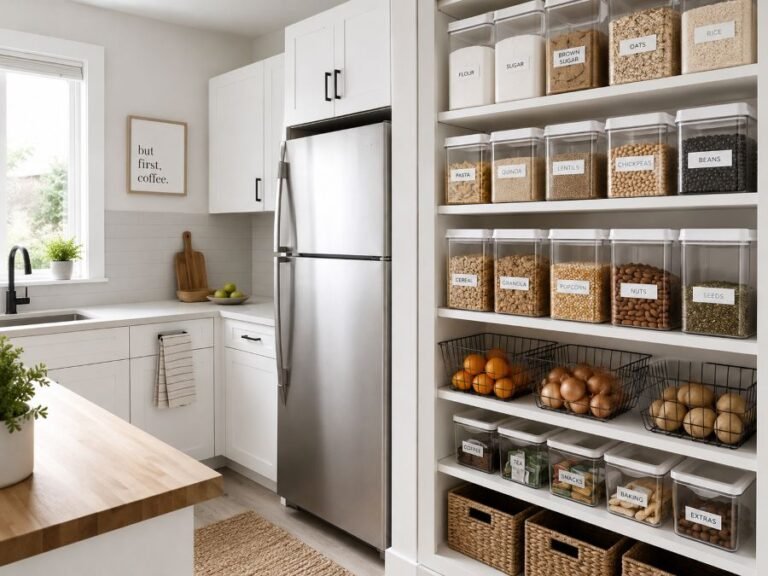
Clear, airtight containers transform kitchen organization. By removing items from bulky original packaging and storing them in uniform containers, you save space and prevent spills. Transparent containers let you see contents without opening them, making meal prep and grocery shopping easier.
Invest in several sizes of clear containers to accommodate different items—small ones for spices and herbs, medium for pasta and grains, and large for bulk items. Label containers clearly, noting contents and expiration dates. This system maximizes cabinet space while keeping your kitchen organized and functional.
Drawer Dividers for Small Items
Kitchen drawers quickly become chaotic junk drawers if not organized. Drawer dividers separate utensils, tools, and small items into designated zones. This keeps everything accessible while preventing the frustrating search for a specific item buried under others.
Use adjustable drawer dividers that fit your specific drawer dimensions. Separate utensils, cooking gadgets, measuring tools, and smaller items into their own compartments. This organization system makes cooking more efficient and keeps your drawers functional rather than chaotic.
Vertical Spice Storage
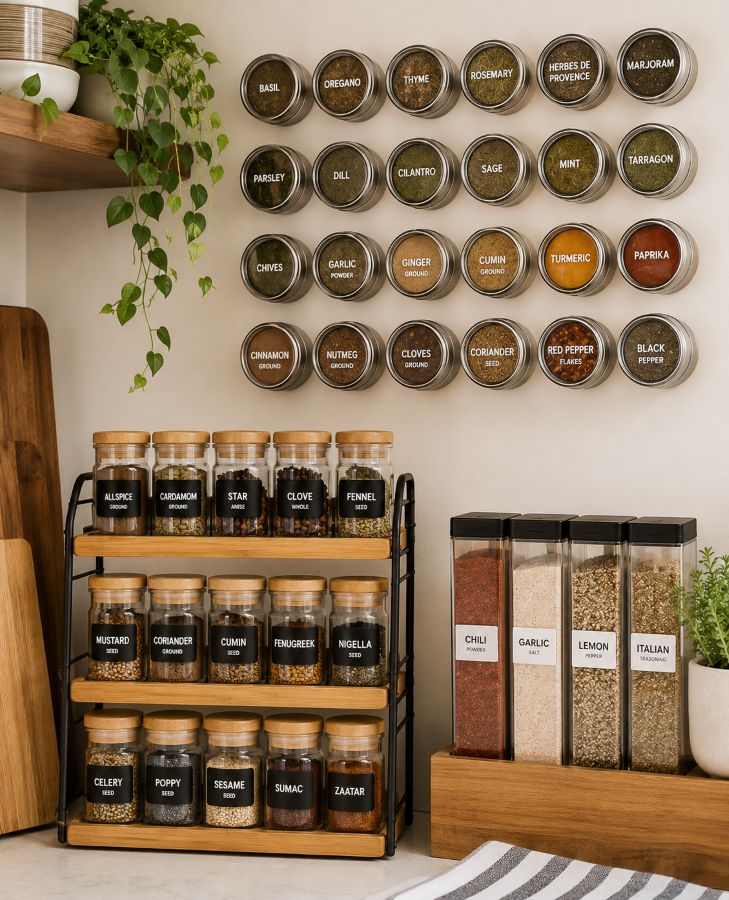
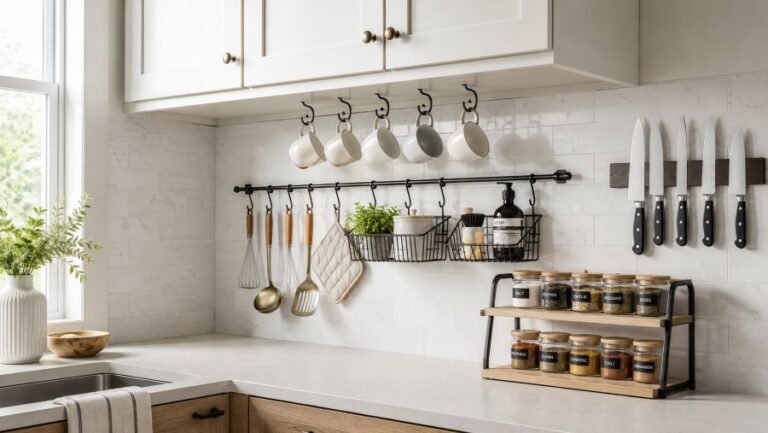
Spices present unique storage challenges in small kitchens. Horizontal stacking makes spices difficult to find and wastes space. Instead, store spices vertically using a tiered shelf organizer, a spice rack designed for vertical storage, or even a shallow wire basket. Vertical organization keeps all spices visible and accessible while consuming minimal space.
Label all spice jars clearly, including the date you purchased them. This prevents confusion and helps you use older spices before they lose potency. Consistent labeling transforms spice storage from chaotic to elegant and functional.
Under-Sink Organization
The space under your kitchen sink is valuable real estate, though it can become disorganized quickly. Install a pull-out organizer, sliding baskets, or tiered shelves beneath the sink to maximize this space. Keep cleaning supplies, dish soap, and trash bags organized and accessible without creating a cluttered jumble.
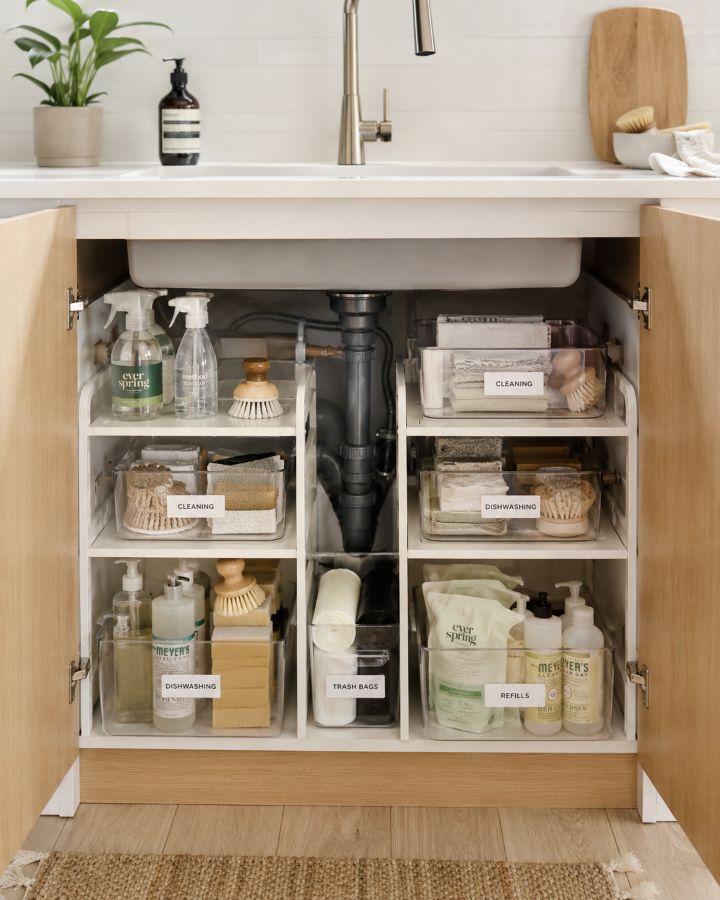
Be cautious about what you store under the sink—avoid keeping food items there due to plumbing risk and temperature fluctuations. Instead, dedicate this space to cleaning supplies, trash bags, and other non-food items that benefit from being easily accessible.
Corner Solutions for Awkward Spaces
Small kitchens often have awkward corners that seem impossible to use. Lazy Susans, corner shelving units, or rotating organizers transform these dead zones into functional storage. Lazy Susans work beautifully for oils, condiments, and frequently used items, making everything easily accessible by simply rotating the tray.
Corner shelving units fit into angles that traditional furniture cannot, providing storage in previously unusable space. These solutions require creativity but maximize your kitchen’s functional capacity.
Magnetic Strips for Small Tools
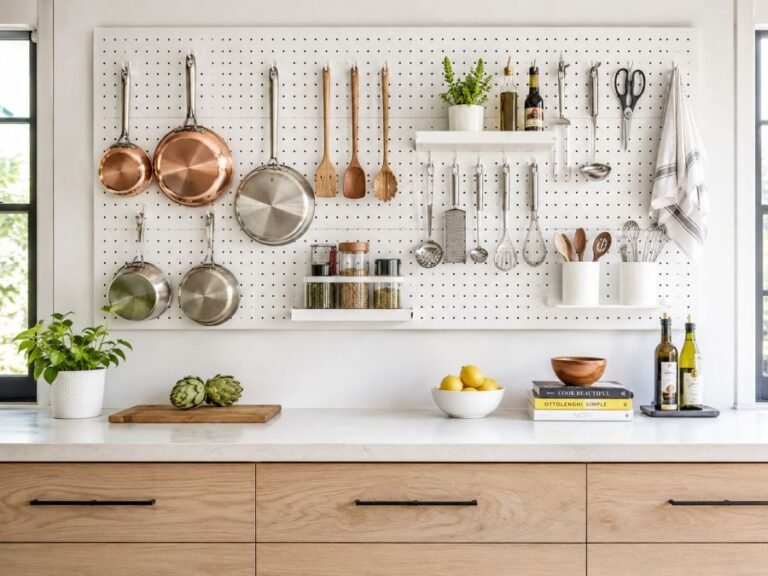
Magnetic strips attached to walls near your stove or prep area store metal kitchen tools beautifully. Knives, scissors, and metal measuring spoons hang within arm’s reach while consuming no drawer or cabinet space. This solution works particularly well in tiny kitchens where every inch of storage matters.
Install magnetic strips at a height that’s convenient for your cooking but out of children’s reach if applicable. This storage method combines function with visual appeal, creating an organized, attractive kitchen.
Organizing by Category and Frequency
| Item Category | Best Storage Location | Container/Organization Method |
|---|---|---|
| Dry pantry staples | Rolling cart, cabinet with shelf risers | Clear, labeled airtight containers |
| Spices and seasonings | Tiered shelf, wall-mounted rack | Vertical storage, clearly labeled |
| Oils and condiments | Over-door organizer, tiered shelf | Small bottles, grouped by type |
| Baking supplies | Cabinet with dividers, rolling cart | Clear containers by ingredient |
| Cooking utensils | Drawer with dividers, wall-mounted | Categorized by function |
| Dishes and glassware | Cabinets with shelf risers | Stacked vertically, separated |
Shopping Smart for Small Kitchen Storage
When shopping for kitchen storage solutions, prioritize quality and durability. Flimsy organizers fail quickly, requiring replacement and creating frustration. Invest in well-made containers, shelves, and organizers that will last through years of use.
Choose organizational solutions that match your kitchen’s aesthetic. Beautiful storage motivates you to maintain organization and makes your small kitchen feel intentional rather than cramped. Function matters, but so does how your storage solutions make your space feel.
Digital Inventory System
In a small kitchen with limited space, it’s easy to forget what you have stored where. Consider maintaining a simple digital inventory of your pantry items. This prevents over-buying, reduces food waste, and helps you meal plan efficiently. A simple spreadsheet or phone note listing your stored items works beautifully.
Update your inventory whenever you use items or add new supplies. This system becomes particularly valuable when managing limited storage—knowing exactly what you have prevents accumulating duplicate items and wasting precious space.
Smart Small Space Tip: Keep your most frequently used items at eye level and within arm’s reach of where you prepare food. Store seasonal or rarely used items on higher or lower shelves. This organization system makes cooking more efficient and maximizes the usability of your small kitchen.
Preventing Kitchen Clutter Accumulation
Once you’ve organized your small kitchen, preventing new clutter from accumulating is crucial. Before bringing any new item into your kitchen, ask yourself if you have adequate storage space. Avoid impulse purchases of items you don’t have room to store properly.
Perform monthly reviews of your kitchen storage. Remove expired items, donate tools you never use, and reorganize as needed. This maintenance prevents small disorganization from becoming overwhelming chaos. Regular attention keeps your small kitchen functional and pleasant.
FAQ: Small Kitchen Storage Solutions
What can I use instead of a pantry in a small kitchen?
Utilize your kitchen cabinets with shelf organizers and dividers, add wall-mounted shelving, use over-door organizers, install floating shelves, add a rolling cart, or use stackable containers in existing storage. These alternatives provide pantry-like organization without requiring additional space.
How do I organize a small kitchen without much cabinet space?
Maximize vertical space with wall-mounted shelves, use clear containers and labels for visibility, install shelf dividers in cabinets, choose multi-functional storage furniture, and keep only items you use regularly. Focus on efficiency and accessibility in your limited space.
What are the best storage containers for small kitchens?
Clear, stackable containers with airtight seals work best for small kitchens. They save space, prevent spills, and let you see contents at a glance. Drawer organizers, shelf risers, and hanging baskets also maximize storage without adding clutter.
How do I keep my small kitchen from feeling cluttered?
Keep countertops clear by storing items immediately after use, use closed storage for backup supplies, and organize visible items beautifully. Consistent organization systems and regular maintenance prevent clutter accumulation and maintain your small kitchen’s functionality.
What should I avoid storing in a small kitchen?
Avoid storing appliances you rarely use, keep items that don’t belong in the kitchen in other rooms, and don’t store excessive backup supplies. Focus on keeping only what you use regularly, preventing wasted storage space in your already-limited kitchen.
Conclusion: Your Pantry-Free Kitchen Awaits
A small kitchen without a pantry presents challenges, but with thoughtful organization strategies, it can function beautifully and efficiently. By maximizing cabinet space with shelf risers, utilizing wall-mounted solutions, investing in clear containers, and implementing smart organizational systems, you transform limited kitchen space into an organized, functional room. The key is being intentional about what you store, choosing organizational solutions that match your lifestyle, and maintaining your systems with regular attention. Your small kitchen doesn’t need a pantry to be organized, accessible, and pleasant to cook in—it just needs thoughtful planning and the right storage solutions.
ADeL A.A
ADeL A.A is a home décor and space optimization writer who believes every square foot matters. He spends his time researching, testing, and comparing smart storage ideas, multi-functional furniture, and practical layout solutions — always searching for the best ways to make compact homes feel bigger, brighter, and better organized.
View all articles by ADeL A.A →