How to Sleep Better in a Small Bedroom or Studio

Sleeping well does not depend on how many square feet you own. It depends on how thoughtfully you use the ones you have. When your bed, your desk, your wardrobe, and your living area all share a single room, the line between rest and everything else starts to blur, and that blur is exactly what keeps so many studio dwellers tossing and turning long after the lights go out.
The good news is that a small bedroom or studio can become one of the most restful spaces you have ever slept in. With the right layout, lighting, textiles, and routine, a compact room can feel like a cocoon rather than a compromise. This guide walks you through how to sleep better in a small bedroom or studio, step by step, using practical changes that work in real apartments.
Before rearranging furniture or buying anything new, it helps to understand why small sleeping spaces challenge our rest in the first place. Once you see the mechanism, every fix in this article will make intuitive sense, and you will be able to adapt the ideas to your own room rather than following a rigid checklist.
If you prefer to see these ideas in action, the short walkthrough below sums up the core strategies for sleeping better in a small bedroom or studio before we dive into the detail.
With that overview in mind, let’s look more closely at exactly what makes rest harder in a compact room, and how each design choice can quietly turn the situation around.
Why Small Bedrooms Affect Your Sleep
Your brain builds powerful associations between places and behaviours. In a spacious home, the bedroom is reserved almost entirely for sleep, so simply walking into it cues drowsiness. In a studio, however, the same few square metres host your workday, your meals, your scrolling, and your sleep. The result is a confused signal: the brain never fully agrees that this is a place to switch off.
On top of that, smaller rooms concentrate the things that disturb sleep. A glowing laptop, a phone charging on the nightstand, a stack of unfinished tasks, and street noise from a single thin window all sit within arm’s reach of your pillow. In a larger home you might leave these stressors in another room, but in a studio they follow you to bed. Recognising this is the first step toward designing them out.
The Three Hidden Sleep Disruptors
- Visual clutter: Items in your line of sight keep the mind alert and processing, even when you are trying to relax. A tidy field of view calms the nervous system.
- Blurred function: When the bed doubles as a sofa, a desk, and a dining spot, your body loses the cue that lying down means sleep is coming.
- Sensory overload: Light leaking under the door, traffic noise, and stale air are amplified in a tight space where everything is close together.
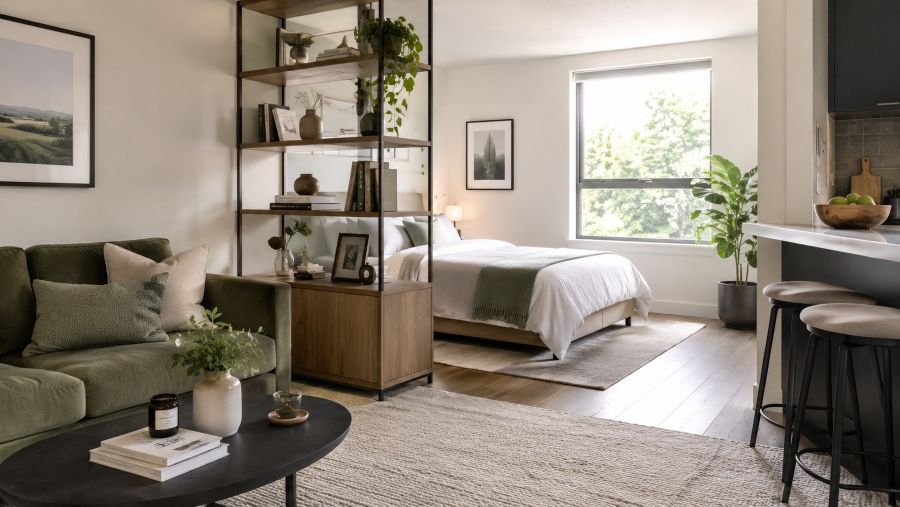
Define a Dedicated Sleep Zone
The single most effective change you can make in a studio is to give sleep its own visual territory, even if the room is technically one open space. You do not need walls to achieve this. A change in flooring, lighting, or material is enough to tell your brain, “this corner is for rest.” When the boundary is clear, falling asleep becomes easier almost immediately.
Start by anchoring the bed in the quietest, darkest part of the room, ideally away from the front door and the busiest walking paths. Then layer in a few gentle signals of separation. A low open bookshelf, a folding screen, or even a curtain hung from the ceiling can suggest a threshold without closing the space in or blocking light. The aim is a soft border, not a fortress.
Simple Ways to Mark the Boundary
- Lay a soft rug under the bed that stops where the sleep zone ends, defining the area underfoot.
- Use a slim open shelving unit as a half-wall that stores books while screening the bed.
- Hang a light fabric panel or canopy that you can draw at night and tie back during the day.
- Switch to warmer, dimmer lighting in the sleep corner than in the rest of the room.
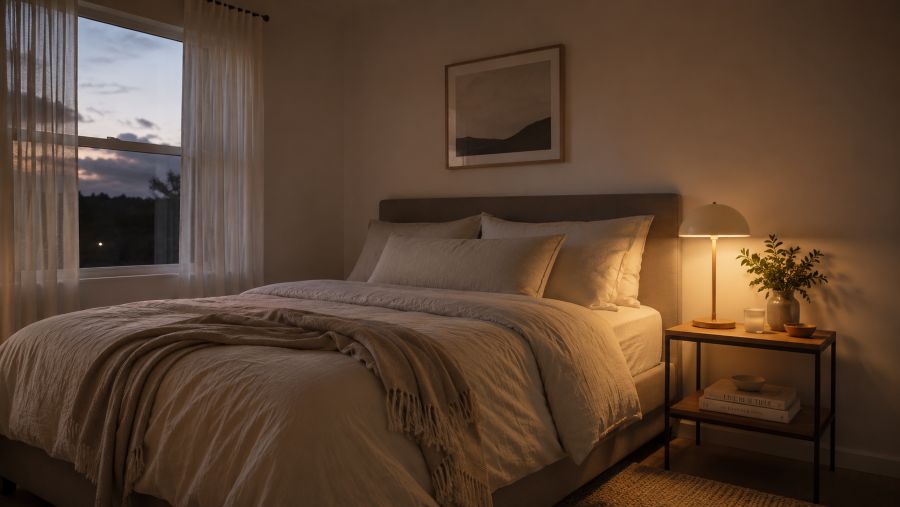
Wellness tip: Keep the area immediately around your pillow as empty as possible. A clear nightstand with only a lamp, a glass of water, and perhaps one book trains your brain to read this corner as a place of calm rather than a to-do list.
Dimmable Warm-Touch Bedside Lamp
A compact, dimmable lamp with a warm glow lets you switch the sleep corner to soft, low light in the evening, the single clearest signal that rest is coming. Its small footprint suits a slim nightstand, and touch dimming means no harsh overhead light before bed.
Check Price on Amazon →Master Light, Sound, and Air
In a compact room, your senses do most of the heavy lifting when it comes to sleep quality. Get light, sound, and air right, and the room will feel restful even if it is barely larger than the bed itself. Neglect them, and no amount of pretty décor will compensate.
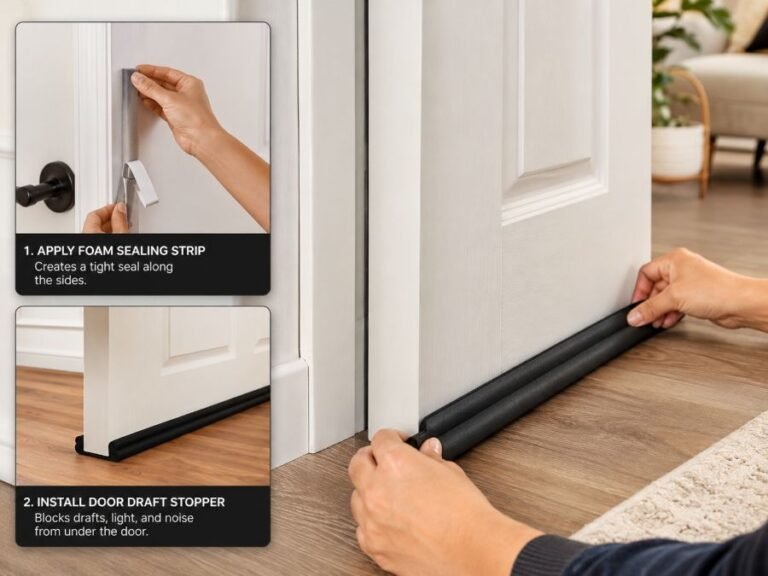
Light is the master switch for your body clock. Aim to make the sleep zone genuinely dark at night while letting in plenty of natural light by day, since that contrast keeps your rhythm strong. Blackout curtains or a blind-and-curtain combination handle street lamps and early sunrises beautifully. During the evening, swap bright overhead light for a warm, dimmable bedside lamp so your body starts producing the hormones that prepare it for sleep.
Sound is the next priority, and small rooms with hard surfaces tend to echo. Soft textiles such as rugs, a fabric headboard, and curtains absorb noise and soften the whole atmosphere. If outside sound still intrudes, a quiet fan or a white-noise app masks sudden disturbances by giving the ear something steady to settle on. Fresh, cool air rounds out the trio: crack a window before bed when you can, keep the room slightly cooler than the rest of your home, and avoid letting cooking smells or stuffy air linger near the sleep zone.
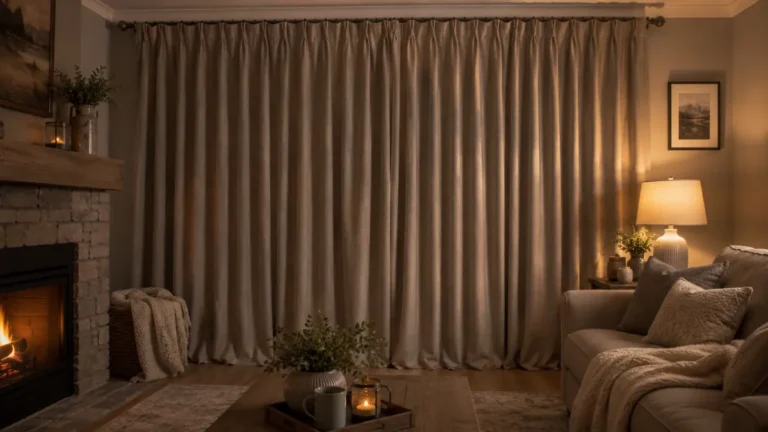
Blackout Curtains
Blackout curtains are the most effective fix for street lamps and early sunrises, and they double as sound and heat insulation, which is ideal for a single-window studio. Choose a length that pools slightly on the floor for the best light seal and a calmer, more finished look.
Check Price on Amazon →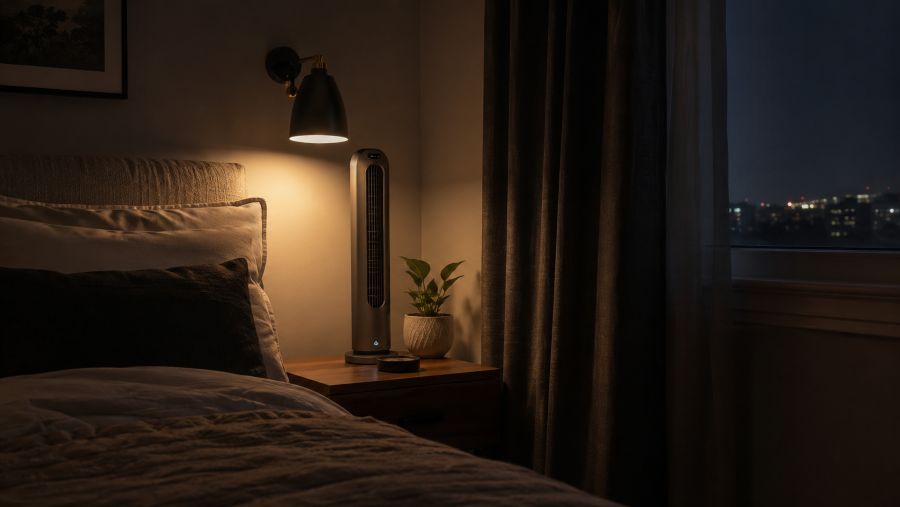
Choose the Right Bed and Bedding for Compact Spaces
In a small bedroom, the bed is both the largest object and the heart of your wellbeing, so it deserves careful thought. The instinct is often to squeeze in the biggest mattress that fits, but a slightly smaller bed that leaves breathing room around it usually delivers far better sleep than an oversized one wedged against every wall. Space to move calms the mind; a cramped, boxed-in bed does the opposite.
Storage beds are a small-space hero. A frame with built-in drawers or a lifting platform swallows bedding, off-season clothes, and clutter that would otherwise pile up in your line of sight. Keep the headboard low and uncomplicated so the room feels taller and more open. When it comes to the mattress, match it to your body and sleeping position rather than to a trend, because comfort and support matter far more than thickness in a room this size.
Bedding is where comfort and visual calm meet. Layered, breathable fabrics in soft, muted tones make the bed feel inviting and help the whole room read as a serene retreat. The table below compares common small-bedroom bed options so you can match the right setup to your space and lifestyle.
| Bed Type | Best For | Sleep & Space Benefit |
|---|---|---|
| Storage platform bed | Studios with little wardrobe space | Hides clutter, keeps surfaces clear, reduces visual stress |
| Low-profile divan | Rooms with low ceilings | Makes the room feel taller and more open and calm |
| Daybed or sofa bed | True multi-use studios | Frees daytime floor space, but needs a firm mattress for real rest |
| Loft / raised bed | High-ceiling micro-apartments | Opens up floor area below, but limits airflow near the ceiling |
Under-Bed Storage Bags & Bins
The space beneath the bed is the most overlooked storage in any small room. Low-profile under-bed bags or bins swallow off-season clothes and spare bedding, keeping clutter out of sight from the pillow so the room reads as calm and the visual stress that disrupts sleep simply disappears.
Check Price on Amazon →Tame Clutter to Quiet the Mind
Clutter and poor sleep are closely linked, and the connection is sharpest in small rooms where mess has nowhere to hide. When the last thing you see before closing your eyes is a heap of unfinished tasks, your mind keeps churning. Clearing the visual field around your bed is one of the gentlest yet most powerful sleep upgrades available, and it costs nothing.
The trick in a studio is to give everything a home that is out of sight from the bed. Vertical storage uses wall height that would otherwise go to waste, while baskets and lidded boxes corral small items into tidy, closed containers. Most importantly, resist the urge to store work materials in or under the bed, because keeping them visible quietly tells your brain that the workday is never truly over.
A Five-Minute Nightly Reset
- Clear the nightstand down to a lamp, water, and one book.
- Tuck away anything related to work or screens out of sight from the bed.
- Fold or hang clothes left on chairs and the floor near your sleep zone.
- Lower the lights and draw the curtain to mark the shift into rest.
Build a Wind-Down Routine That Fits a Studio
Even the most beautifully designed small bedroom will not deliver deep sleep if your evenings keep your nervous system on high alert. In a studio, where you may have spent the entire day in the same room, a clear transition ritual matters even more, because nothing about the space itself signals that the day is ending. You have to create that signal yourself.
Begin the wind-down about an hour before bed by dimming the lights and stepping away from bright screens, since screen light delays the body’s natural drowsiness. Use this window for slow, low-stimulation activities such as reading, gentle stretching, journaling, or quiet music. As you move through the same small calming actions each night, the room gradually relearns its purpose, and your body starts to follow.
Consistency is the secret ingredient. Going to bed and waking up at roughly the same time, even on weekends, strengthens your internal clock far more than any single gadget can. Pair that steady schedule with a tidy, dim, well-aired sleep zone, and your small bedroom or studio will start working with your sleep instead of against it.
White Noise Machine
In a studio, thin walls and street noise can pull you out of sleep just as you drift off. A white-noise machine gives the ear a steady, soothing sound to settle on, masking sudden disturbances so you fall asleep faster and stay asleep through the night, a small device that makes a real difference in a noisy, compact space.
Check Price on Amazon →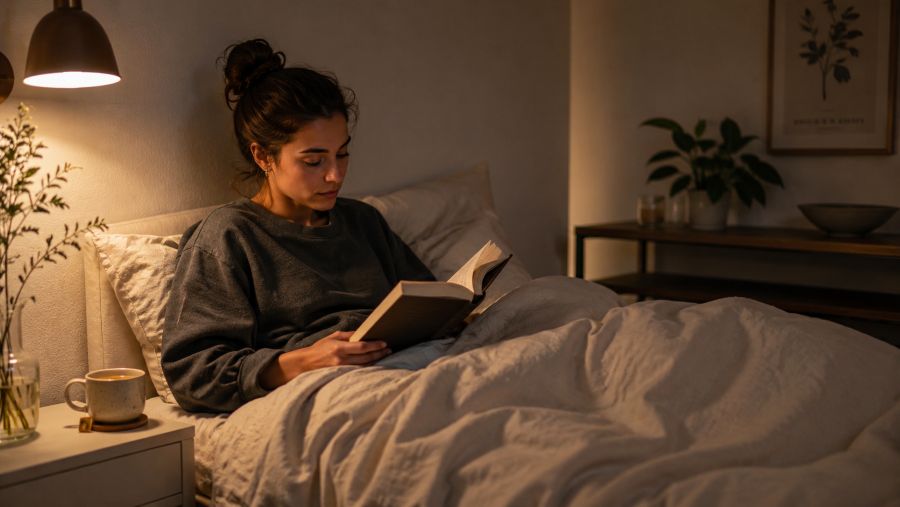
FAQ: Sleeping Better in Small Bedrooms and Studios
Why is it harder to sleep well in a small bedroom or studio?
In a small bedroom or studio, the spaces where you sleep, work, and relax overlap, so your brain receives mixed signals about when it is time to rest. Clutter, screen light, and noise sit closer to the bed, which raises stimulation and makes it harder to wind down. Creating clear visual and functional separation between your sleep zone and the rest of the room helps your mind associate the bed with rest again.
What is the best bed setup for a very small room?
A storage bed with built-in drawers or a lifting platform is usually the best choice, because it adds hidden storage without taking up extra floor space. Place the bed against a wall to free up walking room, keep the headboard low and simple, and choose a slim, supportive mattress that suits your sleeping position rather than the largest model that fits.
How can I block light and noise in a studio apartment?
Use blackout curtains or a layered blind-and-curtain combination to control street light, and add soft textiles such as rugs, fabric headboards, and curtains to absorb echo. A white-noise machine or a quiet fan masks sudden sounds, while a simple sleep mask and earplugs offer a reliable backup on noisy nights.
Should the bed face the door in a small bedroom?
Ideally the bed should let you see the door without being directly in line with it, which many people find more calming and secure. In a small bedroom this is not always possible, so prioritise a position that keeps the head against a solid wall, leaves a clear path to the door, and avoids placing the head directly under a window.
Do plants help you sleep better in a small space?
A few low-maintenance plants can make a small bedroom feel calmer and improve the sense of freshness, which supports relaxation before sleep. Choose compact, easy-care varieties and avoid overcrowding, since too many plants in a tiny room can raise humidity and create visual clutter that works against a restful atmosphere.
Final Thoughts: Small Room, Deep Rest
A small bedroom or studio is not an obstacle to good sleep; it is an invitation to be intentional. Because every element sits so close together, each thoughtful choice you make has an outsized effect. Defining a dedicated sleep zone, mastering light and sound, choosing a bed that fits the room rather than fights it, clearing clutter, and building a steady wind-down ritual all stack together into nights that feel genuinely restorative.
Start with one change tonight, perhaps clearing the nightstand or dimming the lights an hour early, and add another next week. Over time these small adjustments compound, and your compact space transforms into the calm, cocooning sanctuary that helps you fall asleep faster and wake up clearer. In the end, restful sleep was never about more space. It was about the right space, used with care.
Affiliate disclosure: This article contains affiliate links. If you buy through them, we may earn a small commission at no extra cost to you. We only recommend products we genuinely believe support better rest in small spaces.
ADeL A.A
ADeL A.A is a home décor and space optimization writer who believes every square foot matters. He spends his time researching, testing, and comparing smart storage ideas, multi-functional furniture, and practical layout solutions — always searching for the best ways to make compact homes feel bigger, brighter, and better organized.
View all articles by ADeL A.A →