Studio Apartment Layout Ideas for Renters on a Budget

A poorly arranged studio apartment is cramped and uncomfortable. A well-arranged studio? It feels spacious and functional. The difference isn’t square footage—it’s intentional layout and smart design. Studio apartments present a unique challenge: one room must serve as bedroom, living room, kitchen, and office.
This guide shows you how to create a functional, beautiful studio apartment layout on a budget, with solutions perfect for renters who can’t modify their space permanently. No landlord drama, no damage deposits at risk.
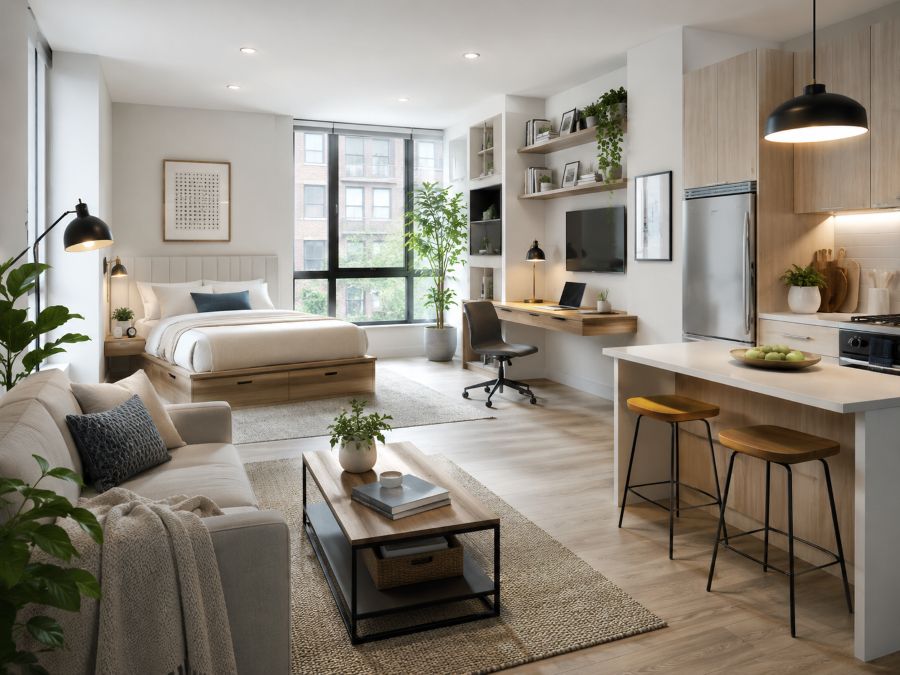
Success in a studio requires strategic furniture placement, defined zones, and ruthless decluttering. There’s no room for “just in case” items. Every piece must earn its place and serve multiple purposes. Let’s explore the best layouts that work in 400-500 square foot studios.
Five Proven Studio Apartment Layouts
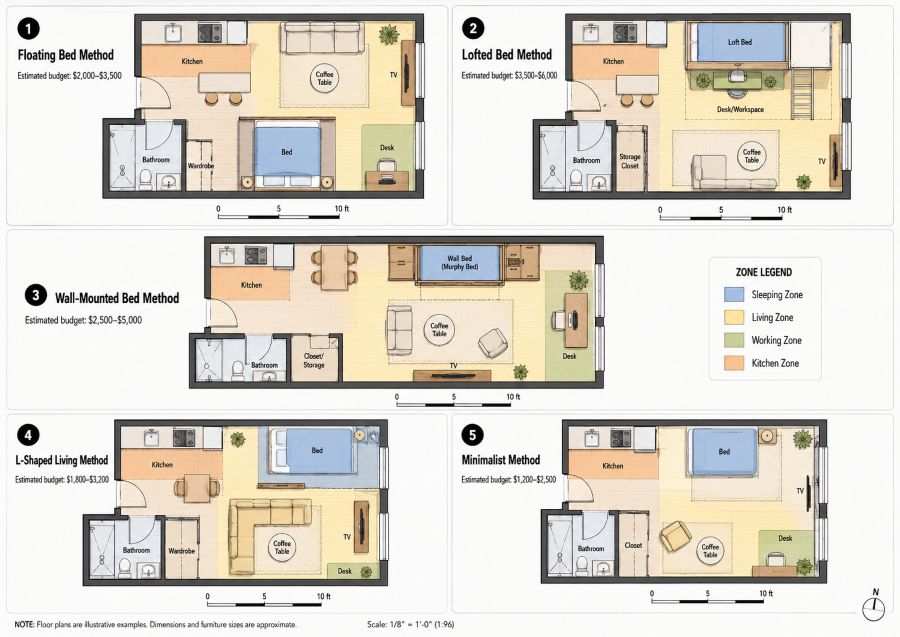
Layout #1: The Floating Bed Method
Place your bed in the center or against one wall (not the corner), creating a visual separation between sleeping and living zones. Float a sofa perpendicular to it. This creates natural room division without walls. It looks intentional and designed rather than cramped. Maximizes sightlines across the apartment. Budget: $200-500.
Layout #2: The Lofted Bed Method
Raise your bed 5-6 feet high using a loft frame, creating a living or working area underneath. This literally doubles your usable floor space. Sleeping and living are completely separated. Looks modern and efficient. Best for studios with high ceilings (9+ feet). Budget: $300-800.
Layout #3: The Wall-Mounted Bed Method
Mount a platform bed to the wall or use a Murphy bed frame. Your entire studio becomes living space during the day. Maximum space transformation for maximum functionality. Professional, polished look that impresses guests. Budget: $500-1,500.
Layout #4: The L-Shaped Living Method
Position sofa and bed in an L-shape, with desk or dining table anchoring the corner. Creates natural zones through furniture placement. Easily arranged with standard furniture. Clear separation of zones without structural changes. Budget: $400-900.
Layout #5: The Minimalist Method
Futon or sofa bed in living area, minimalist bed against opposite wall, vertical storage everywhere. Ruthlessly simple approach. Maximizes floor space completely. Forces intentional decluttering. Reduces visual clutter significantly. Budget: $200-600.
Creating Distinct Zones in One Room
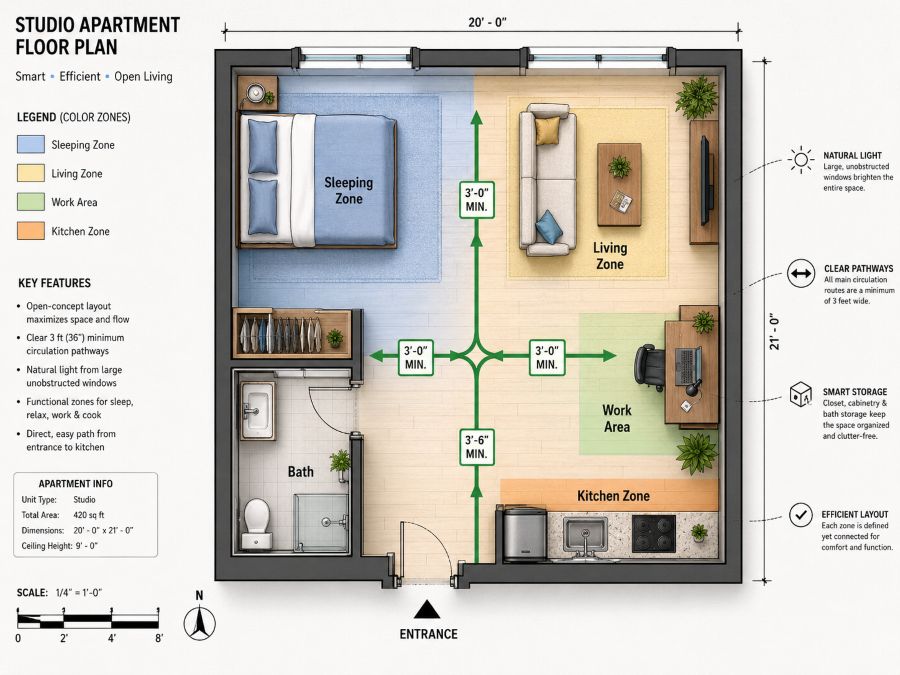
The secret to functional studios is defined zones. Your brain needs visual signals that say “this is the bedroom area” or “this is the work area.” Create zones without walls using strategic placement, lighting, color, and visual hierarchy. This makes small spaces feel intentional rather than cramped.
The Sleeping Zone
- Place bed against wall or float it slightly forward
- Add a bedside table (small, vertical, or wall-mounted)
- Hang a statement piece behind bed (art, tapestry, or headboard)
- Keep personal items at foot/sides of bed only
The Living Area
- Position sofa opposite from bed
- Add a small coffee table (nesting tables or glass)
- Create a focal point (TV, fireplace, or large window)
- Use an area rug to define the zone naturally
The Work Area
Wall-mounted desk or corner desk with lighting to separate it visually. Keep supplies organized in drawers, not visible. Position where bedroom isn’t directly visible. This maintains work-life separation even in one room.
Traffic Flow & Walkways: Essential for Comfort
In a studio, traffic flow is critical. Poor flow makes your apartment feel cramped and uncomfortable. Walk through your studio from entrance to each zone. Can you move naturally without navigating around furniture? Clear, direct paths from entrance to kitchen, to living area, to bedroom are essential.
Maintain clear, unobstructed walkways of at least three feet wide. Use area rugs to define paths naturally. Don’t let corners become cluttered dead zones. Block windows, and your apartment feels darker and smaller. Keep pathways open and furniture logically placed for intuitive movement.
Storage Solutions for Studio Living
Limited square footage means limited places to hide clutter. Every item needs a designated home. Under-bed storage containers hold seasonal items. Large flat bins store efficiently when hidden beneath beds. Rolling carts make retrieval easy and provide flexible storage.
Floating shelves use wall-mounted space without consuming floor area. Wall-mounted magnetic strips for knives save kitchen drawer space. Under-sink sliding organizers maximize bathroom storage. Shelf dividers and drawer organizers prevent chaos. Vacuum storage bags compress items dramatically for seasonal storage.
| Layout Type | Best For | Key Advantage | Budget |
|---|---|---|---|
| Floating Bed | Good natural light | Natural room division | $200-500 |
| Lofted Bed | High ceilings (9+ ft) | Doubles floor space | $300-800 |
| Wall-Mounted Bed | Renter-friendly | Maximum transformation | $500-1,500 |
| L-Shaped Living | Standard layouts | Defined zones | $400-900 |
| Minimalist | Tiny studios | Maximum floor space | $200-600 |
Smart Small Space Tip: Use area rugs, lighting, furniture arrangement, and paint colors to define zones. Visual separation (without walls) is more important than physical distance in studios. Your brain responds to these visual cues strongly.
Renter-Friendly Tips (Keep Your Deposit Safe)
No-Drill Solutions
- Removable adhesive strips hang shelves and art without holes
- Tension rods create closet dividers without installation
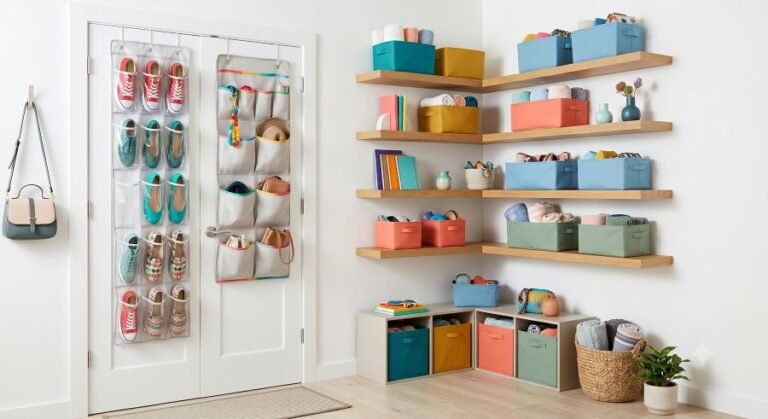
- Over-door organizers need no drilling
- Freestanding shelving requires zero modifications
- Peel-and-stick wallpaper provides non-permanent wall treatment
Before You Make Changes
Document original apartment condition with photos. Get landlord approval before making any modifications. Keep receipts for removable fixtures. Document paint colors with samples. Keep original hardware (screws, hooks, etc.). This protects your deposit and maintains good landlord relations.
Common Layout Mistakes to Avoid
Mistake #1: Pushing everything against walls makes rooms feel like waiting areas, not homes. Float furniture for intentional, designed feel.
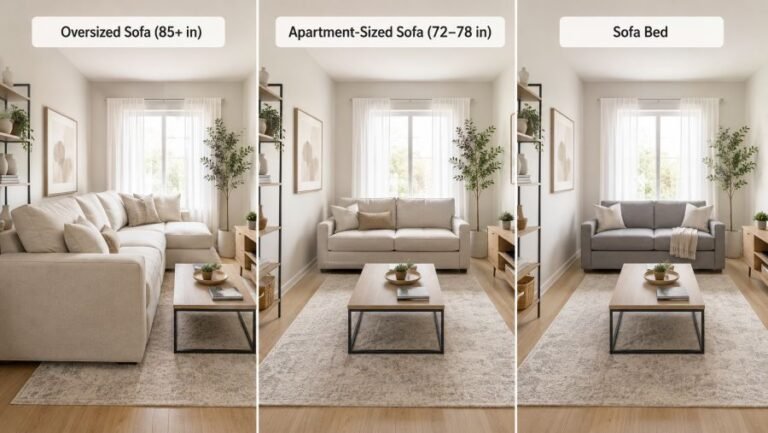
Mistake #2: Oversized furniture overwhelms tiny studios. Choose appropriately scaled pieces. A king bed and large sectional creates claustrophobia, not comfort.
Mistake #3: Multiple small pieces create visual chaos. Choose fewer, larger statement pieces instead for clean aesthetics.
Mistake #4: Visible clutter ruins everything. Studio apartments can’t hide mess. Every item needs a storage home and organizational system.
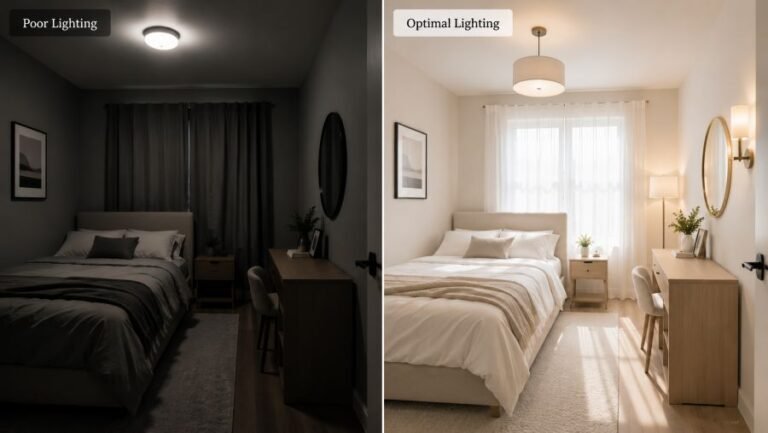
Mistake #5: Don’t block windows with furniture. Light is precious in small apartments and affects your mood and perception of space.
FAQ: Studio Apartment Layout Questions
What is the best studio apartment layout?
The best layout depends on your lifestyle and ceiling height. Floating bed method works well for visual separation. Lofted beds maximize space if you have high ceilings (9+ feet). Wall-mounted beds offer maximum transformation for small studios. Choose based on your primary need: sleeping, working, entertaining, or a combination.
How do I create zones in a studio apartment?
Use area rugs, lighting, furniture arrangement, and paint colors to define zones visually. Position bed perpendicular to sofa. Use different lighting in each zone. Keep walkways clear. Visual separation (without walls) is more important than physical distance. Your brain responds strongly to these visual cues.
How can I maximize traffic flow in a small studio?
Maintain clear pathways from entrance to kitchen, living area, and bedroom. Don’t block windows with furniture. Use area rugs to define paths naturally. Avoid placing furniture in traffic patterns. Walk through with arms full to test natural movement patterns. If you struggle to navigate, rearrange.
Is it worth getting a loft bed for my studio?
Loft beds are valuable if you have high ceilings (9+ feet) and want to double usable floor space. They’re expensive ($300-800+) but transform studios dramatically. For low ceilings, consider floating beds or wall-mounted options instead. Choose based on your ceiling height and lifestyle needs.
Transform Your Studio Into a Comfortable Home
Studio apartment layout success requires intentional design, defined zones, and ruthless decluttering. These proven layouts work because they address the core challenge: making one room feel like multiple functional spaces. Start with the layout method that best matches your lifestyle and ceiling height. Then focus on traffic flow, zone definition, and storage organization.
Your studio apartment can feel spacious, comfortable, and beautiful with strategic layout choices. Begin by identifying your lifestyle priorities: sleeping, working, entertaining, or a combination. Choose the layout that addresses these needs. Then declutter mercilessly and organize everything. Your comfortable studio is just a few intentional design decisions away.
ADeL A.A
ADeL A.A is a home décor and space optimization writer who believes every square foot matters. He spends his time researching, testing, and comparing smart storage ideas, multi-functional furniture, and practical layout solutions — always searching for the best ways to make compact homes feel bigger, brighter, and better organized.
View all articles by ADeL A.A →