Best Compact Washing Machines for Apartments: The Complete 2026 Guide

Hauling laundry bags to a shared laundry room — or worse, a laundromat three blocks away — is one of the fastest ways to lose a weekend in a small apartment. The good news is that the latest generation of compact washing machines has quietly solved this problem. Today’s portable washers and slim washer dryer combos deliver genuinely clean clothes from a footprint smaller than a mini fridge, and many of them need nothing more than a kitchen faucet to run.
In this guide, we break down every type of compact washing machine for apartments, explain exactly which capacity and hookup style fits your space, and walk you through renter-friendly installation that will not put your security deposit at risk. Whether you live in a studio with zero hookups or a one-bedroom with a forgotten utility closet, there is a machine on this list that fits.
Disclosure: This article contains affiliate links. If you buy through them, we may earn a small commission at no extra cost to you.
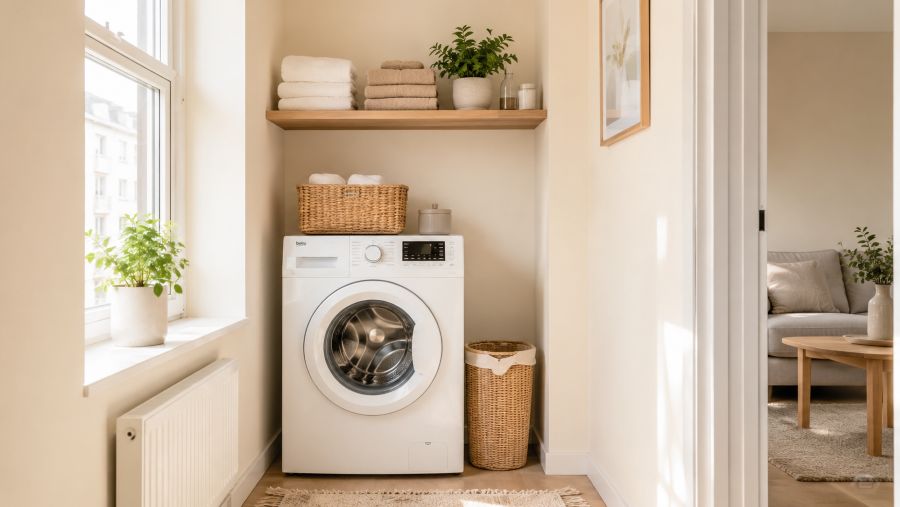
Before we get to specific recommendations, it helps to understand why compact laundry has improved so dramatically. For years, small washers were treated as camping gear — flimsy plastic tubs that barely agitated. That era is over. Modern compact machines borrow technology directly from full-size units: stainless steel drums, multiple wash programs, high-RPM spin cycles, and child locks. Manufacturers finally realized that millions of people live in apartments permanently, not temporarily, and they are designing accordingly.
Prefer to see these machines in action before reading on? The short video below gives you a quick visual tour of the compact washing machine styles covered in this guide — from faucet-connected portables to all-in-one ventless combos.
With that overview in mind, let’s look at why bringing laundry inside your apartment is such a high-impact upgrade — and exactly how to choose the right machine for your space.
Why a Compact Washing Machine Is the Smartest Upgrade for Apartment Living
The case for in-home laundry goes far beyond convenience, although the convenience alone is substantial. Consider the real cost of shared or off-site laundry: the average laundromat visit consumes two to three hours, costs several dollars per load between washing and drying, and forces you to schedule your life around machine availability. Over a year, a household doing two loads per week can easily spend hundreds of dollars and more than a hundred hours on laundry logistics. A compact washing machine pays for itself remarkably quickly.
There is also a hygiene argument that became impossible to ignore in recent years. Shared machines wash other people’s clothes, pet bedding, and who-knows-what before yours. Owning your machine means you control the cleanliness of the drum, the detergent that touches your skin, and the wash temperature for delicate or sensitive-skin items.
Finally, compact laundry fits the broader small-space philosophy we champion at Smart Small Space: every appliance should earn its footprint. A portable washer that rolls into a closet between uses, or a combo unit that eliminates the need for a separate dryer entirely, multiplies what your square footage can do without making the apartment feel more crowded.
Types of Compact Washing Machines for Apartments
Compact laundry is not one product category — it is four distinct ones, and choosing the wrong type is the single most common mistake apartment dwellers make. Here is how they differ, from smallest to most capable.
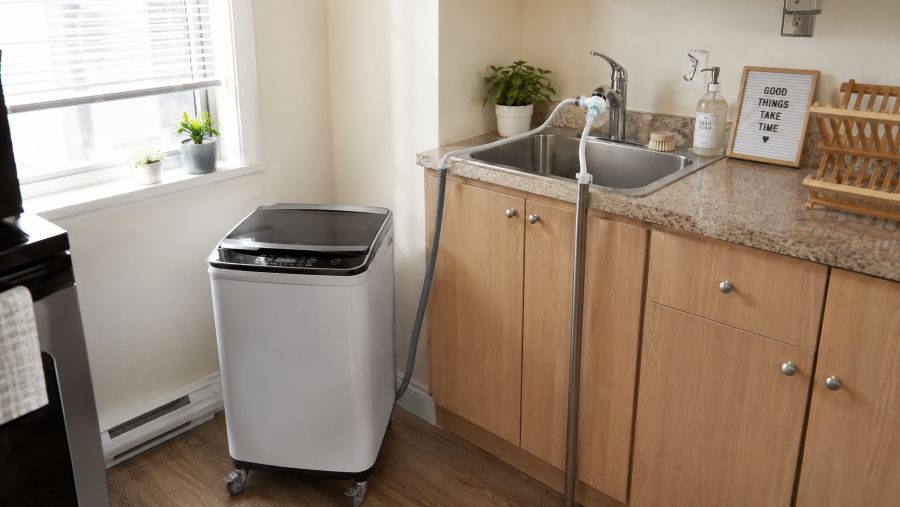
1. Portable Top-Load Washers (Faucet-Connected)
This is the sweet spot for most renters. Portable top-loaders sit on caster wheels, connect to your kitchen or bathroom faucet with a quick-connect adapter, and drain directly into the sink. Capacities typically range from 1.0 to 2.0 cubic feet — enough for 6 to 12 pounds of laundry per load. The best models include multiple wash programs, a genuine spin cycle that leaves clothes nearly dry enough to air-finish overnight, and a fully automatic operation that fills, washes, rinses, and spins without supervision.
2. Twin Tub Washers
Twin tub machines split the work between two chambers: one washes, one spins. They are lighter and cheaper than fully automatic portables, and because the tubs work simultaneously, you can spin one load while washing the next — surprisingly efficient for bigger laundry days. The trade-off is manual involvement: you move clothes between tubs yourself and usually fill the wash tub by hose or bucket. They suit budget-focused users and anyone who washes small, frequent loads.
3. Compact Front-Load Washers (24-Inch Class)
If your apartment has laundry hookups — even in a tight closet — a 24-inch compact front-loader is the closest thing to full-size performance. These machines offer 2.2 to 2.5 cubic feet of capacity, spin speeds up to 1,400 RPM, steam and sanitize cycles, and stackability with a matching compact dryer. They are a bigger investment and require dedicated hookups, but they wash as well as any full-size machine.
4. Ventless Washer Dryer Combos
The combo unit is the ultimate space consolidator: one drum that washes and then dries, with no exterior vent required. Condenser and heat-pump drying technology removes moisture through a water loop or closed-air system instead of blowing humid air outside. For apartments where a vented dryer is physically impossible, combos are transformative — load it before work, come home to clean, dry clothes. The honest caveat: drying takes two to four hours, considerably longer than a vented dryer.
How to Choose the Right Compact Washer for Your Space
With the categories clear, the decision comes down to four practical questions. Answer them honestly and the right machine almost selects itself.
Capacity: Match the Machine to Your Laundry Rhythm
- 0.9–1.4 cu. ft. (5–8 lbs): Singles who wash twice a week. Handles everyday clothing, towels in small batches, and bedding one piece at a time.
- 1.6–2.0 cu. ft. (9–12 lbs): The apartment sweet spot. Couples and small households can wash a full day’s clothing or a queen sheet set in one cycle.
- 2.2–2.7 cu. ft. (13–17 lbs): Compact front-loaders and combos. Families in apartments, or anyone who hates doing laundry more than once a week.
Hookups: What Your Apartment Actually Allows
Walk to your kitchen sink right now and look at the faucet. If it has a removable aerator (most do), a portable washer will connect with the included adapter. If your faucet is a pull-down sprayer model, you may need an inexpensive faucet diverter or a dedicated adapter — check before buying. Apartments with washer hookups in a closet open the door to compact front-loaders and combos, which connect like any standard machine.
Spin Speed: The Hidden Specification That Matters Most
Here is the detail most buyers overlook: spin speed determines how wet your clothes are when the cycle ends, and in an apartment without a dryer, that determines how long they take to air dry. A washer spinning at 700–800 RPM leaves clothes noticeably damp; at 1,000+ RPM, they come out ready to hang and dry overnight. If you plan to air dry — and most portable-washer owners do — prioritize spin speed over almost everything else.
Noise and Vibration: Respect the Neighbors
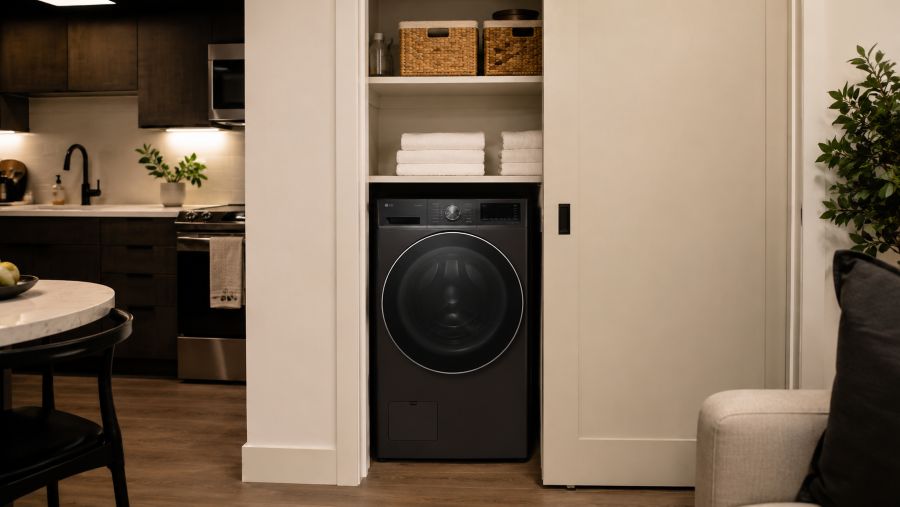
Apartment laundry means shared walls and floors. Look for machines rated below 70 decibels on spin, and budget a few extra dollars for an anti-vibration washing machine mat — it absorbs the high-frequency hum that travels through floors better than any leveling trick. Front-loaders with direct-drive motors are the quietest category overall; budget twin tubs are the loudest.
Smart Small Space Tip: Run your first few loads at different times of day and stand in the hallway outside your door during the spin cycle. If you can clearly hear the machine, add a rubber mat and check the floor leveling before a neighbor mentions it first. Five minutes of adjustment prevents months of awkward elevator encounters.
Compact Washing Machine Comparison: Which Type Wins for Your Apartment?
The table below summarizes how the four categories stack up across the factors apartment dwellers care about most. Use it as a quick filter before committing to a specific model.
| Type | Typical Capacity | Hookup Needed | Best For | Main Trade-Off |
|---|---|---|---|---|
| Portable Top-Load | 1.0–2.0 cu. ft. | Faucet + sink drain | Renters without hookups | Smaller loads, air drying needed |
| Twin Tub | 0.9–1.8 cu. ft. (wash tub) | Faucet or manual fill | Budget buyers, frequent small loads | Manual transfer between tubs |
| Compact Front-Load (24″) | 2.2–2.5 cu. ft. | Dedicated hookups | Apartments with laundry closets | Higher cost, fixed installation |
| Ventless Washer Dryer Combo | 2.0–2.7 cu. ft. | Hookups, no vent | One-machine wash-and-dry living | Long drying cycles (2–4 hrs) |
Our Top Compact Washing Machine Picks for Apartments in 2026
After comparing dozens of models across capacity, build quality, noise levels, and real-world apartment usability, these are the machines we recommend in each category. Each one has earned its place through consistent owner satisfaction and genuinely apartment-friendly design.
Best Overall Portable Washer: The Fully Automatic 1.6 Cu. Ft. Class
For most apartment dwellers, a fully automatic portable washer around 1.6 cubic feet hits the perfect balance. Machines in this class — led by the COMFEE’ 1.6 Cu.ft Portable Washing Machine and the BLACK+DECKER BPWM16W Portable Washer — offer six or more wash programs, a transparent lid to monitor cycles, an LED display with delay-start, and a spin cycle strong enough that a load of t-shirts air dries overnight on a rack. The stainless steel drum resists odor and staining far better than plastic tubs, and caster wheels mean the whole unit rolls into a closet when guests arrive.
Best Budget Option: The Twin Tub Workhorse
If your budget is tight or your laundry needs are light, a twin tub such as the Giantex Portable Mini Twin Tub Washing Machine washes remarkably well for the price. The simultaneous wash-and-spin design actually speeds up multi-load days, and at under 30 pounds, these machines move anywhere — some owners even store them in a wardrobe. Expect to be more hands-on, but the cost savings are significant.
Best for Apartments with Hookups: The 24-Inch Front-Loader
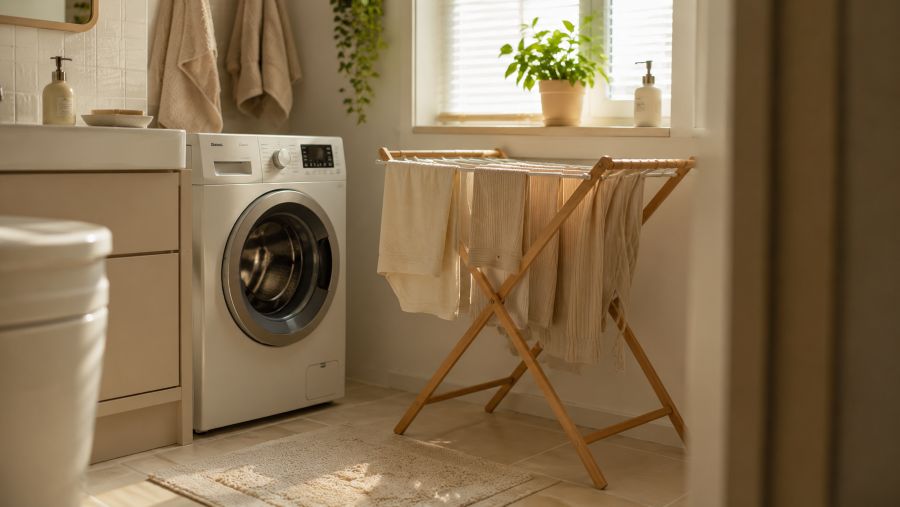
When a laundry closet is available, a compact front-loader like the BLACK+DECKER 24″ Compact Front Load Washer delivers full-size washing quality with high-RPM spins, sanitize cycles, and whisper-quiet operation. Stack a matching ventless dryer on top and you have a complete laundry center in a 24-inch-wide column — the same footprint as a kitchen cabinet.
Best All-in-One: The Ventless Washer Dryer Combo
For the one-machine lifestyle, a ventless combo such as the Equator Ventless Washer Dryer Combo (All-in-One) washes and dries in a single drum with no vent, no transfer, and no second appliance. It is the right choice for anyone who values set-and-forget convenience over speed, and it is often the only legal dryer option in buildings that prohibit vent installation.
Renter-Friendly Installation: Setting Up Without Risking Your Deposit
One of the best things about compact laundry is that proper setup requires zero permanent modifications. Follow this sequence and you will be washing within thirty minutes of unboxing.
- Level first, always. Use a phone level app on top of the machine and adjust the feet until it reads flat in both directions. An unlevel washer walks across the floor during spin and generates most of the noise complaints attributed to “loud machines.”
- Use the quick-connect adapter properly. Unscrew the faucet aerator, thread on the adapter, and snap the inlet hose into place. Keep the original aerator in a labeled bag — you will reinstall it when you move out.
- Secure the drain hose. Clip or zip-tie the drain hose to the sink edge so spin-cycle pressure cannot push it out. A loose drain hose is the number one cause of portable-washer floods.
- Add a leak tray underneath. A shallow appliance drip tray costs little and protects the flooring beneath the machine — cheap insurance for your deposit and your downstairs neighbor’s ceiling.
- Mind the outlet. Plug directly into a wall outlet, never a power strip. Washers draw motor surges that strips are not designed to handle.
Keeping Your Compact Washer Fresh: Maintenance That Takes Five Minutes
Small drums concentrate detergent residue faster than full-size machines, so a light maintenance habit makes an outsized difference. After each load, leave the lid open for a few hours so the drum dries completely — this single habit prevents nearly all musty-drum complaints. Once a month, run an empty hot cycle with a washing machine cleaner tablet or a cup of white vinegar to dissolve detergent film and mineral buildup.
Check the inlet filter screen every couple of months, especially in hard-water areas, and wipe the door gasket on front-loaders weekly. If your machine lives in a closet, pull it out quarterly to vacuum dust from the rear vents — overheating from blocked airflow is the most common cause of premature motor failure in enclosed installations.
Finally, respect the capacity rating. Overloading is the silent killer of compact washers: it strains the motor, prevents proper agitation, and throws the drum off balance during spin. When in doubt, split the load — two balanced cycles clean better and stress the machine less than one stuffed cycle.
FAQ: Compact Washing Machines for Apartments
Can I use a compact washing machine in an apartment without laundry hookups?
Yes. Most portable compact washers connect to a standard kitchen or bathroom faucet with a quick-connect adapter and drain into the sink. No permanent plumbing changes are required, which makes them ideal for rentals without dedicated laundry hookups.
What size compact washing machine is best for a small apartment?
For one or two people, a portable washer with 1.6 to 2.0 cubic feet of capacity handles roughly 9 to 12 pounds of laundry per load. If you have a closet with hookups, a 24-inch compact front-loader around 2.2 to 2.5 cubic feet offers near full-size performance in half the footprint.
Are ventless washer dryer combos worth it for apartments?
Ventless combos are worth it when you cannot install an exterior dryer vent, which is the case in most apartments. They wash and dry in one drum using condensation or heat-pump drying. Drying cycles take longer than vented dryers, but the all-in-one convenience and zero venting requirement make them a strong fit for small homes.
How noisy are portable washing machines in an apartment?
Most quality portable washers run between 50 and 70 decibels, about the level of normal conversation during wash and slightly louder during spin. Placing the unit on a rubber anti-vibration mat, leveling the feet, and avoiding overloading keeps noise neighbor-friendly even in thin-walled buildings.
Final Thoughts: Reclaim Your Weekends, One Load at a Time
A compact washing machine is one of those rare apartment upgrades that improves daily life immediately and keeps paying dividends for years. Renters without hookups should start with a fully automatic portable top-loader in the 1.6 cubic foot class — it offers the best balance of capacity, convenience, and renter-friendly setup. Budget buyers will be pleasantly surprised by a twin tub, while anyone blessed with a laundry closet should go straight to a 24-inch front-loader or a ventless combo and never think about laundromats again.
Whichever route you choose, pair your new washer with a quality foldable drying rack, an anti-vibration mat, and the five-minute maintenance habits above. Your weekends — and your quarters jar — will thank you.
ADeL A.A
ADeL A.A is a home décor and space optimization writer who believes every square foot matters. He spends his time researching, testing, and comparing smart storage ideas, multi-functional furniture, and practical layout solutions — always searching for the best ways to make compact homes feel bigger, brighter, and better organized.
View all articles by ADeL A.A →