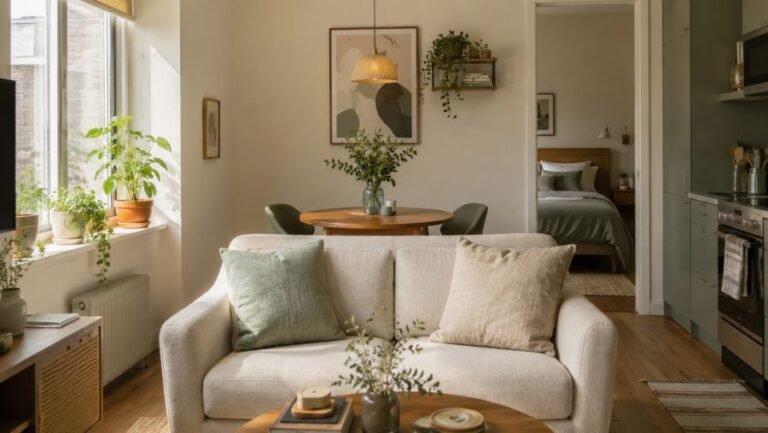
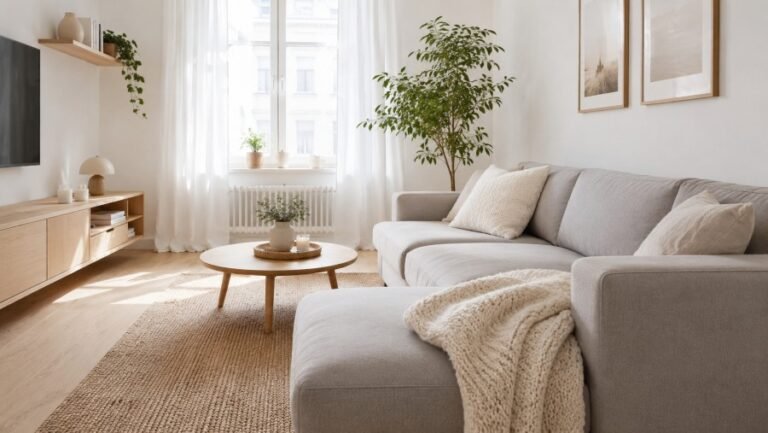
Compact Apartment Entryway Ideas (Even Without a Real Foyer)

You open the front door and you are instantly… in the living room. No hallway, no foyer, not even a polite square meter of transition — just the sofa staring back at you while your keys, shoes, and shopping bags search desperately for somewhere to land. If that scene sounds familiar, you are living one of the most common frustrations of compact city dwellings, and you are far from alone.
Here is the encouraging truth: a functional, genuinely beautiful entrance is not about square footage — it is about intention. In this guide, we show you how to carve a working entry zone out of thin air, which slim furniture actually earns its floor space, how renters can add storage without a single drill hole, and the styling moves that make those first two meters feel like a designed moment rather than an accident.
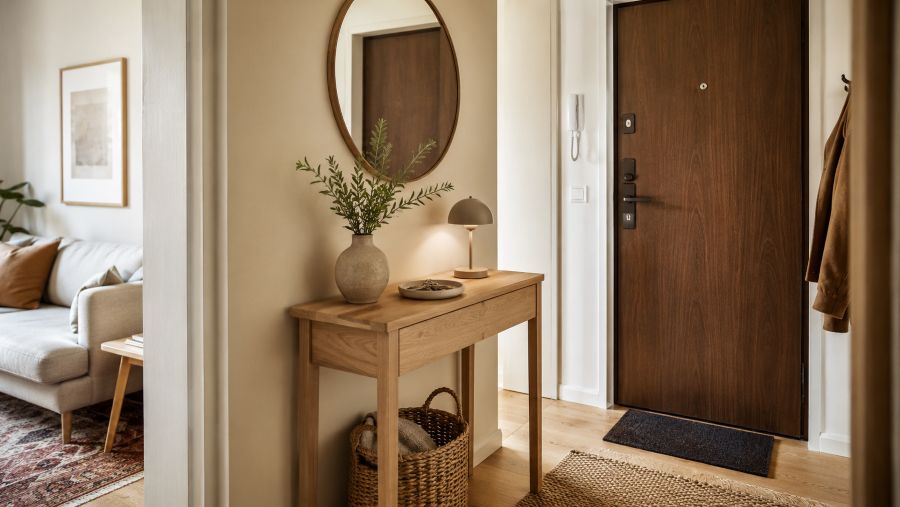
Before we get to furniture and hooks, it is worth understanding why this tiny patch of floor deserves so much attention. The entrance is the highest-traffic zone in any home and the stage for two daily rituals: leaving and arriving. When it works, mornings run smoother — keys are where they belong, shoes pair up willingly, and you walk out the door composed. When it fails, clutter spills inward and greets you the moment you return. Designers call this the “landing strip” principle: give every incoming object a designated landing spot within arm’s reach of the door, and the rest of your home stays dramatically tidier. That single idea drives everything that follows.
Want the whole strategy at a glance before we dig in? The short video below walks through the core entryway ideas for homes without a foyer — defining the zone, going vertical, and choosing slim furniture — all in under ninety seconds.
With that overview in mind, let’s start with the foundational move every successful entrance depends on: drawing a boundary where the architecture never bothered to.
Define the Zone First: Making a Foyer Out of Thin Air
When the front door opens straight into your main living area, the goal is to create a perceived boundary — a visual cue that says “this is the entrance” — without building a single wall. The human eye reads changes in texture, color, and light as room divisions, and you can exploit that beautifully.
Three Ways to Draw the Invisible Line
- Anchor with a rug: A flat-weave, washable runner or doormat-style rug just inside the door instantly defines the territory. Choose a darker tone or pattern that hides traffic, and keep it low-profile so the door clears it without snagging.
- Shift the wall treatment: Painting only the wall beside the door in a deeper accent shade — or adding peel-and-stick wallpaper, wood slat panels, or a framed gallery strip — visually breaks that section away from the living area and gives the entrance its own identity.
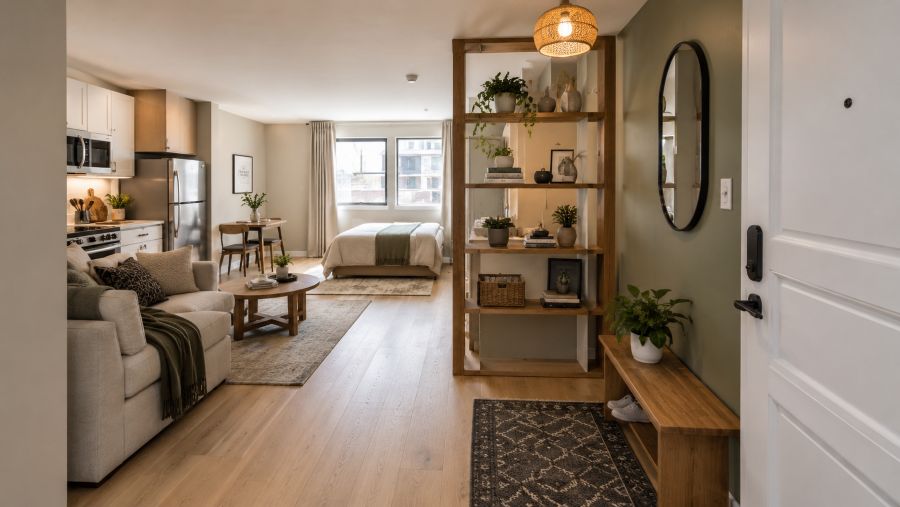
- Use furniture as architecture: An open-backed shelving unit, a narrow bookcase, or even a slim bench placed perpendicular to the door creates a gentle partition. Light still flows through, but arriving guests experience a moment of “entry” before stepping into the room proper.
Lighting completes the illusion. A dedicated light source — a wall sconce, a plug-in pendant on a hook, or a compact table lamp on the console — separates the entry mood from the rest of the room and makes evening arrivals feel welcoming instead of fumbling. Put it on a smart plug or motion sensor and the zone literally greets you when you walk in.
Go Vertical: Wall Storage That Replaces a Closet
In a tight footprint, the wall beside your door is prime real estate, and most homes leave it almost completely unused. Working vertically lets you store coats, bags, hats, keys, and even shoes while claiming zero centimeters of walking space — the single most valuable trade in compact living.
Start with a sturdy hook rail mounted at roughly 165 centimeters high for adult coats, and consider a second, lower rail at 100 centimeters if children share the home or you want a spot for everyday bags. Above the hooks, a single floating shelf catches the overflow — a basket for gloves and scarves in winter, sunscreen and caps in summer. Higher still, the often-ignored band of wall near the ceiling can hold a deep shelf for off-season storage in labeled boxes; out of sight, but seconds away when the weather turns.
For maximum flexibility, a pegboard panel deserves serious consideration. Once dismissed as workshop equipment, modern pegboards in birch or powder-coated steel have become a design statement, and their genius is reconfigurability: hooks, small shelves, cups for sunglasses, and key rings all reposition in seconds as your needs change with the seasons. One panel of 60 by 90 centimeters can comfortably absorb the daily gear of two people.
Smart Small Space Tip: Resist the temptation to install a hook for every garment you own. Open storage looks calm only when it is curated — aim for one hook per person plus one for guests, and rotate everything else into a closet or box. The fastest way to make an entrance feel cramped is to let it become a public wardrobe.
Slim Furniture That Earns Its Floor Space
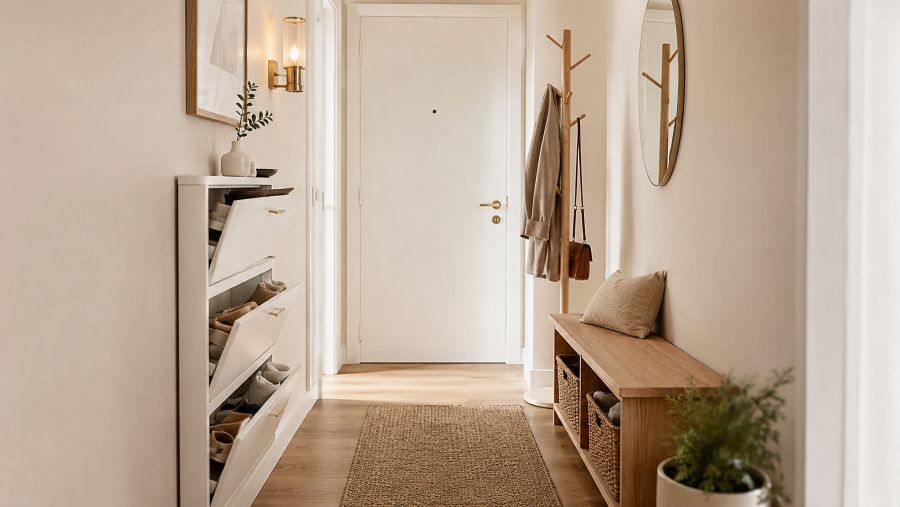
Floor space near the door is scarce, so every piece that touches the ground must justify itself twice over — once with function, once with looks. The good news is that furniture makers have embraced the shallow-depth category, and there are now genuinely elegant options under 30 centimeters deep.
The Pieces Worth Considering
- Tilting shoe cabinet: The undisputed champion of tight entrances. At just 17–24 centimeters deep, its drawers pivot open to store shoes upright, hiding a dozen pairs behind a clean facade that doubles as a display surface.
- Storage bench: Sitting down to put on shoes is a small daily luxury, and a bench with a lift-up lid or baskets beneath turns that luxury into hidden storage for slippers, pet leashes, and reusable bags.
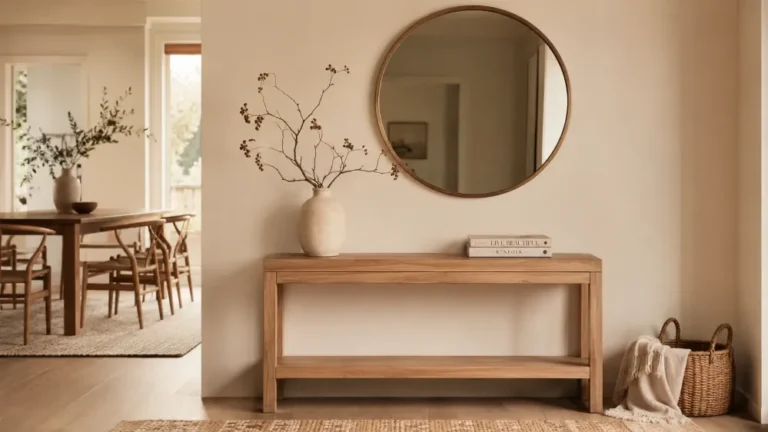
- Slim console or floating shelf: A surface 20–30 centimeters deep is enough for the essentials: a tray for keys, a bowl for coins, a lamp, and one beautiful object that makes you smile on the way out.
- Coat stand: Where wall mounting is impossible, a sculptural freestanding stand occupies a 40-centimeter circle of floor and swallows an impressive amount of outerwear — choose one with a weighted base so winter coats cannot tip it.
Whatever you choose, protect the walkway. Accessibility guidelines suggest keeping at least 90 centimeters of clear passage, and in daily life that margin is the difference between gliding out the door with grocery bags and performing an awkward sideways shuffle. Measure before you buy, and when in doubt, go shallower.
The Drop Zone: A Home for Every Pocket’s Contents
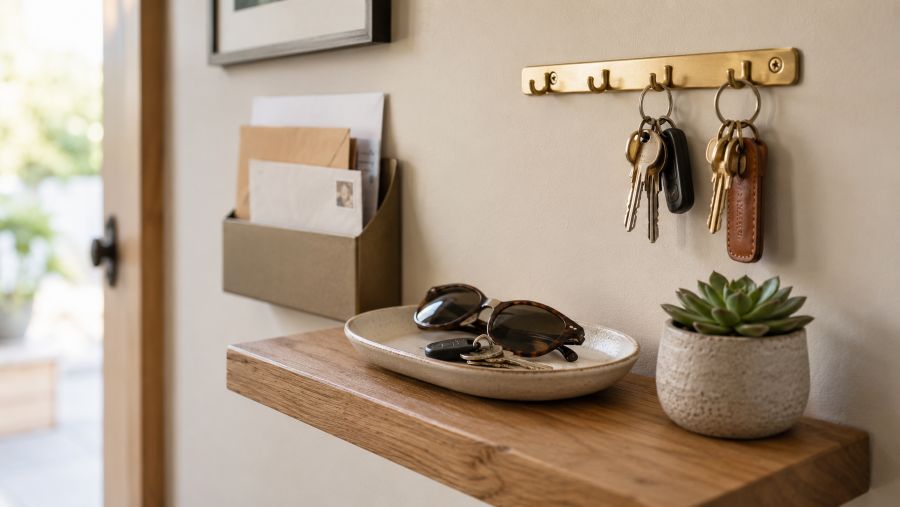
Most entrance clutter is not furniture failure — it is the absence of micro-homes for small objects. Keys, earbuds, sunglasses, transit cards, mail, and parcel slips arrive in your pockets every single day, and without assigned spots they scatter across counters and side tables like confetti. The fix costs almost nothing.
Dedicate one tray or shallow bowl exclusively to pocket contents, and make emptying your pockets into it the very first thing you do after locking the door. Add a wall-mounted key rack or a magnetic strip for the keys themselves, a slim wall file or letter holder for incoming mail — with a hard rule that it gets sorted when full — and a small dish for coins. If you carry a bag daily, give it its own dedicated hook rather than letting it migrate to chair backs around your home.
The habit matters more than the hardware. Behavioral researchers note that routines anchored to an existing trigger — in this case, walking through the door — form fastest. Within two weeks, the tray ritual becomes automatic, and the morning hunt for keys quietly disappears from your life.
Mirrors, Light, and Color: Making the Entrance Feel Bigger
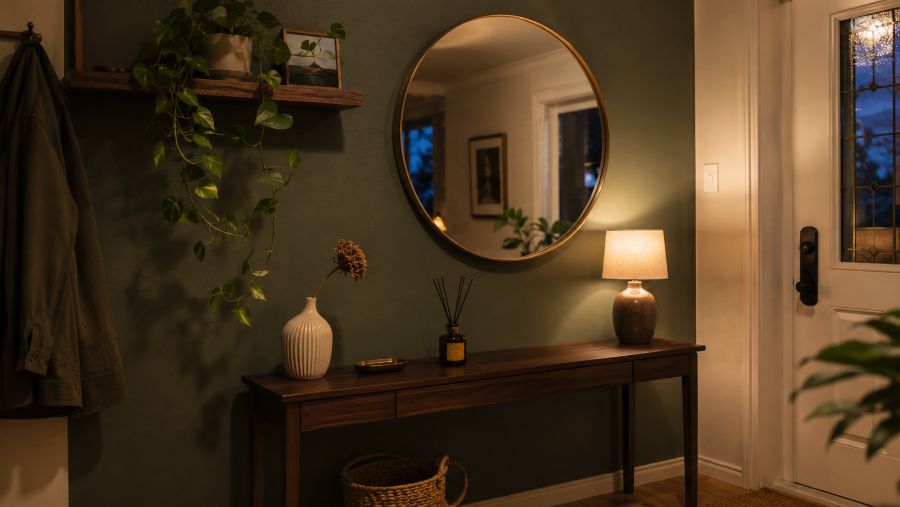
Function gets you organized; styling makes the entrance feel like part of a designed home. And in a tight footprint, the most powerful styling tool is the mirror. Hung above the console or directly on the wall facing the most light, a generous mirror does triple duty: a final outfit check on the way out, a bounce surface that amplifies daylight, and an optical trick that visually doubles the depth of the zone. Round mirrors soften the angular geometry that narrow entries usually suffer from, while a full-length lean-against-the-wall mirror works wonders in a corridor-style entrance.
Color strategy depends on your light. If the entrance is dark — as most interior-facing ones are — embrace it with a rich, cocooning tone like deep sage, terracotta, or warm charcoal on a single wall; fighting darkness with stark white usually just produces gloomy gray. If natural light reaches the door, warm neutrals and soft creams will stretch it. Either way, repeat one accent color from the adjacent living area so the entry feels connected to the whole home rather than orphaned at the threshold.
Finish with life and scent. A trailing pothos on the top shelf, a vase that gets a single stem when you remember, and a reed diffuser near the door engage the senses the moment you arrive. Scent is the most underrated welcome-home signal there is — real estate stagers have leaned on it for decades for precisely this reason.
Renter-Friendly Moves: Zero Drill Holes Required
Many of the ideas above involve screws, and many leases involve landlords who frown on them. Fortunately, nearly every solution has a no-damage twin. Heavy-duty adhesive hooks now hold five kilograms or more — plenty for coats and bags — while removable picture-hanging strips support lightweight mirrors and key racks. Over-the-door organizers add hooks and pockets without touching the wall at all, and tension rods inside a nearby closet can multiply hanging space instantly.
For larger pieces, think freestanding and leaning. A ladder shelf rests against the wall and offers four tiers of storage with nothing but gravity holding it in place. A coat stand, a storage bench, and a lean-to mirror together build a complete entrance setup you can assemble in an afternoon and take with you to your next address — which, in rental life, is exactly the kind of investment that makes sense.
Quick Comparison: Which Solution Fits Your Entrance?
Every doorway situation is different — some open into corridors, some into living areas, some have generous walls and others barely a sliver. Use the table below to match the right solution to your specific constraints and budget.
| Solution | Floor Depth Needed | Renter Friendly? | Best For |
|---|---|---|---|
| Hook rail + floating shelf | 0 cm | With adhesive versions | Any wall beside the door |
| Pegboard panel | 3–5 cm | With anchor-free mounts | Households whose needs change seasonally |
| Tilting shoe cabinet | 17–24 cm | Yes (freestanding) | Shoe collections with no closet nearby |
| Slim console table | 20–30 cm | Yes | Creating a styled focal point |
| Storage bench | 35–40 cm | Yes | Anyone who sits to put on shoes |
| Coat stand | 40 cm circle | Yes | Corners where wall mounting fails |
| Open shelving divider | 30–40 cm | Yes | Doors opening straight into living areas |
| Runner rug + accent wall | 0 cm | Rug yes; paint depends on lease | Defining the zone visually |
Smart Small Space Tip: Before buying anything, mark your planned entry zone on the floor with painter’s tape — rug footprint, console depth, door swing arc — and live with the tape for two days. You will discover circulation problems for free instead of discovering them after assembly, and the door swing test alone has saved countless consoles from being returned.
FAQ: Creating an Entryway Without a Foyer
How do I create an entryway when my door opens directly into the living room?
Define the zone visually rather than physically. A durable rug just inside the door, a wall hook rail, and a slim console or shelf signal “this is the entrance” without walls. A narrow bookcase, open shelving unit, or folding screen placed perpendicular to the door can also act as a subtle divider that creates the feeling of a foyer.
What is the ideal depth for an entry console in a tight space?
Look for consoles between 20 and 30 centimeters (8–12 inches) deep. This is shallow enough to keep walkways clear — you generally want at least 90 centimeters of clear passage — while still offering a surface for keys, a tray, and a lamp. Wall-mounted floating shelves can go even slimmer at 15 centimeters.
How can renters add entryway storage without drilling holes?
Use over-the-door hook racks, freestanding coat stands, lean-against-the-wall ladder shelves, and heavy-duty adhesive hooks rated for the weight of coats and bags. Removable adhesive strips can also hold lightweight mirrors and key racks, and a storage bench requires no installation at all.
Where should shoes go if there is no closet near the door?
A slim shoe cabinet with tilting drawers is the best answer — many are only 17–24 centimeters deep and hold 12 or more pairs upright. Alternatives include a storage bench with a lift-up lid, stackable shoe boxes under a console, or a low two-tier rack with a tray underneath for wet weather.
Final Thoughts: Two Square Meters of Daily Joy
An entrance without a real foyer is not a flaw to apologize for — it is a design brief. Draw the boundary with a rug and a shift in color, push storage up the wall where it costs nothing, choose one or two shallow pieces that work hard, give every pocket-sized object a permanent home, and let a mirror and a warm lamp handle the atmosphere. None of these moves requires renovation, most survive a landlord’s inspection, and together they transform the most-used two square meters of your home into a place that organizes your mornings and welcomes your evenings. The foyer you were never given is, it turns out, entirely yours to invent.
ADeL A.A
ADeL A.A is a home décor and space optimization writer who believes every square foot matters. He spends his time researching, testing, and comparing smart storage ideas, multi-functional furniture, and practical layout solutions — always searching for the best ways to make compact homes feel bigger, brighter, and better organized.
View all articles by ADeL A.A →