How to Soundproof a Small Bedroom in a Shared Building

Few things drain your wellbeing faster than a bedroom you cannot rest in. When you live in a shared building, the footsteps overhead, the muffled television next door, and the late-night conversations in the hallway all seem to find their way straight to your pillow. In a small bedroom, those sounds feel even closer, because there is less air, fewer surfaces, and almost no buffer between you and the noise.
The good news is that you do not need to gut the walls or break your lease to reclaim your peace. This guide walks you through how to soundproof a small bedroom using renter-friendly, budget-conscious methods that prioritize calm, sleep, and mental clarity. We will treat your bedroom as what it truly is: a wellness sanctuary that happens to share walls with the rest of the world.

Before reaching for foam panels or expensive gadgets, it helps to understand a simple truth that quietly defines every soundproofing project: sound behaves like water. It seeps through cracks, pools where there is empty space, and bounces off hard surfaces until the whole room feels louder than it should. Once you start thinking about noise this way, the path to a quieter bedroom becomes far more logical, and you stop wasting money on solutions that look impressive but accomplish very little.
To see these ideas in action before we break them down, the short walkthrough below shows how a few simple, renter-friendly changes can transform the way a small bedroom sounds at night. It is a helpful visual companion to the step-by-step soundproofing methods covered throughout this guide.
With that overview in mind, the rest of this guide focuses on the practical detail: which type of noise you are facing, where to spend your budget first, and how each small upgrade contributes to a quieter, more restful bedroom over time.
Why Noise Hits Harder in Small Shared Spaces
In a large home, sound has room to dissipate. Long hallways, multiple rooms, and generous ceilings give noise somewhere to travel before it reaches you. A small bedroom in a shared building offers none of that luxury. The walls are often thin, the rooms are stacked tightly against your neighbors, and every hard surface reflects sound back toward you instead of letting it fade.
This matters for more than comfort. Chronic exposure to night-time noise is closely linked to fragmented sleep, elevated stress hormones, and a constant low-grade tension that follows you into the next day. When your nervous system never fully relaxes, your small bedroom stops feeling like a refuge and starts feeling like another source of pressure. Treating noise as a wellness issue, rather than a mere annoyance, is the mindset shift that makes the effort worthwhile.
It also explains why small spaces respond so well to soundproofing. Because the room is compact, a handful of well-chosen materials can transform the entire acoustic feel of the space. You are not trying to treat a sprawling area; you are softening a small, contained box, and that is a battle you can realistically win on a modest budget.
Understanding How Sound Travels Into Your Bedroom
To soundproof effectively, you first need to know which type of noise you are fighting. Most disturbances in a shared building fall into two broad categories, and each one calls for a different response. Tackling the wrong type with the wrong method is the most common reason people feel their soundproofing efforts have failed.
Airborne Noise
Airborne noise travels through the air and slips through gaps. Think of voices, television sound, music, barking dogs, and street traffic. This kind of noise is sneaky because it does not need a large opening to reach you; the thin gap beneath a door or a poorly sealed window frame is more than enough. The encouraging part is that airborne noise is also the easiest and cheapest to reduce, because sealing gaps and adding soft mass works remarkably well against it.
Impact Noise
Impact noise is created when something strikes a surface and the vibration travels through the structure itself. Footsteps from the apartment above, furniture being dragged, doors slamming, and the thud of a dropped object all fall into this group. Impact noise is far harder to stop as a renter, because the vibration moves through the building’s bones. While you cannot eliminate it entirely without construction, you can soften its arrival and mask it so it no longer dominates your sleep.
Soundproofing the Walls Without Renovation
Shared walls are usually the biggest culprit, yet they are also where renters feel most powerless. You cannot tear into the drywall or add a second layer of plasterboard, but you can add mass and absorption on your side of the wall, which is surprisingly effective in a small room.
The simplest strategy is to place a large, fully stocked bookshelf against the wall you share with a noisy neighbor. Books are dense, and a packed shelf acts as a thick, irregular barrier that both absorbs and blocks a meaningful portion of sound. A solid wardrobe positioned against the same wall does similar work and doubles as storage, which is invaluable in a small bedroom where every piece of furniture must earn its place.
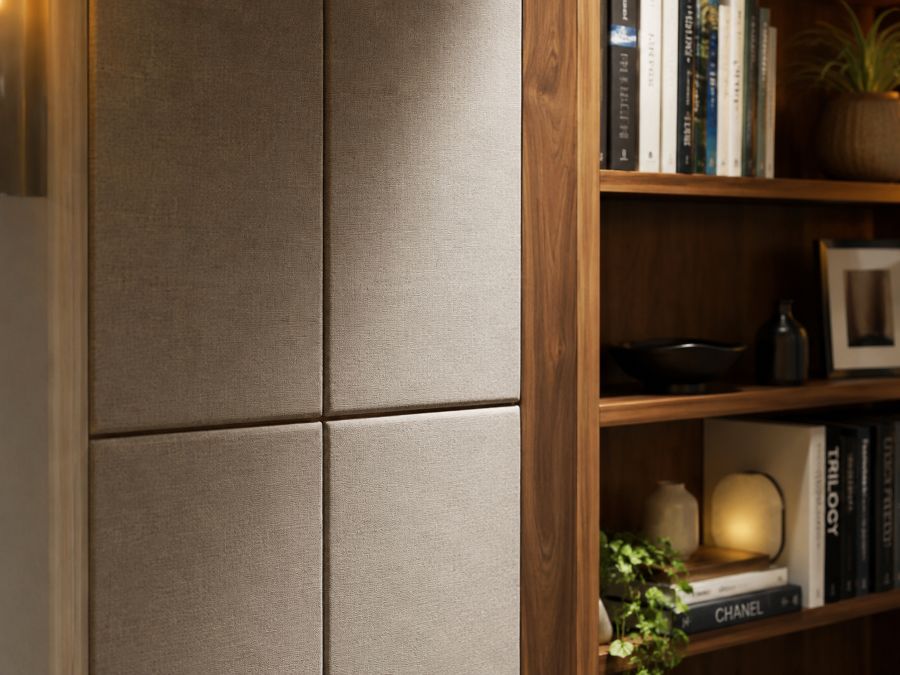
For a softer, more decorative approach, fabric-wrapped acoustic panels or even thick woven wall hangings can be mounted directly onto the problem wall. These absorb the higher-frequency sounds that make voices feel sharp and intrusive. Layering a tapestry over a thin acoustic blanket gives you both function and style, and nothing about it threatens your deposit when removal day arrives.
Smart Small Space Tip: Resist the urge to cover every wall with thin acoustic foam. Foam is excellent at reducing echo inside a room, which improves how the space sounds, but it does almost nothing to stop your neighbor’s noise from reaching you. For blocking transmitted sound, prioritize dense mass and sealed gaps first, and treat foam as a finishing touch rather than a frontline defense.
Sealing Doors, Windows, and Hidden Gaps
If you do only one thing from this entire guide, seal your gaps. It is the highest-impact, lowest-cost step available to any renter, and it directly targets the airborne noise that most often ruins a night’s sleep. Sound leaks through openings the way light does, so even a small unsealed gap can let in a disproportionate amount of noise.
Start with the bedroom door, which is rarely a tight fit. The gap underneath is usually the single largest opening in the room, so an under-door draft stopper or noise blocker makes an immediate difference. Around the rest of the frame, self-adhesive foam weatherstripping closes the thin perimeter gaps where sound and air both escape. A hollow-core interior door can also be upgraded with a heavy door blanket or a thick decorative curtain hung across it for an extra layer of mass.
Under-Door Draft Stopper & Noise Blocker
The gap beneath your door is the number-one entry point for hallway noise. This under-door draft stopper slides on in seconds, blocks airborne sound and drafts alike, and needs no tools or permanent fixing — making it the perfect first upgrade for any renter chasing a quieter, more restful night.
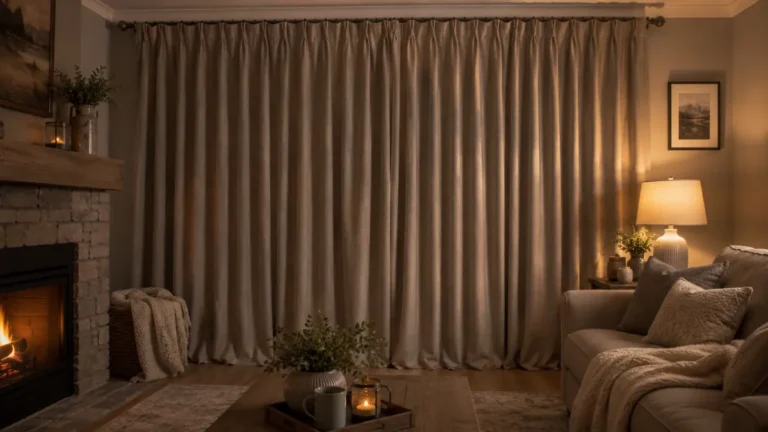
Check Price on Amazon →Windows deserve equal attention, especially if street noise or hallway chatter reaches you through them. Acoustic-grade weatherstripping seals the movable frame, while heavy, floor-to-ceiling thermal blackout noise-reducing curtains add a soft barrier that absorbs sound before it spreads across the room. For stubborn windows, a removable secondary acrylic panel can be fitted inside the existing frame, trapping a layer of still air that meaningfully dampens incoming noise without any permanent alteration.
Thermal Blackout Noise-Reducing Curtains
Heavy, floor-to-ceiling thermal blackout curtains do triple duty: they soften incoming street and hallway noise, block light for deeper sleep, and add a calming layered texture to a small bedroom. If window noise is keeping you awake, this is the single most rewarding upgrade you can hang today.
Check Price on Amazon →Finally, inspect the less obvious gaps. Electrical outlets on shared walls, gaps around pipes, and cracks where the wall meets the floor or ceiling all act as quiet highways for sound. Acoustic caulk, foam outlet sealers, and a careful walk around the room with your hand feeling for drafts will reveal openings you never knew were undermining your other efforts.
Self-Adhesive Foam Weatherstrip Door Seal
Once the bottom gap is handled, the thin cracks around the frame come next. This self-adhesive foam weatherstrip presses neatly into the door perimeter to close the openings where sound sneaks through. Affordable, easy to trim to size, and fully removable when you move out — a tiny spend with an outsized payoff.
Check Price on Amazon →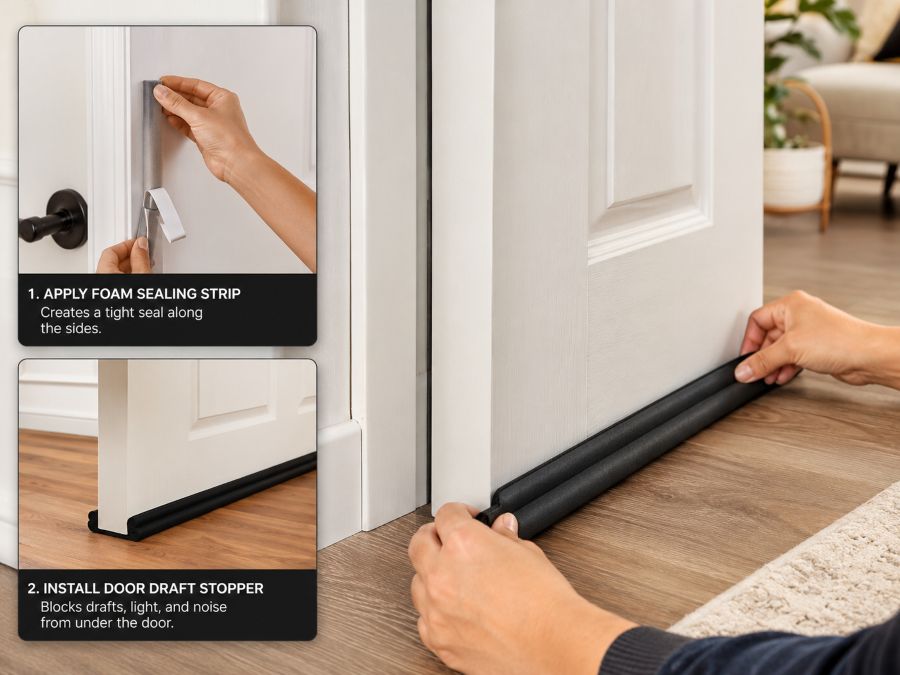
Soft Furnishings That Quietly Absorb Sound
Hard, bare surfaces are the enemy of a calm bedroom. Bare floors, blank walls, and minimal furniture cause sound to bounce endlessly, amplifying even quiet noises into something that feels louder and harsher. The cure is layering soft, porous materials that catch sound waves and convert their energy into a faint, harmless warmth instead of letting them ricochet.
A thick area rug, ideally with a dense underlay, is one of the best investments for a small bedroom. It absorbs sound within your room and softens the impact noise of your own movements, while also adding the kind of grounding texture that makes a space feel restful. Upholstered furniture follows the same principle: a padded headboard, a fabric chair, or a cushioned bench all act as discreet sound absorbers that double as comfort.
Textiles are your friend everywhere. Layered curtains, throw blankets, floor cushions, and fabric storage baskets each chip away at the room’s harshness. In a small space, this layering also serves your wellbeing directly, because soft, tactile surroundings signal safety to the nervous system and help your body wind down toward sleep more easily.
Tackling Noise From the Ceiling and Floor
Footsteps from above are among the most frustrating sounds in any shared building, and unfortunately they are the hardest to fully solve from a rented bedroom. You cannot treat your neighbor’s floor, but you can reduce how that vibration arrives and how much your own room amplifies it.
A heavier rug with a quality underlay on your own floor reduces the impact noise you create, which keeps the peace with neighbors below and often earns you goodwill in return. For ceiling noise, fabric drapes, a canopy of soft material, or absorbent panels can take the sharp edge off echoing footsteps, even though they will not eliminate the deep vibration entirely. Setting realistic expectations here is important: with impact noise, the goal is to soften and mask rather than to silence.
Budget Comparison: Where to Spend First
Not every soundproofing method delivers the same value, and in a small bedroom on a tight budget, the order in which you act matters. The table below ranks common renter-friendly options by cost and impact so you can spend wisely and feel results quickly rather than scattering money across low-return purchases.
| Method | Approximate Cost | Noise Type Targeted | Impact |
|---|---|---|---|
| Door draft stopper & weatherstripping | Low | Airborne | High |
| Acoustic caulk for gaps & outlets | Low | Airborne | Medium to High |
| Heavy blackout curtains | Low to Medium | Airborne | Medium to High |
| Thick rug with underlay | Medium | Impact & Echo | Medium to High |
| Packed bookshelf or wardrobe on shared wall | Varies (often owned) | Airborne & Impact | Medium to High |
| Fabric acoustic panels | Medium | Echo | Medium |
| White noise machine | Low to Medium | All (masking) | High for sleep |
Building a Wellness-First Sleep Sanctuary
Once you have blocked and absorbed as much noise as your space allows, the final layer of the strategy is masking. No renter-friendly approach will deliver perfect silence in a shared building, so instead of chasing the impossible, you can give your brain a steadier, gentler sound to focus on. A consistent background sound smooths over the unpredictable spikes of a slamming door or a sudden voice, and it is the unpredictability of noise, more than its volume, that wakes us.
A white noise machine, a fan, or a simple app playing soft rain or brown noise can transform how the room feels at night. The aim is not to drown the world out at high volume, but to raise the floor of ambient sound just enough that intrusive noises no longer stand out. Many people find this single addition does more for their sleep than every physical modification combined.
White Noise Sound Machine
When you cannot block every sound, mask it. A dedicated white noise machine smooths over sudden footsteps and voices with a steady, soothing hum your brain easily tunes out. Many light sleepers say it does more for their rest than every other change combined — a small device with a genuinely transformative effect on sleep quality.
Check Price on Amazon →Beyond sound itself, the wellness payoff comes from how the whole room now feels. A small bedroom that is softly lit, layered with calming textures, sealed against drafts, and wrapped in a gentle hum of background sound becomes a genuine sanctuary. Your nervous system reads these cues and finally allows you to rest. That, ultimately, is the point of soundproofing: not merely quieter walls, but deeper, more restorative sleep and the clearer, calmer days that follow.
Smart Small Space Tip: Tackle your soundproofing in stages rather than all at once. Start with the door and window seals, live with the change for a few nights, and notice exactly which noises still bother you. This way you spend money only where it is genuinely needed, and you avoid cluttering a small bedroom with materials that solve problems you do not actually have.
FAQ: Soundproofing a Small Bedroom
Can you really soundproof a small bedroom in a rented apartment?
Yes, though it is more accurate to call it sound reduction than full soundproofing. With renter-friendly methods such as heavy curtains, door seals, soft furnishings, and strategic furniture placement, you can noticeably lower the noise entering a small bedroom without making permanent changes that risk your deposit.
What is the cheapest way to reduce noise in a small bedroom?
Sealing gaps is the cheapest and most effective first step. A door draft stopper, adhesive foam weatherstripping around the door frame, and acoustic caulk for cracks usually cost very little yet block a surprising amount of airborne sound, since noise travels easily through even the smallest openings.
Does soundproofing foam actually block noise from neighbors?
Acoustic foam absorbs echo and improves sound quality inside a room, but it does very little to block noise coming through walls from neighbors. To reduce transmitted noise you need mass and sealed gaps, such as heavy bookshelves, dense curtains, soft furnishings, and weatherstripping rather than thin foam panels alone.
How can I block noise to sleep better without major renovation?
Combine layered soft materials with a steady background sound. Add a rug, an upholstered headboard, and thick curtains to absorb noise, seal the door and windows, and then use a white noise machine or fan to mask any sound that still gets through. This layered approach creates a calmer sleep environment in any small shared space.
A Quieter Room Is a Calmer You
Soundproofing a small bedroom in a shared building is rarely about achieving total silence, and chasing that ideal only leads to frustration and overspending. It is about taking back enough control that your room feels like a place to recover rather than endure. By sealing the gaps, adding soft mass where it counts, absorbing the echo, and masking what remains, you build a layered defense that quietly works around the clock.
Begin with the simplest, cheapest steps, observe how your sleep responds, and add the next layer only when you feel you need it. With a little patience and a wellness-first mindset, even the smallest bedroom in the noisiest building can become the calm, restorative sanctuary you deserve to come home to each night.
Affiliate Disclosure: This article contains affiliate links. If you purchase through them, Smart Small Space may earn a small commission at no extra cost to you. We only ever recommend products that genuinely fit a small-space, wellness-first approach to a calmer, quieter home.
ADeL A.A
ADeL A.A is a home décor and space optimization writer who believes every square foot matters. He spends his time researching, testing, and comparing smart storage ideas, multi-functional furniture, and practical layout solutions — always searching for the best ways to make compact homes feel bigger, brighter, and better organized.
View all articles by ADeL A.A →