How to Build a Smart Apartment on a Budget

Turning your home into a smart apartment no longer requires a big renovation budget or a tech-savvy background. Thanks to a wave of affordable, plug-and-play gadgets, you can automate lighting, control appliances from your phone, and add real convenience for the price of a few dinners out.
This guide walks you through how to build a smart apartment on a budget step by step, focusing on the devices that deliver the most impact for the least money, renter-friendly setups that leave no marks, and smart habits that keep your costs and your electricity bill low.
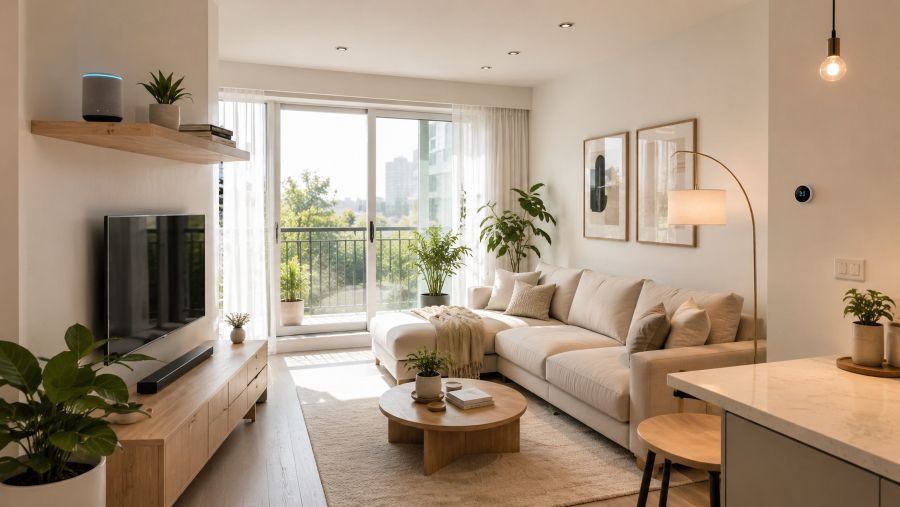
The idea of a “smart home” used to be tied to luxury builds, expensive wiring, and professional installers. That image is outdated. Today, the smart apartment movement is driven by inexpensive Wi-Fi devices that you set up yourself in minutes. For renters and people living in small spaces especially, this is great news: you can build an intelligent, responsive home without owning the property, without drilling holes, and without spending more than you would on a single piece of furniture.
If you prefer to see how a budget smart apartment comes together before reading the full breakdown, the video walkthrough below covers the essential affordable devices and how they fit into a small space. It is a quick visual companion to the step-by-step guide that follows.
With the overview in mind, let’s break down exactly why an intelligent apartment no longer demands a premium budget, and how to put your money where it counts most.
Why a Smart Apartment Doesn’t Have to Be Expensive
The biggest myth about smart homes is that the price tag scales with the number of “smart” features. In reality, the cost of core automation hardware has dropped dramatically over the past few years. A smart plug that once cost $40 now sells for under $10, and a capable smart speaker can be found on sale for the price of a takeout meal. Because these devices connect to your existing Wi-Fi, you avoid the installation fees and proprietary systems that used to make automation so pricey.
Just as importantly, a smart apartment is something you build gradually. You do not need to buy everything at once. Starting with one or two devices lets you learn how the ecosystem works, decide what genuinely improves your daily routine, and add more only when it makes sense. This incremental approach keeps your spending in check and prevents the all-too-common mistake of buying gadgets that end up unused in a drawer.
Start With a Smart Hub (or Skip It Entirely)
One of the first questions newcomers ask is whether they need a central smart home hub. The honest answer for most budget setups is no. A hub is a device that coordinates communication between sensors and gadgets that use protocols like Zigbee or Z-Wave. While hubs are powerful, they add cost and complexity that a first-time smart apartment rarely needs.
Hub vs No-Hub: Which Path Fits Your Budget?
For an affordable start, lean on Wi-Fi devices that connect directly to your router and are controlled through a free app or a voice assistant. You only need to consider a hub later, once your collection grows and you want faster, more reliable communication across many sensors. Here is how to think about the choice:
- No hub (recommended for budgets): Wi-Fi plugs, bulbs, and speakers work straight out of the box. Lowest upfront cost, fastest setup, perfect for a handful of devices.
- Hub-based: Better for large setups with many battery-powered sensors. Reduces Wi-Fi congestion but adds $50 to $100 and a steeper learning curve.
- Hybrid: Many people stay hub-free for years and only add one when a specific need appears, such as advanced motion-triggered automations.
The Essential Budget Smart Devices to Start With
If you are wondering where to put your first few dollars, focus on devices that you will interact with every single day. Daily-use gadgets justify their cost almost immediately because the convenience compounds. The following three categories form the foundation of nearly every affordable smart apartment.
Smart Plugs: The Cheapest Entry Point
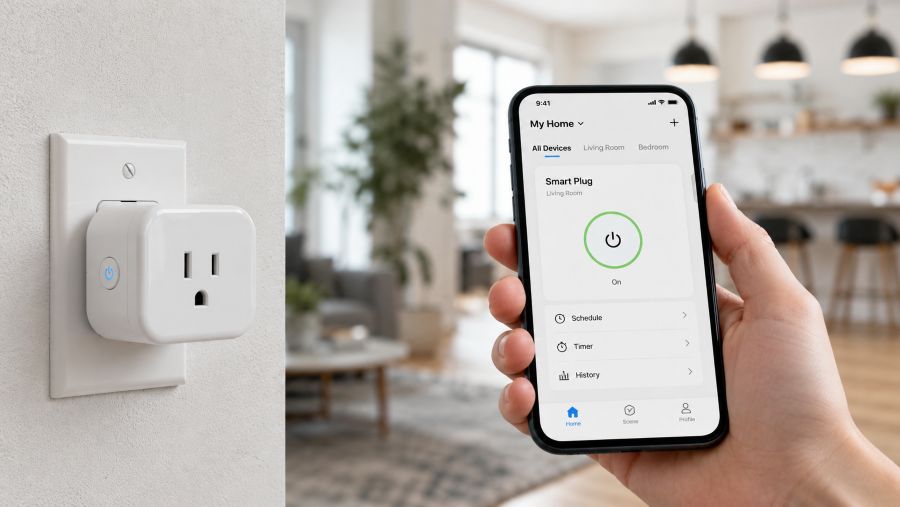
Smart plugs are the single best value in home automation. You plug one into an existing outlet, plug a lamp, fan, coffee maker, or any standard appliance into the smart plug, and suddenly that device can be controlled from your phone or by voice. You can schedule it, turn it off remotely, and in many cases monitor how much energy it uses. At under $10 each, smart plugs instantly make “dumb” devices smart without replacing anything you already own.
Smart Bulbs: Lighting That Adapts to You
Smart bulbs screw into your existing fixtures and let you dim, schedule, and even change the color temperature of your lighting from an app. For a small apartment, this is transformative: warm light in the evening to wind down, brighter cool light for working, and automatic schedules so you never walk into a dark room. Budget multipacks bring the per-bulb price down considerably, making it easy to cover a whole room affordably.
A Smart Speaker: Your Voice Command Center
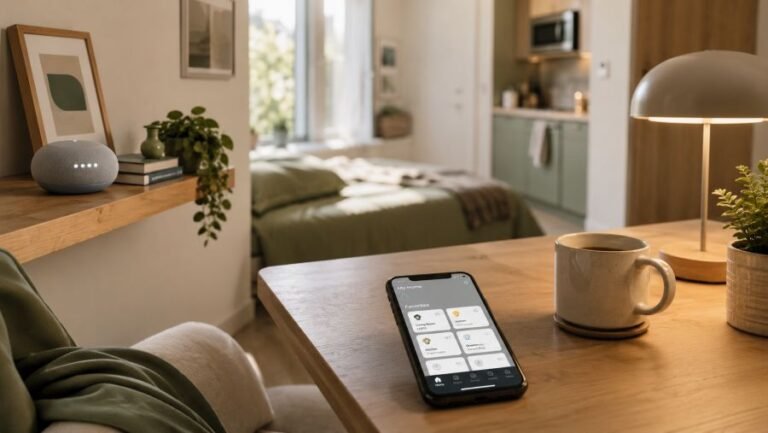
A compact smart speaker ties everything together. It acts as the voice assistant that controls your plugs and bulbs, sets timers, answers questions, and plays music. Entry-level models frequently go on sale, and a single speaker is usually enough to cover a studio or one-bedroom apartment. Once you have a speaker, adding new smart devices feels effortless because you can control them hands-free.
Smart Lighting on a Budget
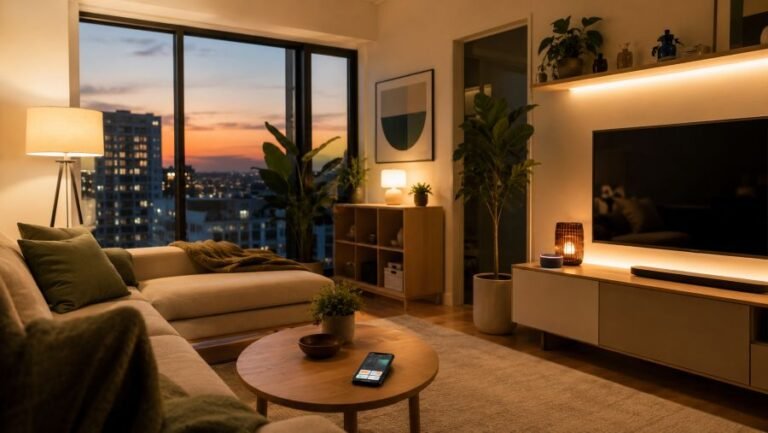
Lighting deserves special attention because it shapes how a small space feels more than almost anything else. Beyond individual smart bulbs, inexpensive LED light strips can completely change the mood of a room. Mounted behind a headboard, under a shelf, or along a TV stand, they add depth and warmth that make compact rooms feel larger and more inviting. Because they are adhesive-backed, they are entirely renter-friendly.
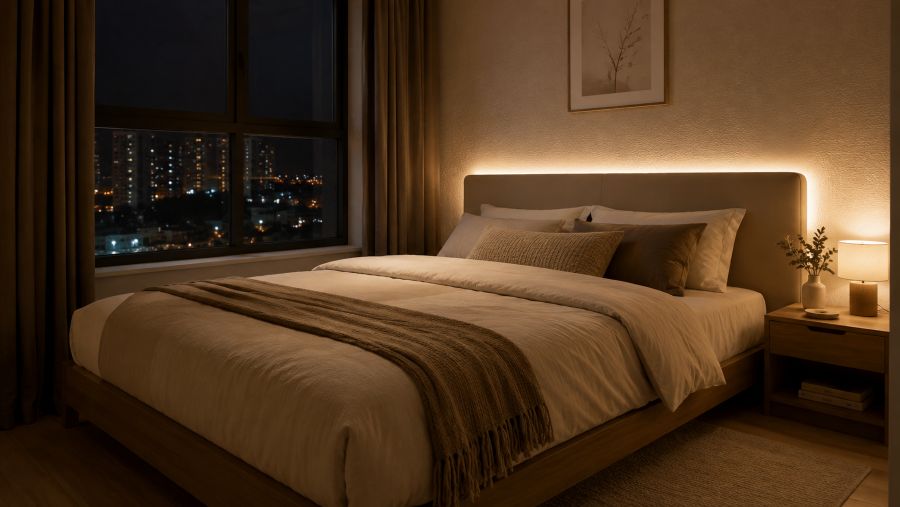
The real magic of smart lighting comes from automation. Setting your lights to fade on gently in the morning, switch to a relaxed warm tone after sunset, and turn off automatically at bedtime removes dozens of tiny manual actions from your day. These routines cost nothing extra to set up, yet they make an apartment feel genuinely intelligent and tailored to your life.
Smart Small Space Tip: Group all the lights in one room under a single scene or routine. Then a single command like “Goodnight” can turn off every light at once. This is the kind of small automation that makes a budget smart apartment feel far more premium than its price.
Security and Monitoring Without the Subscription
Security is often where smart home costs balloon, mainly because of monthly subscription fees. The budget-friendly approach is to choose devices that store footage locally on a memory card or offer free basic features without forcing you into a paid plan. An affordable indoor Wi-Fi camera can provide live viewing and motion alerts to your phone for a one-time cost, which is ideal for keeping an eye on a pet or your front door while you are away.
Inexpensive contact sensors and motion sensors round out the picture. A small sensor on a door or window can trigger your lights to turn on or send you a notification, adding both convenience and peace of mind. Because these pieces are small, wireless, and battery-powered, they install in seconds with adhesive and leave no trace when you move out.
Budget Smart Device Comparison
To make planning easier, here is a quick comparison of the core devices most people start with, along with their typical role and approximate budget pricing. Use it to decide where your first purchases should go based on your priorities.
| Device | Main Benefit | Typical Budget Price | Best For |
|---|---|---|---|
| Smart Plug | Control any appliance remotely & on a schedule | $6 – $12 | Absolute beginners |
| Smart Bulb | Dimming, scheduling, color temperature | $8 – $15 | Mood and energy savings |
| Smart Speaker | Voice control hub for everything | $20 – $40 | Hands-free convenience |
| LED Light Strip | Ambient lighting, makes rooms feel larger | $12 – $25 | Small-space ambiance |
| Indoor Camera | Live monitoring, motion alerts | $25 – $40 | Pets and security |
| Contact / Motion Sensor | Triggers automations & alerts | $10 – $18 | Automation enthusiasts |
Renter-Friendly Setup Tips (No Drilling, No Damage)
If you rent your apartment, you may worry about installing anything that could risk your deposit. The good news is that an entire smart apartment can be built without a single screw. Nearly every budget device on this list is designed to be temporary and removable, which is exactly what makes them ideal for rentals and small spaces.
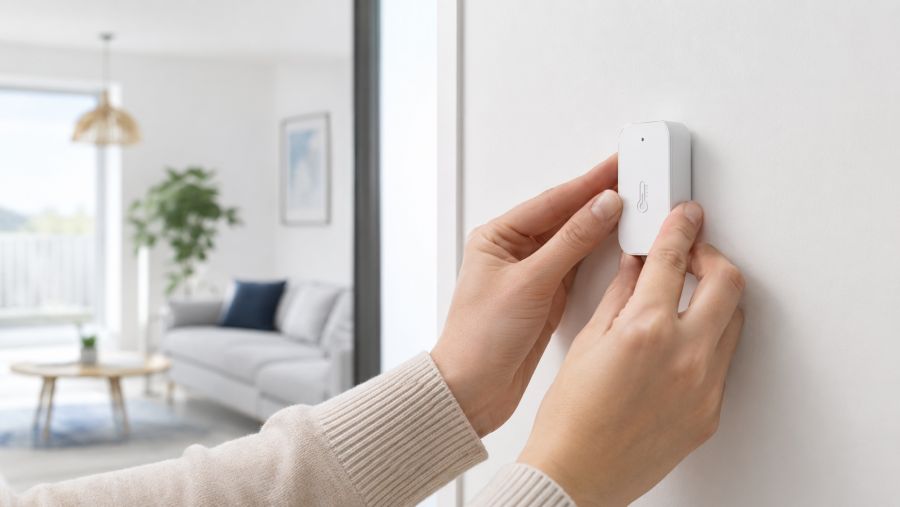
Stick to plug-in devices wherever possible, since they require nothing more than an existing outlet. For anything that needs mounting, removable adhesive strips hold cameras, sensors, and light strips securely yet peel away cleanly later. Avoid hardwired switches and fixtures that replace your landlord’s electrical components, and instead achieve the same results with smart bulbs and plugs. When moving day comes, you simply unplug, peel, and pack everything into a small box.
Building Your Smart Apartment Step by Step
With the pieces understood, here is a sensible order to follow so your spending stays controlled and each new device builds on the last. Treat this as a roadmap rather than a shopping spree.
- Step 1 – Get a smart speaker. This becomes your control center and makes everything else easier to operate.
- Step 2 – Add two or three smart plugs. Automate a lamp, your coffee maker, and any device you turn on and off daily.
- Step 3 – Replace your most-used bulbs. Start with the living room and bedroom for the biggest daily impact.
- Step 4 – Create your first routines. A morning routine and a bedtime routine instantly make the apartment feel smart.
- Step 5 – Expand thoughtfully. Add a camera, sensors, or light strips only as specific needs arise.
Common Mistakes to Avoid
Even on a tight budget, a few missteps can waste money or leave you frustrated. The most frequent mistake is buying too much too soon, before you understand which features you actually use. Another is mixing too many incompatible brands, which scatters your control across multiple apps. Whenever possible, choose devices that work with the same voice assistant so everything lives in one place.
Finally, do not overlook your Wi-Fi. Because budget smart devices rely on your home network, a weak or overcrowded connection can cause delays and dropouts. A well-placed router or an inexpensive Wi-Fi extender often does more for reliability than any single gadget, and it ensures your affordable smart apartment performs as smoothly as a far more expensive one.
FAQ: Building a Smart Apartment on a Budget
How much does it cost to make an apartment smart on a budget?
You can start a smart apartment for around $40 to $80 by combining a smart speaker, two or three smart plugs, and a couple of smart bulbs. Expanding gradually keeps costs low while still giving you real automation and remote control over lighting and appliances.
Do I need a smart home hub to get started?
No. Most budget Wi-Fi devices like smart plugs, bulbs, and speakers connect directly to your home network without a separate hub. A hub becomes useful later if you add many Zigbee or Z-Wave sensors, but it is not necessary for a first smart apartment setup.
Are smart home devices safe for renters?
Yes. Plug-in devices, wireless sensors, adhesive-mounted gadgets, and battery cameras require no drilling or permanent changes, so they are fully renter-friendly. When you move, you simply unplug everything, remove the adhesive mounts, and take your devices with you.
Will smart devices actually lower my electricity bill?
They can. Smart plugs that cut standby power, schedules that turn off lights automatically, and energy monitoring help reduce waste. The savings are modest per device but add up over time, often paying back the cost of inexpensive gadgets within several months.
Final Thoughts: Smart Living Within Reach
Building a smart apartment on a budget is less about spending money and more about spending it wisely. By starting with a few high-impact, daily-use devices, leaning on hub-free Wi-Fi gadgets, and embracing renter-friendly installation, you can create a home that responds to your routine without straining your wallet. The beauty of this approach is that it grows with you: each affordable addition builds on the last, turning a simple apartment into a genuinely intelligent space one small, smart step at a time.
ADeL A.A
ADeL A.A is a home décor and space optimization writer who believes every square foot matters. He spends his time researching, testing, and comparing smart storage ideas, multi-functional furniture, and practical layout solutions — always searching for the best ways to make compact homes feel bigger, brighter, and better organized.
View all articles by ADeL A.A →