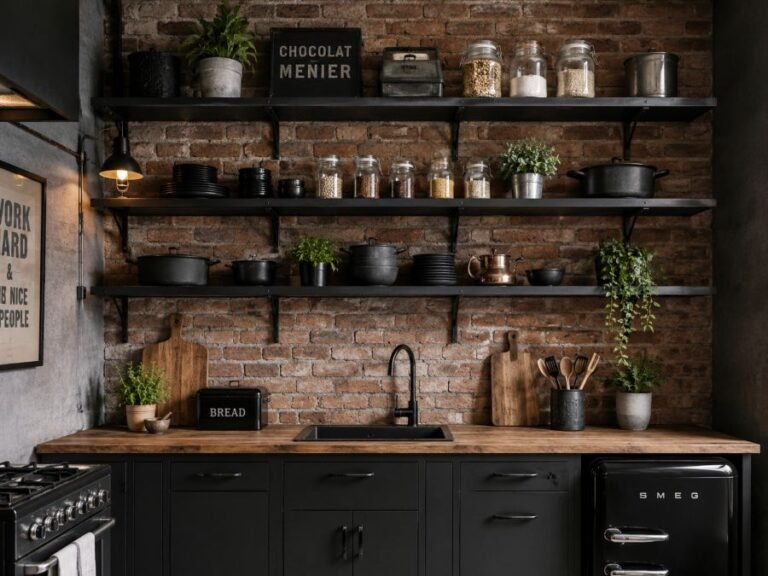
Small Kitchen Organization Ideas: Maximize Functionality

A small kitchen doesn’t mean you have to sacrifice functionality or style. With smart organization strategies and the right storage solutions, you can transform even the tiniest kitchen into a highly efficient culinary space. Whether you’re living in a studio apartment, a cozy cottage, or a compact home, these proven techniques will help you maximize every inch.
In this comprehensive guide, we’ll explore over 20 practical small kitchen organization ideas that actually work. From drawer dividers to vertical storage solutions, you’ll discover creative ways to declutter, organize, and optimize your kitchen layout for maximum efficiency and ease of use.
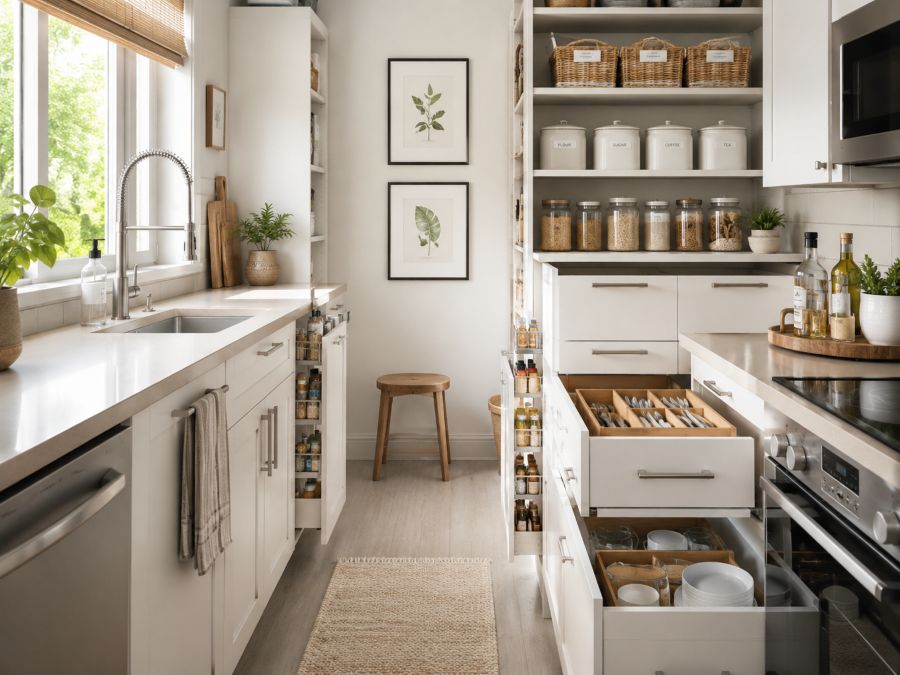
Organizing a small kitchen requires a strategic approach that balances aesthetics with practicality. The key is to identify your space constraints, understand your cooking habits, and implement solutions that work specifically for your lifestyle. Many people mistakenly believe that having a small kitchen limits their ability to cook efficiently. However, professional chefs and experienced home cooks know that constraint breeds creativity, and a well-organized small kitchen can be just as functional as a spacious one.
Understand Your Kitchen Layout and Workflow
Before implementing any storage solutions, take time to analyze your kitchen’s layout and your cooking workflow. Understanding the triangle between your sink, stove, and refrigerator helps you identify the most frequently used areas. Focus your organization efforts on these zones first. Place items you use daily—cutting boards, frequently used spices, cooking utensils—within arm’s reach of your main work areas. Items you use occasionally can be stored higher up or in harder-to-reach places, freeing up valuable counter and cabinet space near your primary work zones.
Consider your cooking style as well. Are you someone who bakes frequently? If so, prioritize accessible storage for flour, sugar, and baking tools. Do you meal prep? Organize your storage containers and freezer accordingly. Tailor your organization system to match your actual cooking habits, not idealized versions. This personalized approach ensures your system is sustainable and genuinely improves your kitchen experience.
Master Vertical Storage Solutions
Wall-Mounted Shelves and Racks
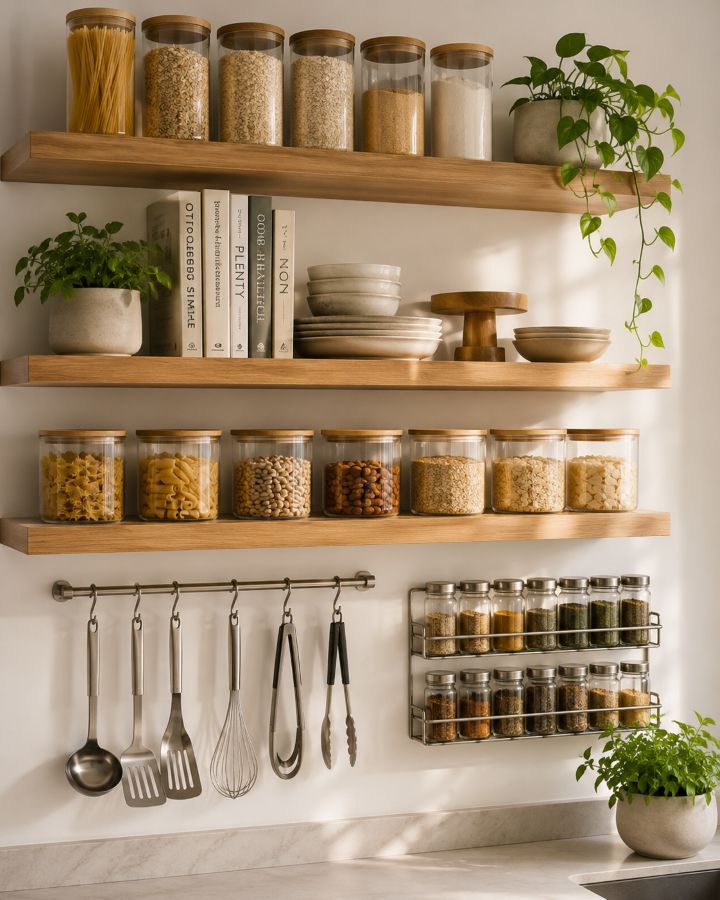
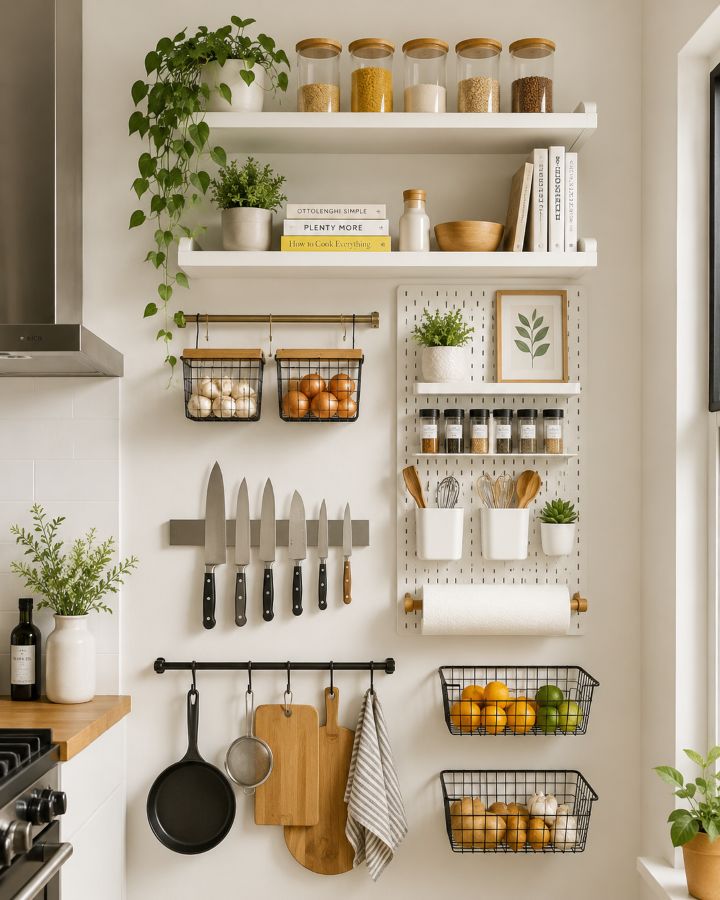
Vertical storage is your best friend in a small kitchen. Wall-mounted open shelves maximize storage while creating visual interest. Use them to display frequently used items like cookbooks, beautiful serving dishes, or organized spice jars. Remember that open shelving requires items to look neat and cohesive, so invest in matching containers and labels for a polished appearance.
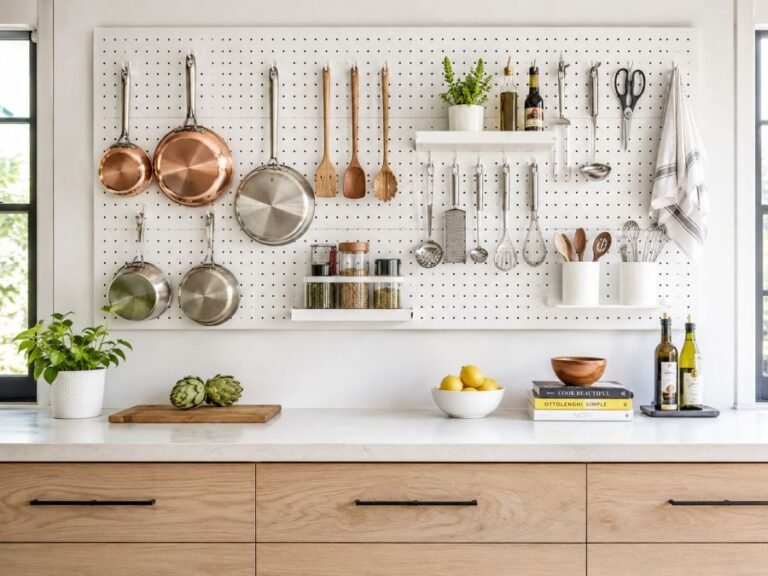
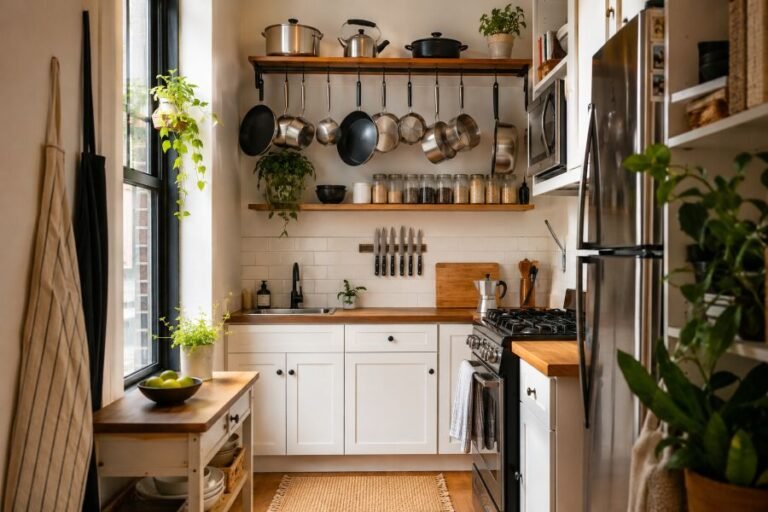
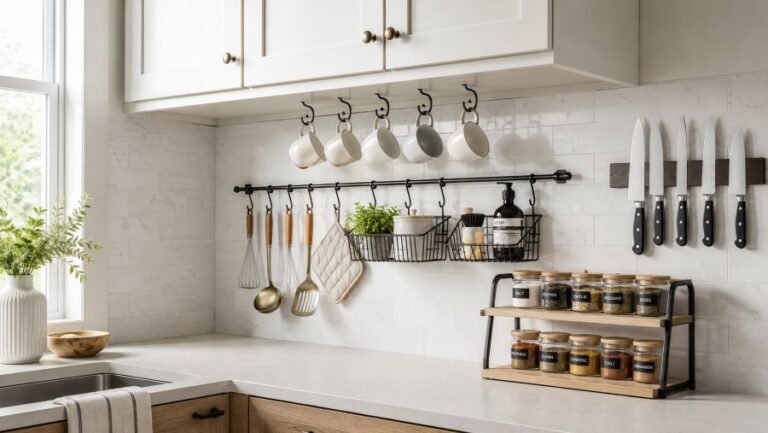
Magnetic strips mounted on walls hold metal knives securely while freeing up precious drawer space. Pegboards offer incredible flexibility, allowing you to arrange hooks, shelves, and baskets in whatever configuration works best. Hanging rails with S-hooks provide convenient access to frequently used pans, utensils, and kitchen towels.
Over-the-Door Organizers
Don’t overlook the back of your kitchen door or cabinet doors. Over-the-door organizers with clear pockets are perfect for storing small items like spice packets, tea bags, or kitchen gadget manuals. They utilize wasted space and keep items visible and accessible. Cabinet door organizers can hold cleaning supplies, sandwich bags, or less frequently used kitchen tools.
Optimize Cabinet and Drawer Organization
Drawer Divider Systems
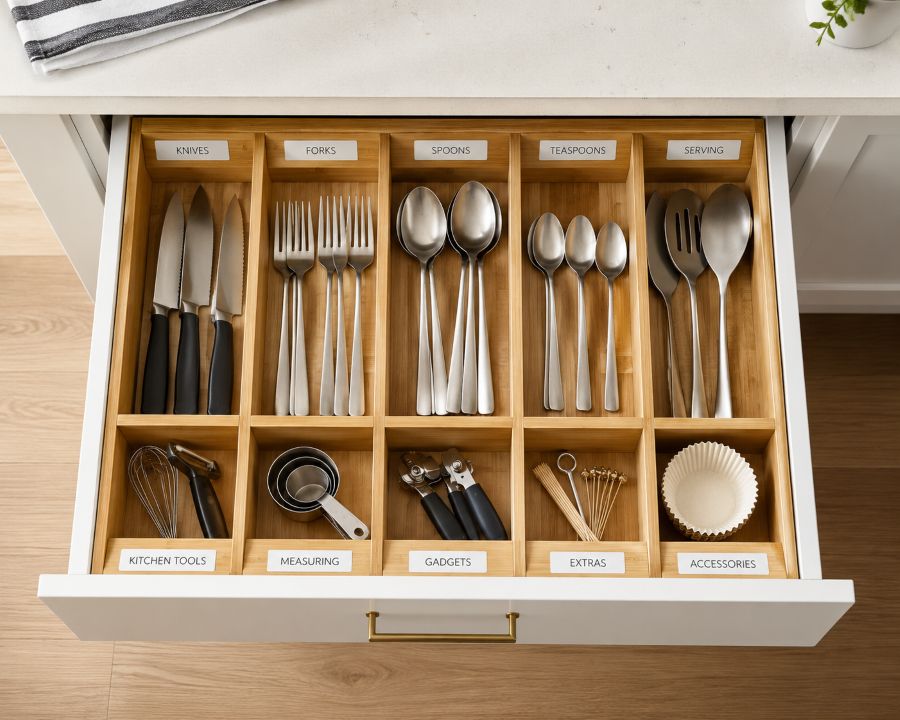
Drawer dividers transform chaotic drawers into organized zones. Invest in adjustable divider systems that let you customize compartment sizes based on your specific needs. Create dedicated sections for cooking utensils, eating utensils, gadgets, and other tools. Clear containers within drawers also help you see items at a glance without having to dig through everything.
Cabinet Organization Strategies
Maximize cabinet space with shelf risers or stacking systems that create additional tiers within a single shelf. Use pull-out baskets to make items in the back of cabinets easily accessible. Lazy susans are excellent for organizing corner cabinets and spice collections, allowing you to rotate items into view without reaching. Store like items together in labeled containers to create a logical system that’s easy to maintain.
For upper cabinets, reserve the most accessible spots for items you use frequently. Store heavier items lower and lighter items higher to maintain safety and accessibility. Infrequently used items—like specialty equipment or decorative platters—can occupy the highest or deepest shelves.
Smart Small Space Tip: Implement the “one in, one out” rule to prevent your small kitchen from becoming cluttered. When you acquire a new kitchen item, remove something you don’t use regularly. This habit keeps your storage systems from becoming overcrowded and ensures everything you keep serves a clear purpose.
Pantry and Food Storage Organization
Pantry organization is crucial in small kitchens where storage space is limited. Begin by conducting a thorough inventory of what you actually have. Toss expired items and donate duplicates or foods you won’t eat. This immediately frees up valuable space and gives you a clear picture of what you’re working with.
Container Solutions
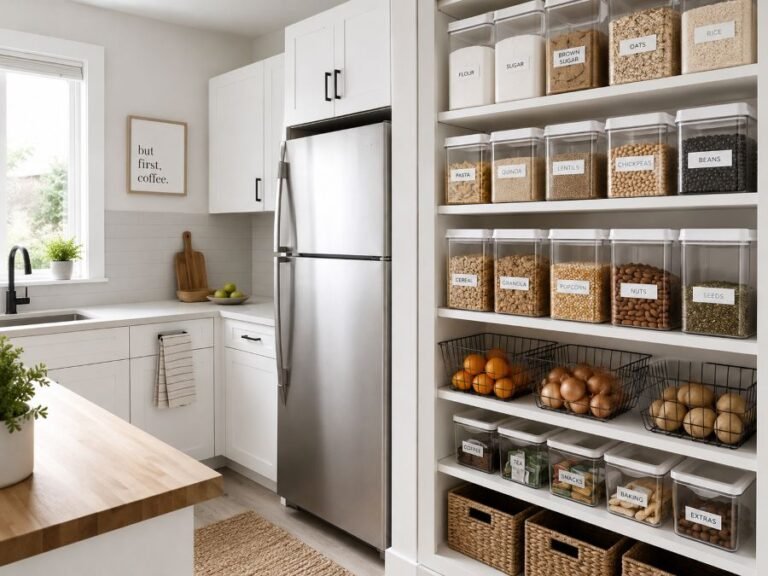
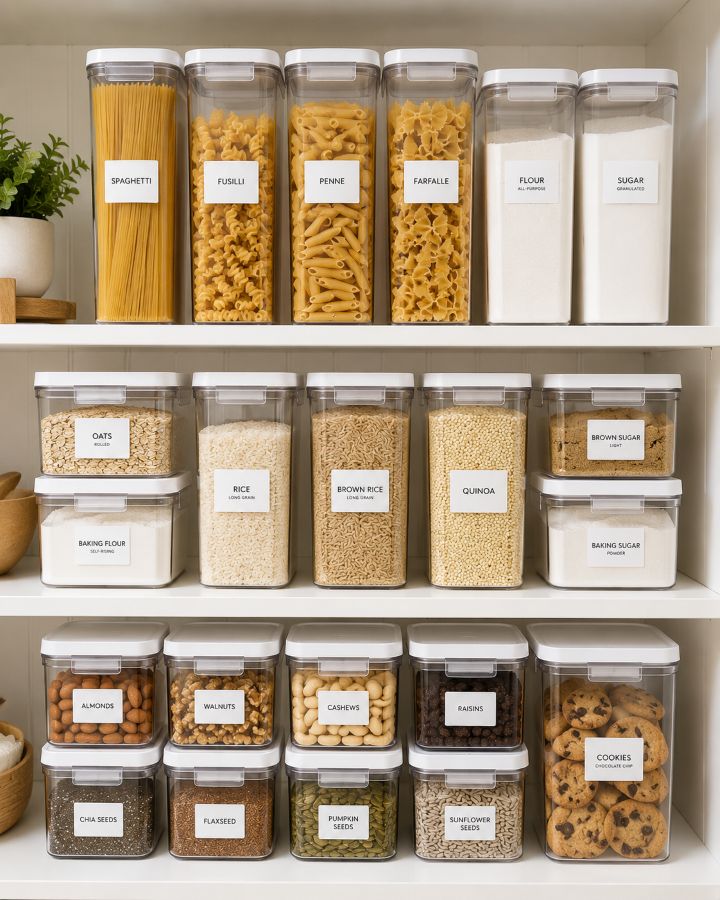
Transfer dry goods like pasta, rice, cereal, and flour into matching clear containers with airtight lids. These stackable containers maximize space while allowing you to see exactly what you have at a glance. Label each container with the contents and expiration dates. This prevents food waste and makes meal planning easier.
Refrigerator and Freezer Organization
Small refrigerators require intentional organization. Use clear plastic containers and bins to group similar items together. This makes it easier to find things and prevents items from getting lost in the back. Label containers with contents and dates, especially for leftovers. Utilize the door for items that don’t require cold storage in the coldest zone, reserving premium fridge real estate for perishables. In your freezer, use flat storage containers that slide easily and allow you to see contents without unpacking everything.
Counter Space and Appliance Management
Keep Counters Clear
Cluttered counters make small kitchens feel even smaller and cramped. Practice the habit of returning items to their designated storage spaces immediately after use. Store small appliances like toasters, coffee makers, and blenders in lower cabinets when not in use, or install wall-mounted shelves to keep them visible yet off the counter. Only the items you use daily deserve counter real estate.
Smart Appliance Choices
In a small kitchen, multifunctional appliances are game-changers. A combination convection oven-microwave saves space compared to having two separate units. An instant pot replaces a pressure cooker, slow cooker, and rice cooker. A small food processor with interchangeable blades handles multiple tasks. These versatile tools accomplish more while taking up less space.
Spice Storage and Organization
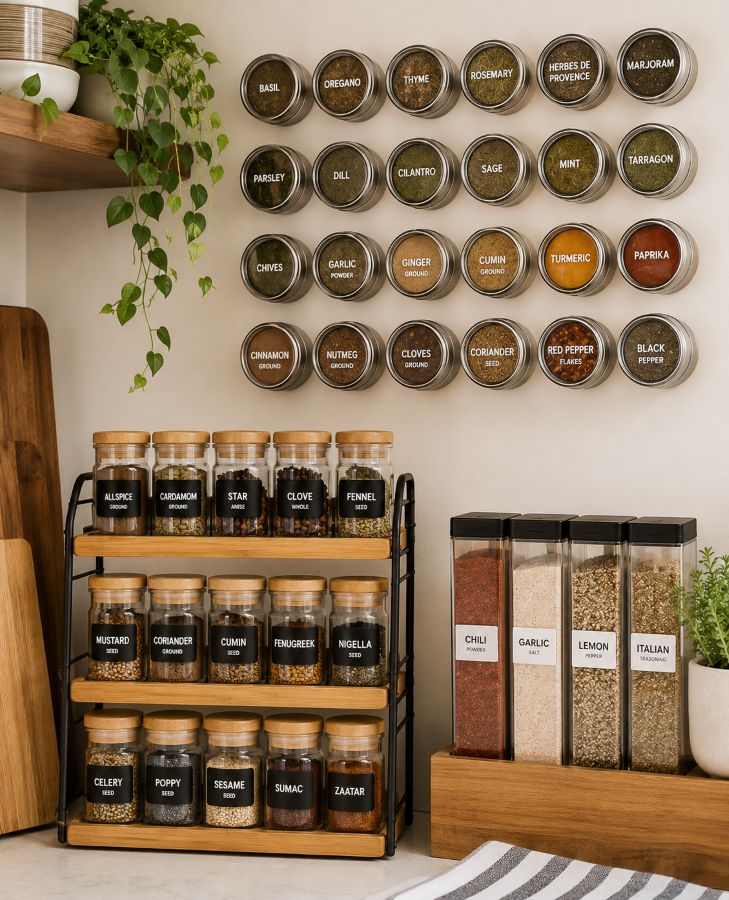
Spices require accessible, organized storage to encourage cooking and baking. In a small kitchen, this becomes especially important as spice clutter can quickly consume precious cabinet or counter space. Several excellent storage solutions exist depending on your kitchen setup and cooking frequency.
Spice Organization Methods
- Magnetic Spice Jars: Attach small magnetic spice containers to a wall or the side of your refrigerator, saving cabinet space while keeping spices visible and accessible.
- Tiered Spice Racks: Wall-mounted tiered racks display spices in a visually appealing way while utilizing vertical space efficiently.
- Drawer Spice Organizers: Customize drawer dividers specifically for spice jars, creating a hidden spice storage system that keeps your kitchen looking clean.
- Lazy Susan Organizers: Store spices in a rotating lazy susan within a cabinet, making them easy to access despite limited cabinet depth.
- Labeled Containers: Transfer spices from bulky packaging into uniform, labeled containers that stack neatly in a designated drawer or small cabinet.
Essential Small Kitchen Organizing Tools
| Organizing Tool | Best Use | Space Saved |
|---|---|---|
| Drawer Dividers | Separating utensils, tools, and gadgets | Makes full use of existing drawer space |
| Shelf Risers | Creating double layers in cabinets | Increases storage by 50% per cabinet |
| Stackable Containers | Pantry and fridge organization | Reduces wasted space significantly |
| Pull-Out Baskets | Accessing items in deep cabinets | Makes previously inaccessible space usable |
| Magnetic Strips | Knife and metal utensil storage | Eliminates need for bulky knife blocks |
| Over-Door Organizers | Small item and supply storage | Utilizes completely unused space |
| Lazy Susans | Spice and condiment organization | Increases accessibility in tight spaces |
| Tension Rods | Holding spray bottles and cleaning supplies | Frees up shelf and cabinet space |
Video Guide: Small Kitchen Organization in Action
This comprehensive video walkthrough shows you exactly how to implement these small kitchen organization strategies. Watch as we transform a cluttered kitchen into an efficient, well-organized space using practical tools and proven techniques. The step-by-step demonstrations make it easy to replicate these ideas in your own kitchen, regardless of your space size or current organization level.
Decluttering Before You Organize
Before implementing any organizational system, you must declutter. A small kitchen organized with items you don’t use is still a small, inefficient kitchen. Begin by removing everything from your kitchen—cabinets, drawers, and pantry. Sort items into three categories: keep, donate, and discard.
Be ruthless with this process. Ask yourself: Do I use this item? Does it serve a clear purpose? Does it bring functionality or joy? Duplicate items (like multiple can openers or measuring cup sets) should be consolidated down to one or two reliable options. Broken items, expired foods, and tools you’ve never used should be discarded or donated immediately.
Smart Small Space Tip: Create a “donation box” in your kitchen and continuously add items you discover you don’t actually use. Rather than waiting for a major decluttering session, this ongoing approach prevents re-accumulation of clutter and keeps your organization systems efficient long-term.
Maintenance: Keeping Your Small Kitchen Organized
An organized kitchen only stays organized with consistent habits. Dedicate 15 minutes once a week to maintaining your organization system. This includes returning items to their designated spaces, wiping down shelves, and checking for items that have become cluttered or disorganized.
Daily Habits for Kitchen Organization
- Return items to their designated storage immediately after use
- Wash dishes or load the dishwasher right away to keep sinks clear
- Wipe down counters after meal preparation and eating
- Use the “one in, one out” rule when acquiring new kitchen items
- Do a quick five-minute tidy before bedtime to start each day fresh
- Check and refresh container labels monthly to maintain clarity
Budget-Friendly Organization Solutions
You don’t need expensive organizational systems to create an efficient small kitchen. Many effective solutions cost little to nothing. Mason jars store dry goods beautifully and cost just pennies each. Vintage containers from thrift stores work perfectly for organizing and add character. Small baskets from dollar stores organize drawers and shelves inexpensively. Cardboard boxes, when covered with adhesive decorative paper, become attractive drawer dividers and shelf organizers.
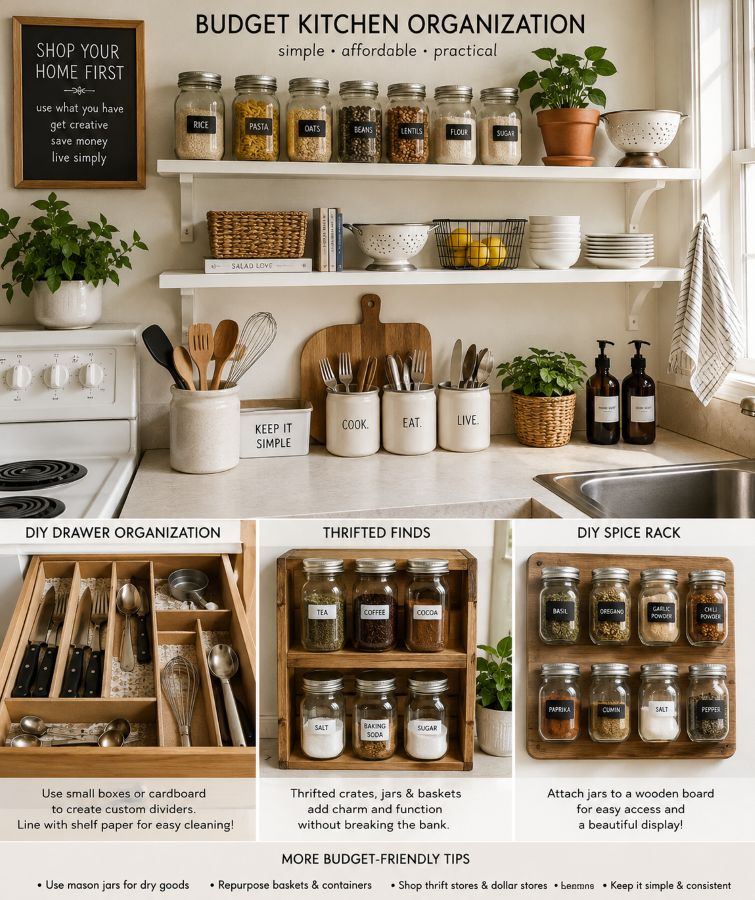
Free organizational materials surround you if you know where to look. Shoebox-sized containers from shoe purchases become drawer organizers. Empty jars from store-bought items store smaller items. Newspaper, kraft paper, and brown cardboard can be fashioned into custom drawer dividers. The key is thinking creatively about repurposing items you already have or can obtain for free.
FAQ: Small Kitchen Organization
How can I maximize storage in a very small kitchen?
Use vertical storage solutions like wall-mounted shelves, magnetic strips for knives, and over-the-door organizers. Install cabinets that reach the ceiling, use drawer dividers, and store infrequently used items in labeled containers. Consider pull-out pantry systems and multi-functional furniture pieces to make the most of every inch.
What are the best organizing tools for small kitchens?
Essential organizing tools include drawer dividers, stackable containers, shelf risers, lazy susans, magnetic strips, adhesive hooks, pull-out baskets, and under-sink organizers. Vertical storage solutions like pegboards and wall-mounted racks are also highly effective for small spaces. Many budget-friendly options exist at dollar stores and online retailers.
How do I organize my small kitchen drawers effectively?
Use drawer dividers to separate utensils, cooking tools, and gadgets into categories. Group similar items together, store frequently used items in easily accessible locations, and use vertical space by stacking shallow containers. Label each section for quick identification and maintain a regular decluttering routine to prevent accumulation.
What’s the best way to organize under-sink storage?
Install pull-out baskets or sliding organizers under the sink to maximize space. Use cabinet door organizers for cleaning supplies, add a tension rod to hang spray bottles, and place items you use daily at eye level. Keep rarely used items in labeled containers on higher shelves, and use shelf risers to create additional storage layers.
How can I make my small kitchen feel less cramped?
Keep countertops clear by storing items in cabinets and drawers. Use light colors for walls and cabinets to create an airy feel. Install open shelving to display organized items, use mirrors to reflect light, and implement regular decluttering habits. Good lighting and minimal visual clutter make small spaces feel larger and more functional.
What’s the best method for storing spices in a small kitchen?
Options include magnetic spice jars, tiered wall-mounted racks, drawer spice organizers, and lazy susan systems within cabinets. The best method depends on your cooking frequency and available space. Choose solutions that keep spices visible and accessible while matching your kitchen’s aesthetic.
Transform Your Small Kitchen Today
A small kitchen is an asset, not a limitation. With thoughtful organization, strategic storage solutions, and consistent maintenance habits, you can create a kitchen that’s not just functional but genuinely enjoyable to use. The organization strategies covered in this guide—from vertical storage to container systems to maintenance routines—work together to create a cohesive, efficient kitchen space.
Start by decluttering ruthlessly, identifying your specific storage needs based on your cooking habits, and implementing solutions that work for your unique space. Remember that organization is not about achieving perfection; it’s about creating systems that support your lifestyle and make cooking, eating, and gathering in your kitchen more pleasant.
Whether you’re working with a studio apartment kitchen, a galley-style space, or a small corner kitchen, these organization principles apply. The key is customizing solutions to your specific space, cooking style, and aesthetic preferences. With these small kitchen organization ideas in your toolkit, you’ll transform your compact kitchen into a highly functional, beautifully organized culinary hub that inspires you to cook and entertain with confidence.
ADeL A.A
ADeL A.A is a home décor and space optimization writer who believes every square foot matters. He spends his time researching, testing, and comparing smart storage ideas, multi-functional furniture, and practical layout solutions — always searching for the best ways to make compact homes feel bigger, brighter, and better organized.
View all articles by ADeL A.A →