How to Maximize Space in a Studio Apartment: Complete Guide

Living in a studio apartment doesn’t mean sacrificing comfort, style, or functionality. Whether you’re a young professional in your first downtown studio, a couple seeking an affordable urban home, or someone downsizing intentionally, maximizing your available space is both an art and a science. The key lies in strategic planning, smart furniture choices, and creative design thinking that transforms every square foot into purposeful living space.
This comprehensive guide reveals proven techniques that architects, interior designers, and space optimization experts use to make studio apartments feel larger, more organized, and infinitely more livable. By implementing these strategies, you’ll discover how to create distinct zones, eliminate visual clutter, and build a home that serves all your needs while maintaining a sense of openness and calm.
The challenge of compact living has never been more relevant. Urban housing costs continue to rise, making smaller units more common and more accessible to renters and buyers alike. Yet many people accept cramped, cluttered spaces as inevitable. This mindset couldn’t be further from the truth. With intentional design decisions and organizational systems, your modest apartment can become a model of efficiency and beauty.
Embrace Vertical Storage and Wall Space
The most underutilized resource in smaller homes is vertical space. While we naturally focus on floor space, walls represent enormous storage and design potential. The moment you stop thinking horizontally and start thinking vertically, your apartment transforms. This isn’t about creating a chaotic wall of stuff—it’s about intelligent placement of functional elements that actually enhance your interior aesthetic.
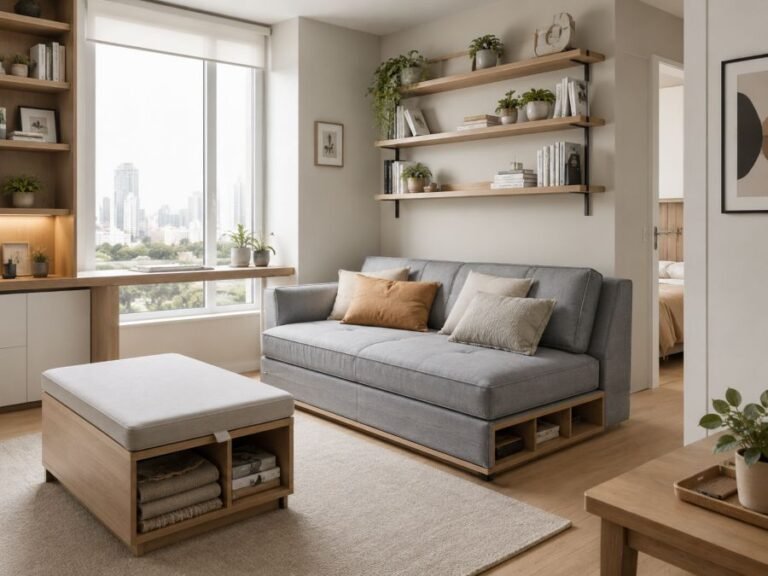
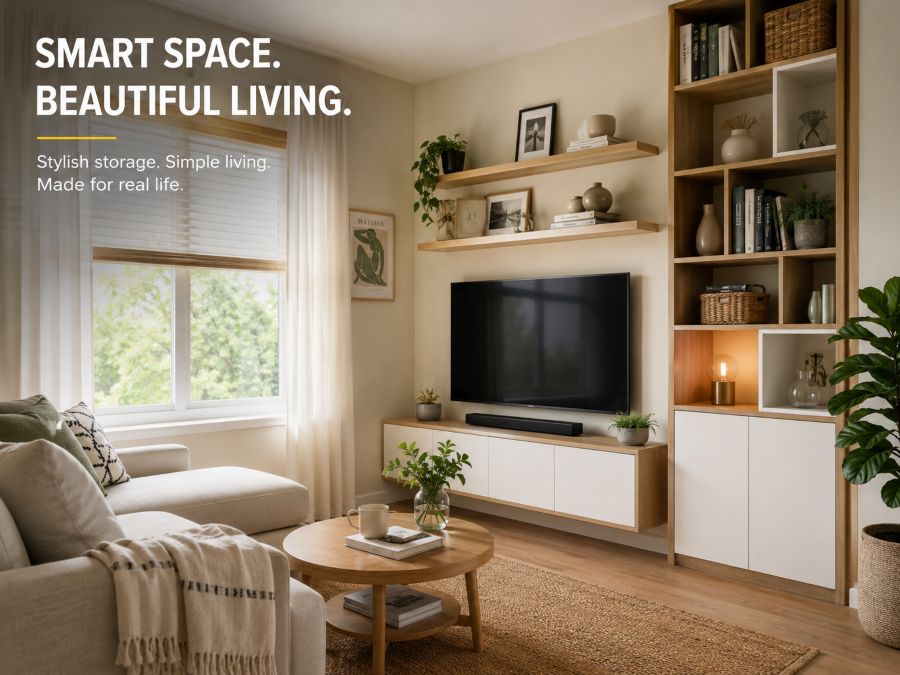
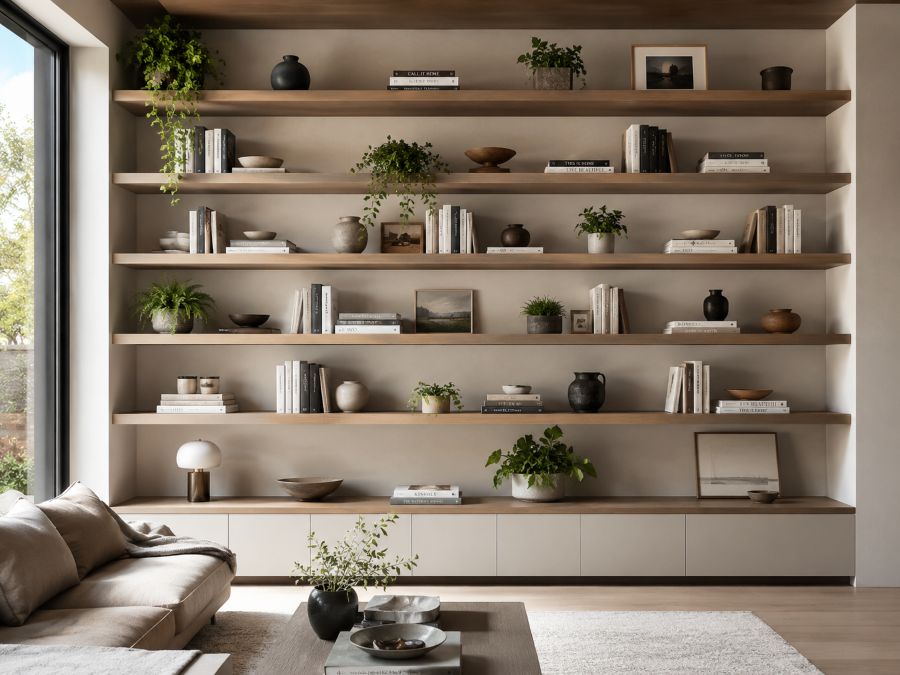
Floor-to-ceiling shelving systems create impact while storing everything from books and plants to decor and daily essentials. Floating shelves offer a lighter visual appearance than traditional bookcases, and they’re incredibly versatile. Arrange them at varying heights to create visual interest while accommodating items of different sizes. Mount them above your desk, bed, or sofa to store items without consuming precious floor space.
Wall-mounted storage solutions extend far beyond shelves. Pegboards have experienced a design renaissance and come in modern finishes like black metal, natural wood, and painted options that complement any décor. They’re perfect for organizing kitchen gadgets, office supplies, art supplies, or bathroom essentials. Magnetic strips in kitchens, wall organizers in entryways, and hanging file holders in home offices all transform dead wall space into active storage systems.
Choosing the Right Wall Storage for Your Space
- Floating shelves work best above desks, side tables, or low furniture where they won’t feel top-heavy. They’re excellent for displaying decorative items alongside functional storage.
- Tall, narrow bookcases fit perfectly in corners and along walls, creating vertical lines that draw the eye upward and make ceilings appear higher.
- Wall-mounted cabinets with doors hide clutter while providing substantial storage. They’re ideal for kitchens, entryways, and bathrooms where you want a finished look.
- Pegboards and grid systems offer flexible, modular storage that you can reconfigure as your needs change. Paint them to match your décor or leave them natural for an industrial vibe.
- Hanging baskets and woven organizers combine function with visual warmth. They’re perfect for corralling items like blankets, pillows, or daily essentials while adding texture to walls.
Select Multifunctional Furniture Strategically
In space-starved apartments, every piece of furniture must earn its place. Multifunctional pieces are game-changers because they address multiple needs without multiplying your furniture count. This approach doesn’t mean your apartment looks utilitarian or feels cramped—modern multifunctional furniture is beautifully designed and surprisingly sophisticated.
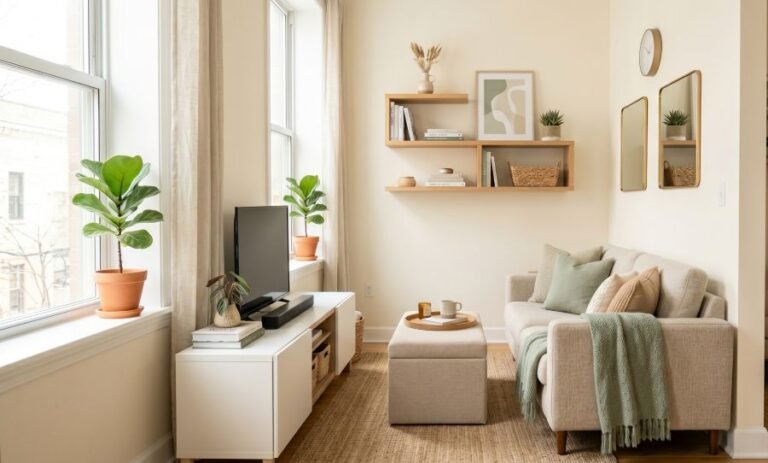
A storage ottoman is perhaps the most versatile piece you can own. It serves as seating, a footrest, a coffee table alternative, and hidden storage all in one. Choose one upholstered in a color that complements your palette, and it becomes a stylish focal point. Keep throw blankets, seasonal items, or extra bedding inside, and nobody will know it’s a storage solution.
Murphy beds and wall beds have evolved dramatically from their practical-but-awkward origins. Today’s designs are stunning, with options ranging from minimalist wood frames to beds with surrounding shelving and desks. A properly installed wall bed frees up an entire bedroom during the day, transforming it into an office, gym, creative space, or formal seating area. The initial investment pays dividends through usable square footage gains.
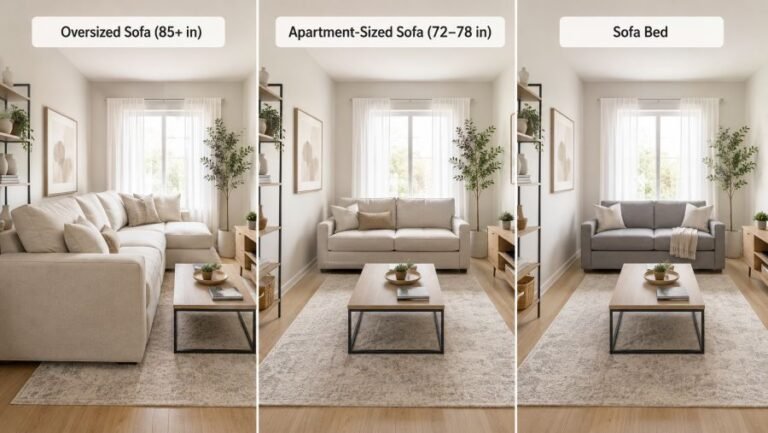
Sofa beds remain popular for good reason, but shop carefully. Your sofa should be genuinely comfortable for daily sitting—the bed function is the bonus, not the primary use. Look for quality mattresses and mechanisms that operate smoothly. Many modern sofa beds are indistinguishable from regular couches until you need the bed.
Smart Small Space Tip: When selecting multifunctional furniture, prioritize pieces that serve your actual daily needs first. A beautiful storage ottoman is pointless if you never store items in it. Choose functionality that aligns with your lifestyle, then ensure it looks great in your space.
Create Distinct Zones Without Walls
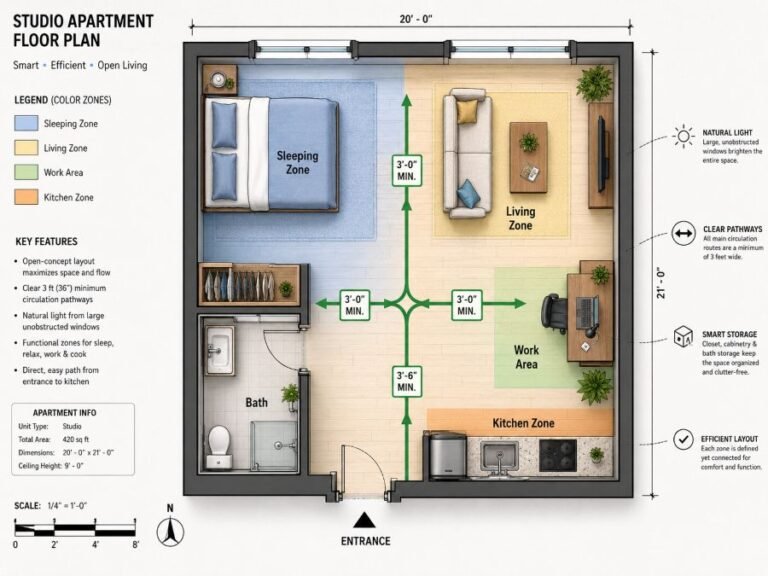
Studio apartments often feature open floor plans where living, sleeping, and working areas blend together. Strategic zoning creates psychological separation and functional organization without the expense or permanence of actual walls. This technique makes small spaces feel larger while maintaining clear purposes for different areas.
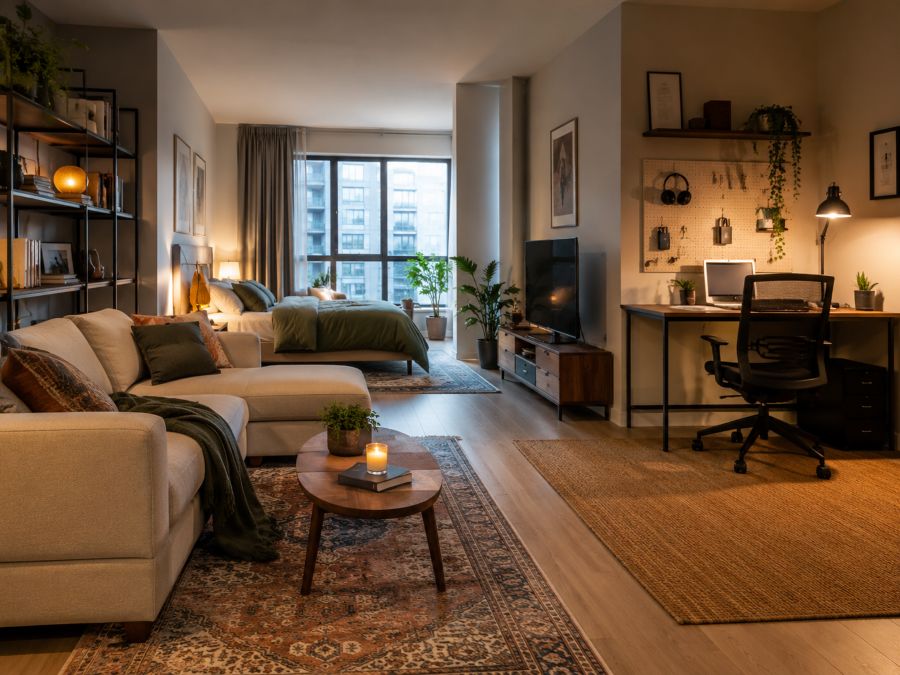
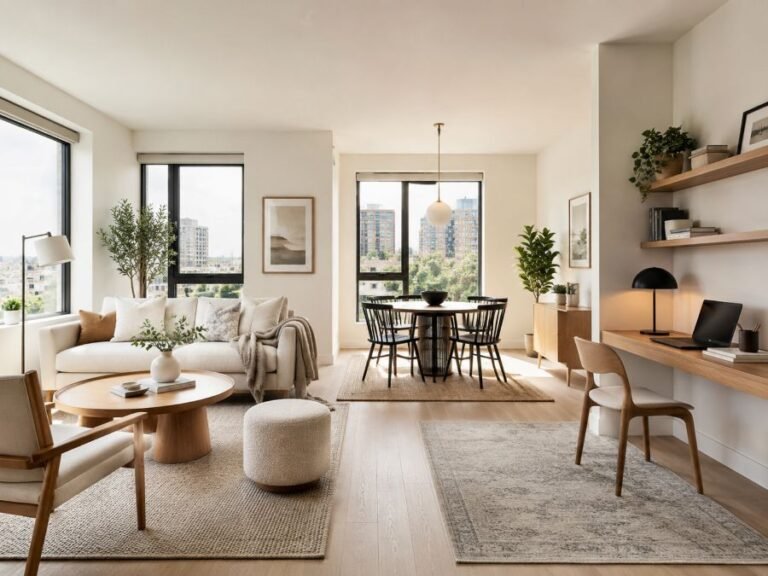
Area rugs are your primary zoning tool. A bedroom area might feature a smaller, cozy rug under and around the bed. A living area centers on a larger rug anchoring the seating arrangement. A dining or workspace defines itself through its own rug. This visual delineation helps your brain compartmentalize the space and makes the apartment feel more intentional and organized.
Furniture arrangement naturally creates zones. Position your sofa to face the television, creating a distinct living area. Angle your bed toward the window rather than placing it against walls. Create a home office in a corner with a desk facing into the room rather than a wall. These arrangements establish clear purposes for different areas and improve traffic flow.
Lighting intensifies zoning effects. A floor lamp behind your sofa creates atmospheric lighting for the seating area. A desk lamp illuminates your workspace. Bedroom ambient lighting differs from living area lighting. These layered, zone-specific lighting solutions make each area feel intentional while creating visual separation without structural changes.
Master Strategic Lighting Techniques
Lighting is perhaps the most underestimated tool in small space design. Proper lighting doesn’t just improve functionality—it fundamentally alters how spacious and inviting your apartment feels. The relationship between light, color, and perceived space is so powerful that lighting can make a cramped studio feel surprisingly expansive.
Natural light is your strongest ally. Maximize window exposure by keeping treatments minimal and light-filtering. Sheer curtains or cellular shades maintain privacy without blocking light. During the day, open everything. At night, strategic artificial lighting becomes critical. Ceiling fixtures alone create unflattering shadows and harsh lighting. Instead, layer your lighting with multiple sources at different heights.
Floor lamps in corners bounce light upward, illuminating walls and creating the impression of higher ceilings. Table lamps on nightstands and side tables provide focused task lighting while maintaining ambient warmth. Wall sconces beside beds or in reading nooks serve similar purposes with no floor footprint. String lights or smart bulbs that adjust color temperature create mood while serving practical functions.
Light color temperature matters profoundly. Warm white light (2700K) creates cozy ambiance suitable for bedrooms and living areas. Neutral white light (4000K) works well in kitchens and offices where clarity matters. Avoid bright, cold light (5000K+) in living spaces—it feels institutional and uninviting. Many modern smart bulbs let you adjust color temperature throughout the day, supporting your natural circadian rhythms.
Implement Smart Color and Material Choices
Color influences more than aesthetics—it physically affects how we perceive space. This principle, grounded in both psychology and physics, gives you powerful tools for transforming compact homes. The right colors make rooms feel larger, more organized, and more intentional.
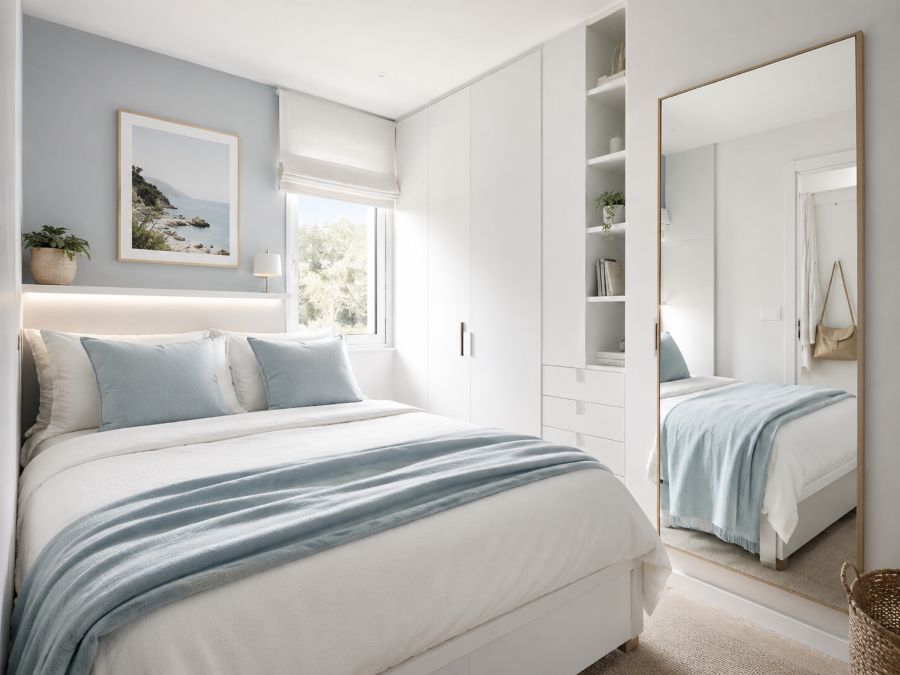
Light, neutral colors expand perceived space. Whites, creams, soft grays, pale blues, and warm beiges reflect light and create airiness. This doesn’t mean your apartment must be boring—add personality and color through accessories that you can easily swap out. Paint accent walls in deeper shades if desired, but keep the majority of surfaces light. Use bright pops of color in pillows, artwork, plants, and temporary décor that won’t overwhelm the space.
The monochromatic approach takes this principle further. Using various tints and shades of a single color family creates visual cohesion and unbroken sight lines that make rooms feel larger. A bedroom in varying shades of blue—pale walls, medium blue bedding, darker blue accents—feels unified and spacious. This technique requires restraint but pays tremendous dividends.
Material texture adds visual interest without consuming space. Lighter materials like linen, cotton, and light woods feel more open than heavy velvet, dark leather, or thick wood. Glass and metal furniture creates virtually invisible footprints. A glass dining table takes up floor space but doesn’t visually crowd a room. Metal shelving or a metal-framed desk feels lighter than solid wood alternatives.
Mirrors are decorative powerhouses in small spaces. They reflect light and create the illusion of extended depth. Position a large mirror opposite your window to amplify natural light throughout the room. Lean a full-length mirror in a corner rather than hanging it if you’re renting and avoiding wall holes. Smaller decorative mirrors in unexpected places create visual interest and cumulative light reflection.
Smart Small Space Tip: Create a cohesive color palette by choosing your three main colors before shopping for anything. Limit accessories and décor to this palette. This restraint creates visual calm and makes the space feel intentional rather than chaotic.
Organize with System and Purpose
Storage capacity means nothing without organization systems. Cluttered storage is worthless storage. The most effective small-space organization follows clear principles that work with human behavior rather than against it.
Categorize items ruthlessly. Every item in your apartment should have a purpose and a place. If you haven’t used something in a year and it doesn’t bring you joy or serve a function, remove it. This isn’t minimalism for its own sake—it’s practical: fewer items means better organization, easier cleaning, and a sense of calm and control.
Use clear storage containers whenever possible. You’re more likely to use items if you can see them without opening multiple containers. Transparent drawer dividers, clear boxes for under-bed storage, and labeled containers make finding things simple. For less attractive items, decorative boxes or baskets hide clutter while maintaining accessibility.
Implement the “one in, one out” rule. When you bring something new into your apartment, commit to removing something similar in return. This prevents the creeping accumulation that makes small spaces feel impossibly cramped. It also forces intentionality around purchases—you’ll think twice before bringing something in if you know something else must leave.
Create zones within storage areas. Your kitchen drawers, bathroom cabinets, and closets should have organized systems. A junk drawer is fine—everyone needs one—but it should have compartments for different categories. Closet organizers, shelf dividers, and drawer systems are inexpensive investments that transform functionality.
Optimize Kitchen and Bathroom Spaces
Kitchens and bathrooms present unique challenges in tiny apartments. These utilitarian spaces often feel cramped and dysfunctional if poorly organized, yet they’re critical to daily quality of life. Strategic optimization transforms them from problem areas into functional, even pleasant spaces.
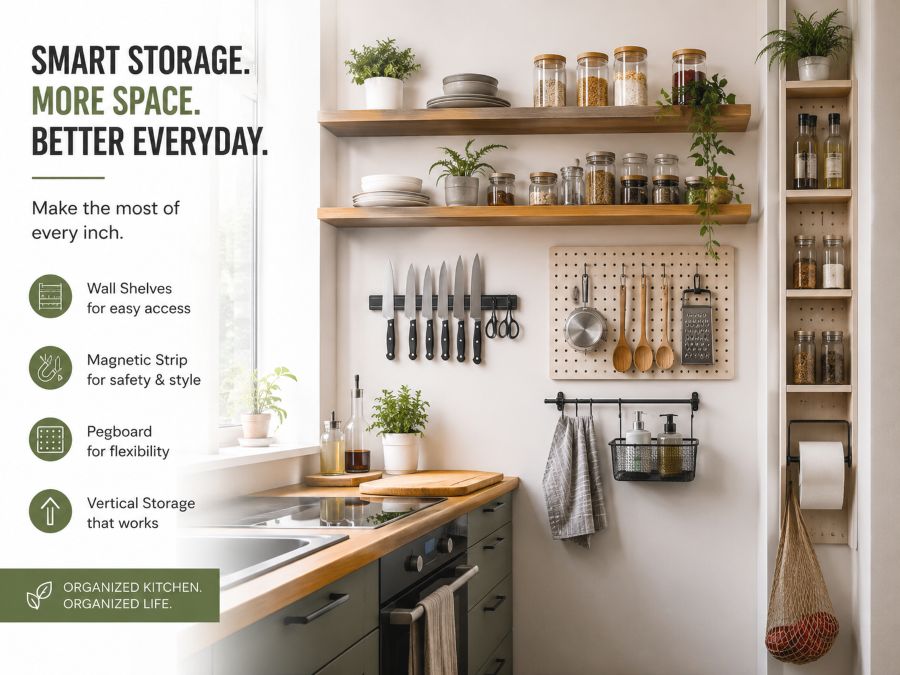
In kitchens, vertical space is your secret weapon. Wall-mounted magnetic strips hold knives safely and decoratively. Pegboards store cooking utensils, pots, and pans. Floating shelves display everyday dishes while freeing up cabinet space. Under-cabinet hooks hang mugs and small tools. Over-the-door organizers use wasted space efficiently. Magnetic spice containers organize your spice collection without consuming shelf space.
Minimize countertop clutter by storing items vertically or hidden. A utensil crock, a container for frequently used cooking tools, and maybe a small plant are all you need on counters. Everything else goes into cabinets, drawers, or wall storage. Clear counters aren’t just cleaner—they make the entire kitchen feel larger and more functional.
Bathroom organization requires similar vertical thinking. Wall-mounted shelves above the toilet, in corners, or beside mirrors provide storage without fixtures. Over-the-door organizers hold products, medications, and supplies. Under-sink organizers maximize cabinet space. Shower caddies keep items organized and accessible. Minimal counter items—perhaps a soap dispenser and a small container for daily essentials—maintain visual clarity.
Choose compact appliances and fixtures when possible. A compact dishwasher saves space compared to hand-washing in a small sink. Smaller cooking appliances accomplish the same tasks in tiny spaces. Narrow vanities and space-saving toilet designs free up square footage without sacrificing function.
Develop a Decluttering Mindset
The most effective space-maximization strategy is prevention. Maintaining an organized, visually calm apartment means continuously resisting the creeping accumulation of stuff. This requires intentionality and a mindset shift about consumption and belonging.
Before purchasing anything, ask yourself: Do I have space for this? Do I actually need this? Will I use this regularly? Does this fit my apartment’s aesthetic? Affirmative answers to all four questions justify the purchase. If you’re uncertain, you probably don’t need it.
Regularly assess your possessions. Monthly or seasonal purges prevent accumulation. As seasons change, assess whether you actually used those items. As your style evolves, remove décor pieces that no longer resonate. This ongoing process becomes easier with practice and prevents the overwhelming scenario of major decluttering when things get out of hand.
Make Your Studio Apartment Work: Video Guide
Addressing Common Small-Space Challenges
Certain challenges plague small-space dwellers. Understanding how to address them prevents compromise on comfort and functionality. These solutions are inexpensive and often require only thoughtful planning.
Limited closet space drives many apartment dwellers to distraction. Solution: Use slim hangers to maximize hanging space. Add a second clothing rod. Install over-door organizers for seasonal items or smaller clothes. Use vacuum storage bags for off-season clothing. A rolling garment rack in a corner provides additional hanging space and can be hidden behind a curtain when needed. Under-bed storage with shallow plastic containers holds off-season items perfectly.
Insufficient counter or table space restricts dining and workspace. Solution: A narrow console table against a wall serves multiple purposes. Nesting tables occupy minimal space when not in use. A wall-mounted desk folds away completely. A dining table with drop leaves expands when needed and contracts when not. These flexible solutions adapt to your daily needs.
No bedroom, small bedroom, or converted office-bedroom: Solution: A quality sofa bed in your main living area provides comfortable sleeping for guests. Murphy beds transform bedrooms into multifunctional spaces. Room dividers create distinct areas within open floor plans. Heavy curtains provide privacy and light control without permanent walls.
FAQ: Studio Apartment Space Maximization
What is the most effective way to maximize space in a studio apartment?
The most effective approach combines multiple strategies: vertical storage for wall utilization, multifunctional furniture for dual purposes, strategic lighting to expand perceived space, light colors to create openness, and aggressive organization to prevent clutter. When these elements work together, even quite modest apartments feel comfortable and functional.
How can I make my apartment look bigger?
Focus on light, openness, and minimal visual clutter. Use light paint colors and neutral tones, maximize natural light, install mirrors to reflect light and create depth, keep surfaces organized and clear, and arrange furniture to create open pathways. These visual tricks are remarkably effective at expanding perceived space without any structural changes.
What furniture works best in compact apartments?
Multifunctional pieces are essential: storage ottomans, sofa beds, murphy beds, nesting tables, wall-mounted desks, and furniture with built-in storage all serve multiple purposes. Choose pieces with legs rather than solid bases to create visual lightness. Glass, metal, and light wood materials feel less heavy than solid dark wood or bulky upholstered pieces.
How do I organize a tiny apartment efficiently?
Use vertical space extensively, implement drawer dividers and shelf organizers, utilize under-bed and over-door storage, choose furniture with built-in storage, and regularly purge items you don’t use. Create categories for items, use clear storage containers so you can see contents easily, and maintain consistency in your organizational system.
Should I paint my apartment a specific color?
Light, neutral colors like white, cream, soft gray, and pale blue make small spaces feel larger by reflecting light. You can add personality through décor, artwork, and accessories without overwhelming the space. Monochromatic approaches—using various shades of one color—create visual cohesion that also expands perceived space.
How do I create separate areas in an open floor plan?
Use area rugs to visually define spaces, arrange furniture to create distinct zones, use different lighting for different areas, and employ strategic color choices. These techniques create psychological separation without walls, making the apartment feel more organized and intentional.
Conclusion: Creating Your Ideal Small Space
Maximizing space in a studio apartment isn’t about sacrificing comfort, style, or personality. It’s about intentionality—making conscious choices about what you own, how you arrange your environment, and how you use your space. The strategies in this guide work together to transform compact dwellings from cramped necessities into beautiful, functional homes where you’re genuinely happy to spend your time.
Start with vertical storage, add multifunctional furniture, implement smart organization, optimize lighting and color, and maintain a decluttering mindset. These foundations create the conditions for small space success. As you implement these strategies, you’ll discover that space constraints actually encourage creativity and thoughtfulness about how you live. Your little apartment becomes not a limitation but a blank canvas for intelligent design.
Remember that you don’t need to implement everything at once. Start with one or two changes—perhaps adding wall shelving or selecting a multifunctional furniture piece. As you experience the benefits, you’ll naturally build upon your successes. Small-space living isn’t about doing more with less; it’s about living better through intentional choices. Your space reflects your priorities, your aesthetic, and your lifestyle. Make those reflections count.
ADeL A.A
ADeL A.A is a home décor and space optimization writer who believes every square foot matters. He spends his time researching, testing, and comparing smart storage ideas, multi-functional furniture, and practical layout solutions — always searching for the best ways to make compact homes feel bigger, brighter, and better organized.
View all articles by ADeL A.A →