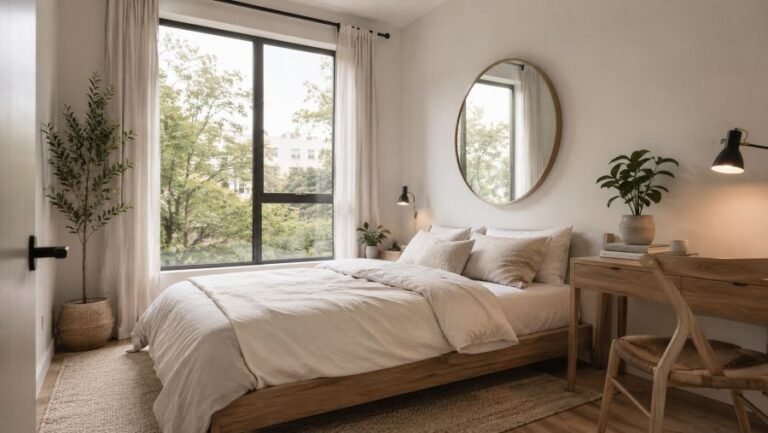
Small Bedroom Layout Ideas With a Queen Bed

A queen bed doesn’t mean you have to sacrifice a comfortable, stylish bedroom—even in smaller spaces. Whether you’re living in a compact apartment, a cozy home, or simply working with limited square footage, the right layout approach can transform your small bedroom into a functional and beautiful retreat.
In this comprehensive guide, we’ll explore proven small bedroom layouts specifically designed for queen beds, complete with space-saving strategies, furniture placement tips, and creative design solutions that maximize every precious inch. By the end, you’ll have a clear roadmap for arranging your small bedroom beautifully.
Understanding Your Space: Queen Bed Dimensions and Room Requirements
Before diving into layout strategies, let’s establish baseline measurements. A standard queen bed measures approximately 60 inches wide (5 feet) and 80 inches long (6 feet 8 inches). Add in the headboard depth and footboard, and you’re looking at a piece of furniture that dominates roughly 10-15% of typical small bedroom floor space.
For comfortable functionality in a small bedroom, experts recommend minimum dimensions of 10 feet by 10 feet (100 square feet), though many successfully navigate 9 feet by 10 feet layouts. Your specific room configuration—including door placement, window locations, and ceiling height—plays a crucial role in determining the best layout approach.
The golden rule: after positioning your queen bed, you should have at least 2-3 feet of clearance on each side and at the foot of the bed. This allows comfortable passage, easier bed making, and prevents the room from feeling claustrophobic. It also ensures you can open closet doors, windows, and room doors without obstruction.
The Wall-Mounted Queen Bed Strategy: Maximum Floor Space Approach
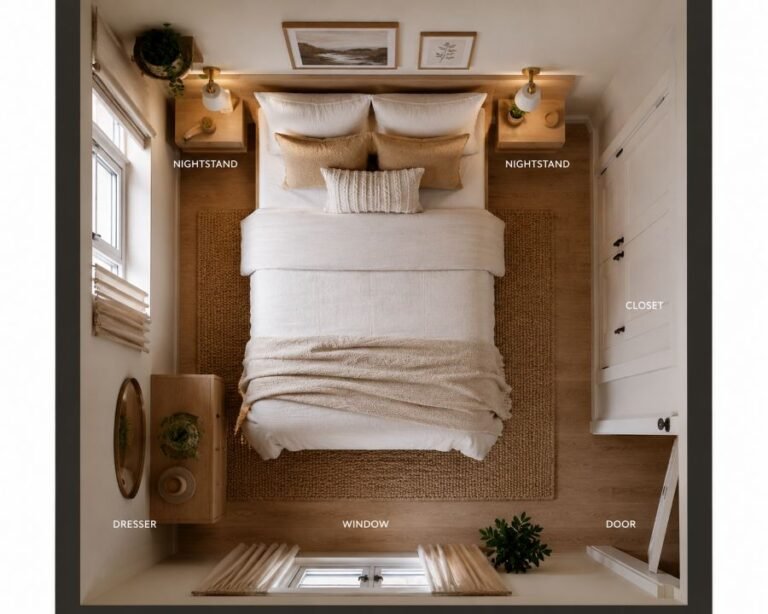
The most effective layout for small bedrooms places the queen bed against the longest wall. This positioning accomplishes multiple objectives: it anchors the room visually, maximizes usable floor space, creates natural traffic patterns, and provides an excellent foundation for additional design elements.
Optimal Placement Against the Wall
Position your queen bed so the headboard sits against the longest wall, preferably opposite the entrance or at a 90-degree angle to the door. This arrangement:
- Creates a focal point that anchors the bedroom’s design narrative
- Opens up the majority of floor space for movement and additional furniture
- Allows natural light from windows to illuminate the foot of the bed
- Provides wall space above the headboard for decorative elements or functional storage
- Leaves corner areas accessible for nightstands or storage solutions
Smart Nightstand Solutions for Small Bedrooms
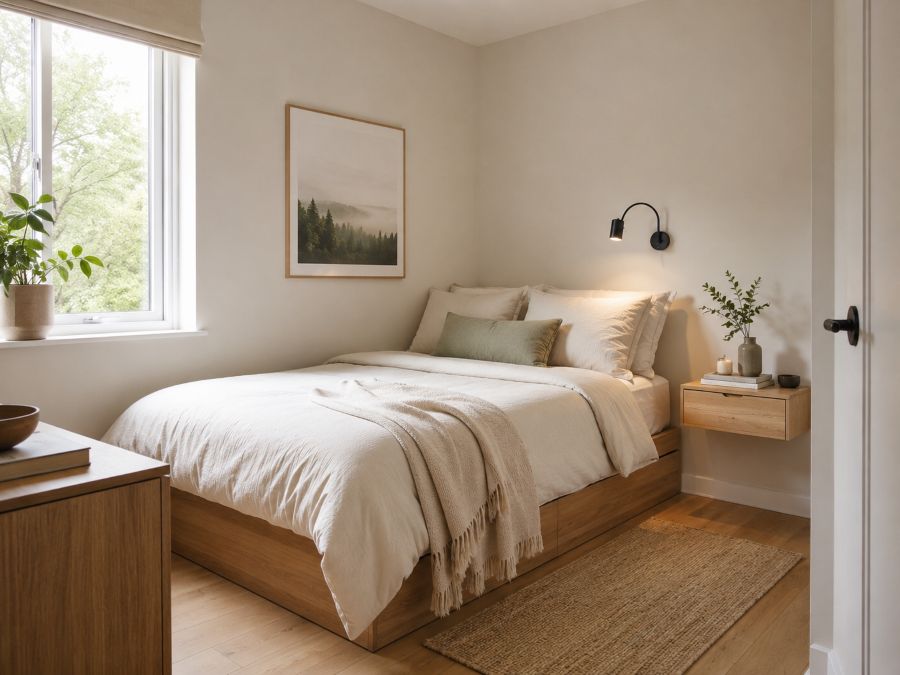
Traditional nightstands can consume valuable floor space in small bedrooms. Instead of bulky side tables, consider these space-efficient alternatives that maintain functionality without compromising layout flexibility.
Wall-Mounted Nightstands and Shelving
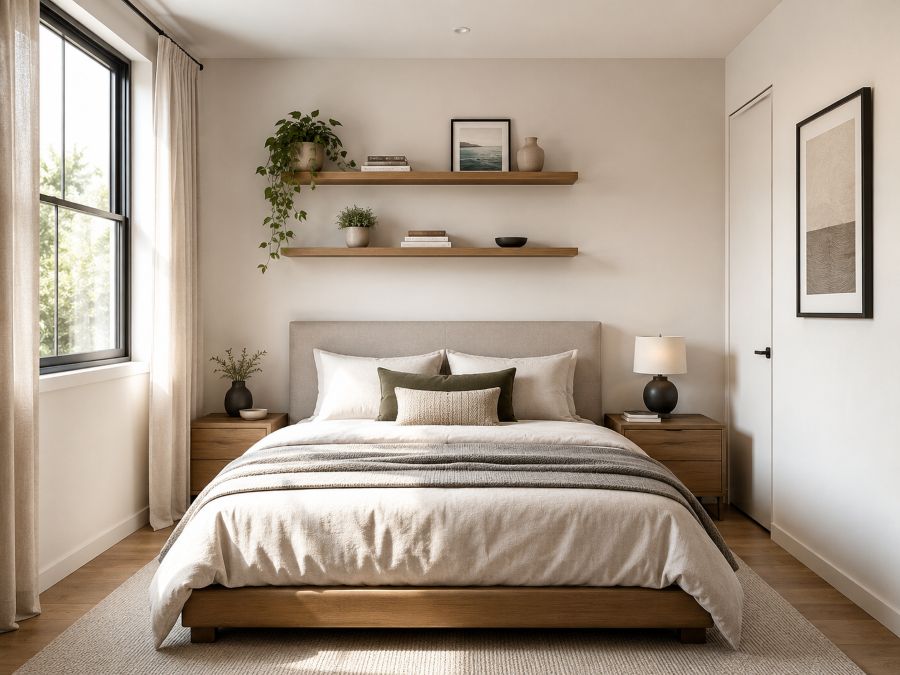
Floating shelves mounted directly to the wall beside your bed serve as excellent nightstand alternatives. A simple 18-24 inch floating shelf installed at bedside height provides surface space for lamps, alarm clocks, glasses, and books—all without taking up any floor space. Mount shelves securely into wall studs for stability and safety, especially if you plan to keep heavier items on them.
Wall-mounted bedside pockets—fabric organizers attached to the headboard or wall—offer another creative solution. These small pouches hold phones, books, and reading glasses, keeping them within arm’s reach while freeing up floor space entirely.
Compact and Multi-Functional Nightstands
If you prefer traditional nightstands, opt for compact designs with built-in storage. Look for narrow nightstands measuring 14-18 inches wide rather than standard 24-30 inch models. Alternatively, select pieces that serve multiple functions, such as nightstands with built-in shelving, drawers, or integrated seating surfaces.
Vertical Storage: The Secret to Spacious Small Bedrooms
The most effective small bedroom layouts treat walls as valuable real estate. By expanding your storage strategy upward, you transform limited floor space into abundant functional capacity without visual clutter.
Wall Shelving and Storage Systems
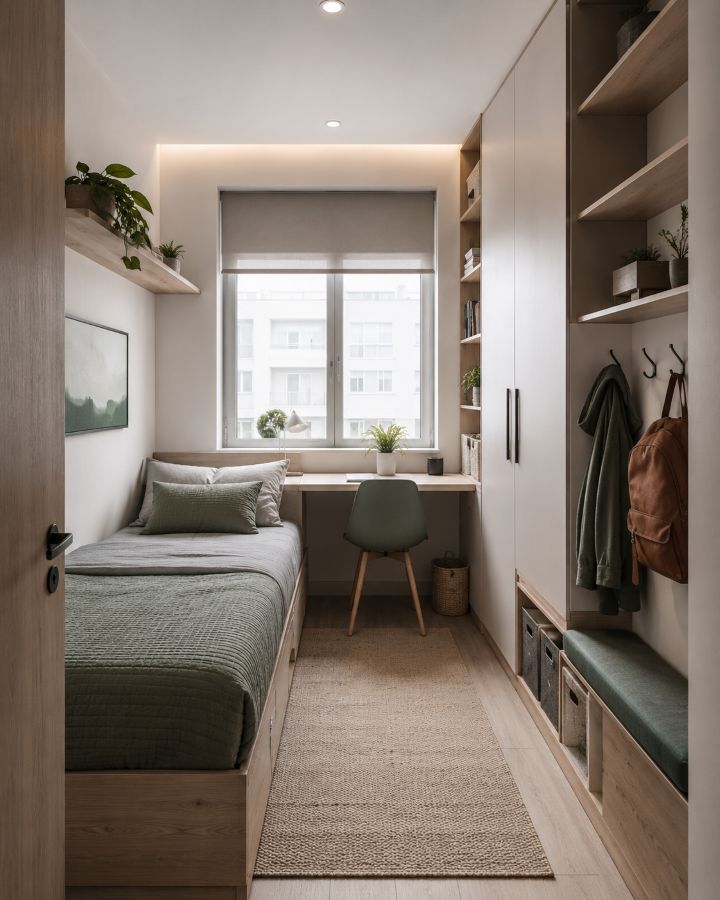
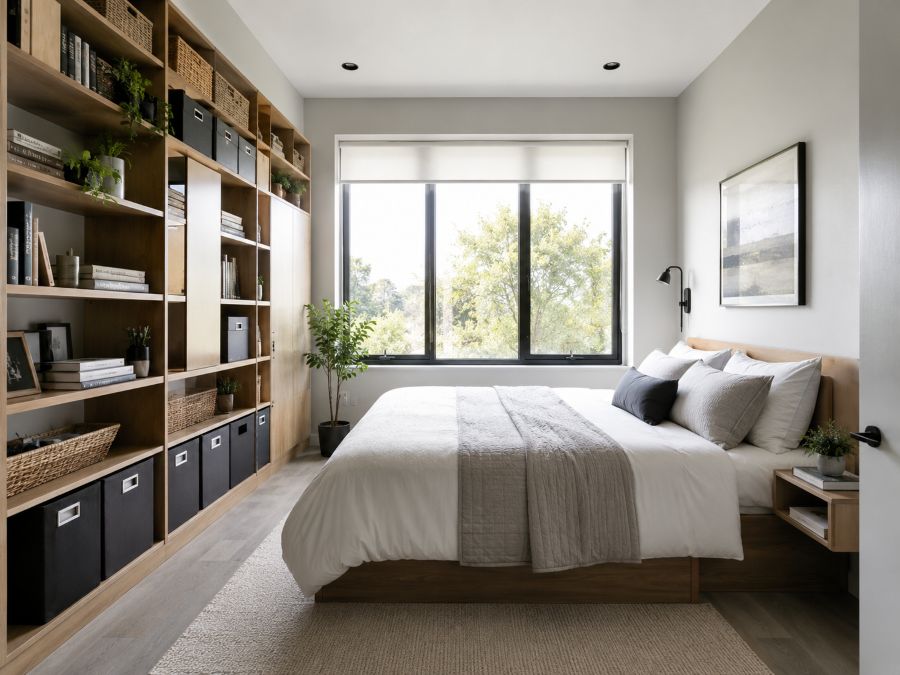
Install floating shelves above your dresser, desk, or along empty walls. A 5-shelf configuration spanning a standard wall can provide storage capacity equivalent to a large dresser while consuming minimal floor space. Use shelves for organizing books, displaying decorative items, and storing folded clothing in decorative bins.
For bedrooms with angled ceilings or alcoves, custom shelving maximizes awkwardly-shaped spaces. Furniture stores and online retailers offer modular shelving systems that adapt to your room’s unique architecture.
Over-the-Door Organizers and Wall Hooks
The back of your bedroom door is prime storage real estate. Over-the-door organizers with pockets hold accessories, belts, scarves, and other small items. Wall-mounted hooks near the entrance accommodate coats, bags, and everyday clothing, reducing clutter on furniture and floors.
Furniture Arrangement for Multi-Functional Small Bedrooms
Many small bedrooms serve dual purposes—sleeping spaces that transform into home offices, guest rooms, or relaxation areas. Strategic furniture arrangement supports these multiple functions without overwhelming the space.
The Bedroom-Office Hybrid Layout
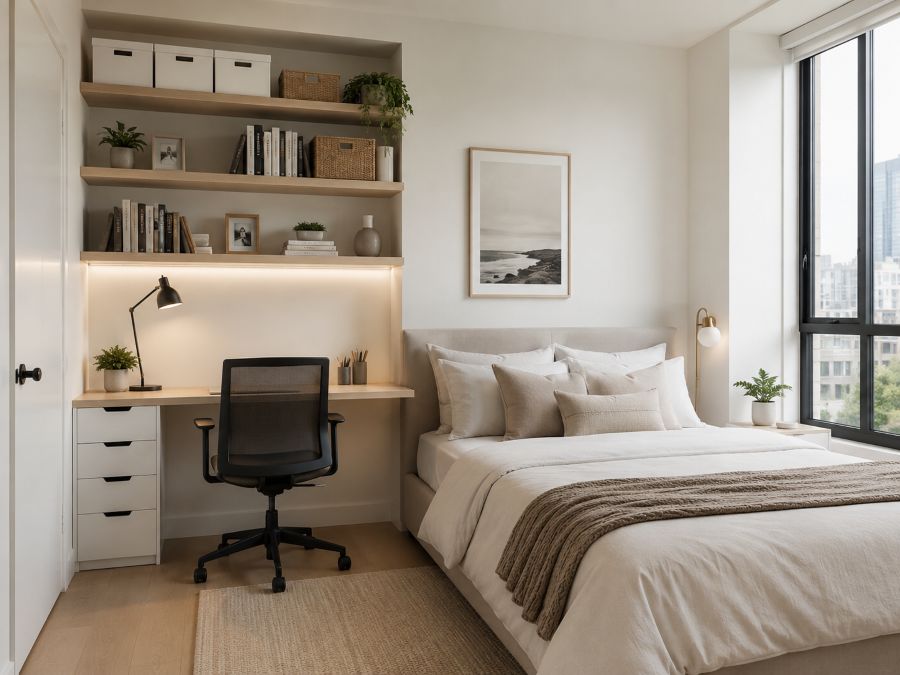
Position a compact desk perpendicular to the bed, utilizing wall space efficiently. A narrow desk (36-42 inches wide) provides adequate workspace for laptops and paperwork without consuming significant floor space. Mount shelves above the desk for office supplies and keep the desktop clear for daily work.
Creating a Reading Nook
In corners opposite the bed, position a single chair or loveseat with a small side table and reading lamp. This creates a cozy secondary seating area without the bulk of a full-size sofa. Choose furniture with clean lines and compact dimensions to maintain the room’s openness.
The Role of Dressers: Strategic Placement and Alternatives
Traditional dressers are bulky and consume precious floor space. In small bedroom layouts, rethink your approach to clothing storage through these alternatives and strategies.
Smart Small Space Tip: Consider a narrow dresser (18-24 inches wide) instead of a standard 36-inch model. Wall-mounted dressers, corner dressers, or tall, thin clothing racks maintain functionality while occupying minimal floor space. Vertical shelving with decorative bins can often replace a traditional dresser entirely.
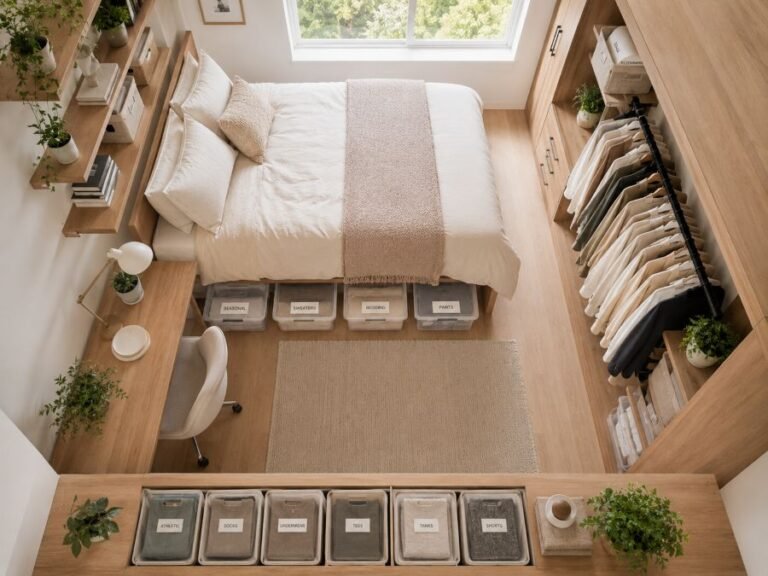
Under-Bed Storage Solutions
Don’t overlook the valuable storage capacity beneath your queen bed. Install low-profile rolling drawers on casters that slide under the bed easily. These containers store seasonal clothing, extra bedding, pillows, and rarely-used items. Choose drawers with measurements under 6 inches in height to ensure they fit comfortably under your bed frame.
Flat under-bed storage boxes, while less accessible than rolling drawers, provide affordable solutions for items you don’t need frequent access to. Label containers clearly so you know exactly what’s stored where.
Layout Configurations: Four Proven Approaches
Different room shapes and window placements call for different layout strategies. Here are four proven configurations for small bedrooms with queen beds, each optimized for specific room dimensions and features.
| Layout Configuration | Best For | Key Features |
|---|---|---|
| Wall Headboard | Rectangular rooms, 9×10 or larger | Bed centered against longest wall; nightstands on either side; dresser opposite foot of bed |
| Corner Placement | Awkwardly shaped rooms; rooms with multiple doors | Bed positioned in corner; wall-mounted nightstand; open floor space emphasized |
| Perpendicular to Window | Rooms with single large window; maximizing natural light | Bed positioned perpendicular to window; natural light streams across bedroom; wall space for secondary furniture |
| Diagonal Placement | Square rooms; rooms with corner windows | Bed angled diagonally; creates visual interest; maximizes corner space utilization |
Color, Lighting, and Visual Expansion Techniques
Beyond physical layout, your choices in color, lighting, and visual design dramatically impact how spacious a small bedroom feels. Strategic design choices can make your queen-bed bedroom feel significantly larger than its actual dimensions.
The Power of Light and Neutral Colors
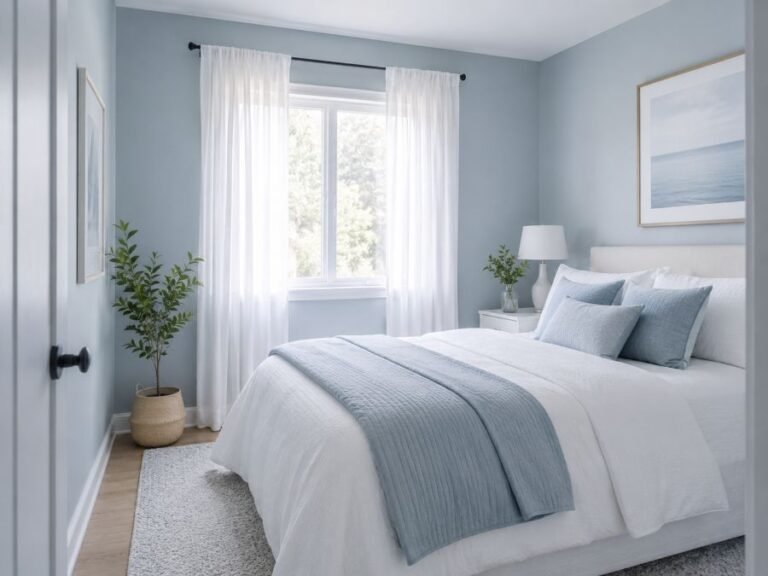
Paint walls in soft, neutral tones—warm whites, pale grays, soft beiges, or gentle greens. These colors reflect available light, making rooms feel airier and more spacious. Reserve darker, richer colors for accents through artwork, bedding, and accessories rather than wall coverage.
Layer your lighting strategically. Combine ambient overhead lighting with task lighting (bedside lamps, desk lights) and accent lighting (wall sconces, LED strips). This multi-layered approach eliminates shadows that can make spaces feel cramped while providing functional illumination for different activities.
Mirrors and Reflective Surfaces
A well-positioned mirror can visually double the perceived size of your bedroom. Hang a large mirror opposite your window to reflect natural light throughout the space. Mirrors above dressers or on feature walls create depth and brightness without requiring additional square footage.
Practical Tips for Queen Bed Placement and Room Flow
Beyond abstract design principles, these practical considerations ensure your small bedroom layout works beautifully in everyday life.
Door and Traffic Flow Optimization
Analyze your room’s traffic patterns. The path from the door to other key areas (closet, window, bathroom) should remain clear and unobstructed. Position furniture so walking through your bedroom doesn’t require navigating around the foot of your bed or squeezing between pieces.
Window Treatment Strategies
Use minimal window treatments that don’t consume wall space visually. Mount curtain rods near the ceiling to draw the eye upward, creating a sense of greater height. Use light, sheer curtains that allow natural light to filter through while maintaining privacy. Avoid heavy drapes that can overwhelm small spaces.
Headboard and Bedframe Selection
Choose headboards that provide visual interest without consuming floor space. Wall-mounted headboards, upholstered panels attached directly to walls, or even creative wallpaper treatments eliminate the need for bulky headboards. If you prefer a traditional headboard, select one with built-in storage shelves or pockets to maximize functionality.
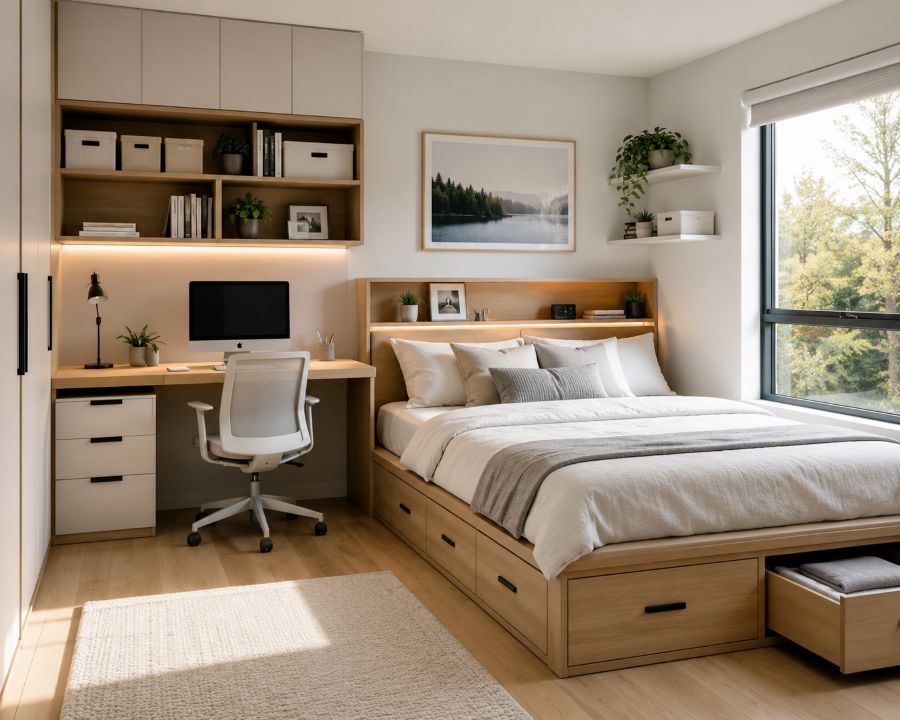
Select bed frames with built-in storage drawers when possible. Storage beds maximize under-bed utilization with easy-access drawers, effectively creating additional storage capacity without additional furniture pieces.
Common Small Bedroom Layout Mistakes to Avoid
Learning from others’ missteps can save you valuable time and effort. These common small bedroom mistakes undermine functionality and visual spaciousness.
- Centering the bed in the room: This positioning wastes wall space and creates awkward floor gaps. Wall-positioning your bed is almost always superior in small spaces.
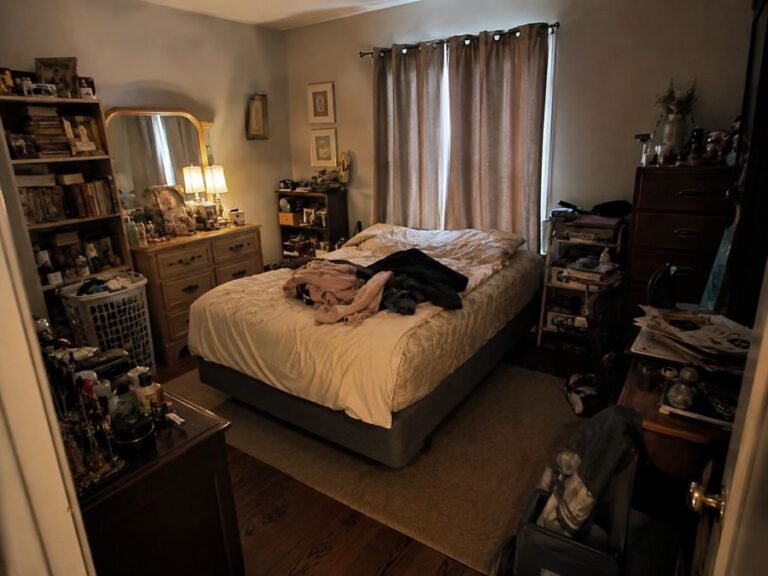
- Overcrowding with furniture: More pieces don’t improve functionality. Select each furniture item with intention, ensuring it serves a necessary purpose.
- Ignoring vertical space: Walls are your most valuable real estate in small bedrooms. Furniture positioned on walls preserves precious floor space.
- Poor lighting choices: Single overhead lights create shadows and harsh contrasts. Layer multiple light sources for warmth and depth.
- Mismatched scale and proportion: Oversized furniture visually dominates small spaces. Select pieces proportionate to your room dimensions.
- Neglecting circulation space: Tight, congested layouts feel cramped. Ensure comfortable walking paths and adequate clearance around all furniture.
FAQ: Small Bedroom Layout Ideas With a Queen Bed
Can you fit a queen bed in a small bedroom?
Yes, absolutely! A queen bed can fit beautifully in small bedrooms with proper planning. The key is strategic placement against a wall and using vertical storage solutions to maximize floor space. Most small bedrooms between 90-120 square feet can accommodate a queen bed comfortably with the right layout approach.
What is the ideal size for a small bedroom with a queen bed?
Ideally, a small bedroom with a queen bed should be at least 80-100 square feet, though 110-120 square feet is more comfortable. A queen bed itself measures approximately 5 feet wide by 6.7 feet long, and you’ll want at least 2-3 feet of clearance on the sides and foot for proper functionality and comfort.
How do I arrange a bedroom with a queen bed in a small space?
Place the queen bed against the longest wall to maximize floor space. Use a headboard or wall behind the bed as a visual anchor. Position nightstands vertically or use wall-mounted solutions. Utilize the wall space above the bed for floating shelves and artwork. Keep the floor clear and use under-bed storage for seasonal items or extra bedding.
What furniture should I avoid in a small bedroom with a queen bed?
Avoid large, bulky furniture pieces like oversized dressers, entertainment centers, or heavy nightstands. Skip freestanding storage units when wall-mounted alternatives exist. Avoid multiple seating pieces and keep decorative items minimal. Choose furniture that serves multiple purposes, like storage ottomans or beds with built-in drawers, instead of single-function pieces.
Are there specific colors that make small bedrooms feel larger?
Yes! Light, neutral colors on walls create an airy feeling and make spaces appear larger. Soft whites, pale greens, and warm beiges are excellent choices. Keep large furniture pieces in neutral tones and add personality through smaller accessories. Avoid dark, heavy colors on walls as they can make the room feel more cramped and enclosed.
Creating Your Perfect Small Bedroom Layout: Action Steps
Ready to transform your small bedroom with a queen bed? Follow these actionable steps to create a layout that maximizes space, functionality, and beauty.
Step One: Measure and Map. Precisely measure your bedroom dimensions, including wall lengths, window placements, door swings, and any architectural features like closets or angled ceilings. Create a to-scale floor plan using graph paper or online tools like RoomSketcher or Floorplanner.
Step Two: Analyze Traffic Patterns. Trace the natural flow from your door to essential destinations—closet, windows, bathroom. Ensure your bed placement doesn’t obstruct these pathways.
Step Three: Prioritize Vertical Storage. Before purchasing furniture, identify wall space for floating shelves, wall-mounted organizers, and other vertical storage solutions. These should anchor your layout planning.
Step Four: Select Essential Furniture. Choose only furniture pieces that serve clear purposes. Your layout should include a bed, one nightstand or equivalent, a dresser or wall storage, and perhaps one secondary piece (desk, seating, etc.). Every item must justify its presence through functionality or necessity.
Step Five: Test Your Layout. Before purchasing or moving large pieces, use painters tape on your floor to outline furniture positions. Walk through your layout for several days, noting any issues with traffic flow, accessibility, or proportion before committing to the arrangement.
Step Six: Implement Design Elements. Once furniture is positioned, add color, lighting, mirrors, and accessories that enhance spaciousness. Prioritize quality over quantity in decorative items.
Conclusion: Making Your Small Bedroom Work
A small bedroom with a queen bed isn’t a limitation—it’s an opportunity to design a cozy, functional, and beautiful personal space. By understanding your room’s dimensions, strategically placing your queen bed against walls, utilizing vertical storage, and thoughtfully selecting furniture and design elements, you can create a bedroom that feels spacious, comfortable, and perfectly suited to your lifestyle.
Remember, the most successful small bedroom layouts prioritize function over aesthetics, use vertical space creatively, eliminate unnecessary clutter, and maintain clear traffic patterns. Your queen bed becomes an anchor for the entire design, with supporting elements positioned to enhance rather than compete with this focal point.
Whether you’re working with a 90-square-foot bedroom or slightly larger space, these proven strategies and creative solutions provide a framework for designing a small bedroom that works beautifully for sleep, storage, work, and relaxation. Start with your specific room’s measurements and constraints, implement the layout approach that best matches your space, and watch as your small bedroom transforms into a perfectly proportioned, highly functional retreat.
ADeL A.A
ADeL A.A is a home décor and space optimization writer who believes every square foot matters. He spends his time researching, testing, and comparing smart storage ideas, multi-functional furniture, and practical layout solutions — always searching for the best ways to make compact homes feel bigger, brighter, and better organized.
View all articles by ADeL A.A →