How to Declutter a Small Home Without Feeling Overwhelmed

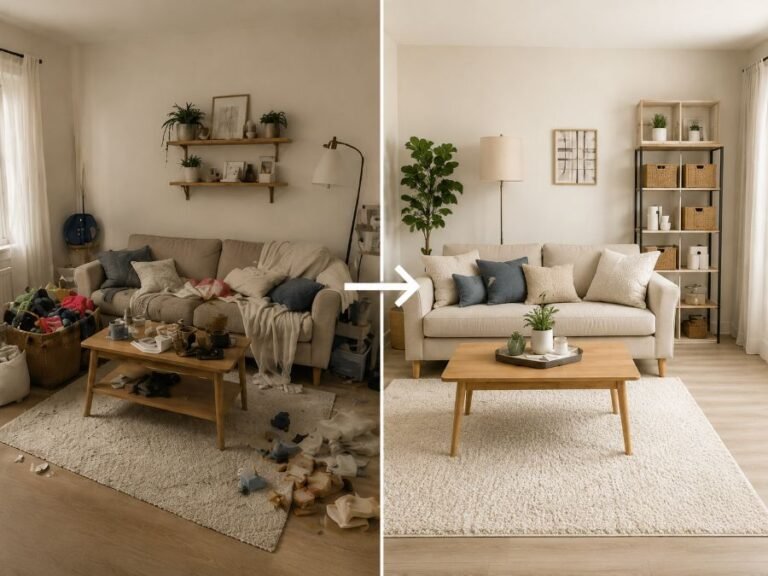
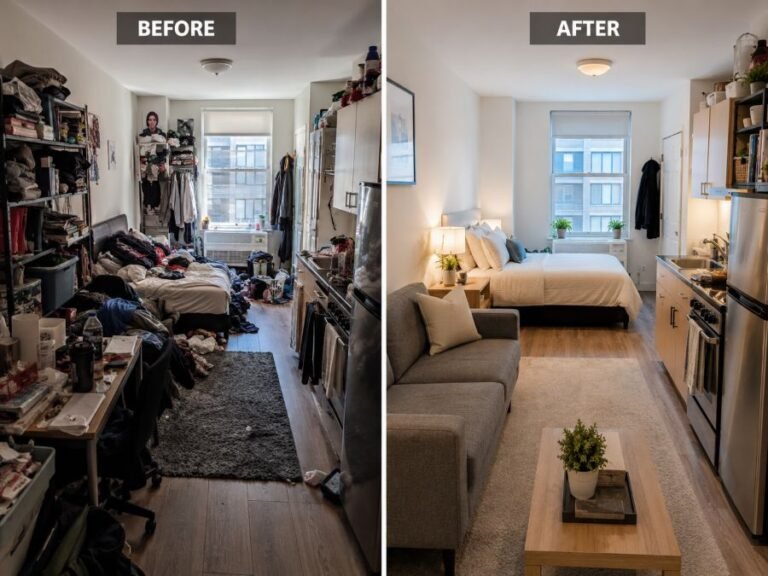
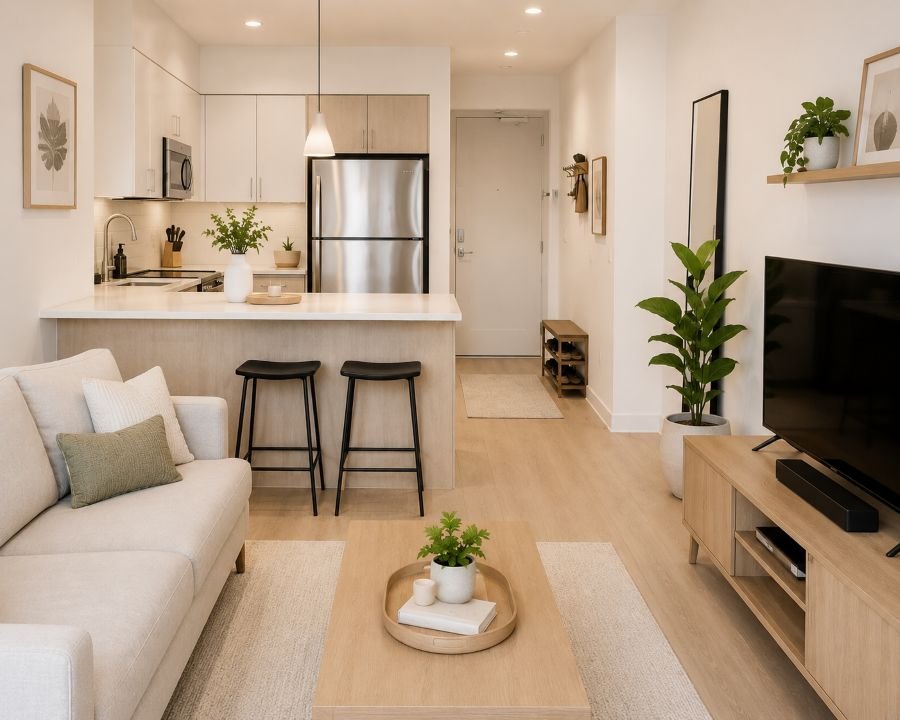
Decluttering a small home can feel like an enormous task, especially when limited space means your belongings are more visible and harder to organize. The thought of tackling an entire apartment at once often leads to paralysis—you look around, feel overwhelmed, and do nothing.
The key to successful decluttering is approaching it systematically, with grace, and in manageable chunks. This guide provides realistic strategies that work specifically for compact living, helping you clear your space without losing your mind in the process.
Understanding Decluttering Overwhelm
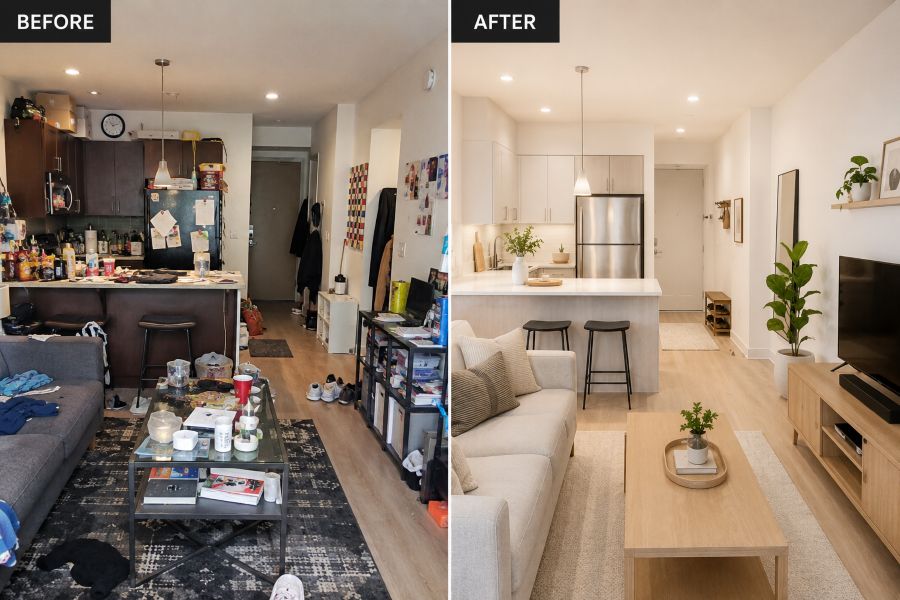
Decluttering overwhelm is real, and it’s particularly intense in small spaces where clutter feels more concentrated. When you live in a few hundred square feet, every item you own is visible, touchable, and impossible to ignore. This proximity makes the decluttering project feel enormous before you even start.
The solution isn’t to tackle everything at once—it’s to create a system that works within your mental and emotional capacity. By breaking the project into tiny, manageable pieces, you maintain momentum without burning out.
Step 1: Start Small and Build Momentum
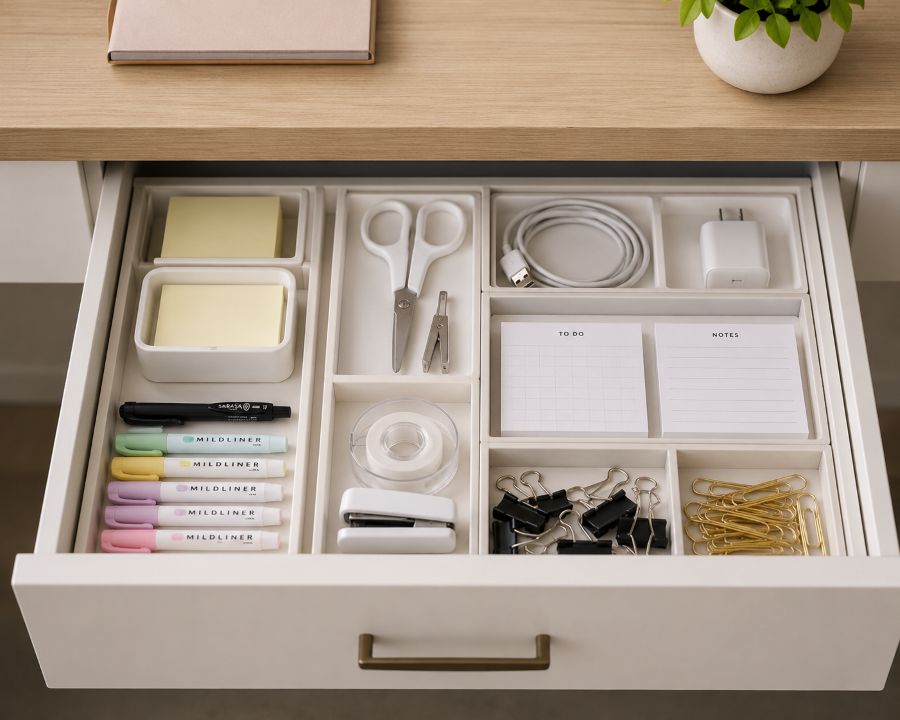
The first rule of decluttering a cozy apartment is starting extremely small. Don’t begin with your bedroom closet or the kitchen. Instead, choose something tiny: a single drawer, a shelf, or a small corner. This creates an immediate win that builds momentum and motivation for larger projects.
Perfect Small Starting Projects
- Junk drawer or miscellaneous drawer in kitchen or bedroom
- One bathroom shelf or medicine cabinet
- Closet shelf or small section of hanging clothes
- Kitchen cabinet with glasses, mugs, or dishes
- Nightstand drawer with accumulated items
Step 2: Use the Timer Technique
Set a timer for 15 to 30 minutes and declutter only during that window. This technique prevents burnout and makes the project feel manageable. When your timer goes off, stop—even if you feel you could continue. This creates a sustainable rhythm that doesn’t drain you emotionally.
The time constraint also creates gentle urgency that helps you make decisions faster. You’re less likely to overthink or get stuck on individual items when you have a time limit. After completing several short sessions, you’ll have tackled a surprising amount of your apartment without exhaustion.
Step 3: Create Clear Sorting Categories
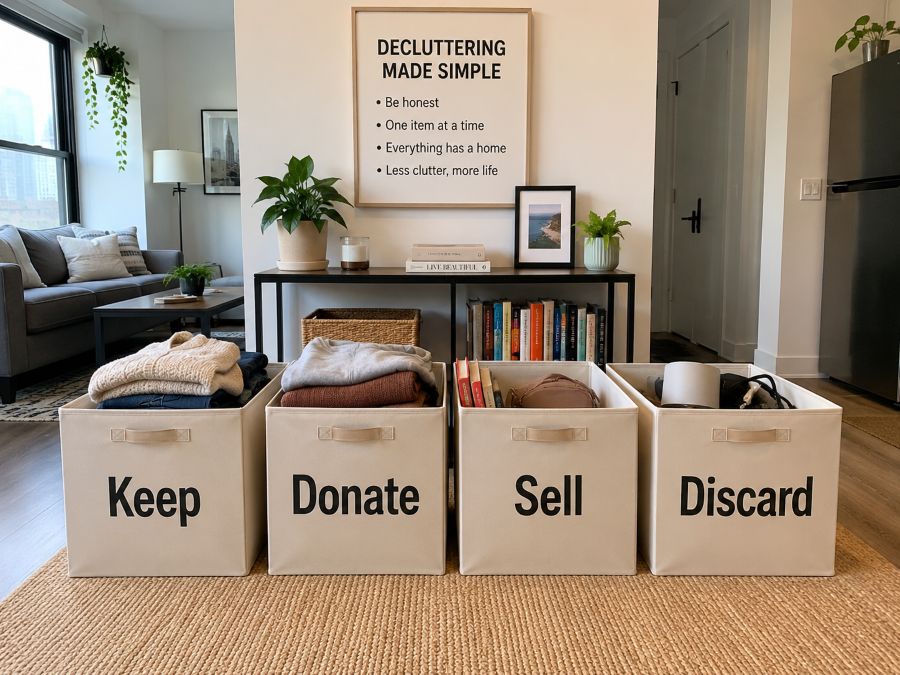
Before you start decluttering, set up clear sorting categories to make decisions easier. The process becomes simpler when you have designated homes for items: keep, donate, sell, or discard. This prevents decision fatigue and keeps you moving forward without getting stuck.
Use bags, boxes, or even different areas of your apartment to separate items as you sort. Being able to see your categories visually helps you stay focused and prevents items from getting re-mixed as you work.
Step 4: Ask the Right Questions
When deciding whether to keep an item, ask yourself specific questions rather than vague ones. “Do I like this?” is too subjective and leads to keeping too much. Instead, ask practical questions that help you assess genuine value and usefulness.
Decision-Making Questions
- Do I use this regularly (at least monthly)?
- Does this fit my current lifestyle and interests?
- Would I buy this again if I didn’t already own it?
- Does this item work properly and in good condition?
- Does keeping this serve a purpose in my life right now?
- Am I keeping this from guilt or obligation?
Step 5: Deal with Sentimental Items Gently
Sentimental items present unique decluttering challenges. You may have gifts you don’t love, inherited items you feel obligated to keep, or mementos from past relationships. These items trigger emotions that make decisions harder. Approach them with compassion for yourself and respect for their original givers.
Consider keeping one representative piece from a sentimental collection rather than everything. A single photo can represent an entire event. One piece of jewelry from a loved one honors that relationship without requiring you to keep items you don’t use. This balanced approach respects sentiment without overwhelming your space.
Step 6: The Maybe Box Strategy
For items you’re genuinely uncertain about, use a “maybe” box. Place questionable items in a box and put it away for 30 days. If you don’t need or think about any of those items during that month, you have your answer—donate them. This approach removes guilt and gives your brain time to adjust.
Most people find they never need anything from their maybe boxes, reinforcing that they were ready to let those items go. This delayed-decision strategy works beautifully for people with attachment anxiety around possessions.
Step 7: Process Donations and Sales
Don’t let your sorted items sit in piles—process them quickly. Research local donation centers, schedule pickup services, or list items for sale immediately. Stalled donations create mental burden and tempt you to second-guess your decisions.
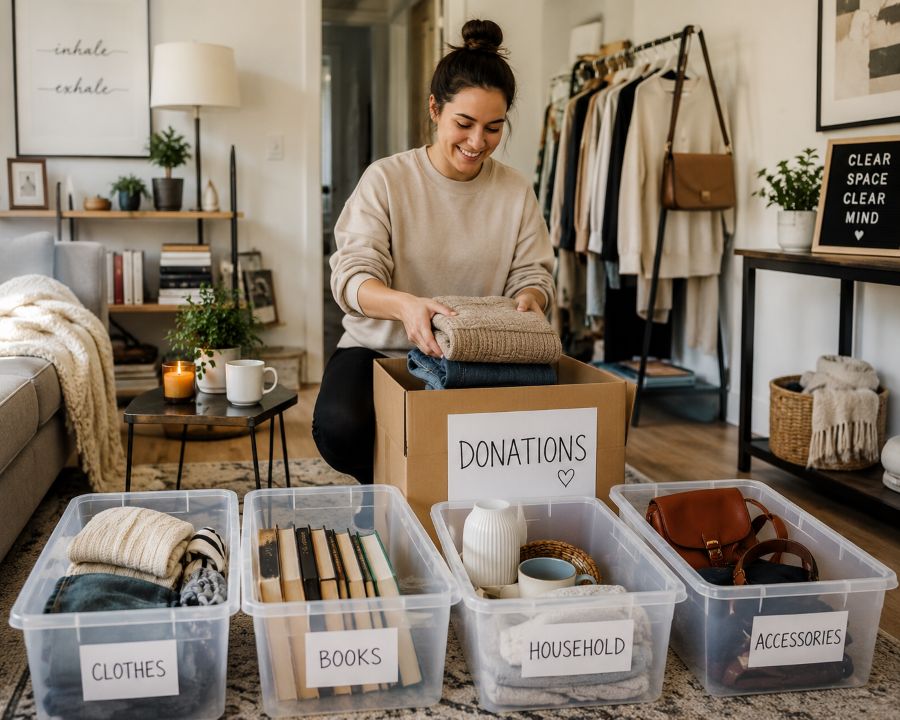
For smaller items or online sales, batch them together. Group similar items and photograph them once rather than individually. This efficiency keeps you motivated and removes items from your apartment faster.
Step 8: Organize as You Declutter
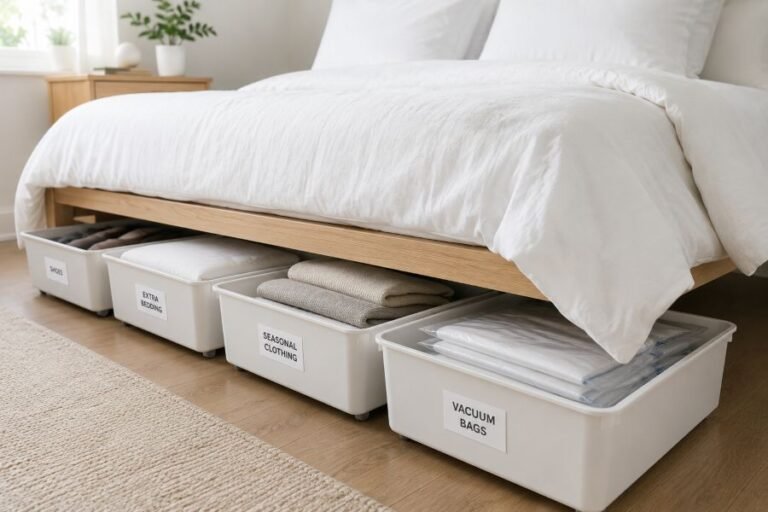
As you remove items, immediately organize what remains. This prevents decluttering from just moving clutter around. When you complete a drawer, organize the remaining items with dividers or containers. This transforms your compact space into an organized, functional area—not just an empty one.
Organization naturally maintains your decluttering efforts. Beautiful, functional organization makes you less likely to accumulate new clutter. It’s harder to add something to a perfectly organized drawer than to an empty one.
Step 9: Create a Preventing-Clutter System
After decluttering, prevent new clutter from accumulating by implementing simple rules. One in, one out means for every new item you bring into your apartment, you remove something similar. This keeps your inventory stable and prevents backsliding into clutter.
Also establish a regular review schedule. Set monthly or seasonal reminders to reassess your belongings. Quick, regular purges prevent clutter from building up again and keep your home feeling spacious and functional, no matter its size.
Common Decluttering Mistakes to Avoid
| Mistake | Why It’s Problematic | Better Approach |
|---|---|---|
| Starting too large | Overwhelm leads to giving up | Start with one small area |
| Keeping items for future use | Creates clutter, wastes space | Keep only what you use now |
| Decluttering everything at once | Physical and emotional exhaustion | Short sessions over several weeks |
| Not having a donation plan | Items sit, tempting you to keep them | Schedule pickup immediately |
| Keeping items from guilt | Fills space with unloved items | Release guilt, keep what you love |
| Not organizing after decluttering | Space still feels cluttered | Organize remaining items beautifully |
Decluttering Different Apartment Areas
Different areas require different decluttering strategies. Your bedroom, kitchen, and living room each present unique challenges and require tailored approaches. Understanding area-specific strategies makes decluttering more efficient and targeted.
Bedrooms accumulate clothing, books, and sentimental items. Kitchens overflow with tools and dishes you rarely use. Living rooms collect décor and entertainment items. By addressing each area’s specific challenges, you declutter more effectively and maintain organization afterward.
Smart Small Space Tip: Declutter with a friend or accountability partner for motivation and perspective. Someone else can offer objective opinions on items you’re emotionally attached to, and their presence keeps you on task without judgment.
Managing Emotional Attachments
Items carry emotional weight, especially in tight quarters where we’re constantly aware of their presence. Gifts make us feel guilty for not loving them. Inherited items feel disrespectful to discard. Aspirational items represent our “future selves.” Acknowledging these emotions makes decluttering easier.
Give yourself permission to release items that don’t serve your current life. Taking a photo of sentimental items before donating them honors the memory while freeing physical space. Recognizing that you’re not rejecting the giver—just the gift—reduces guilt and makes decisions clearer.
Maintaining Your Decluttered Space
Decluttering is just the beginning. Maintaining your organized space requires conscious habits and systems. Use the one-in-one-out rule, perform regular reassessments, and immediately deal with items that no longer serve you. This prevents clutter from creeping back.
Compact homes benefit particularly from this maintenance mindset because clutter becomes visible immediately. The moment you bring in new items, your space either expands with organization or contracts with clutter. This visibility is actually helpful—it keeps you accountable and motivated to maintain what you’ve created.
FAQ: Decluttering Small Homes
How do I start decluttering without feeling overwhelmed?
Start with small, manageable areas like a single drawer or shelf. Set a timer for 15-30 minutes to create urgency without burning out. Focus on one category at a time rather than trying to tackle your entire apartment at once. Celebrate small victories to stay motivated.
What should I do with items I’m unsure about?
Create a ‘maybe’ box for items you’re uncertain about. Store it for 30 days. If you don’t need or think about the items during that period, donate them. This helps you let go of items guilt-free while giving yourself time to adjust to not having them.
How often should I declutter my small home?
Perform a seasonal declutter (4 times yearly) to reassess what you’re using and need. This maintains your organized space and prevents clutter from accumulating again. Smaller monthly check-ins help you stay on top of organization between major decluttering sessions.
How do I handle sentimental items when decluttering?
Take photos of sentimental items before donating them to preserve memories without requiring physical storage. Keep one representative piece from collections rather than everything. Give yourself permission to release items that no longer serve your life, even if they’re sentimental.
What’s the best way to prevent clutter from returning?
Implement a one-in-one-out rule where you remove something whenever you bring a new item into your apartment. Perform regular monthly or seasonal reviews of your belongings. Create systems and organizational methods that make it easy to maintain your decluttered space.
Conclusion: A Peaceful Home Awaits
Decluttering a small home doesn’t have to feel overwhelming or impossible. By starting small, using time limits, creating clear sorting systems, and processing donations quickly, you can transform your space into a peaceful, organized home. The key is approaching decluttering with compassion for yourself, releasing guilt around items that no longer serve you, and celebrating the small victories along the way. Your cozy home deserves to feel spacious, functional, and beautiful—and with these strategies, you can make that a reality without the overwhelm.
ADeL A.A
ADeL A.A is a home décor and space optimization writer who believes every square foot matters. He spends his time researching, testing, and comparing smart storage ideas, multi-functional furniture, and practical layout solutions — always searching for the best ways to make compact homes feel bigger, brighter, and better organized.
View all articles by ADeL A.A →