How to Set Up a Small Apartment for a New Baby (No Nursery)

Bringing a newborn home to a one-bedroom or studio apartment can feel daunting when every parenting guide assumes you have a spare room to turn into a picture-perfect nursery. The truth is that most new parents in cities, in their first homes, or simply living intentionally small do not have a dedicated baby room — and they do just fine. A thoughtful no-nursery setup is not a downgrade; it is a smarter, more flexible way to welcome a baby into a small apartment.
In this guide, we will walk through exactly how to set up a small apartment for a new baby without a nursery, from carving out a dedicated baby corner and choosing compact sleep solutions to building a fold-away changing station and taming the inevitable wave of baby gear. Everything here is designed for real square footage, real budgets, and real life.
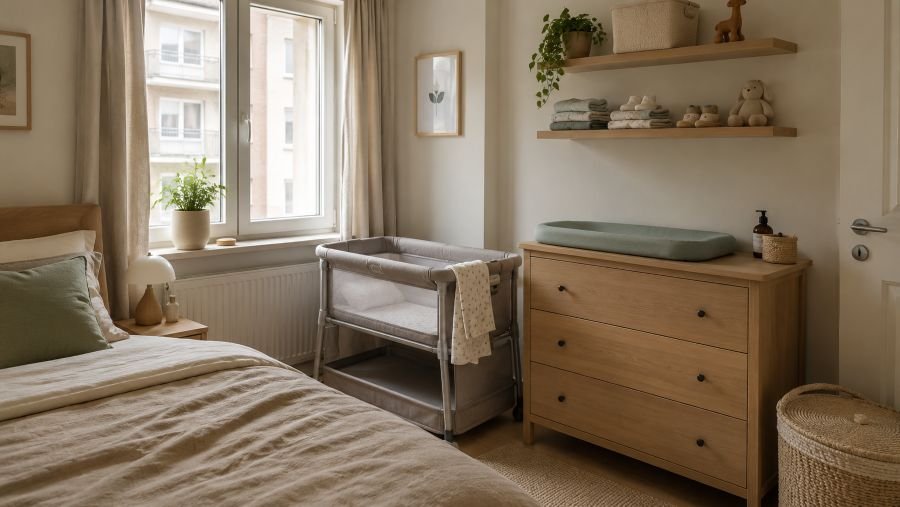
Before you buy a single piece of furniture, it helps to reframe the whole project. Setting up for a baby in a small apartment is not about shrinking a nursery down to fit; it is about choosing which functions a baby genuinely needs — sleep, feeding, changing, and storage — and then designing the smallest possible footprint that covers all four. Once you stop chasing the magazine nursery and start designing around those four jobs, a studio or one-bedroom suddenly feels entirely workable.
If you prefer to see these ideas come together visually, the short video below walks through a real no-nursery setup in a small apartment — from where to place the bassinet to how the storage and changing area can share a single compact corner.
With that overview in mind, let’s break the small-apartment baby setup down step by step, starting with why skipping the nursery is often the smarter move in the first place.
Why a Nursery-Free Setup Can Work Better in a Small Apartment
It is worth saying plainly: a separate nursery is often overrated for the first several months, especially in a small space. Newborns wake frequently through the night, and a baby corner inside your own bedroom means you are steps — not rooms — away from feeding and soothing. That proximity protects your sleep and the baby’s, and it eliminates the late-night shuffle down a hallway that a dedicated room would require.
There is also a practical financial angle. Outfitting a full nursery typically means buying a full-size crib, a standalone changing table, a glider, a large dresser, and a wall of decor — much of which is outgrown within a year. A no-nursery approach naturally pushes you toward fewer, smarter, multifunctional pieces, which is exactly what a small apartment needs anyway. You spend less, store less, and resell or repurpose more easily when the baby’s needs change.
Finally, a baby zone within an existing room is endlessly adaptable. As your child grows from newborn to crawler to toddler, you can expand, shift, or dismantle the zone without renovating an entire room. Flexibility is the small-space superpower, and a nursery-free setup is built on it from day one.
Carving Out a Dedicated Baby Zone in a Shared Room
The single most important move in a no-nursery apartment is to create one clearly defined baby zone rather than scattering supplies across the home. When the bassinet is in the bedroom, the bath supplies are in the bathroom cabinet, the clothes are in a hall closet, and the toys live in the living room, you spend your whole day chasing items. A consolidated zone keeps everything for the daily routine in a single, predictable spot.
Choosing the Right Corner
Walk through your apartment and look for a corner that is calm, away from direct drafts and harsh afternoon sun, and close to where you already spend the night. In most cases this is a corner of the main bedroom, but in a studio it might be a nook beside the bed defined by furniture placement. When evaluating candidate spots, keep these priorities in mind:
- Proximity to your bed: the closer the baby’s sleep surface is to yours, the easier night wakings become.
- Away from windows and radiators: avoid placing a sleep space in a draft, in direct sun, or next to a heat source.
- Access to an outlet: you will want power nearby for a soft lamp, a sound machine, or a baby monitor.
- Clear of walkways: the zone should not block the path to the door, bathroom, or closet, especially for groggy 3 a.m. trips.
Defining the Zone Visually
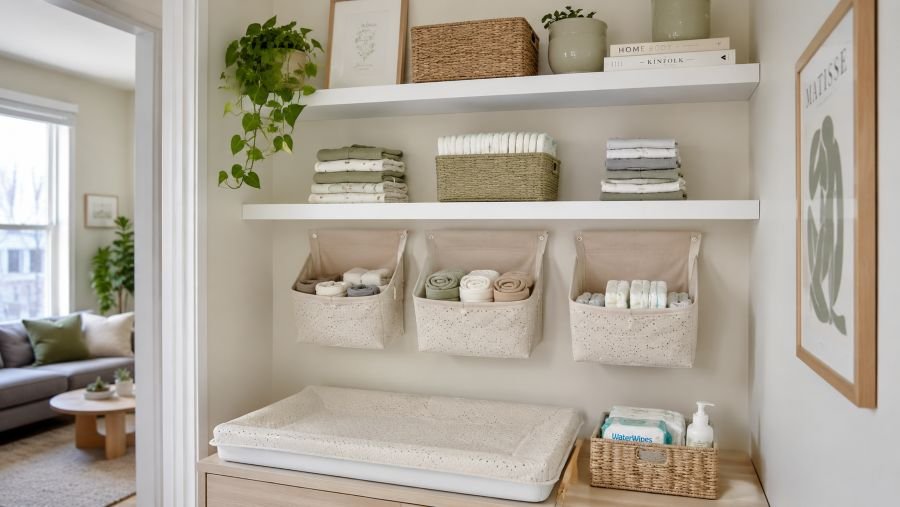
In an open or shared room, a baby zone works best when it reads as its own little area. You do not need walls to achieve this. A small area rug under the corner, a slim open bookshelf or curtain used as a soft divider, or simply a consistent color story — say, sage green and warm cream — can signal that this pocket of the room belongs to the baby. Visual definition makes the space feel intentional rather than like furniture that washed up in a corner, and it gives the baby a consistent, soothing environment to associate with rest.
Smart Sleep Solutions When There Is No Separate Room
Sleep is the function that drives every other decision, so it deserves the most careful thought. The good news for small-space parents is that the safest newborn sleep setup also happens to be the most compact one. Pediatric guidance recommends that babies sleep in the same room as their parents, on their own firm, flat surface, ideally for the first six months. In other words, a separate nursery was never required for safe sleep — room-sharing is the recommendation.
For the early months, a bassinet or a bedside (co-sleeper) bassinet is ideal. These have a tiny footprint, often tuck right up against the parents’ bed, and can be moved easily if you rearrange. As the baby outgrows the bassinet, a mini crib is the small-apartment hero: it offers a proper crib sleep surface in noticeably less space than a full-size model, and many mini cribs fold flat or roll on wheels for flexibility. A convertible crib that later transforms into a toddler bed can also be a smart long-term investment if your corner can accommodate it.
Whatever sleep surface you choose, keep it strictly for sleep: a firm mattress, a fitted sheet, and nothing else — no pillows, bumpers, loose blankets, or stuffed toys. This is non-negotiable for safety, and as a bonus it keeps your tight baby corner from collecting clutter. A clean, minimal sleep space is both the safest and the most space-friendly choice.
Building a Compact Changing Station Without a Dedicated Table
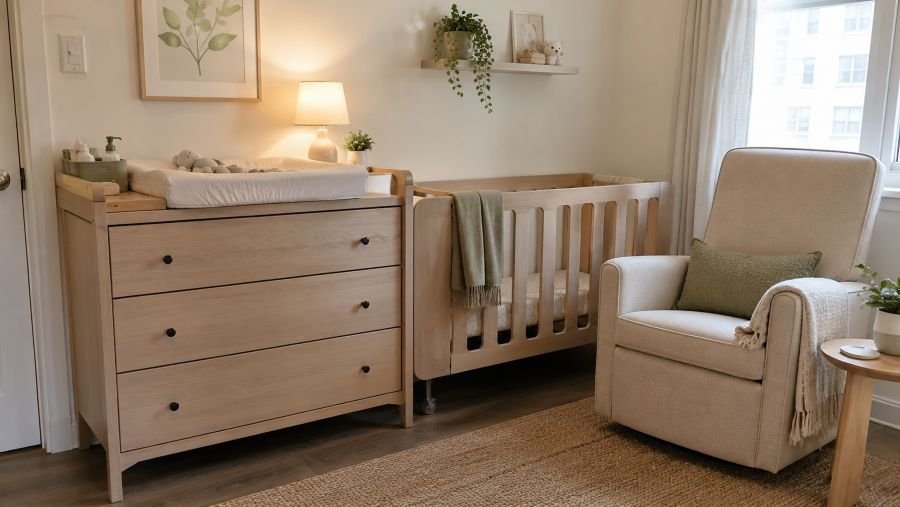
A standalone changing table is one of the first things to cut in a small apartment, because it is bulky and only useful for a year or two. Instead, create a changing station on top of furniture you already own or would buy anyway. A standard dresser, fitted with a contoured changing pad secured to the top, turns into a perfect changing surface while storing all the baby’s clothes in the drawers below. When diapers are behind you, the dresser simply goes back to being a dresser.
If even a dresser is too much, a wall-mounted fold-down changing shelf or a sturdy changing tray that sits across the crib rails can work for the early months. The principle is the same: borrow an existing surface rather than dedicating new floor space. Keep a small caddy or wall-mounted organizer right beside the changing spot stocked with diapers, wipes, and a change of clothes so you never have to walk away mid-change. Tucking the essentials into one grab-and-go basket is what makes a borrowed surface feel like a real station.
Storage Strategies That Keep Baby Gear From Taking Over
Babies are small; their gear is not. The volume of clothes, diapers, blankets, bottles, and toys can quickly overwhelm a small apartment if you let it spread. The antidote is a storage system built on two principles: go vertical, and rotate by stage. Together, these keep surfaces clear and prevent the slow clutter creep that makes small spaces feel chaotic.
Go Vertical
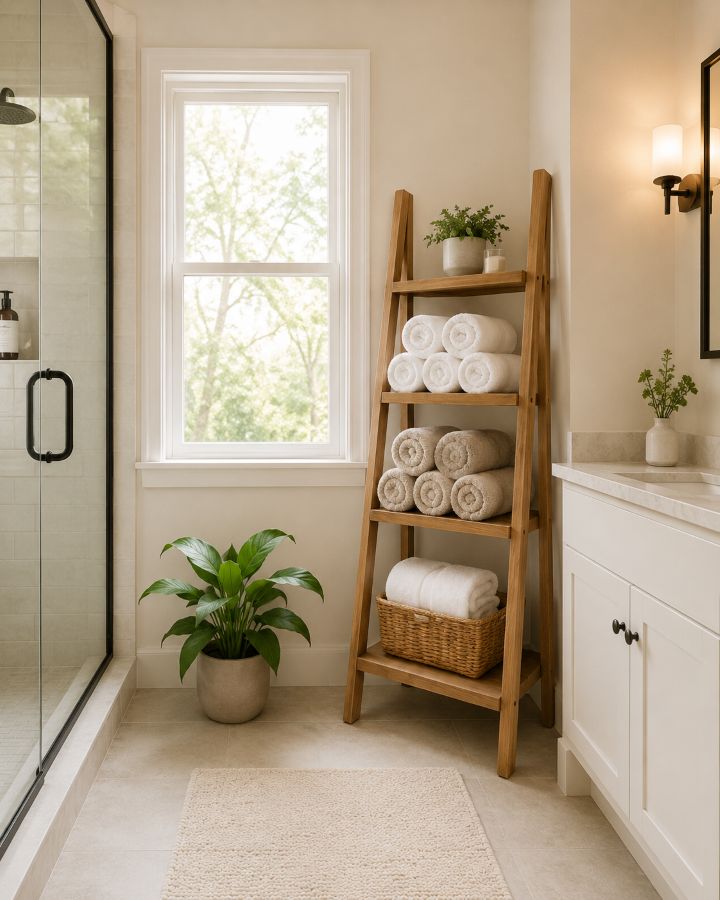
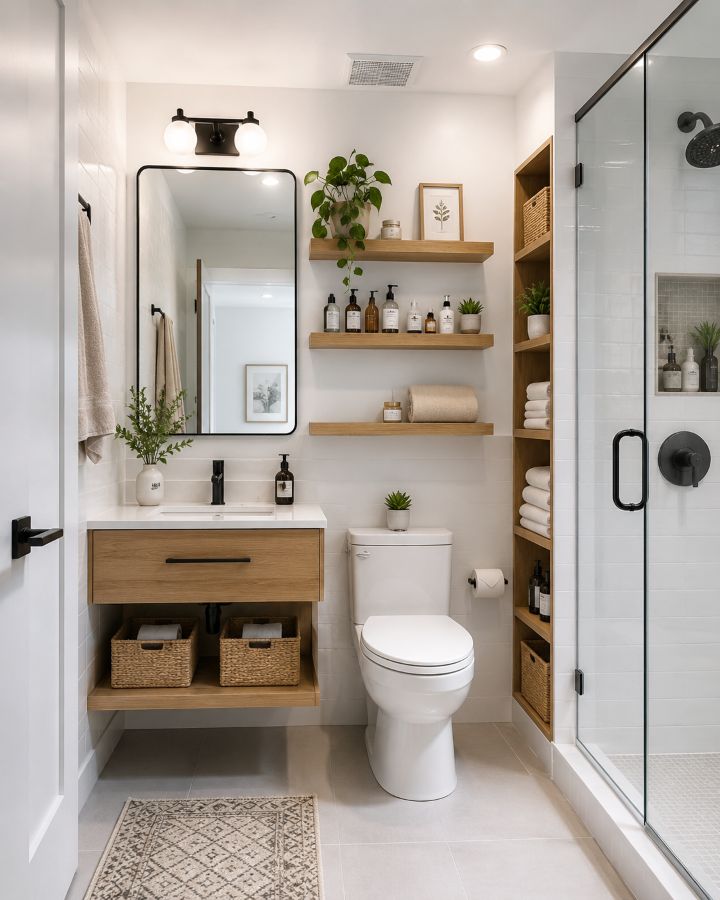
Floor space is the scarcest resource in a small apartment, so push storage up the walls and onto the backs of doors wherever possible. A few well-placed solutions can hold a surprising amount:
- Floating wall shelves above the changing area for folded clothes, books, and a basket or two of supplies.
- Over-the-door organizers with clear pockets for socks, hats, mittens, and small accessories that otherwise vanish.
- Stackable lidded bins on a high shelf or in the closet for items you are not using this month.
- Under-bed storage boxes for bulkier items like extra blankets, next-size-up clothing, or seasonal gear.
Rotate by Stage
The second principle is just as powerful: only keep the current stage within reach. Newborns blow through size ranges in weeks, and trying to store every size at once is what buries a small apartment. Keep the clothes and supplies that fit right now in the accessible drawers and shelves, and pack everything else — outgrown sizes, future sizes, gear for later milestones — into clearly labeled bins stored high or under the bed. Every few weeks, swap the active stage in and the old stage out. This single habit does more to protect a small space than any amount of clever furniture.
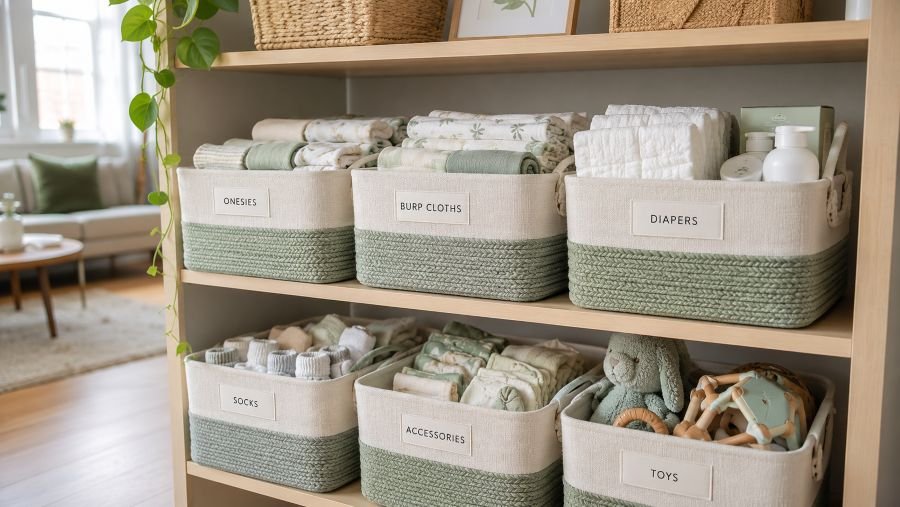
Smart Small Space Tip: Before the baby arrives, do a “one-in, one-out” sweep of the room where the baby zone will live. For every baby item you bring in, remove or relocate something you no longer use daily. This keeps your overall furniture count flat, so the apartment never feels more crowded after the baby than it did before.
Lighting and Calm for Night Feeds
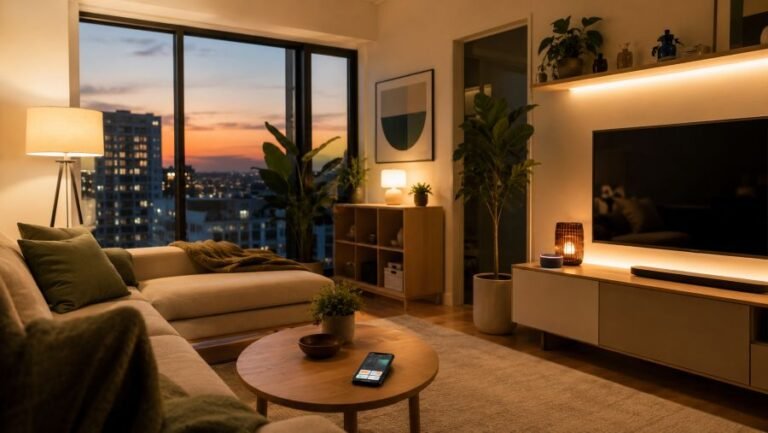
In a no-nursery setup, lighting matters more than usual because you and the baby share the same space. Bright overhead lights at 3 a.m. wake everyone up and make it hard for the baby to settle back down. The solution is layered, low, warm light: a small dimmable bedside lamp or a soft nightlight with a warm color temperature gives you just enough to see for feeding and changing without flooding the room.
Consider a lamp with a touch dimmer or a smart bulb you can set to a low warm glow on a schedule, so night wakings happen in gentle light rather than harsh brightness. Pair this with a small white-noise machine to mask apartment sounds — neighbors, traffic, the hum of a shared space — which is especially valuable when the baby sleeps in the same room where you move around. Calm light and steady sound turn a shared bedroom into a genuinely restful environment for everyone.
Choosing Multifunctional Baby Furniture for Small Apartments
When floor space is limited, every piece of furniture should earn its place by doing more than one job or by being genuinely compact. The table below compares the small-apartment-friendly options against the bulkier defaults, so you can prioritize the pieces that pull double duty and skip the ones that only eat square footage.
| Function | Small-Apartment Pick | Why It Works in No-Nursery Setup |
|---|---|---|
| Sleep (newborn) | Bedside / co-sleeper bassinet | Tiny footprint, attaches by your bed, supports safe room-sharing. |
| Sleep (3+ months) | Mini crib or convertible crib | Proper crib surface in far less space; many fold or roll for flexibility. |
| Changing | Dresser + changing pad topper | Storage below, changing surface above; reverts to a dresser later. |
| Storage | Vertical shelves + under-bed bins | Uses wall and dead space instead of scarce floor area. |
| Feeding | One compact armchair or your bed | Skips the bulky glider; a single comfortable seat is enough. |
The pattern across the table is consistent: choose pieces that consolidate functions and shrink footprints. A dresser-changer combo replaces two items. A mini crib replaces a full crib. Vertical shelving replaces floor-hogging units. Each swap quietly buys back square footage you can actually live in.
FAQ: Setting Up a Small Apartment for a Baby
Can a baby really sleep in your bedroom instead of a nursery?
Yes. Pediatric guidance actually recommends that babies sleep in the same room as their parents for at least the first six months, on a separate firm, flat sleep surface such as a bassinet or mini crib. A no-nursery setup in a small apartment is not a compromise here; it lines up with safe-sleep best practice as long as the baby has its own clear, uncluttered sleep space.
How much floor space do you actually need for a baby corner?
A functional baby zone can fit in roughly 1 to 1.5 square meters. A mini crib or bassinet takes a surprisingly small footprint, and a wall-mounted or dresser-top changing area uses vertical space rather than floor space. The key is grouping the sleep, change, and storage functions into one tight, defined corner instead of spreading gear across the whole apartment.
What baby furniture is worth buying for a small apartment?
Prioritize multifunctional, compact pieces: a mini crib or convertible crib that grows with the child, a dresser that doubles as a changing table with a removable topper, and a single comfortable feeding chair. Skip oversized standalone changing tables, full-size cribs, gliders that swallow floor space, and single-use gadgets that only work for a few weeks.
How do you keep baby gear from taking over a small space?
Go vertical and edit ruthlessly. Use wall shelves, over-door organizers, and stackable baskets so surfaces stay clear. Keep only the current stage of clothing and supplies within reach, and store outgrown or future-size items in labeled bins under the bed or on a high shelf. Rotating gear in and out by stage prevents the clutter creep that overwhelms small apartments.
Final Thoughts: A Small Space Is More Than Enough
Welcoming a new baby into a small apartment without a nursery is not a problem to apologize for — it is an opportunity to set up with intention from the very first day. When you design around the baby’s four real needs, consolidate everything into one calm corner, choose furniture that pulls double duty, and commit to a vertical, rotate-by-stage storage system, a one-bedroom or studio becomes a warm, functional, beautiful home for a new family. Babies do not need square footage; they need closeness, calm, and consistency, all of which a thoughtfully designed small space delivers in abundance. Start with the corner, keep it simple, and let the space grow with your child.
ADeL A.A
ADeL A.A is a home décor and space optimization writer who believes every square foot matters. He spends his time researching, testing, and comparing smart storage ideas, multi-functional furniture, and practical layout solutions — always searching for the best ways to make compact homes feel bigger, brighter, and better organized.
View all articles by ADeL A.A →