Weekend Decluttering Plan for Small Apartments

Living in a small apartment means every square inch counts, and clutter quickly becomes overwhelming in limited spaces. That pile of items you’ve been meaning to sort through? The closet stuffed with clothes you never wear? The kitchen drawers overflowing with gadgets you’ve forgotten you own? These clutter challenges compound in small apartments where there’s nowhere to hide mess or excess items. But here’s the good news: you can completely transform your small apartment in just one focused weekend.
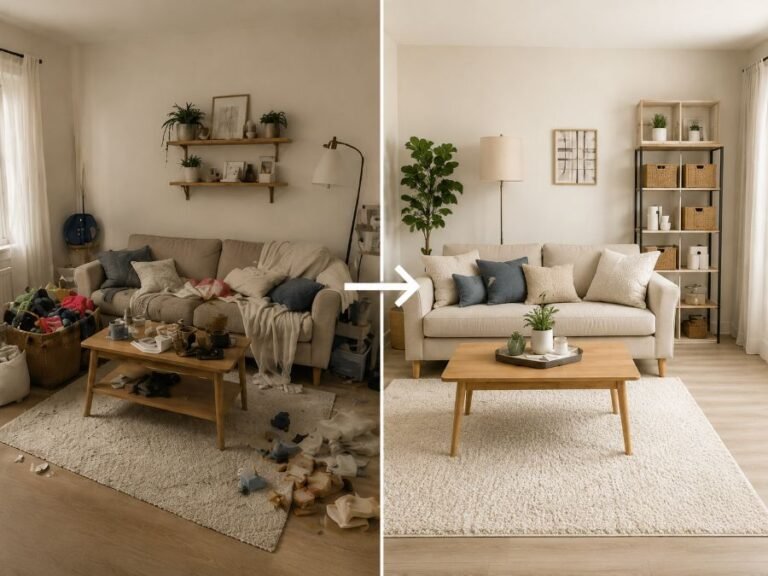
This comprehensive weekend decluttering plan provides a realistic, achievable roadmap for systematically sorting through your belongings, making intentional decisions about what stays and what goes, and organizing your space for long-term success. We’ll break the project into manageable daily tasks, provide decision-making frameworks to help you let go of items guilt-free, and share strategies for maintaining your newly organized space long after the weekend ends. By Sunday evening, your small apartment will feel spacious, peaceful, and perfectly organized.
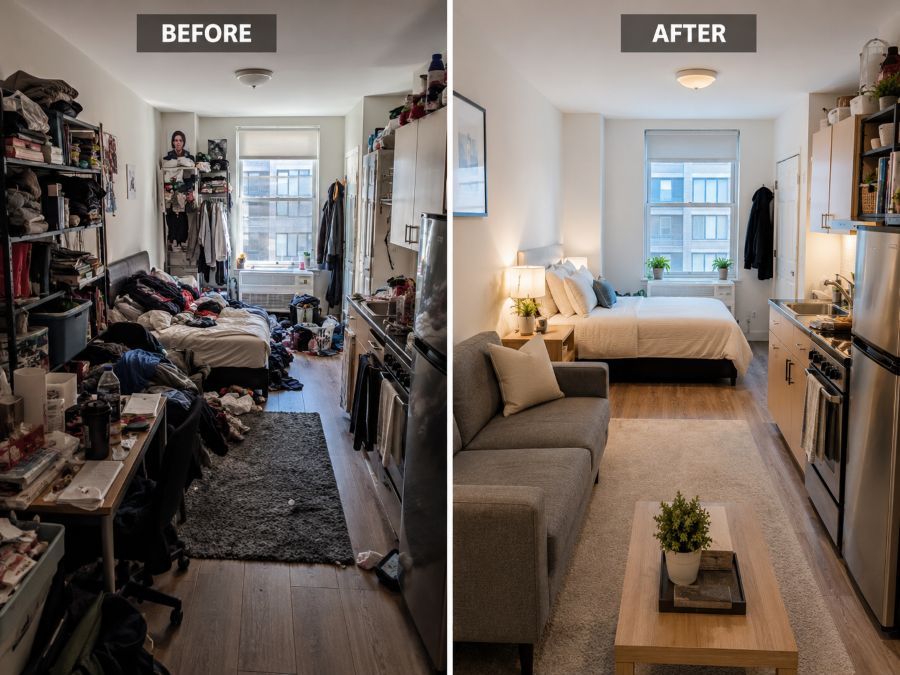
Most people underestimate how much time decluttering requires, approaching it haphazardly and achieving disappointing results. Others become overwhelmed by the project’s scope and give up before making real progress. This weekend decluttering plan eliminates both problems by providing specific time blocks, clear decision criteria, and actionable steps that make the entire project feel manageable. Whether you’re decluttering a studio apartment or a one-bedroom space, this plan adapts to your situation and delivers actual results you can maintain.
Understanding the Psychology of Clutter and Letting Go
Before diving into the physical work of decluttering, it’s important to understand the psychological barriers that prevent people from letting go of belongings. Many people hold onto items for “just in case” reasons, feel guilt about unused gifts, attach memories to inanimate objects, or fear missing out on potential future uses. These emotional attachments make decluttering emotionally challenging, not just physically demanding.
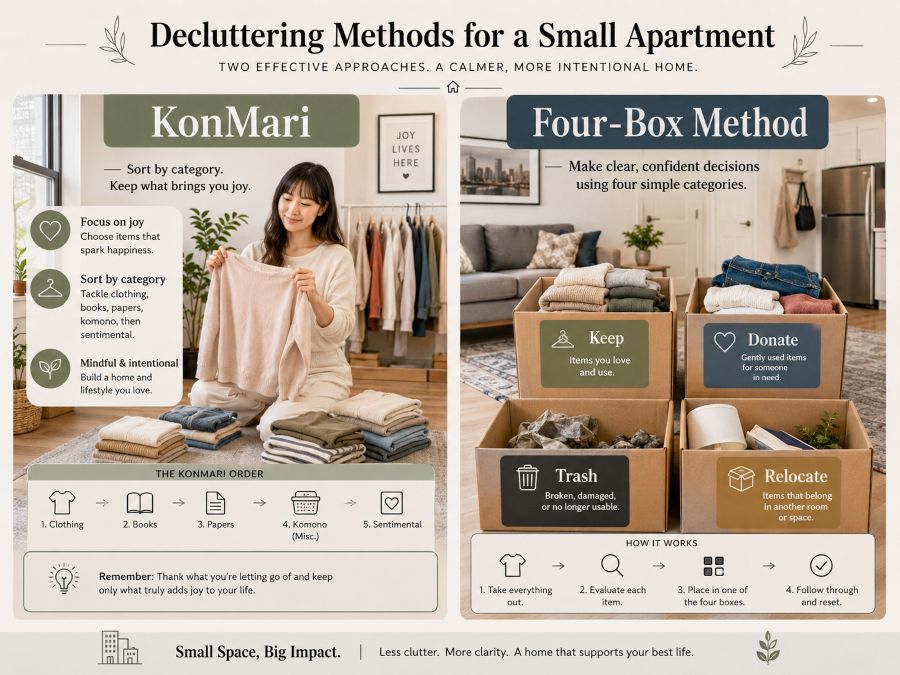
The KonMari method, popularized by organizing expert Marie Kondo, addresses this psychology by asking a simple but powerful question: “Does this spark joy?” This reframe shifts decluttering from guilt-based (“I should keep this”) to positive-based (“I love this and want it in my life”). This psychology of intentional curation rather than guilty retention makes letting go easier and helps you create a space filled with things you genuinely love and need, not things you feel obligated to keep.
Common Emotional Barriers to Decluttering
- “Just in case” thinking: Keeping items you might need someday prevents you from living with the space you actually have. Ask yourself: have you needed this in the last year? If not, you probably won’t.
- Gift guilt: Gifts were given with the intention of you enjoying them, not suffering through their presence. Keeping an unwanted gift isn’t honoring the giver—it’s dishonoring yourself.
- Memory attachment: Items aren’t your memories—your memories exist in your mind and heart regardless of the physical object. You can honor memories without keeping the objects.
- Identity remnants: Clothes from when you were a different size, books on hobbies you’ve abandoned, or equipment for activities you quit represent past identities. Keep current-you items, not past-you items.
- Sunk cost fallacy: You feel obligated to keep expensive items even if you don’t use them. The money is already spent; keeping unused items doesn’t recover that investment.
- Potential-use fantasy: Imagining yourself doing complicated projects or hobbies you’ve never actually done leads to keeping supplies for activities that exist only in fantasy. Keep items for actual hobbies you practice, not imaginary ones.
Pre-Weekend Planning and Preparation
Success begins before the weekend starts. Proper preparation prevents wasted time and builds momentum. Plan your decluttering dates—choose a weekend when you’re well-rested and not stressed about other obligations. Alert friends and family that you’ll be unavailable so you can focus without interruptions. Gather supplies: markers, bags for donations, storage containers, and cleaning supplies. These simple preparations remove obstacles and set you up for success.
Decide whether you’ll tackle your apartment by room or by category. The room-based approach feels satisfying because you complete visible transformations quickly. The category-based approach (clothing, books, kitchen items, etc.) works better if you store similar items throughout multiple rooms. For small apartments, the room-based approach typically works better because you’ll see progress immediately, which keeps you motivated throughout the weekend.
Essential Supplies for Your Decluttering Weekend
- Large bags or bins for donations, sales, and discards (color-coded if possible)
- Cleaning supplies for deep cleaning as you empty spaces
- Labels and markers for organizing categories and identifying donation items
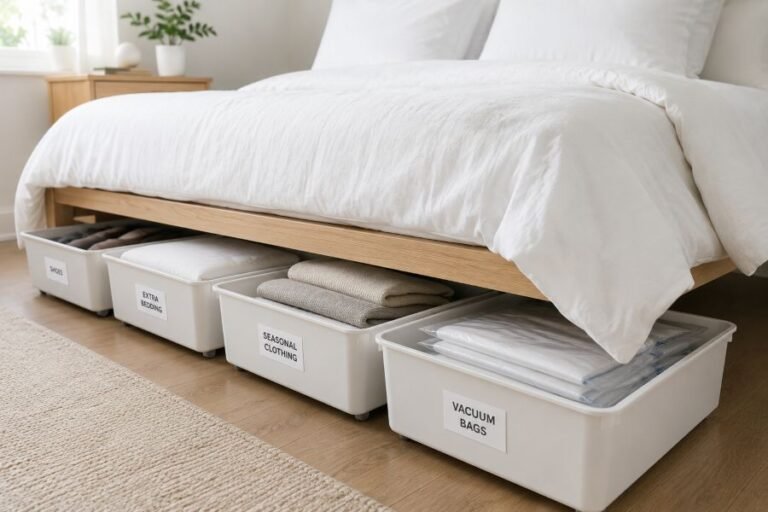
- Storage containers and baskets for organizing items you’re keeping
- Camera or phone for photographing valuable items to sell online
- Floor plan or notebook for planning new furniture arrangements
- Comfortable clothes and shoes for standing and bending throughout the day
- Water, snacks, and motivational music or podcasts to sustain energy
Smart Small Space Tip: Start your decluttering weekend Friday evening by removing one easy category (books, DVDs, or kitchen gadgets) to build momentum. Then tackle larger categories like clothing on Saturday when you’re fresh. This approach gives you a motivating win before the main effort, making you more likely to push through challenging decisions on Saturday.
Friday Evening: Quick Win Category
Before diving into heavy decluttering Saturday morning, spend Friday evening tackling one easy category that’s likely cluttering your apartment. Books, DVDs, kitchen gadgets, or decoration items work well for Friday evening because decisions come quickly and you’ll see immediate results. Plan for 1-2 hours maximum—just enough to build momentum without exhausting yourself before the main weekend effort.
Choose a category where you can realistically let go of 30-50% of items. Books you’ve already read and won’t reread, kitchen gadgets that duplicate functionality, decorations you don’t display, or DVDs in the streaming era represent items most people can release guilt-free. This Friday evening win gives you confidence heading into Saturday and proves to yourself that you can make good decisions and let things go.
Friday Evening Task: Books, Kitchen Items, or Decorations
- Set a timer for 90 minutes to maintain focused energy
- Gather all items in your chosen category into one central location
- Handle each item, making quick keep/donate/sell/discard decisions
- Return keepers to their proper storage locations, organized thoughtfully
- Bag donations and items to sell, removing them from your living space
- Dispose of items appropriately based on local guidelines
- Enjoy your Friday evening win and go to bed motivated for Saturday
Saturday: Major Decluttering Push
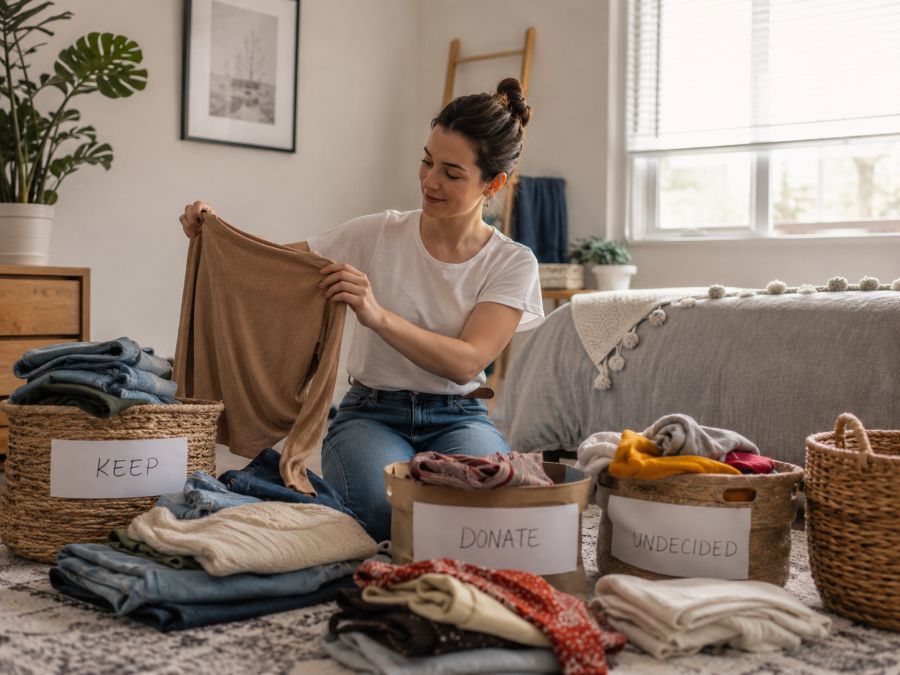
Saturday is your main decluttering day. Start with a good breakfast and clear schedule, dedicating 6-8 hours to focused work with short breaks. Tackle clothing first because it’s usually the largest category and requires significant decision-making. Clothing decisions are also highly personal, and seeing your closet transformed immediately boosts motivation for the rest of the day.
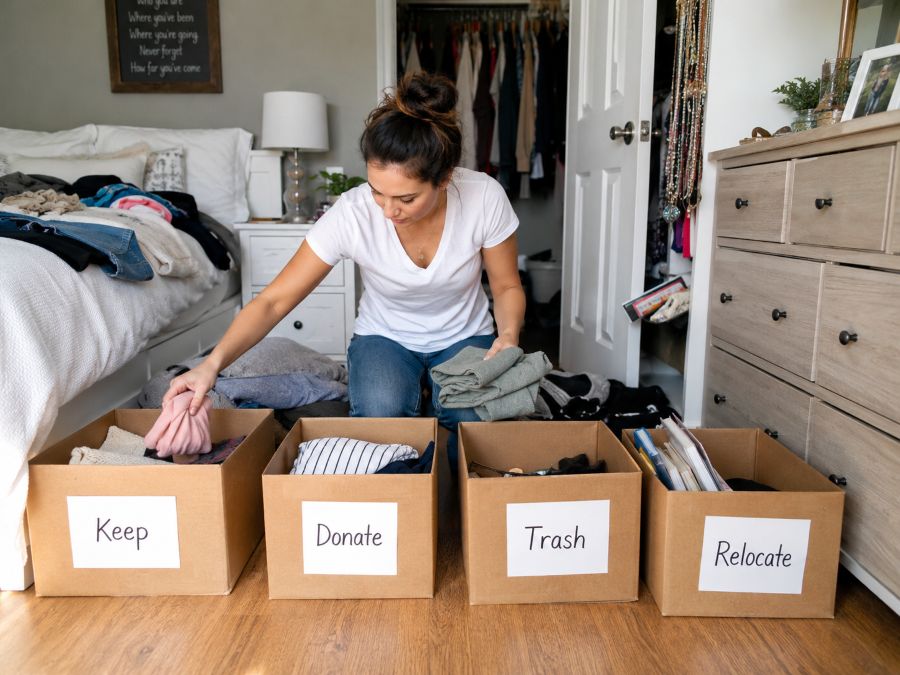
For your small apartment’s main rooms, use the four-box method. As you go through items, sort into four categories: keep (returning to proper storage), donate (given to charity), sell (items with resale value), and discard (broken, unusable, or too worn). This method prevents decision paralysis by giving you clear options rather than forcing a simple yes/no choice.
Saturday Morning: Bedroom and Closet (3-4 hours)
- Remove everything from your closet and arrange on your bed in categories
- Try on questionable items—if you feel uncomfortable, it doesn’t belong
- Keep only clothes you wear regularly, that fit properly, and that make you feel good
- Donate items you haven’t worn in one year, that don’t fit, or that need significant repair
- Sell valuable items (designer bags, unworn with tags) through online marketplaces
- Organize keepers by category (tops, bottoms, dresses, etc.) or by color for visual appeal
- Deep clean your closet while it’s empty and organize with dividers or hangers
Saturday Afternoon: Living Room and Common Areas (2-3 hours)
- Declutter under furniture cushions and side tables where items accumulate
- Go through books, DVDs, and decor items using the four-box method
- Remove items that don’t support your current lifestyle or aesthetic
- Organize remaining items in storage containers that match your decor
- Consider your furniture arrangement—would moving pieces open up the space?
- Take time to arrange furniture if needed, creating better flow and function
- Step back and appreciate your transformed living room before moving to the next area
Sunday: Finishing Touches and Kitchen Organization
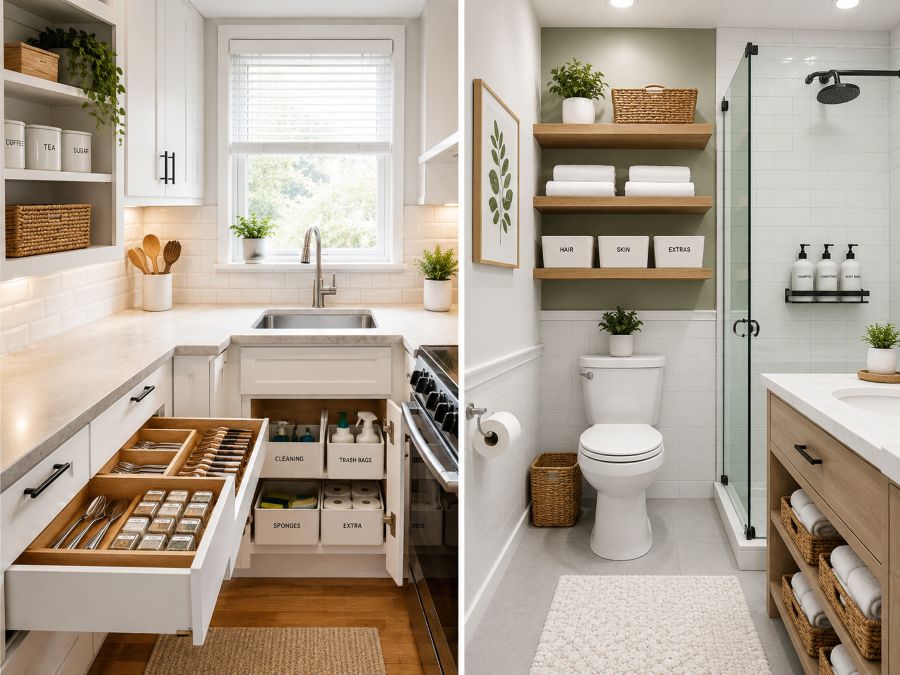
Sunday is for completing remaining areas and establishing systems that keep your newly organized apartment clutter-free long-term. Start fresh with your kitchen, the room that accumulates items fastest and feels most chaotic when disorganized. Kitchen decluttering sets you up for success because you use this room daily, so an organized kitchen immediately improves your quality of life throughout the following week.
After completing the kitchen, tackle bathrooms and any remaining items. These areas require less decision-making than bedrooms and living rooms, making them perfect Sunday tasks when you might be feeling decluttering fatigue. Finish the weekend by creating organizational systems and containers that maintain your newly decluttered space rather than slowly accumulating clutter again.
Sunday Morning: Kitchen Deep Declutter (2-3 hours)
- Empty every cabinet one at a time, removing rarely used items
- Purge gadgets with single purposes, broken items, and duplicates
- Keep only cookware, dishes, and utensils you actually use regularly
- Organize remaining items by frequency of use and logical grouping
- Invest in drawer dividers, shelf risers, and storage containers for organization
- Label containers and organize pantry items by category
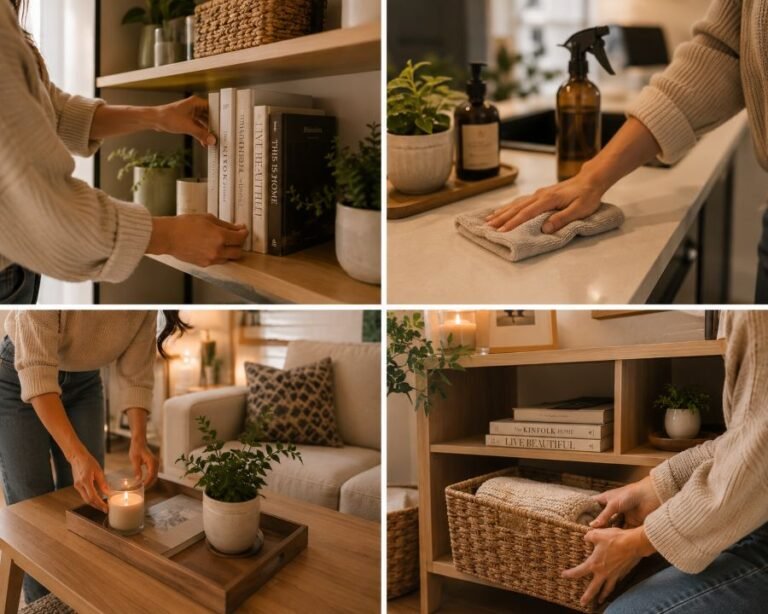
- Wipe down shelves and rearrange for both function and visual appeal
- Create systems that make returning items to their proper places intuitive
Sunday Afternoon: Bathrooms and Maintenance Setup (1-2 hours)
- Empty bathroom cabinets and shelves, removing expired medications and dried-up products
- Keep only frequently used toiletries and medications you actually take
- Organize remaining items in small containers or drawer organizers
- Declutter under the sink, discarding harsh chemicals you don’t use
- Perform deep cleaning of newly empty spaces before replacing items
- Establish the “one-in-one-out” rule to prevent clutter return
- Create a donation basket for items you identify later as unnecessary
- Schedule monthly 30-minute maintenance decluttering sessions
| Time Period | Room/Area | Time Required | Expected Items to Discard |
|---|---|---|---|
| Friday Evening | Books/Kitchen/Decor | 1-2 hours | 30-50% |
| Saturday Morning | Bedroom & Closet | 3-4 hours | 40-60% |
| Saturday Afternoon | Living Room & Common Areas | 2-3 hours | 25-40% |
| Sunday Morning | Kitchen & Pantry | 2-3 hours | 35-50% |
| Sunday Afternoon | Bathrooms & Setup | 1-2 hours | 30-45% |
| Total Weekend | Entire Apartment | 10-14 hours | 30-50% of total |
Decision-Making Frameworks for Difficult Choices
As you declutter, you’ll encounter items that create internal debate. The “should I keep this?” mental loop wastes time and stalls progress. Having a clear decision framework prevents this paralysis. The simplest framework is Marie Kondo’s “spark joy” question—hold the item and notice your emotional response. If you feel happiness, keep it. If you feel nothing or obligation, let it go. It’s that simple.
For items where emotions cloud judgment, ask practical questions: Have I used this in the last year? Do I have something that serves the same purpose? Would I buy this item again today? Do I have space for this to live properly? If you answer “no” to most questions, the decision is made. Trust the framework, make the decision, and move forward rather than creating mental debate that slows your progress.
Decision-Making Questions for Tough Items
- Sentimental items: Do I treasure this specifically, or do I feel obligated to keep it? Does this item genuinely bring joy, or do I keep it from guilt?
- Gifts: Would I choose to own this if it hadn’t been given to me? Does this item align with my current values and lifestyle?
- “Someday” items: Have I seriously planned to use this? Or am I imagining a version of myself that doesn’t actually exist? When specifically would I use this?
- Expensive items: Does the price I paid matter to my decision, or should I focus on whether I actually want or need this now?
- Worn items: Is this item worn because I love using it, or just taking up space? Does it need repair I’ll actually make?
- Duplicate items: Do I genuinely need two or three of this item? Which one do I prefer and actually use?
Organizing Systems That Prevent Clutter Return
Decluttering is pointless if clutter slowly returns within weeks. Successful long-term organization requires establishing systems and habits that support your newly organized space. The most critical system is the “one-in-one-out” rule: for every new item entering your home, one item of equal or greater category must leave. This prevents accumulation while allowing for fresh purchases and updates.
Create designated homes for everything. Random items accumulate in random places, but when you assign specific storage locations for categories, returning items becomes automatic. Use clear storage containers so you see what you own without opening every container. Maintain a donation basket in an accessible location for items you identify later as unnecessary, preventing mental clutter and decision-making delays.
Systems to Maintain Your Decluttered Space
- One-In-One-Out Rule: Every new item requires removing an existing item to prevent gradual reaccumulation
- Designated Homes: Every item has a specific storage location where it always returns
- Clear Containers: See what you own at a glance, preventing forgotten items from being repurchased
- Regular Donation Basket: Catch items you identify later without creating mental clutter
- Monthly 30-Minute Resets: Brief organization sessions prevent slow-building accumulation
- Annual Deep Declutter: Yearly reviews prevent items from being kept “just because” they’ve always been there
- Mindful Shopping: Ask whether new items align with your values and whether you have space for them before purchasing
FAQ: Weekend Decluttering Plans for Small Apartments
How long does it take to declutter a small apartment?
A thorough decluttering of a small apartment typically requires 8-16 hours spread across a weekend. Studio apartments may take 6-10 hours, while one-bedroom apartments usually need 10-16 hours. The timeframe depends on how much you own, how organized you are currently, and how thoroughly you want to declutter. Breaking the project into focused sessions by room prevents burnout and maintains motivation throughout the weekend.
What is the best decluttering method for small spaces?
The KonMari method (Marie Kondo’s “spark joy” approach) works exceptionally well for small apartments because it focuses on keeping only items that genuinely bring joy rather than storing minimal amounts of everything. This method involves holding items, assessing emotional connection, and organizing by category rather than location. Other effective methods include the four-box method (keep, donate, sell, discard) and zone-based organizing by room or category.
How do I prevent clutter from returning after decluttering?
Prevent clutter return by implementing the one-in-one-out rule, being intentional about new purchases, creating designated homes for items, and conducting regular maintenance decluttering monthly. Review your belongings with the same decision criteria you used during your weekend declutter. Build habits that support your organized space rather than slowly reverting to clutter patterns.
What should I do with items I’m decluttering from my apartment?
Donate gently used items to thrift stores, charities, or friends who need them. Sell valuable items through online marketplaces or consignment shops to recover some of your investment. Recycle appropriate materials at local facilities. Discard broken or unusable items responsibly according to local waste guidelines. Proper disposal prevents waste while supporting others who can benefit from items you no longer need.
Can I realistically declutter my entire small apartment in one weekend?
Yes, absolutely. A focused weekend produces remarkable transformations in small apartments. The key is starting organized with a clear plan, maintaining steady pacing without perfectionism, and being decisive about each item. Plan for 10-14 total hours across Friday through Sunday. Taking a full day Sunday for kitchen, bathroom, and system setup consolidates progress rather than spreading the project across multiple weekends.
How do I stay motivated during a full-day decluttering session?
Take breaks every 90 minutes for water and snacks. Play energizing music or listen to podcasts that keep you mentally engaged. Before starting each room, take a before photo to celebrate afterward with after photos. Set time-based rather than completion-based goals (declutter for two hours rather than “finish the whole closet”). Invite an accountability partner to check in on your progress. Celebrate small victories throughout the weekend.
Complete Your Weekend Decluttering Successfully
Your small apartment deserves to be a sanctuary that supports your wellbeing and celebrates your actual lifestyle rather than sheltering items for imaginary future scenarios. A focused weekend of thoughtful decluttering creates that sanctuary by removing the mental burden of excess possessions and transforming your physical space into an organized, beautiful home you genuinely enjoy living in.
Follow this comprehensive weekend decluttering plan, use the decision-making frameworks when you encounter difficult choices, and implement systems that maintain your newly organized space. By Sunday evening, you’ll have completed what many people put off for years—a complete, thorough decluttering of your entire apartment. More importantly, you’ll have created habits and systems that prevent clutter from gradually returning, ensuring your small space remains beautifully organized for years to come.
Start this Friday evening with confidence. By Sunday night, your small apartment will feel completely transformed—spacious, organized, and perfectly aligned with who you are and how you actually live. That’s the power of a focused, well-planned weekend decluttering project, and it’s entirely within your reach.
ADeL A.A
ADeL A.A is a home décor and space optimization writer who believes every square foot matters. He spends his time researching, testing, and comparing smart storage ideas, multi-functional furniture, and practical layout solutions — always searching for the best ways to make compact homes feel bigger, brighter, and better organized.
View all articles by ADeL A.A →