How to Organize Pots and Pans in a Small Kitchen: Space-Saving Solutions

Pots and pans are kitchen essentials, but in a small kitchen, they can quickly become a storage nightmare. These bulky items consume valuable cabinet space, and inefficient storage can make accessing your cookware frustrating and turn your kitchen into visual chaos. The good news? With strategic organization solutions, you can keep your pots and pans accessible while actually maximizing your small kitchen space rather than letting cookware dominate it.
This comprehensive guide reveals professional organization strategies that transform how small-kitchen dwellers handle cookware storage. From vertical wall solutions to clever cabinet hacks, you’ll discover methods that free up precious counter and cabinet real estate while keeping your most-used pans within arm’s reach. These aren’t complicated systems requiring expensive organizers—many solutions use items you likely already have or can acquire affordably.
Understanding Your Space: Assessing Storage Options
Before implementing any organization system, assess your actual kitchen layout and available storage. Small kitchens present unique constraints, and the best solution uses your specific space effectively. Begin by identifying where cookware currently lives and why that location may or may not be working for you. Is your cabinet too crowded? Are pans falling out when you open the door? Is your stovetop surrounded by clutter because cookware isn’t stored efficiently?
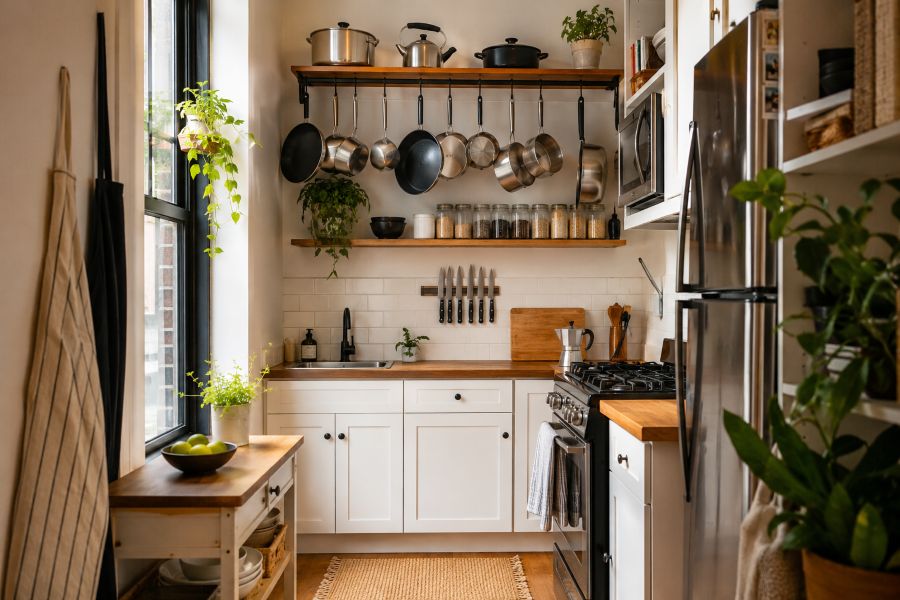
Next, evaluate all potential storage locations. Most kitchens offer multiple possibilities: under-sink areas, over-sink wall space, cabinet interiors, under-stove drawers, the area above cabinets, kitchen walls, and even the inside of cabinet doors. Small kitchens especially benefit from utilizing every available inch. A wall above your stove might seem unusable, but it’s prime real estate for a pot rack. The interior of a cabinet door that currently holds nothing could host a tension rod system for hanging pans. Many small-kitchen dwellers overlook these opportunities because they haven’t visualized the possibilities.
Consider which cookware you actually use regularly versus items you rarely touch. Your everyday pans deserve the most accessible storage location, while occasional-use cookware can occupy less convenient spaces. This prioritization principle alone transforms kitchen functionality. Many people waste prime storage space on cookware they haven’t used in months while their daily pans occupy awkward, hard-to-reach locations.
Vertical Storage Solutions: Utilizing Wall Space
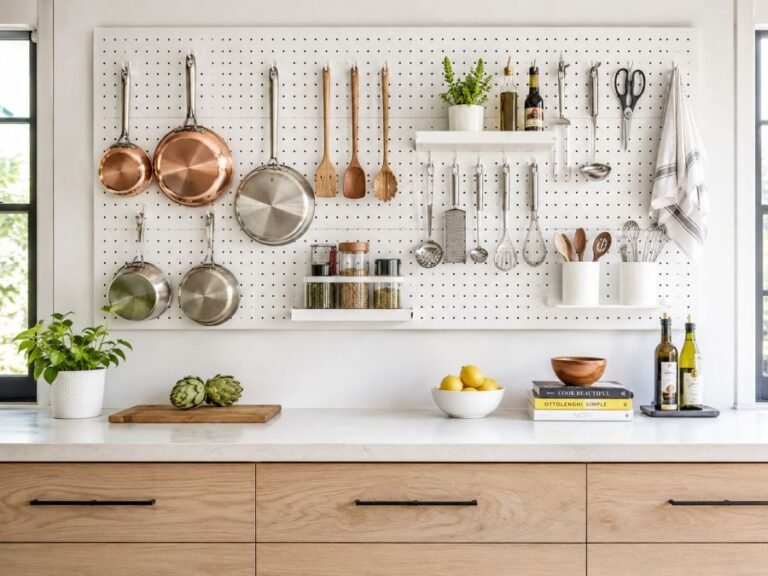
Vertical storage is the game-changer for small kitchens. Walls represent unused real estate that can hold significant amounts of cookware while keeping floors and cabinets clear. Wall-mounted solutions range from simple hooks to elaborate pot racks, and the right choice depends on your kitchen’s style, wall condition, and available space.
Pot Racks and Rail Systems
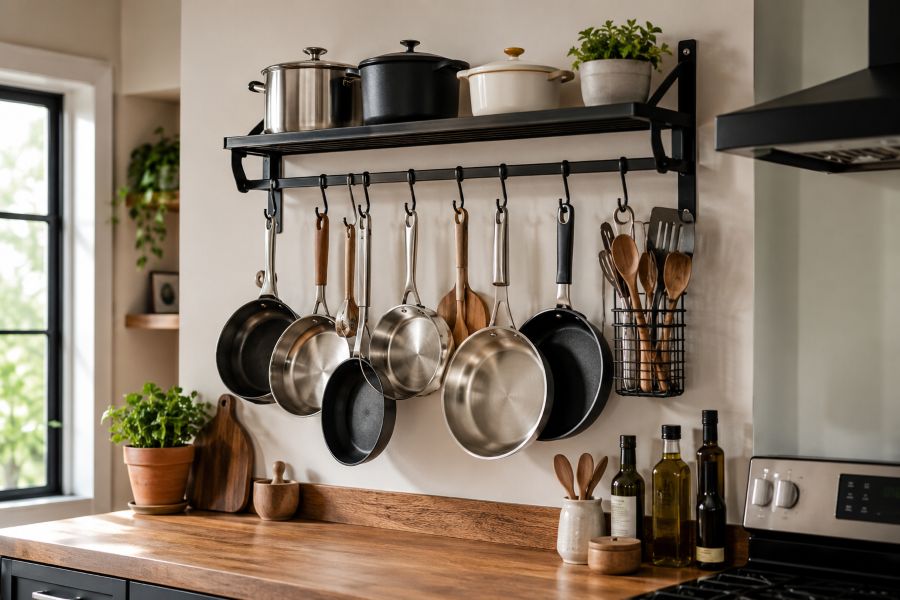
- Wall-mounted pot racks: These come in various styles—from rustic wrought iron to sleek modern designs—and hold multiple pans while contributing to kitchen aesthetics. They’re particularly effective for frequently used cookware that you want accessible and visible. Pot racks work best on walls with adequate clearance from your stove (usually 3-4 feet away) to prevent heat and steam damage.
- Magnetic knife bars: If it can hold knives, it can hold magnetic cookware. Stainless steel and enameled cast iron pans stick to magnetic bars, creating a space-saving display that doubles as kitchen decor. This solution works perfectly for smaller cookware collections and adds contemporary flair to your kitchen.
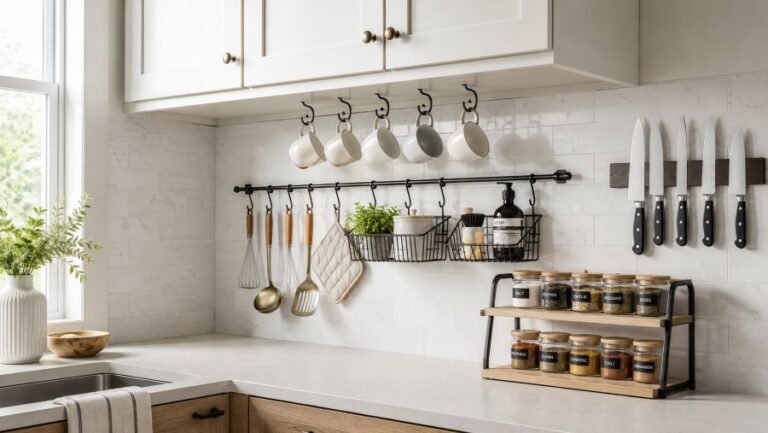
- S-hooks and carabiners: Simple, affordable, and incredibly versatile. Mount a tension cable or rod on your wall and hang pans using S-hooks or carabiners. This system costs minimal money but requires wall anchors strong enough to support cookware weight. The flexibility means you can adjust the arrangement anytime.
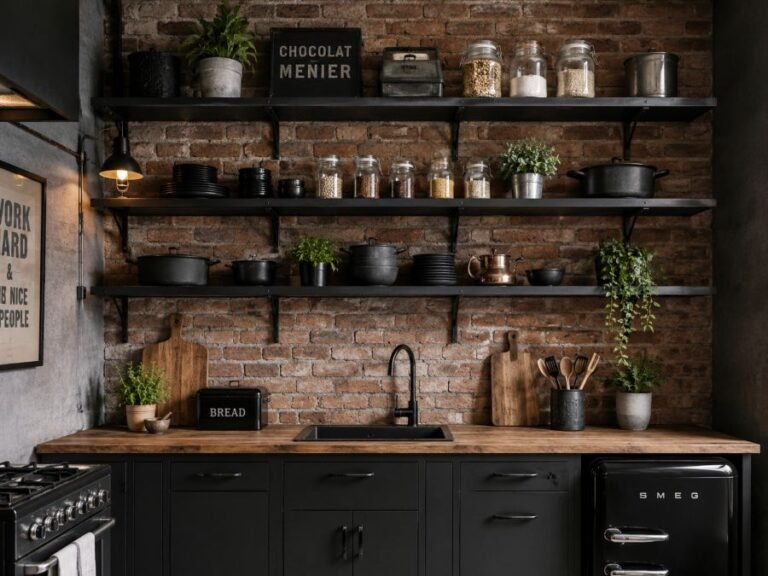
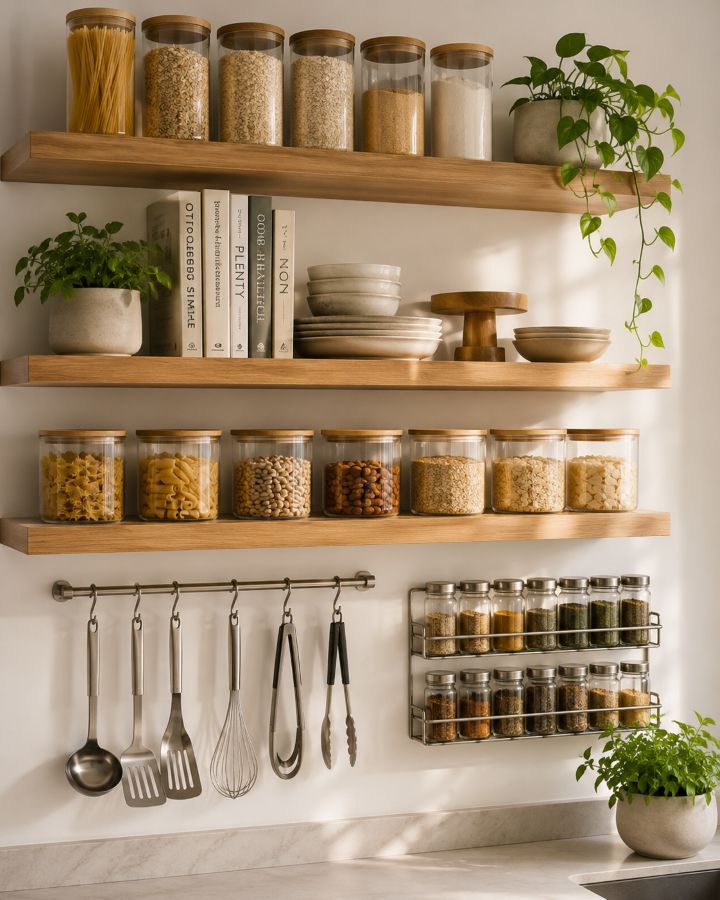
- Over-the-stove shelving: If space permits, install open shelving directly above your stove. This places cookware in an obvious, logical location. Ensure shelving is deep enough for pans and installed far enough from heat sources. Open shelving works best with cookware you use regularly and don’t mind displaying.
Cabinet Organization: Making Interiors Work
Not every kitchen offers wall space for hanging cookware, and some people prefer storing pans inside cabinets. Cabinet organization requires different strategies to maximize the awkward, deep spaces cabinets provide. Well-organized cabinets can hold significantly more cookware than poorly arranged ones by using vertical space and implementing smart dividers.
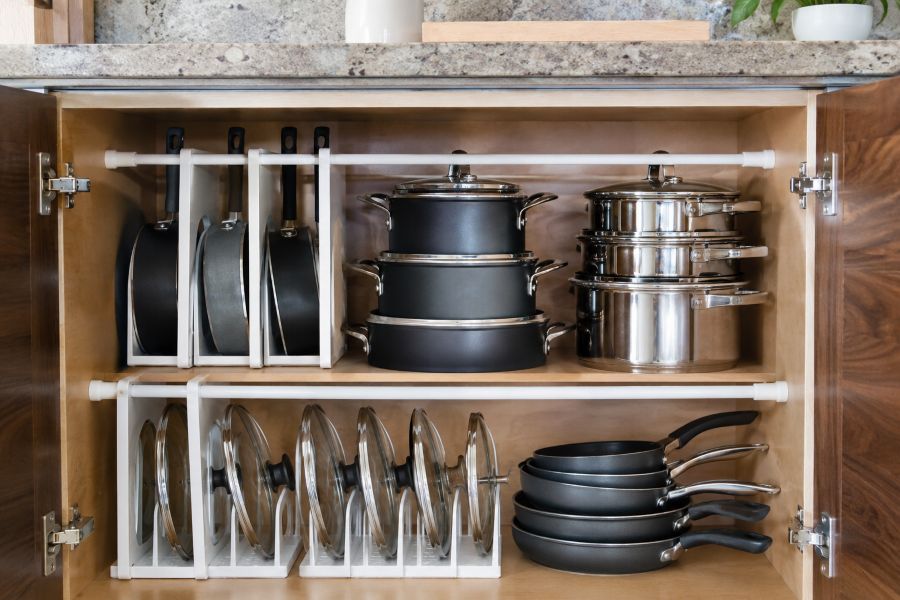
Interior Cabinet Solutions
Tension rods transform awkward cabinet interiors into organized systems. Install horizontal tension rods inside your cabinet and stack pans vertically using the rod to keep them separated. This prevents the frustrating moment when you grab one pan and three others come tumbling out. The cost is minimal, and installation takes minutes without any permanent damage to your cabinet.
Shelf dividers create dedicated sections within cabinets, preventing pans from sprawling across entire shelves. Removable shelf risers increase vertical storage by creating two storage levels where previously only one existed. If your cabinet has adequate depth, consider tiered shelving systems specifically designed for pots and pans. These create an angled display where you can see all pans at once and access any without moving others.
Cabinet door organizers and over-the-door racks multiply your storage capacity instantly. Many small kitchens have valuable cabinet door space that remains empty. Over-the-door pan organizers or simple baskets attached to the inside of cabinet doors hold smaller cookware, freeing up interior space for larger items. This approach works particularly well for lids—a dedicated organizer on a cabinet door keeps lids from sliding around and cluttering your main cookware storage.
Smart Small Space Tip: Stackable cookware systems with separating dividers are game-changers for small kitchens. These sets nest together for minimal storage while the included dividers ensure you can access any pan without moving the entire stack. Many modern cookware sets now feature stackable designs specifically for small-space dwellers. If your current cookware doesn’t stack efficiently, consider investing in one strategic stackable set for everyday cooking while storing specialty items elsewhere.
Storage Solutions Comparison: Finding Your Method
| Storage Method | Space Efficiency | Best For |
|---|---|---|
| Wall-Mounted Pot Rack | Excellent – uses otherwise empty wall space | Frequently used cookware, when kitchen style supports it |
| Tension Rod System | Very Good – maximizes cabinet vertical space | Medium-sized cookware collections with limited wall space |
| Stackable Cookware | Very Good – minimizes footprint through nesting | Small kitchens with limited storage options |
| Over-the-Door Organizers | Good – adds capacity without permanent changes | Lids, small pans, or rental kitchens where modifications aren’t allowed |
| Magnetic Wall Bars | Very Good – minimal wall footprint | Stainless steel or cast iron cookware, modern kitchen aesthetics |
| Under-Sink Rolling Cart | Good – hidden storage in often-unused space | Small, specialty, or occasional-use cookware |
Alternative Storage Ideas: Thinking Outside the Cabinet
Small kitchens sometimes require creative storage solutions beyond traditional cabinets and hanging systems. Several alternative approaches work beautifully when conventional storage methods don’t fit your space or lifestyle.
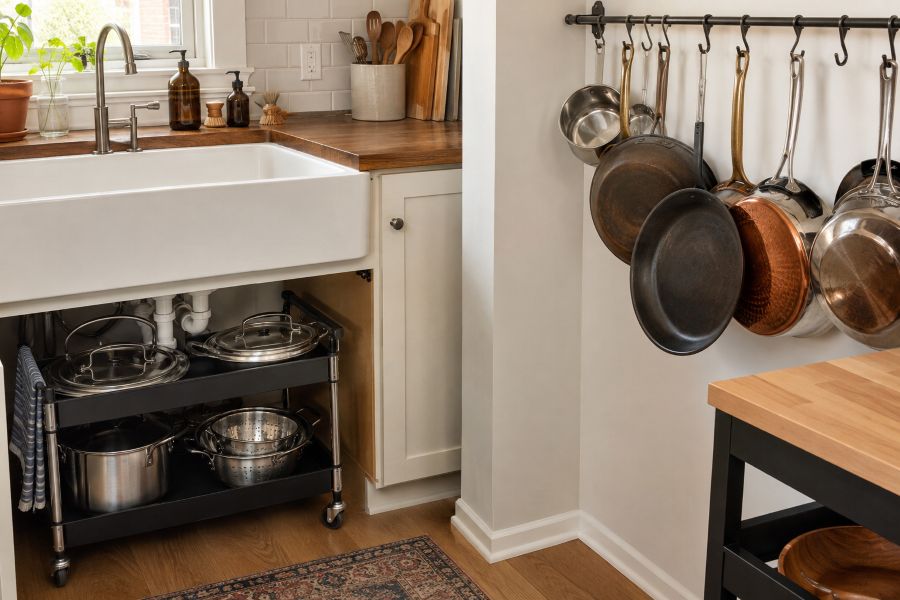
Creative Organization Approaches
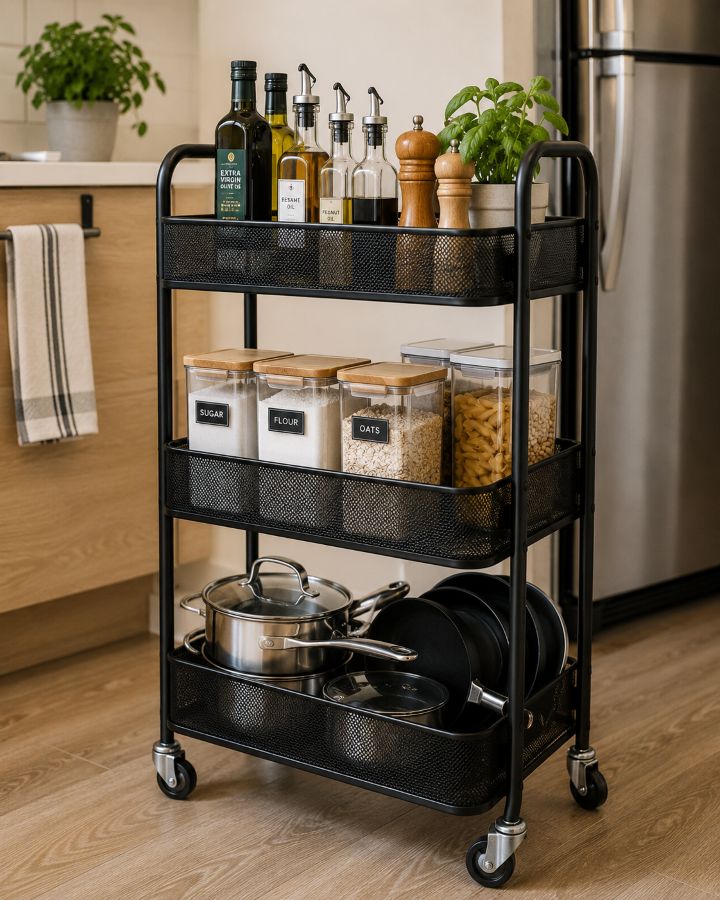
Rolling under-sink carts maximize that often-underutilized space beneath your sink. These slim, multi-tier carts fit easily in tight spaces and store cookware while remaining hidden when you close your cabinet doors. This location works particularly well for cookware you use occasionally or seasonal items you don’t need daily access to. The mobility means you can pull the cart out when needed and tuck it away when not in use.
Drawer dividers and organizers in deep drawers create unexpected cookware storage. Some kitchens have deep drawers that perfectly accommodate flat pans or lids. Before resigning yourself to using drawers for typical kitchen gadgets, measure them and consider whether cookware might fit more efficiently than conventional items. Flat-bottomed pans sometimes actually take less space in a deep drawer than in a cabinet.
Pantry shelving offers alternative storage if your kitchen includes a pantry or closet. Dedicate one shelf to cookware you use less frequently, or store your entire collection there if your kitchen cabinets simply can’t accommodate it. While keeping cookware outside the kitchen requires extra steps, it’s better than cramming your kitchen cabinets until nothing fits efficiently.
Maintenance: Keeping Your System Working
Successful cookware organization isn’t a one-time project—it requires maintenance and regular reassessment. The most beautiful, efficient organization system gradually deteriorates without consistent effort. Pans get shoved back haphazardly, items accumulate that don’t belong in kitchen storage, and before long, you’re back to chaos.
Establish a weekly maintenance routine: every few days, spend five minutes ensuring pots and pans are returned to their designated spots. This preventive approach prevents small messes from becoming big organizational nightmares. Monthly, do a deeper assessment. Are you using all the cookware stored in your primary location? Has your usage pattern changed? Should you swap items between prime storage and less accessible locations?
Seasonally, fully evaluate your cookware collection. Spring might be the perfect time to check if all your stored pans still function properly. Discard anything with permanent damage, rust that won’t clean off, or loose handles. Small kitchens especially can’t afford to dedicate precious storage space to non-functional items. As your cooking habits evolve—maybe you stopped making pasta, or you invested in specialty cookware—adjust your storage strategy to reflect current reality rather than clinging to outdated systems.
Budget-Friendly Organization Hacks
Effective cookware organization doesn’t require expensive systems. Many solutions use items already in your home or affordable alternatives to professional organizers.
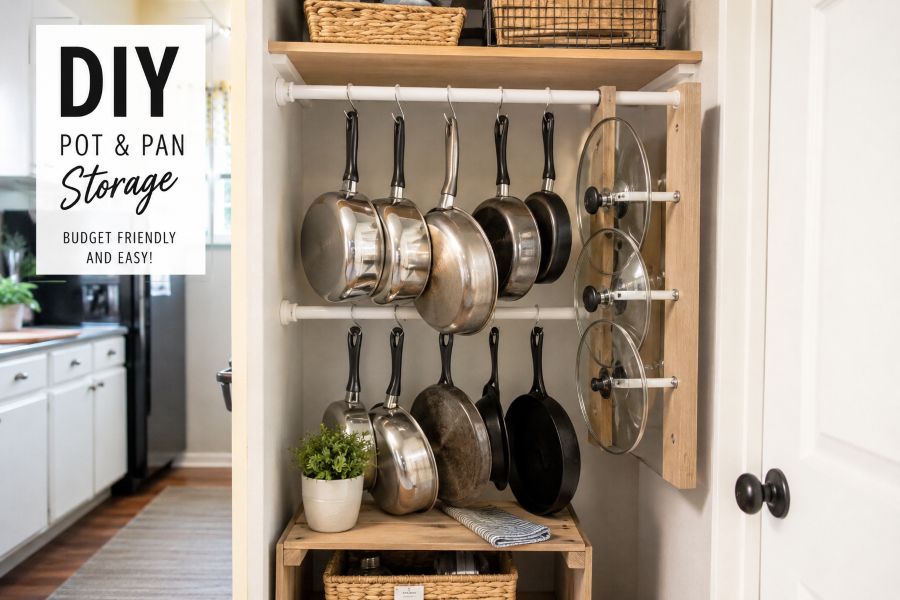
Money-Saving Organization Strategies
Tension rods cost just a few dollars but transform cabinets. Repurpose magazine holders or file organizers as pan dividers—they cost significantly less than purpose-built systems. Dollar stores often carry basic hooks, carabiners, and S-hooks at fraction-of-normal prices. Before investing in specialized organizers, explore what you can create or repurpose from items already available to you.
Thrift stores occasionally have vintage pot racks or kitchen organizers at minimal cost. Even if they need minor restoration, sourcing vintage finds is often cheaper than buying new. DIY wall mounting using simple hooks and your preferred rod (even a sturdy branch can work in rustic kitchens!) costs minimal money but requires more creativity than purchasing a pre-made system.
Cardboard box bottoms, fabric scraps, and folded newspaper create padding that silences noisy pans without purchasing commercial shelf liners. Egg cartons separate and organize lids. Mason jars store small utensils that would otherwise clutter your cookware area. The most effective small-space organization often comes from resourcefulness rather than spending power.
FAQ: How to Organize Pots and Pans in a Small Kitchen
What is the best way to store pots and pans in a small kitchen?
The best storage method depends on your kitchen layout and available space. Vertical storage using wall-mounted racks, hanging systems, or over-the-door organizers maximizes cabinet space. If you have limited wall space, use stackable pans with separators, tension rods inside cabinets, or under-sink storage systems. Choose the method that keeps your most-used cookware accessible while maintaining the visual cleanliness of your small kitchen.
How can I organize pans so they don’t make noise?
Add soft padding between pans using felt pads, foam sheets, or silicone mats to reduce clanking. Tension rods inside cabinets keep pans separated and prevent them from sliding. Silicone or felt-lined shelves absorb impact and reduce noise. If hanging pans on walls, use protective hooks with rubber coating. Keeping pans organized in designated spaces prevents them from shifting and making noise during opening and closing.
Should I store pots and pans in cabinets or hang them?
Both methods work; choose based on your kitchen’s design and personal preference. Hanging pots and pans on walls maximizes cabinet space for other items and keeps frequently used cookware accessible. Storing in cabinets maintains a cleaner aesthetic and keeps dust off your cookware. Small kitchens benefit from combination approaches: hang a few frequently used pans on walls while storing seasonal or specialty cookware in cabinets.
How do I prevent pots and pans from taking over my small kitchen?
Regularly audit your cookware collection and donate or sell unused pieces. Invest in versatile pieces that serve multiple purposes, reducing the total quantity needed. Use stackable cookware systems specifically designed for small spaces. Establish a ‘one in, one out’ rule—when you buy new cookware, remove an old piece. Keep only the essentials in your small kitchen and store seasonal items elsewhere. Maintain your organization system consistently to prevent clutter from accumulating.
Transform Your Small Kitchen: Start Your Cookware Organization Today
Cookware organization is one of those projects that delivers immediate, visible results. Unlike many organizational tasks that take weeks to complete, you can transform your pot and pan storage in a single afternoon. The effort you invest now pays dividends every time you cook—no more digging through stacked pans searching for a specific size, no more mysterious clanking when you open a cabinet, no more feeling frustrated by wasted kitchen space.
Begin with an honest assessment of your current situation and your kitchen’s unique constraints. Not every solution works in every kitchen, and the most successful organization matches both your space and your lifestyle. If you cook daily with ten different pans, your organization needs differ from someone who primarily uses three favorite cookware pieces. If you entertain frequently and use specialty equipment, your storage strategy should prioritize accessibility to that equipment. Design your system around how you actually use your kitchen, not how you think you should use it.
Small kitchens aren’t curses—they’re opportunities to think creatively about storage, to invest in quality cookware you actually use, and to maintain systems that consistently serve you well. Start with one organization method, experience how it transforms your cooking experience, and expand from there. Your small kitchen can be organized, functional, and genuinely enjoyable to cook in. The only requirement is implementing a system that matches your space and committing to maintaining it consistently.
ADeL A.A
ADeL A.A is a home décor and space optimization writer who believes every square foot matters. He spends his time researching, testing, and comparing smart storage ideas, multi-functional furniture, and practical layout solutions — always searching for the best ways to make compact homes feel bigger, brighter, and better organized.
View all articles by ADeL A.A →