How to Make a Small Bedroom Look Bigger: Design Tricks That Actually Work

A small bedroom doesn’t have to feel like a cramped box. With strategic design choices, smart furniture selection, and clever use of light and space, even the tiniest bedroom can feel surprisingly spacious and inviting. The secret isn’t adding more square footage—it’s using psychological design principles and visual tricks to make your brain perceive the space as larger than it actually is.
Whether you’re dealing with a bedroom that’s barely 100 square feet or you’re simply trying to maximize a compact master suite, this comprehensive guide reveals the professional design secrets that interior designers use to transform small bedrooms into rooms that feel open, airy, and thoroughly livable. Many of these tricks cost nothing but require understanding how color, light, furniture placement, and storage work together to create an expanded sense of space.
Understanding Color Psychology for Spaciousness
Color is perhaps the most powerful tool in your small bedroom arsenal. Before you paint, hang wallpaper, or commit to any large design changes, understanding how colors impact spatial perception is essential. The color of your walls, bedding, and furnishings directly influences whether your room feels cozy or cramped.
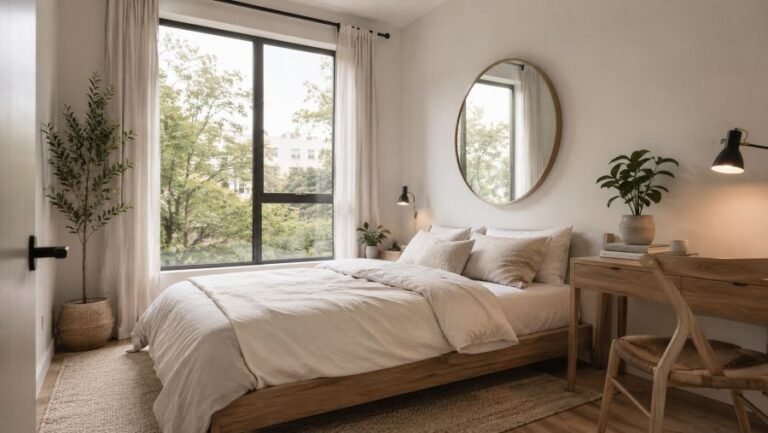
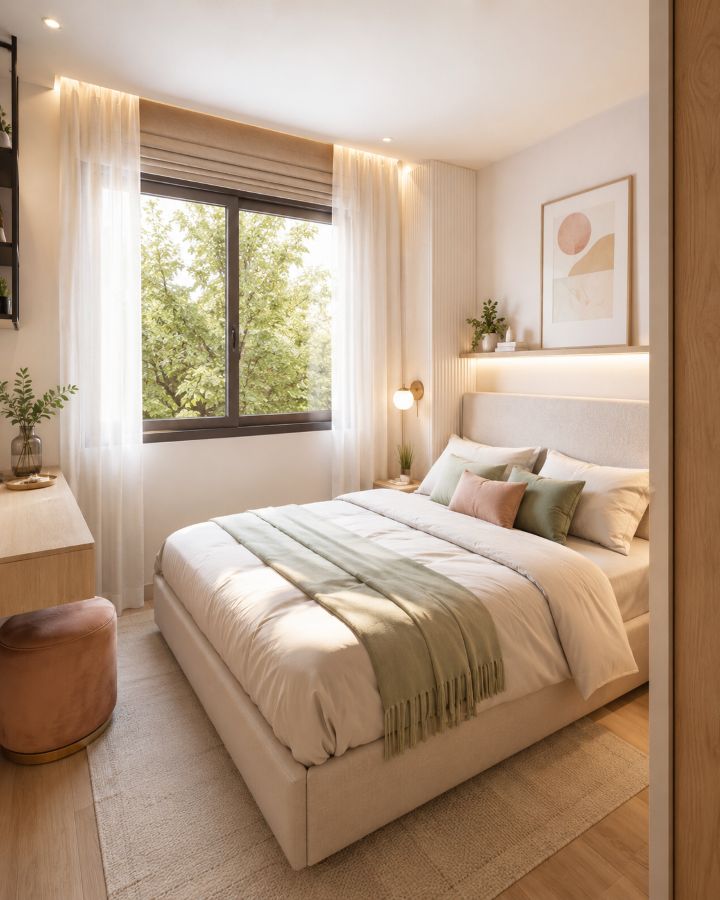
Light, neutral colors are the foundation of any small-space bedroom design. White, cream, pale gray, soft beige, and warm taupe all recede visually, making walls feel farther away than they actually are. These colors also reflect light naturally, creating brightness that makes spaces feel more open. The psychological effect is real—rooms painted in light colors consistently feel larger than identically-sized rooms painted in dark colors, even when all other factors remain constant.
However, choosing light colors doesn’t mean your bedroom needs to feel sterile or boring. The richness comes from texture, layering, and strategic pops of color. A bedroom painted in creamy white feels entirely different than one painted in pure white, thanks to subtle undertones. Adding depth through textured linens, patterned pillows, or artwork prevents the space from feeling flat. The key is using color intentionally: dominate with light neutrals, then accent with colors you love through easily changeable elements like bedding, artwork, and accessories.
Strategic Lighting Techniques That Expand Your Space
After color, lighting is the next critical factor in making your small bedroom feel larger. The right lighting strategy can transform a dark, cramped room into one that feels open and inviting. Most small bedrooms suffer from poor lighting—either too-bright overhead fixtures that feel harsh or insufficient ambient light that makes the room feel smaller and more enclosed.
Layering Light Sources for Depth
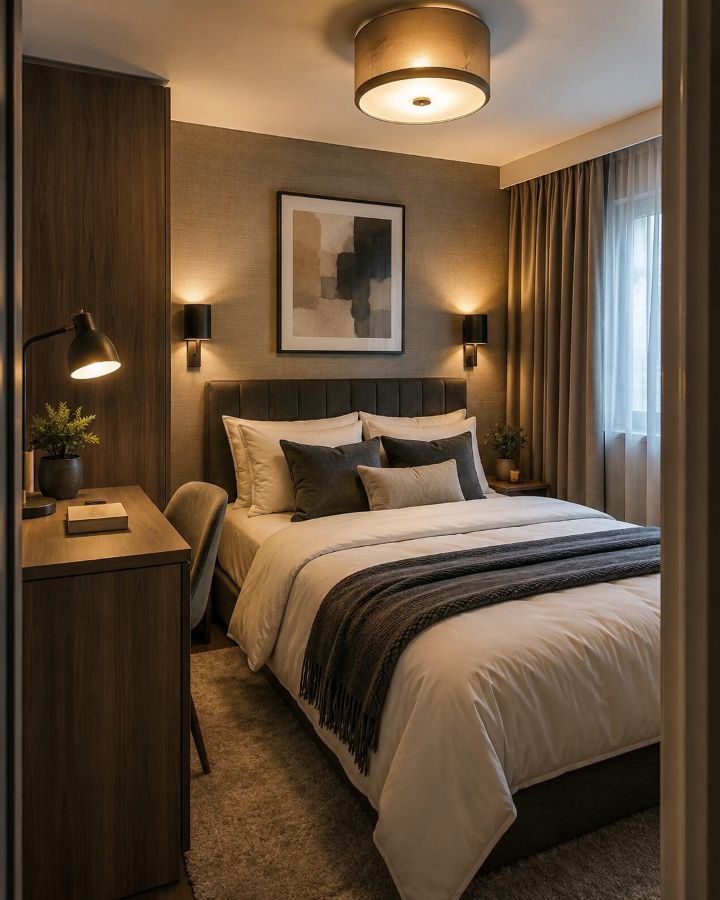
- Ambient lighting: Start with soft, diffused overhead lighting or a ceiling fixture that distributes light evenly throughout the room. Avoid harsh recessed lighting that creates shadows and can make spaces feel smaller. If your room has a bright overhead light, consider replacing it with a softer option or adding a dimmer switch for more control.
- Task lighting: Bedside lamps, desk lamps, or reading lights serve practical purposes while creating visual interest. They draw light to specific areas, making the room feel more dimensionally complex rather than one flat, lit plane. Wall-mounted reading lights save nightstand space—a valuable consideration in small bedrooms.
- Accent lighting: String lights, LED strips behind headboards, or small uplights create depth and visual interest. Strategic accent lighting draws the eye around the room rather than letting it get stuck on walls, making the space feel more expansive. This is where personality shines through without compromising the spacious feel.
- Natural light optimization: Maximize natural light by choosing sheer or light-filtering window treatments that allow sunlight to flood in. Natural light is the ultimate space-expander—it creates brightness and eliminates the feeling of enclosure that artificial light can create. If privacy is a concern, layer sheer curtains with roller shades or opt for light-diffusing fabrics.
The Furniture Arrangement Magic That Changes Everything
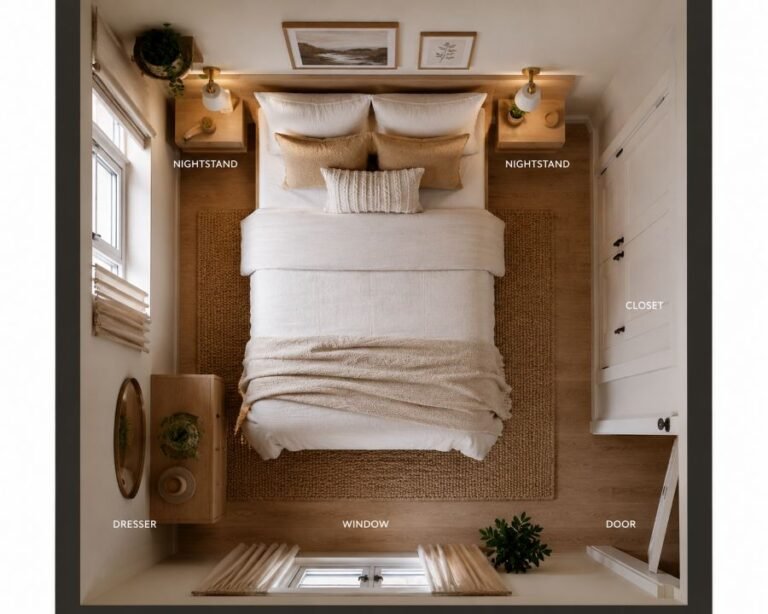
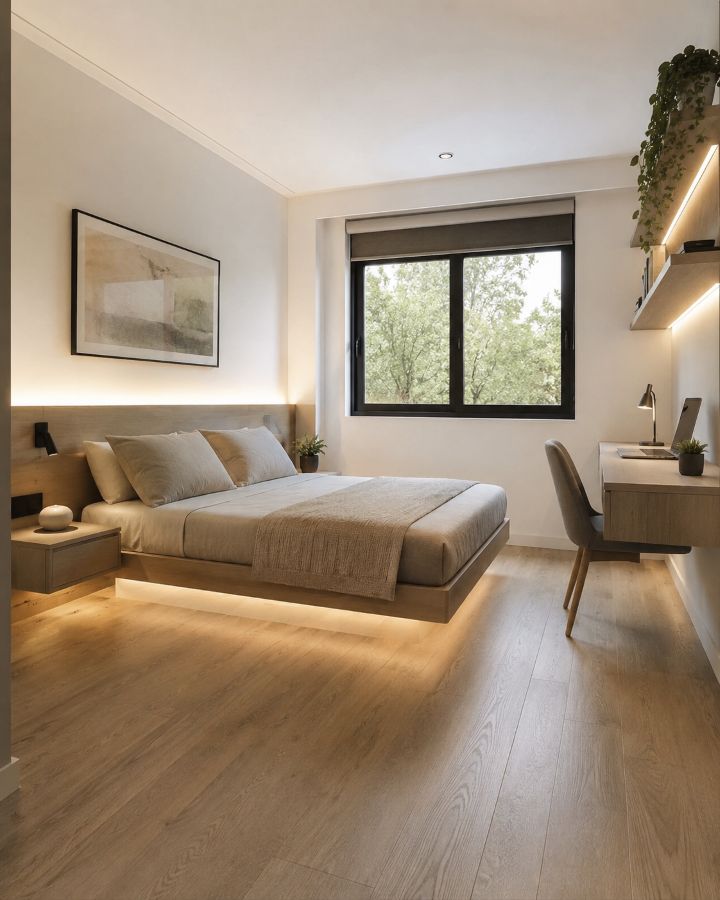
How you arrange furniture in a small bedroom dramatically impacts how spacious the room feels. Many people make the mistake of pushing all furniture against walls, thinking this opens up the room. In reality, floating furniture strategically can make a bedroom feel larger by defining zones and creating visual flow.
Selecting Furniture for Small Spaces
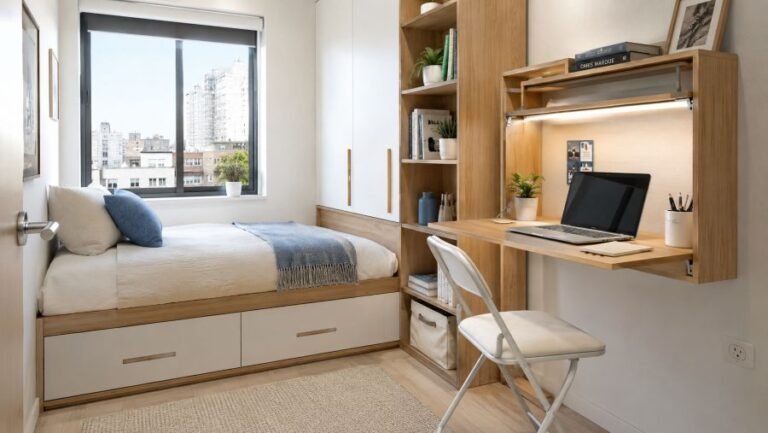
The most successful small bedrooms prioritize multi-functional furniture. A platform bed with built-in drawers eliminates the need for a separate dresser. A desk that doubles as a nightstand serves multiple purposes without overwhelming the room. Ottomans with internal storage provide seating, storage, and a surface—three functions from one piece.
Choose furniture with legs rather than solid bases. A nightstand with legs creates visual floor space underneath, making the room feel less heavy and cramped. This principle applies to all furniture—beds with frames showing daylight underneath, desks with open legs, and tables that aren’t skirted to the floor all contribute to a sense of spaciousness. Additionally, furniture in light colors or natural wood tones visually recedes, while dark, heavy furniture dominates the visual landscape.
Vertical furniture—tall shelving units or floor-to-ceiling bookcases—make ceilings feel higher without taking up precious floor space. The eye naturally follows vertical lines upward, creating the psychological illusion of higher ceilings and more vertical dimension. Just ensure the furniture doesn’t actually touch the ceiling; leaving a gap maintains the open feeling.
Mirror Magic and Reflective Surfaces
Mirrors are the secret weapon of interior designers working with small spaces. A strategically placed mirror can instantly make a bedroom feel significantly larger by reflecting light and creating the illusion of depth. A mirror opposite a window reflects natural light throughout the room, multiplying its brightening effect. Even a mirror opposite a lamp reflects that artificial light, spreading illumination that makes the space feel more open.
Smart Small Space Tip: Avoid placing mirrors directly behind the bed—this breaks the visual sight line that carries through the room. Instead, position mirrors on side walls or opposite windows. A large statement mirror in a corner creates depth without dominating the wall. Leaning mirrors against walls provide flexibility—you can adjust their angle to optimize light reflection as seasons and sunlight patterns change.
Bedroom Design Techniques: A Comparison Guide
| Design Technique | How It Expands Space | Cost & Complexity |
|---|---|---|
| Light Colors | Reflect light naturally and recede visually, making walls feel farther away | Moderate cost for paint; easy implementation via paint or textiles |
| Mirrors | Reflect light and create illusion of depth by doubling perceived space | Low to moderate cost; instant impact without installation complexity |
| Floating Furniture | Creates visual floor space and allows light to flow under pieces | No additional cost; requires rearrangement and understanding of spatial flow |
| Vertical Storage | Utilizes unused wall space and draws eye upward, making ceilings feel higher | Low to moderate cost; installation may vary by piece |
| Layered Lighting | Creates depth and visual interest; prevents flat, shadowless appearance | Moderate cost depending on fixtures; can be implemented gradually |
| Minimal Window Treatments | Maximizes natural light entry and prevents walls from feeling heavy | Low cost for light curtains or shades; easy to change seasonally |
Smart Storage Solutions That Don’t Overwhelm
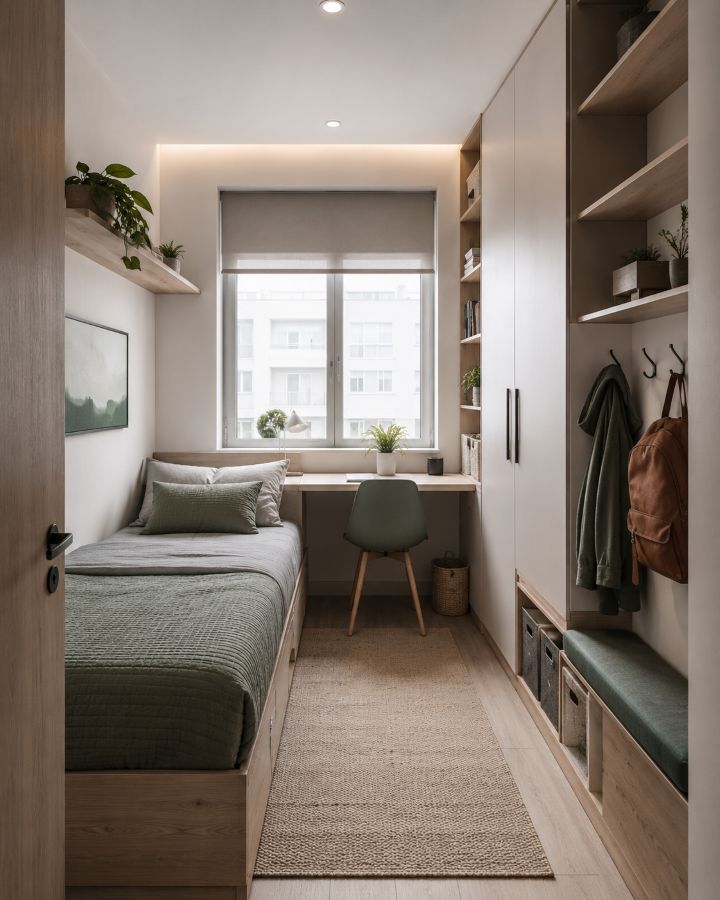
Storage challenges plague small bedrooms. The solution isn’t hiding everything away in massive closet systems that make the room feel chaotic. Instead, strategic, intentional storage using vertical space, multi-functional furniture, and organizational systems keeps the room visually calm while accommodating your possessions.
Implementation Strategies
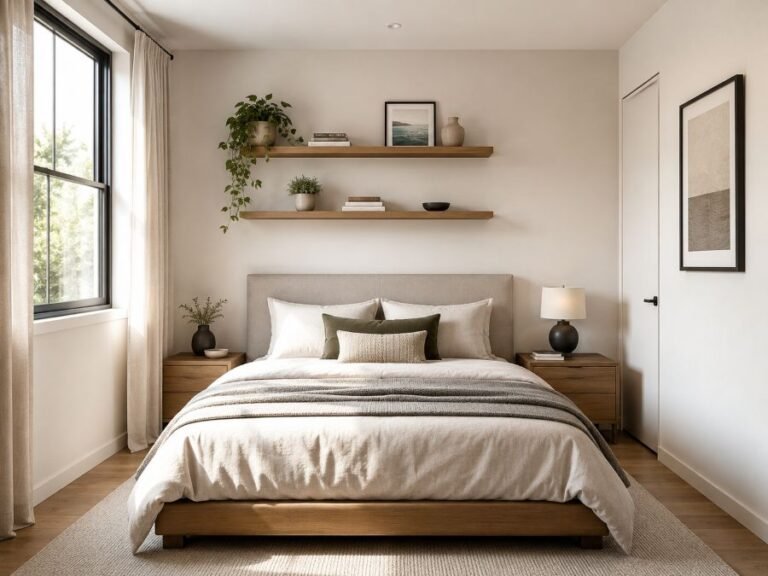
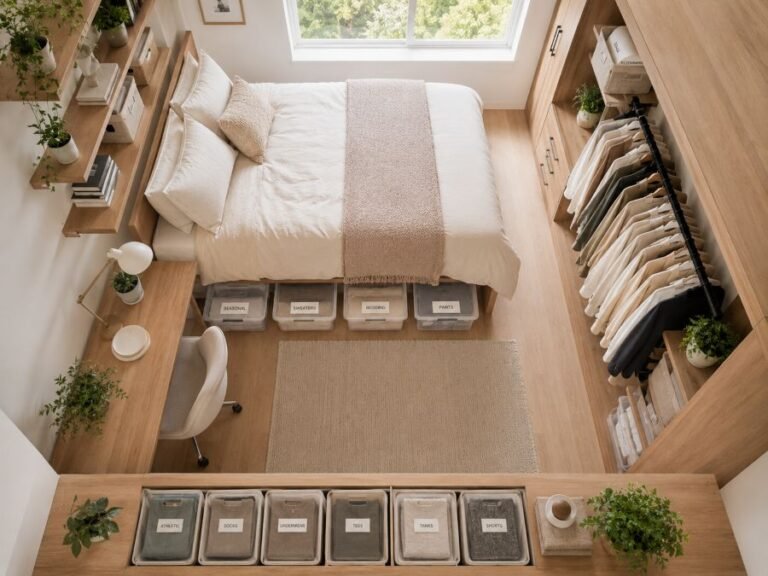
Wall-mounted shelving keeps the floor clear, making the room feel more spacious. Floating shelves above a desk or vanity provide storage without the visual weight of freestanding furniture. Under-bed storage containers hold seasonal items, extra bedding, or off-season clothing without cluttering the bedroom. The psychological benefit of hidden storage is significant—out of sight truly means more visual spaciousness.
Closet organization is crucial in small bedrooms. A well-organized closet can expand your perceived storage by 25-40% through strategic use of vertical space, shelf dividers, and hanging solutions. By maximizing closet space, you reduce the need for bedroom furniture dedicated to storage, leaving more floor space for movement and genuine functionality.
Vertical Space Optimization for Maximum Impact
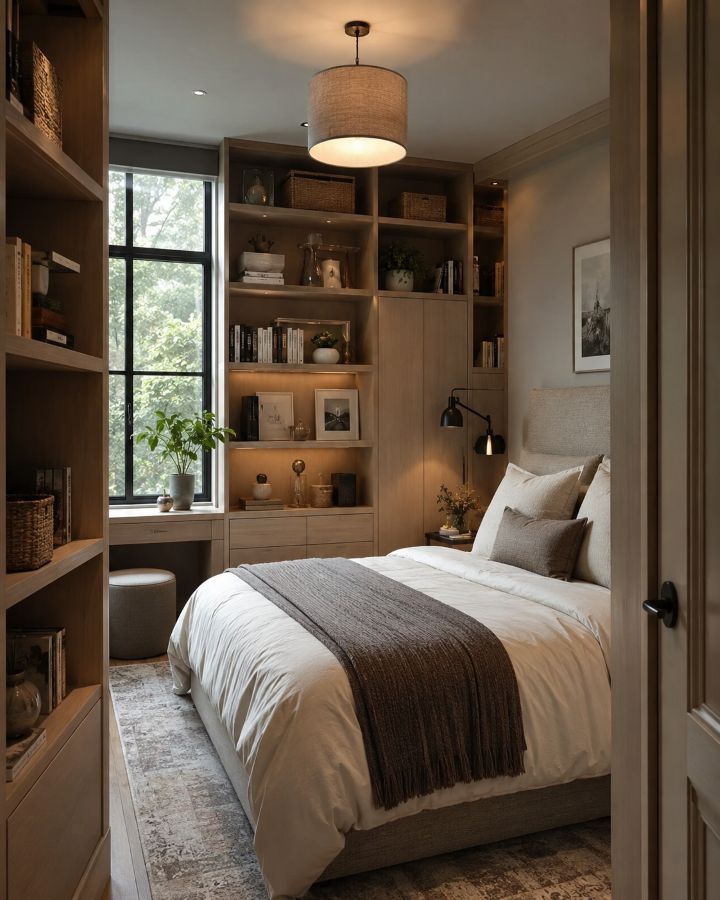
Most small bedroom owners underutilize their walls. Vertical space is prime real estate that costs nothing to access but dramatically changes your room’s functionality and perceived size. A wall 8 feet high represents over 80 square feet of potential storage or display space—that’s like adding a small closet to your room without losing any floor space.
Vertical Design Implementation
Floor-to-ceiling bookcases or open shelving draw the eye upward, making ceilings feel higher. Tall, narrow furniture (think vertical rather than horizontal) occupies less floor space while providing significant storage. Hanging storage—hooks, pegboards, or hanging organizers—keeps items accessible while off the floor. Wall art arranged vertically (creating a gallery wall from low to high) draws the eye upward and makes walls feel taller.
The key to successful vertical space utilization is maintaining organization. Overcrowded shelves or cluttered wall arrangements defeat the purpose. Curated collections, thoughtfully spaced art, and organized storage systems turn your walls into assets rather than visual chaos.
Minimalist Design Principles for Small Bedrooms
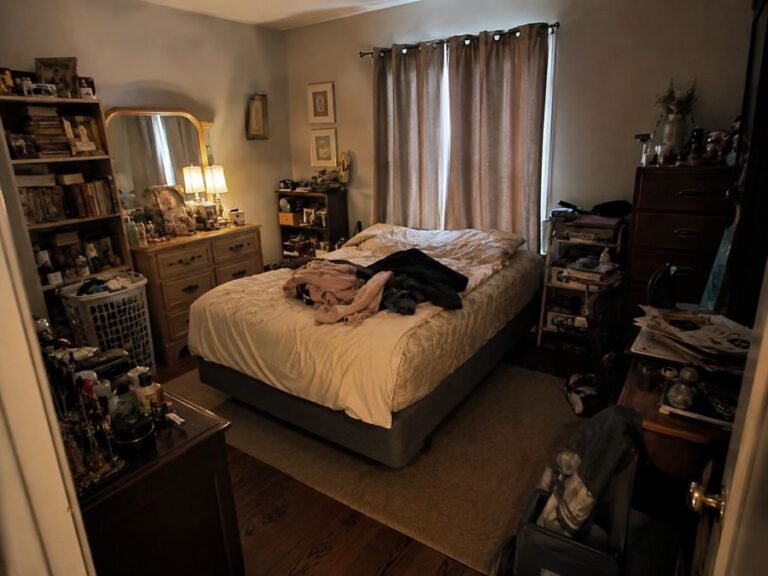
Minimalism in small bedrooms doesn’t mean empty and cold. Instead, it means intentionality—keeping only items that serve a function or bring genuine joy, arranging them thoughtfully, and maintaining visual calm. A cluttered small bedroom feels smaller; a curated small bedroom feels purposeful and spacious.
This doesn’t require extreme decluttering. Instead, focus on removing items that don’t actively contribute to your life: the decorative items that dust but don’t delight, the books you won’t reread, the furniture that doesn’t serve a purpose. Once you’ve ruthlessly edited your belongings, the remaining items have space to breathe, and your bedroom naturally feels larger.
Bringing It All Together: The Complete Small Bedroom Design System
The most successful small bedroom transformations don’t rely on a single trick—they layer multiple techniques to create a cohesive, spacious-feeling room. Start by painting walls in light, neutral colors. Layer your lighting with ambient, task, and accent options. Select multi-functional furniture with legs or floating possibilities. Position a large mirror opposite a window or across from your main sitting area. Maximize vertical space with storage that’s organized and intentional. The sum of these choices creates a bedroom that feels significantly larger than its square footage suggests.
Small bedrooms present unique design challenges, but they also inspire creativity and intentionality that larger spaces sometimes lack. By implementing even three or four of these design strategies, you’ll notice an immediate difference in how your room feels. Start with the techniques that require minimal investment (rearranging furniture, adding a mirror, optimizing lighting), experience the transformation, then consider implementing additional changes like paint or storage solutions.
FAQ: Making Small Bedrooms Look Bigger
What colors make a small bedroom look bigger?
Light, neutral colors like white, cream, pale gray, and soft beige create the illusion of spaciousness because they reflect light and don’t visually crowd the room. These colors also recede visually, making walls feel farther away. You can add pops of color through accessories that are easy to change if you want to refresh your design later without compromising the spacious feeling.
How do mirrors help small bedrooms appear larger?
Mirrors reflect light and create the illusion of depth by ‘doubling’ your perceived space. A large mirror opposite a window reflects natural light around the room, brightening it significantly. Even smaller mirrors placed strategically can make a space feel more open. Avoid placing mirrors directly behind the bed; instead, position them on side walls or opposite windows for maximum effect and psychological impact.
What furniture should I avoid in a small bedroom?
Avoid oversized, heavy furniture with dark colors and ornate designs. Large dressers, bulky nightstands, and bed frames with excessive storage underneath can make a room feel cramped. Instead, choose furniture with legs (which creates visual floor space), multipurpose pieces that serve multiple functions, and items in light colors or natural wood tones that don’t visually dominate the space.
Can vertical storage really save space in a small bedroom?
Yes, absolutely. Vertical storage utilizes wall space that would otherwise go unused, keeping the floor clear and the room feeling more open. Wall-mounted shelves, tall bookcases, and hanging organizers draw the eye upward, making ceilings feel higher. The key is keeping vertical storage organized and uncluttered—overcrowded shelves defeat the purpose of space-saving design.
Your Small Bedroom Transformation Starts Now
A small bedroom can feel large, luxurious, and thoroughly livable when you apply intentional design strategies. You don’t need a large budget or professional help—you need understanding of how light, color, furniture, and space psychology work together. Start today by evaluating your bedroom through the lens of these design principles. Notice which areas feel cramped or dark, then apply the relevant solutions from this guide.
The transformation happens gradually. Each change—a new paint color, a strategically placed mirror, rearranged furniture, or optimized lighting—builds on the others, creating cumulative impact. Within weeks, you’ll look around your bedroom and be amazed at how much larger it feels. Small bedrooms aren’t limitations; they’re opportunities to create thoughtfully designed, functional spaces that feel surprisingly spacious through smart design choices.
ADeL A.A
ADeL A.A is a home décor and space optimization writer who believes every square foot matters. He spends his time researching, testing, and comparing smart storage ideas, multi-functional furniture, and practical layout solutions — always searching for the best ways to make compact homes feel bigger, brighter, and better organized.
View all articles by ADeL A.A →