How to Declutter Clothes in a Small Closet: Complete Guide

A small closet doesn’t have to feel suffocating. Whether you’re living in a tiny studio apartment, a cozy one-bedroom, or simply blessed with limited closet space, the key to making your wardrobe work isn’t acquiring more space—it’s being intentional about what stays. Decluttering clothes in a small closet is one of the most transformative projects you can tackle, and it doesn’t require expensive storage solutions or professional organizers.
In this comprehensive guide, we’ll walk you through proven decluttering strategies, from the popular KonMari method to building a capsule wardrobe that actually fits your lifestyle. By the end, you’ll have a closet that feels spacious, organized, and filled with clothes you genuinely love wearing.
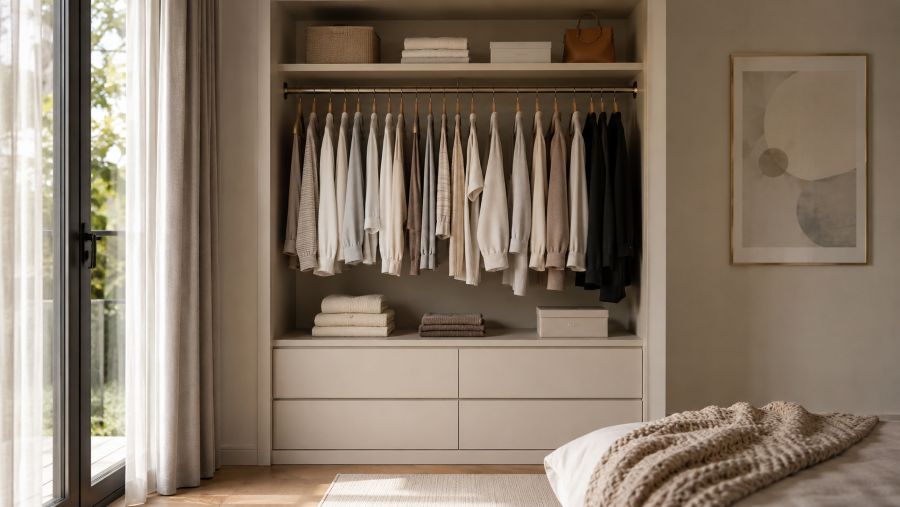
When you’re staring at overflowing hangers, cramped shelves, and that pile of “maybe I’ll wear this someday” clothes on the chair, it’s easy to feel paralyzed. The small space makes the problem feel more acute. But here’s the truth: small closets are actually ideal for decluttering because the limited capacity forces you to make meaningful decisions. You can’t ignore the mess or keep pushing it to the back. Instead, you get the opportunity to create a curated wardrobe that’s both functional and beautiful.
Why Small Closets Require Strategic Decluttering
Large closets have a hidden danger: they enable hoarding. You can keep that barely-worn blazer from five years ago because “there’s room.” You can hold onto five different pairs of black pants because nothing feels truly full. Small closets, by contrast, force confrontation with every single piece you own. This is actually a gift.
When square footage is limited, every item must earn its place. This natural constraint becomes your accountability system. The small closet isn’t the problem—it’s the solution. By accepting the physical limitation and working within it intentionally, you create a wardrobe that serves you actively rather than passively taking up space.
Beyond functionality, a decluttered small closet offers psychological benefits. Every morning, you open your closet and see only clothes you love wearing. There’s no visual clutter creating decision fatigue. Getting dressed becomes simpler, faster, and more joyful. Studies show that visual clutter in our immediate environment increases stress and reduces focus—so a clean, curated closet actually improves your daily mental state.
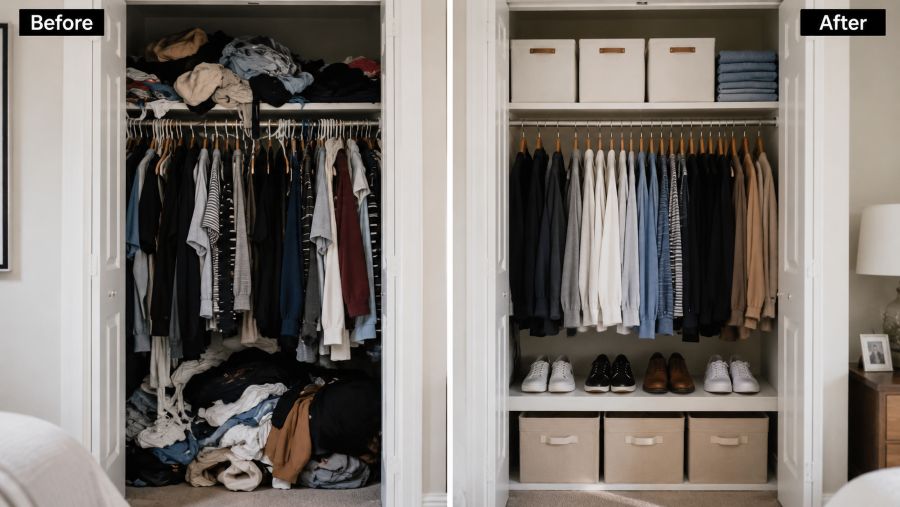
The KonMari Method: Sparking Joy in Your Wardrobe
Marie Kondo’s revolutionary KonMari method has helped millions declutter their homes, and it’s particularly effective for small closets. Unlike traditional “keep or donate” sorting, the KonMari method centers on one simple question: “Does this spark joy?”
The KonMari Process Step-by-Step
- Gather everything: Before you can decide what sparks joy, you need to see everything you own. Remove every single piece of clothing from your closet, shelves, drawers, and storage boxes. Yes, everything. This comprehensive view prevents the mental trick of forgetting about pieces stored elsewhere.
- Hold and evaluate: Pick up each item and hold it in your hands. Notice how it feels. Does it make you smile? Do you envision yourself wearing it soon? Does it align with your current lifestyle? These feelings matter more than logical reasons like “it was expensive” or “I might need it eventually.”
- Make decisive choices: For each piece, you’re making a binary decision: keep or thank-and-release. Avoid the wishy-washy middle ground. If you’re on the fence, that’s usually a sign it doesn’t truly spark joy. The item stays only if it gets a clear “yes.”
- Organize thoughtfully: For keepers, organize by category and color. Kondo recommends folding clothes so you can see everything at once without stacking—this prevents the “out of sight, out of mind” phenomenon that makes people forget they own something.
Smart Small Space Tip: The KonMari method works beautifully for small closets because it shifts your mindset from “I need more space” to “I need less stuff.” Most people find they can fit their joy-sparking clothes easily once they’ve eliminated items that don’t truly serve them. This often means you can downsize storage solutions or reorganize to be more efficient.
Building Your Capsule Wardrobe for Small Spaces
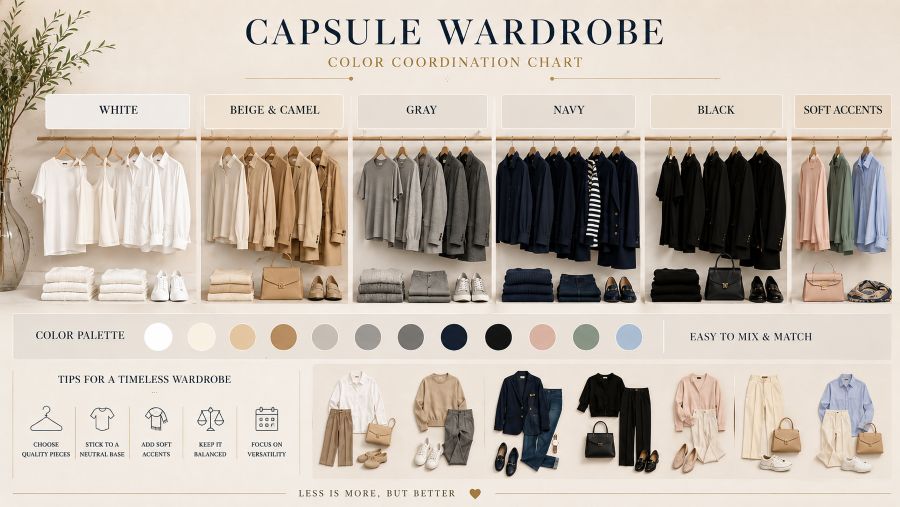
A capsule wardrobe is a curated collection of versatile, interchangeable pieces that work together to create multiple outfits. For small closets, this approach is transformative because you’re intentionally limiting quantity while maximizing outfit combinations.
Components of an Effective Capsule Wardrobe
- Neutral basics (6-8 pieces): Think white t-shirts, black pants, neutral sweaters, basic tank tops, and classic jeans. These form the foundation and mix with everything else.
- Workwear essentials (4-6 pieces): Depending on your job, include blazers, professional pants, button-ups, or dresses that meet workplace standards.
- Casual everyday wear (6-8 pieces): Comfortable clothes for weekends and downtime—think casual pants, comfortable sweaters, and laid-back tops.
- Accent pieces (3-5 pieces): These inject personality into your capsule. A colorful scarf, patterned blouse, or interesting sweater lets you express style while keeping the majority neutral.
- Layering pieces (3-4 pieces): Cardigans, jackets, and blazers extend your wardrobe’s versatility and accommodate different seasons and temperatures.
- Footwear (4-6 pairs): Aim for shoes that work with multiple outfits: daily sneakers, professional shoes, casual flats or loafers, and perhaps one dressier pair.
The Four-Box Decluttering System
When you’re ready to sort through your small closet, having a system prevents decision paralysis. The four-box method gives you clear categories and reduces the cognitive load of sorting.
| Box Category | What Goes Here | Next Action |
|---|---|---|
| Keep | Items that spark joy, fit well, and you wear regularly or plan to wear soon | Return to closet with new organization system |
| Donate | Clothes in good condition that don’t serve you but could help someone else | Take to local charities, shelters, or community organizations |
| Sell | Higher-quality, newer, or designer items with resale value | List online (Poshmark, Depop, Vinted) or take to consignment shops |
| Recycle/Discard | Stained, torn, or damaged items beyond reasonable repair | Take to textile recycling programs or dispose properly |
Setting up these four boxes creates immediate clarity. You’re not making vague decisions—you’re directing each item toward a specific, constructive outcome. This specificity helps you move more decisively through the process.
Strategic Organizing for Maximum Small-Space Efficiency
Once you’ve decluttered, organization determines whether your small closet stays functional or devolves back into chaos. Strategic organization in limited space means every cubic inch counts.
Vertical Storage Solutions
Small closets mean looking up is as important as looking across. Install additional shelves above existing ones, use tall shelving units, or add a second hanging rod at different heights. Vertical real estate is often underutilized in small closets, yet it offers significant storage capacity without increasing floor footprint.
Categorization and Color Coordination
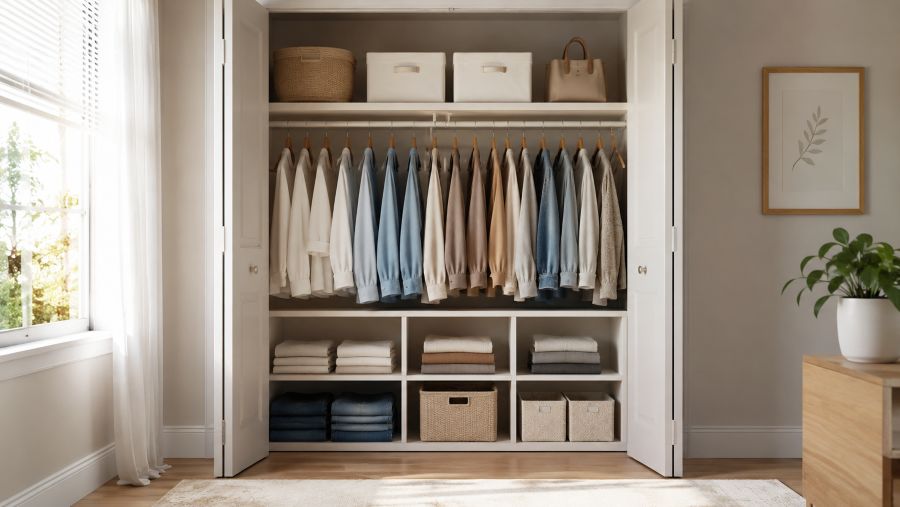
Organize clothes by category first (work clothes, casual wear, activewear, dresses), then by color within each category. This dual organization system means you can quickly find what you need while the visual color gradient makes the closet feel more organized and intentional. Many people find this system also helps them see when they have duplicate items or gaps in their wardrobe.
The Fold vs. Hang Decision
Not everything should hang. Sweaters, t-shirts, and delicate knits stay better folded and risk stretching if hung. Kondo-style folding, where clothes stand upright in shelves, maximizes visibility and saves hanging space for pieces that genuinely benefit from it, like blazers, pants, and dresses.
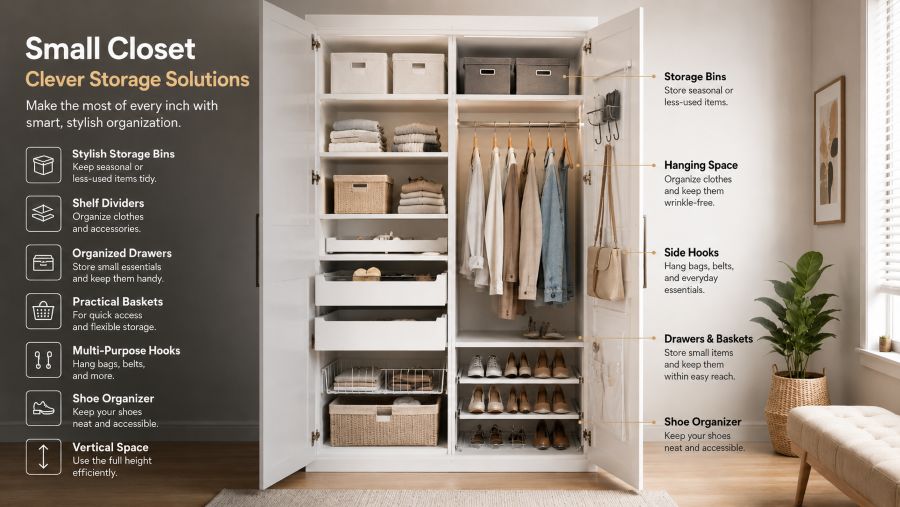
Smart Small Space Tip: Use shelf dividers to create compartments for folded items. This prevents the leaning-tower-of-sweaters situation where removing one item causes an avalanche. The same principle applies to drawer dividers for folded items stored in drawers or storage boxes.
Seasonal Rotation for Year-Round Organization
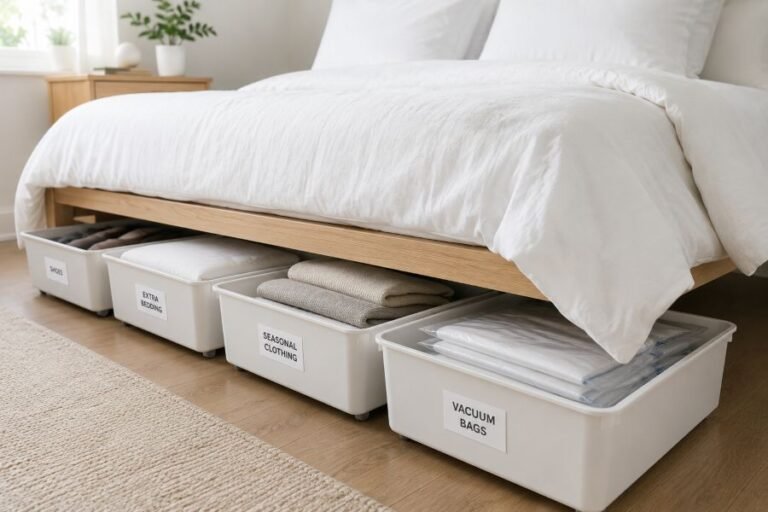
Even in a small closet, seasonal rotation is possible and effective. Rather than trying to fit summer and winter wardrobes simultaneously, consider storing off-season items in another location—under a bed, in an ottoman, in a storage box in a closet elsewhere in your home.
This rotation system achieves multiple benefits at once. Your active closet contains only clothes relevant to the current season, reducing decision fatigue and making it easy to see what you actually wear. Your small closet feels less cramped because you’re only maintaining 50-60% of your yearly wardrobe in there at any time. And your less frequently accessed items stay protected and out of the way.
Mark the date on storage containers and swap items seasonally. This also presents opportunities to reassess items during each transition—did you actually miss anything you packed away? If not, it might deserve another evaluation.
Addressing Common Small-Closet Decluttering Challenges
Challenge: “But I Might Wear It Someday”
This is the most common refrain in closets everywhere. The word “might” is the problem. If you haven’t worn something in a year and aren’t training for a new career or size change, “someday” isn’t coming. Set a realistic timeframe—usually 12-18 months—and let items go if they haven’t been worn. Keep only items you’re actively choosing, not items you’re hoping your future self will become.
Challenge: Designer Items and Expensive Purchases
Expensive clothes can create guilt that prevents letting them go. Remind yourself: the money is already spent. Keeping an unworn item doesn’t recover that cost—wearing it, donating it, or selling it are your only options. If you’re not wearing it, at least let someone else benefit from it or use that money from a resale to invest in pieces you actually love.
Challenge: Sentimental Clothing
Clothes with emotional value deserve consideration. But there’s a difference between one or two meaningful pieces and a closet full of items you keep for sentimental reasons. Choose one or two truly special pieces to keep—perhaps your grandmother’s jacket or your college sweatshirt. Then photograph and let go of the rest. You preserve the memory without sacrificing functional closet space.
FAQ: Decluttering Clothes in Small Closets
How long does it take to declutter a small closet?
Decluttering a small closet typically takes 4-8 hours depending on how many clothes you have and how decisively you can let items go. Breaking the process into multiple sessions—perhaps an hour or two each evening—can make it less overwhelming while maintaining momentum. Setting a timer can help you focus without burnout.
What’s the best method for organizing a small closet?
The KonMari method and capsule wardrobe approach both work exceptionally well for small closets because they focus on quality over quantity. Combine these with practical organization (vertical storage, categorization by type and color, and strategic folding) to create a system that’s both beautiful and functional.
How many clothes should I realistically keep in a small closet?
A practical guideline for small closets is 30-50 versatile pieces that mix and match well. This might break down to roughly 8-10 neutral basics, 6-8 casual pieces, 4-6 professional or work items, 3-5 accent pieces, 3-4 layering items, and 4-6 pairs of shoes. Quality matters more than quantity.
Should I donate or sell unwanted clothes?
Selling designer or newer items online through platforms like Poshmark or Depop can generate income, while donating to local charities offers tax deductions and helps those in need. Choose based on the items’ value, your energy for listing them, and your values. Both options are better than the items sitting unused in your closet.
Maintaining Your Newly Decluttered Closet
The real challenge isn’t the initial decluttering—it’s maintaining it. After all that work, the last thing you want is to slip back into old habits within three months.
Establish a one-in-one-out rule: whenever you bring a new piece into your closet, something else leaves. This maintains your carefully calibrated wardrobe size and forces intentionality about new purchases. Before buying something, ask whether it genuinely serves your existing wardrobe or whether it’s an impulse.
Schedule quarterly closet check-ins—perhaps when transitioning between seasons. These brief 30-minute reviews catch items that aren’t serving you before they accumulate again. It’s far easier to remove two or three pieces that didn’t work out than to overhaul an entire closet again.
Conclusion: Embrace Your Small Closet as an Asset
A small closet isn’t a limitation to lament—it’s an advantage to leverage. The constrained space forces you to be intentional about what you own, which inevitably leads to a more functional, beautiful wardrobe. By working through your clothes thoughtfully, applying decluttering principles like the KonMari method, building a capsule wardrobe, and maintaining strategic organization, you transform your small closet from a source of stress into a source of satisfaction.
Every time you open that closet and see only pieces you love, organized beautifully and accessible easily, you’ll remember why this work was worthwhile. Your small closet doesn’t need to be bigger—it just needs to be smarter. And now you know exactly how to make that happen.
ADeL A.A
ADeL A.A is a home décor and space optimization writer who believes every square foot matters. He spends his time researching, testing, and comparing smart storage ideas, multi-functional furniture, and practical layout solutions — always searching for the best ways to make compact homes feel bigger, brighter, and better organized.
View all articles by ADeL A.A →