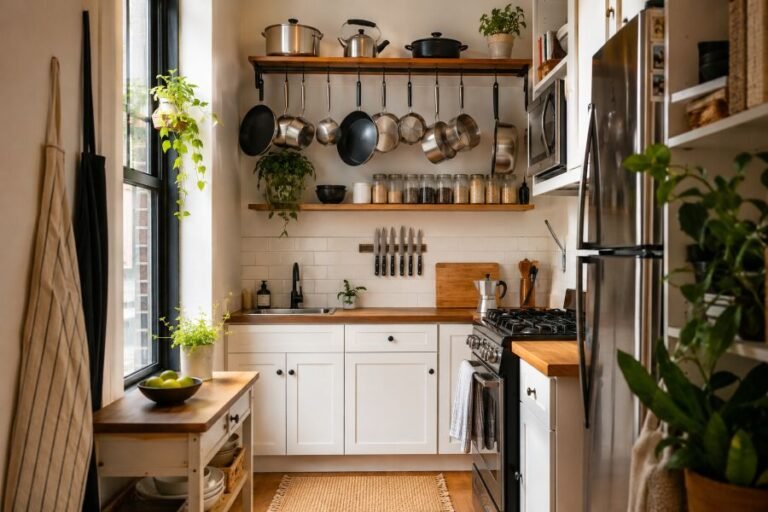
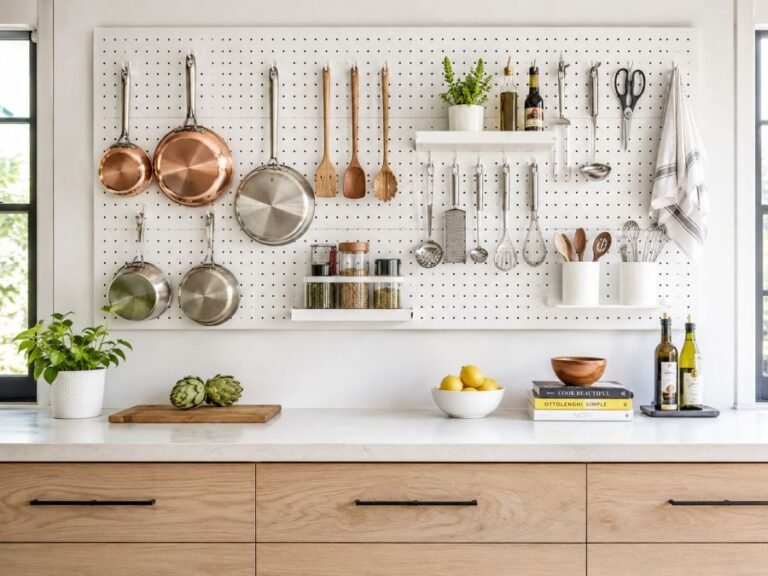
Small Kitchen Shelf Ideas for Extra Storage

Small kitchens demand smart storage solutions that maximize every available inch without sacrificing style or functionality. Unlike spacious kitchens with room for expansive cabinetry and pantries, compact cooking spaces require strategic vertical thinking—and shelves are your secret weapon.
In this comprehensive guide, we’ll explore proven small kitchen shelf ideas that transform walls into valuable storage real estate, discover how to choose the right shelving system, learn organization strategies that prevent clutter, and explore creative ways to combine storage with beautiful design. Whether you’re working with a galley kitchen, studio apartment, or simply limited counter space, these shelf solutions will help you maximize storage while enhancing your kitchen’s aesthetic appeal.
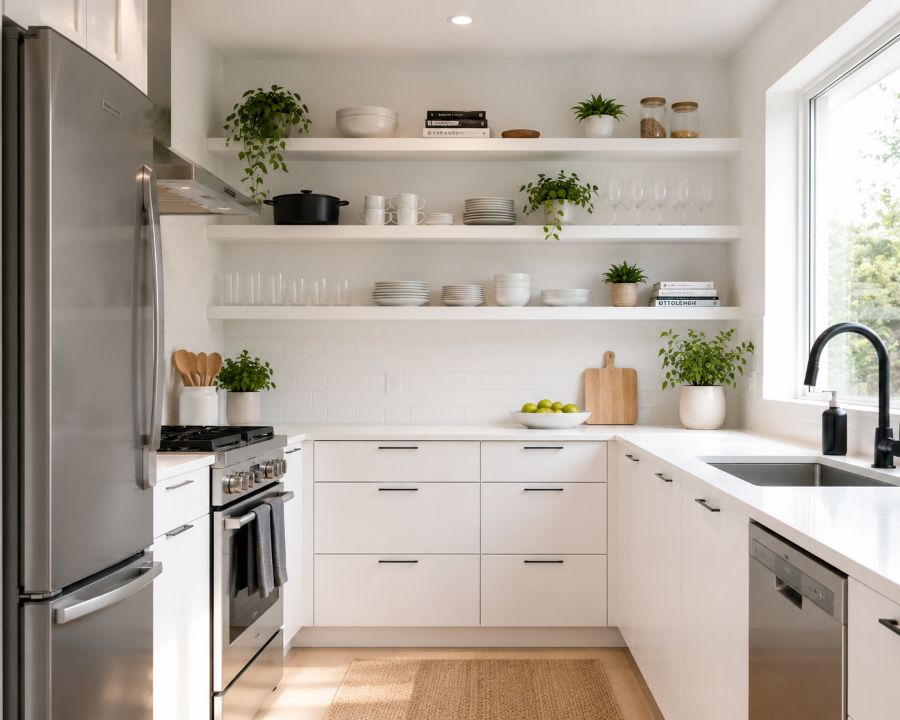
Why Shelves Are Essential in Small Kitchens
Small kitchens face unique storage challenges. Traditional cabinets often consume excessive wall space, countertops fill quickly with essential appliances and tools, and finding room for everyday items becomes increasingly difficult. Shelves offer a compelling alternative—or complement—to standard cabinetry.
Open shelving provides several advantages in compact kitchens. Visually, floating shelves create an airy feeling that makes kitchens appear larger and less confined. Practically, shelves provide immediate access to frequently used items without requiring you to dig through cabinets. Aesthetically, well-organized shelves become decorative elements that enhance your kitchen’s design rather than hide it. Additionally, installing shelves costs significantly less than custom cabinetry, making them ideal for budget-conscious homeowners seeking storage solutions.
Types of Kitchen Shelving Systems for Small Spaces
Not all shelves suit small kitchens equally. Understanding the different shelving options helps you select the system that best matches your kitchen’s layout, design aesthetic, and storage needs.
Floating Shelves: The Minimalist Choice
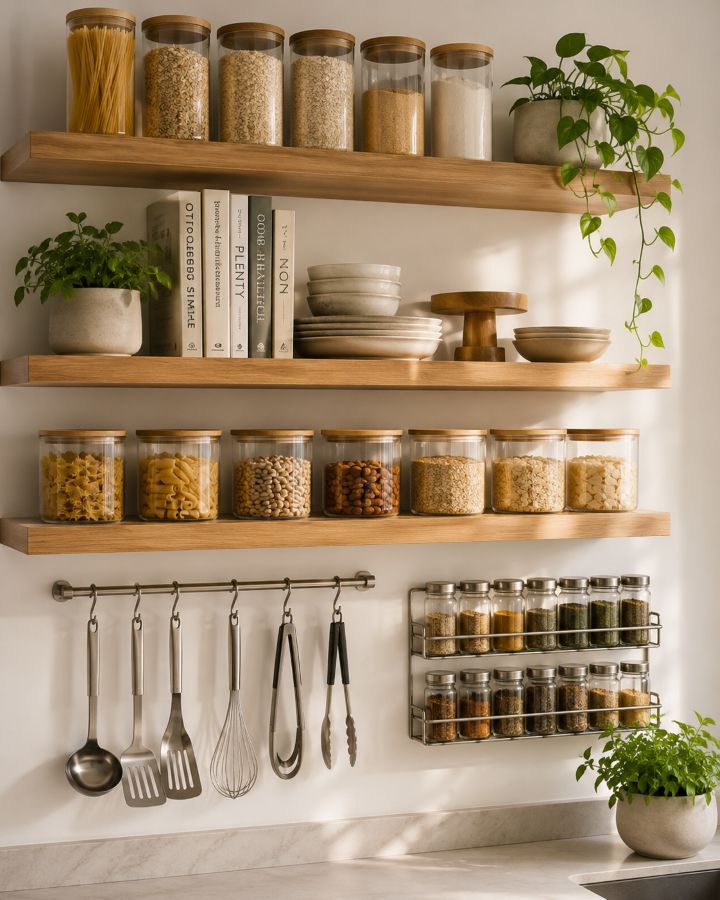
Floating shelves mount directly to walls without visible support brackets, creating a clean, contemporary look. Because they don’t touch the floor, floating shelves make small kitchens feel less cluttered and more spacious. Installation requires securely anchoring shelves into wall studs to support weight safely. Modern floating shelves accommodate 25-50 pounds per shelf when properly installed, sufficient for dishes, glassware, and cooking essentials in most small kitchens.
The main advantage of floating shelves is their visual lightness—they draw attention upward without creating visual barriers. The primary disadvantage is installation complexity; improper mounting leads to sagging or failure. Invest in quality hardware and consider hiring a professional installer if you’re uncertain about wall stud locations or mounting techniques.
Bracket-Supported Shelves: The Traditional Approach
Classic shelves supported by visible brackets offer a timeless, customizable aesthetic. Metal, wood, or industrial-style brackets suit different kitchen designs, from farmhouse to modern minimalist. Bracket-supported shelves typically support more weight than floating shelves, making them ideal for storing heavier cookware or dinnerware collections.
The visibility of brackets becomes either an advantage or disadvantage depending on your design preferences. Industrial or decorative brackets add visual interest and can serve as design elements themselves. Standard utilitarian brackets occupy less visual space and work well in minimalist kitchens. Choose bracket styles that complement your kitchen’s overall design language.
Corner Shelves: Space-Maximizing Solutions
Corner shelves make use of often-wasted corner space, providing valuable storage without consuming wall space along your kitchen’s main sightlines. Triangle-shaped corner shelves fit snugly into wall corners, making them ideal for displaying small decorative items, storing cookbooks, or organizing jars of herbs and spices. Triangular supports keep corner shelves relatively lightweight, though each shelf typically holds less weight than straight shelves.
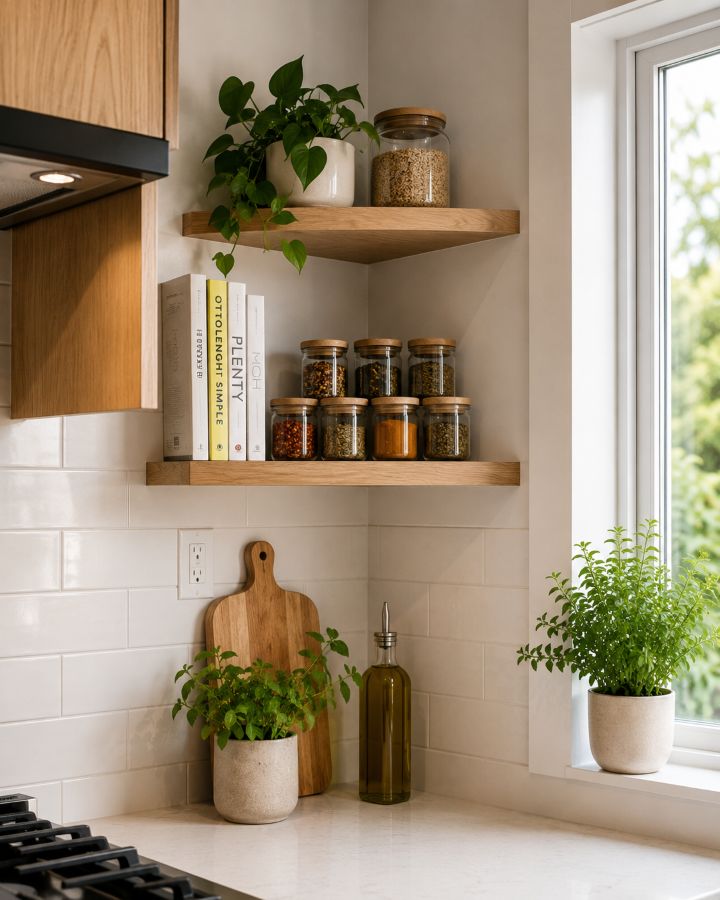
Selecting the Right Shelf Dimensions for Your Kitchen
Shelf size dramatically impacts both functionality and the space’s visual impact. In small kitchens, proper dimensioning prevents shelves from overwhelming the space while ensuring they provide meaningful storage capacity.
Depth: Finding the Optimal Balance
Kitchen shelves should be between 8-12 inches deep. Shallower shelves (8 inches) work beautifully in tight kitchens, holding everyday dishes, glasses, and decorative items without protruding excessively into the room. They’re ideal when shelves are mounted above counters or in limited spaces. Deeper shelves (10-12 inches) accommodate larger cookbooks, serving dishes, or multiple rows of storage items. However, excessively deep shelves (over 12 inches) make accessing back items difficult and can make shelves appear too prominent in small spaces.
Length: Width Considerations
Shorter shelves (24-36 inches wide) suit small kitchens perfectly, providing focused storage without spanning entire walls. Multiple shorter shelves create visual rhythm and prevent walls from feeling monotonous. Longer shelves (36-48 inches) unify kitchen spaces and provide generous storage but may overwhelm tight layouts. Install shelves above counters and work spaces where items will be most useful rather than spreading shelves across full walls.
Height and Spacing Between Shelves
Space shelves approximately 12-16 inches apart vertically. This spacing accommodates typical dishware height, glassware, and decorative items while maintaining proportional aesthetics. Higher shelves become more decorative and less practical for daily-use items. Install the lowest shelf at least 12-18 inches above counter surface, allowing room for tall canisters or appliances beneath. The topmost shelf should be within comfortable reach (typically around 72 inches from the floor for average-height individuals).
Strategic Placement: Where Small Kitchen Shelves Work Best
Shelf placement dramatically affects both usability and kitchen aesthetics. Strategic positioning maximizes functionality while preventing cramped, cluttered feelings.
Above Counters: Primary Work Zones
Shelves mounted above counters provide ideal storage for frequently used items. Position shelves above the stove, sink, or prep areas to keep essentials within arm’s reach. This placement keeps countertops clear of clutter while making daily tasks more efficient. Ensure adequate ventilation when shelves are positioned above cooking areas—steam and cooking splatter require more frequent cleaning and may damage some materials.
Between Cabinets: Filling Visual Gaps
If your kitchen features existing cabinets, shelves bridging gaps create balanced aesthetics and provide additional storage. Shelves between upper cabinets and lower counters fill otherwise wasted space. Shelves between cabinet units break up large wall areas and create visual interest. This approach works particularly well in kitchens with scattered or mismatched cabinetry.
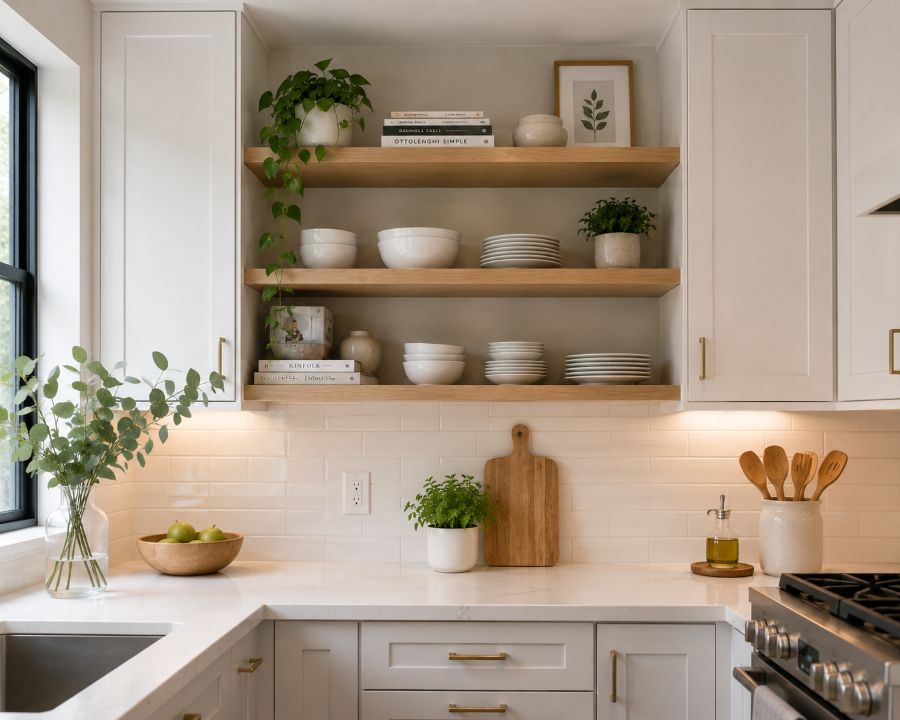
Organization Strategies for Small Kitchen Shelves
Strategic organization transforms shelves from storage holders into beautiful design features that enhance your kitchen’s functionality and appeal.
The Rule of Thirds: Creating Visual Balance
Apply the design principle of rule of thirds to kitchen shelves: fill approximately two-thirds of available shelf space with items, leaving one-third empty. This approach prevents shelves from appearing cluttered while creating breathing room that makes kitchens feel more spacious. Distribute items across shelves rather than filling them completely—visual lightness matters as much as storage capacity in small kitchens.
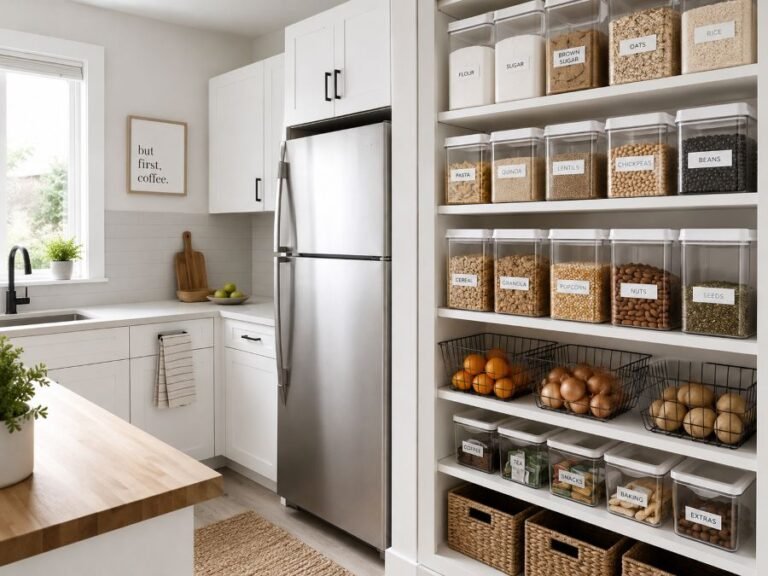
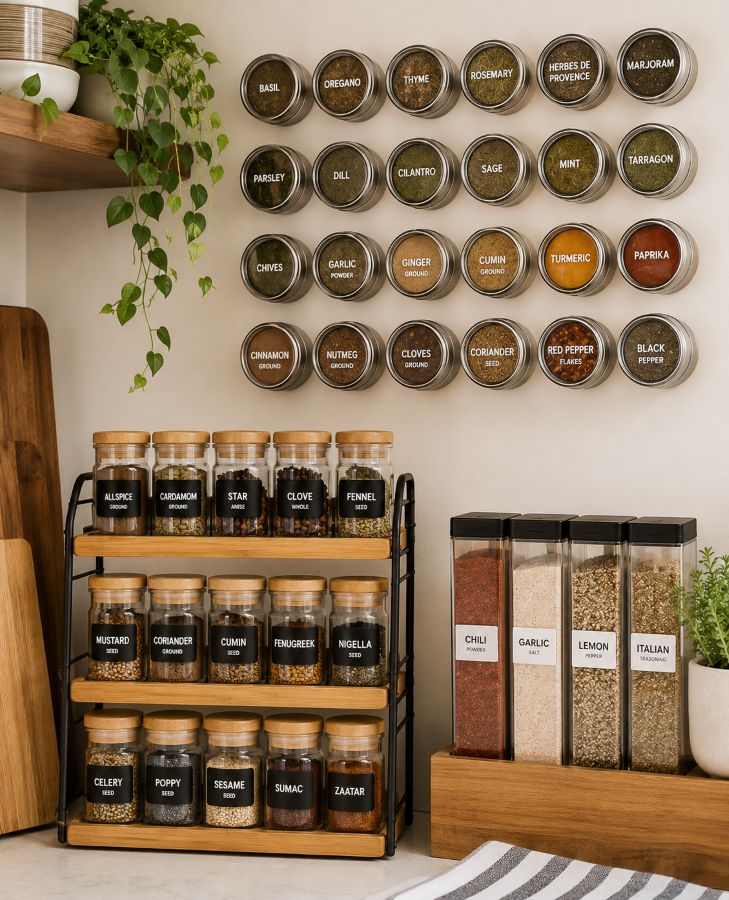
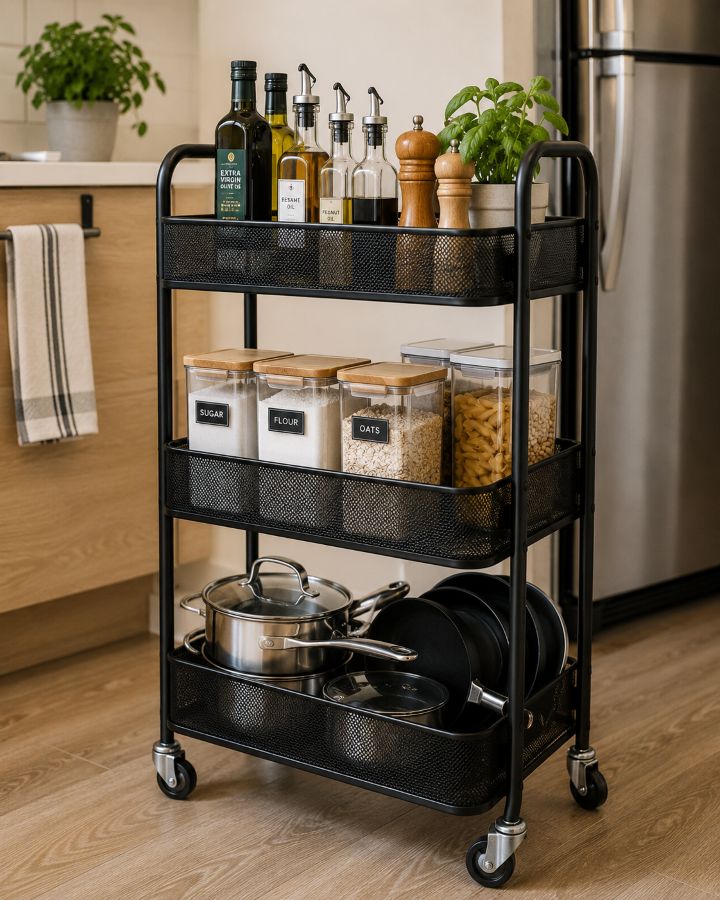
Smart Small Space Tip: Use matching containers, jars, and baskets to group similar items together. Uniform containers create visual cohesion and make shelves appear intentionally designed rather than randomly assembled. Clear glass containers show contents while maintaining aesthetic organization, and matching labels add a professional, curated appearance.
Vertical Grouping and Category Organization
Organize shelf items vertically by category rather than horizontally spreading similar items. Group all glasses together on one shelf, plates on another, and spices or cooking supplies on a third. Vertical organization prevents searching across multiple shelves for matching items and creates clear visual sections that feel intentional. Within each category, arrange items by frequency of use—daily items at eye level, occasional items higher or lower.
Incorporating Decorative Elements
Functional kitchens needn’t sacrifice beauty. Intersperse everyday items with decorative elements: cookbooks, small plants, artwork, or beautiful serving pieces. A well-styled shelf contains approximately 70% functional items and 30% decorative pieces. Include height variation through stacks of plates, tall glasses, and shorter items to create visual interest. This approach transforms practical storage into an attractive kitchen feature.
Styling Small Kitchen Shelves: Design Ideas and Inspiration
Shelf styling significantly impacts how your kitchen looks and feels. The right approach enhances your kitchen’s design while maintaining functionality.
Minimalist White Kitchen Shelves
White or light-colored shelves paired with matching or clear containers create airy, spacious feelings in small kitchens. This aesthetic works particularly well in modern, Scandinavian, or contemporary kitchens. Limit the color palette to whites, blacks, and natural wood tones. Display carefully selected items, removing anything broken or unnecessary. This approach maximizes the perception of space and light.
Warm Wood Shelving with Natural Elements
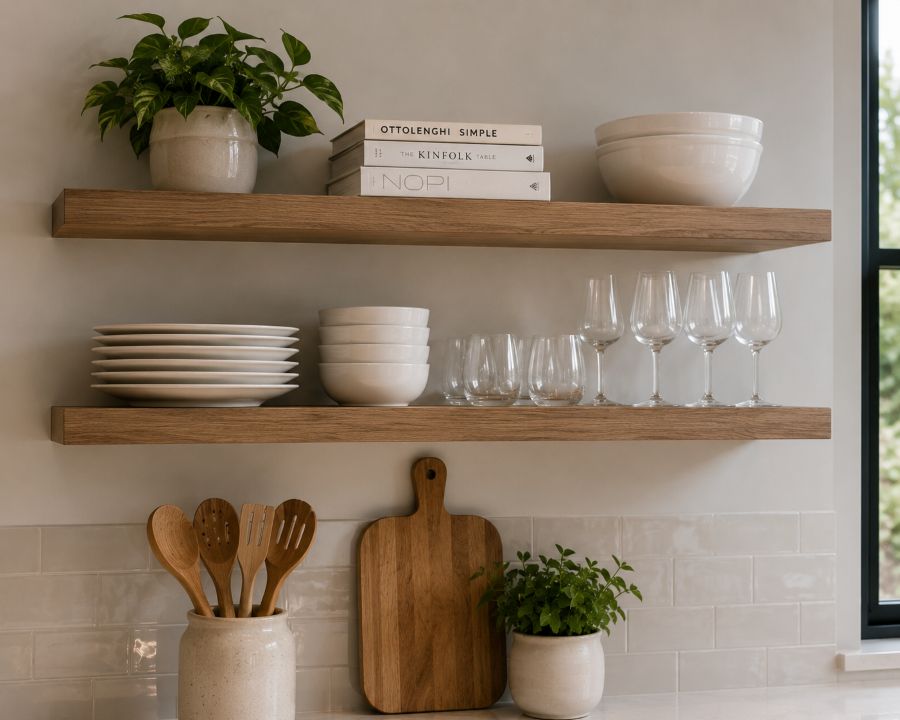
Natural wood shelves bring warmth to small kitchens, particularly when paired with open shelving that displays wooden bowls, cutting boards, and vintage glassware. Incorporate plants and natural materials to create organic, welcoming spaces. This farmhouse or rustic approach feels cozy while maintaining functionality. Warm woods work beautifully in kitchens with stainless steel appliances, creating appealing contrast.
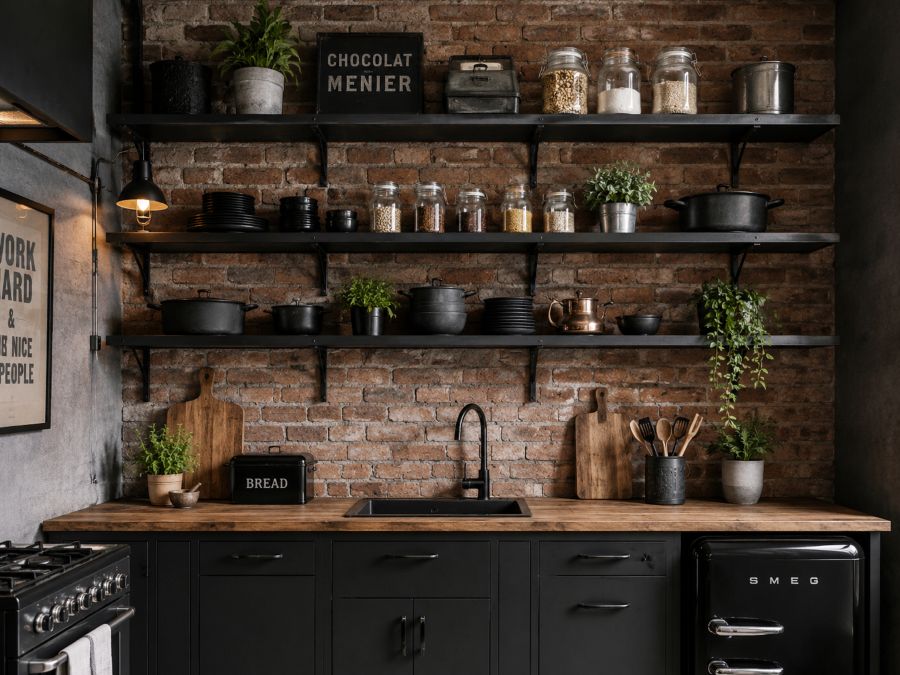
Industrial Chic with Metal Accents
Metal brackets and shelves create industrial aesthetics that suit modern, loft-style, or eclectic kitchens. Pair metal shelves with reclaimed wood or concrete-look materials. Display vintage kitchen items, metal containers, and industrial-style décor. This approach works well in small kitchens where bold design statements offset limited space.
Materials and Finishes: Choosing Durable Kitchen Shelves
Shelf materials must withstand kitchen conditions—heat, humidity, cooking splatter, and frequent use. Your choice impacts both durability and aesthetics.
| Material | Best For | Durability & Maintenance |
|---|---|---|
| Solid Wood | Warm, natural aesthetics; rustic or farmhouse kitchens | Durable but requires sealing/finishing; susceptible to moisture and staining; needs periodic maintenance |
| Plywood with Veneer | Budget-friendly option; contemporary styles; lightweight shelves | Moderate durability; less resistant to moisture than solid wood; susceptible to edge damage |
| Laminate | Contemporary kitchens; moisture-prone areas; easy maintenance | Very durable; moisture-resistant; easy to clean; less expensive than wood |
| Glass | Modern, minimalist kitchens; displaying decorative items | Durable and temperature-resistant; shows fingerprints and dust easily; requires frequent cleaning |
| Metal (Steel) | Industrial, contemporary, or loft kitchens; heavy-duty storage | Extremely durable and moisture-resistant; can feel cold; may require stainless steel for full corrosion resistance |
| Reclaimed or Barn Wood | Rustic, farmhouse, or eclectic kitchens; character-rich spaces | Varies by source; beautiful but may require professional treatment; character marks add appeal |
Practical Installation Tips for Small Kitchen Shelves
Proper installation ensures shelves are safe, level, and capable of supporting their intended loads. Several critical steps make the difference between successful installations and costly mistakes.
Locating Wall Studs: The Foundation of Safety
Always anchor shelves into wall studs using appropriate hardware. Drywall alone cannot support kitchen shelf weight safely. Use a stud finder to locate vertical supports, typically spaced 16 inches apart. Mark stud locations clearly before drilling. If shelves span multiple stud locations, secure at least two anchor points per shelf to distribute weight evenly.
Leveling and Alignment
Use a quality level to ensure shelves are perfectly horizontal. Even slight tilts cause items to slide or shift, creating safety hazards. Additionally, ensure shelf mounting hardware is aligned—crooked mounting brackets undermine shelf stability. Take your time during installation; rushing leads to crooked shelves that diminish aesthetics and functionality.
Weight Distribution and Load Limits
Distribute weight evenly across shelves. Avoid clustering all heavy items on one side, which creates pressure points and accelerates bracket failure. Follow manufacturer specifications for weight capacity and never exceed recommended limits. When in doubt, use more shelves with lighter loads rather than fewer shelves overloaded with heavy items.
Common Small Kitchen Shelf Mistakes to Avoid
Learning from common errors saves time, money, and frustration. These frequent mistakes undermine small kitchen shelf success.
- Overcrowding shelves: Filling every inch of shelf space creates visual chaos and makes kitchens feel smaller. Embrace negative space as a design element.
- Ignoring moisture and splatter: Shelves above cooking areas require more durable finishes and frequent cleaning. Choose materials suitable for kitchen environments.
- Mixing too many styles: Inconsistent shelf finishes, bracket styles, or decorative elements create visual confusion. Coordinate materials and styles throughout your kitchen.
- Forgetting about accessibility: Shelves positioned too high or low become impractical. Keep frequently used items at eye level.
- Poor lighting: Dark shelves make contents difficult to find and appear less attractive. Install accent lighting or position shelves where natural light enhances visibility.
- Inadequate installation: Skimping on hardware or installation shortcuts leads to unsafe, sagging shelves. Invest in quality materials and proper installation.
- Neglecting the style relationship: Shelf style should complement, not clash with, your kitchen’s existing design. Choose materials and finishes that enhance cohesion.
FAQ: Small Kitchen Shelf Ideas for Extra Storage
What is the best type of shelving for a small kitchen?
Wall-mounted floating shelves are ideal for small kitchens because they don’t consume floor space and create a lightweight, open feeling. Narrow shelves (8-10 inches deep) work best, as they don’t protrude excessively into the kitchen. Choose materials like wood, metal, or glass based on your kitchen’s style and weight capacity needs.
How much weight can small kitchen shelves hold?
Weight capacity depends on shelf type and installation. Floating shelves typically hold 25-50 pounds per shelf when properly anchored into wall studs. Corner shelves may hold 20-30 pounds. Heavy items like cookbooks or dinnerware should be distributed across multiple shelves, and always follow manufacturer specifications for your specific shelf system.
Can you have too many open shelves in a small kitchen?
Yes, excessive open shelving can make a small kitchen feel cluttered and overwhelming. Aim for 2-4 shelves maximum in a small kitchen. Keep shelves organized with matching containers and leave some breathing room between items. Balance open shelves with closed storage like cabinets to avoid visual chaos and dust accumulation.
What items should I store on kitchen shelves?
Display everyday dishes, glasses, and frequently used items on kitchen shelves. Store cookbooks, decorative pieces, and attractive containers. Avoid storing heavy appliances or items you rarely use. Keep items organized by category and use matching containers for visual cohesion. Ensure items are easily accessible and won’t shift or fall during regular kitchen use.
How do I prevent small kitchen shelves from looking cluttered?
Use the rule of thirds: fill about two-thirds of shelf space and leave one-third empty. Group similar items together, use matching containers and jars, and incorporate negative space. Add decorative elements like small plants or artwork between functional items. Regularly declutter and remove items you don’t use daily. Paint or stain shelves to match your kitchen’s color scheme.
Implementing Your Small Kitchen Shelf Plan: Action Steps
Step One: Assess Your Kitchen Layout. Analyze your small kitchen’s dimensions, existing storage, counter space, and architectural features. Identify walls suitable for shelves, considering counter space below, existing cabinetry, and traffic patterns. Photograph your kitchen from multiple angles to help visualize potential shelf placements.
Step Two: Determine Storage Needs. List items you want to display or store on shelves—dishes, glasses, cookbooks, decorative pieces, and cooking supplies. Calculate total volume to estimate required shelf space. This assessment ensures you install adequate shelves without over-designing.
Step Three: Choose Your Shelving System. Select shelf type, material, finish, and dimensions based on your kitchen’s design, budget, and storage requirements. Gather hardware, tools, and installation materials. If unfamiliar with installation, consult professional installers to ensure proper stud anchoring and level mounting.
Step Four: Plan Placement and Styling. Sketch potential shelf locations on graph paper or use digital tools to visualize placements. Consider traffic flow, cooking zones, and aesthetic balance. Decide on your organizational and decorative approach—minimalist, warm traditional, or industrial—before beginning installation.
Step Five: Install with Precision. Locate studs, mark placement, and install shelves carefully. Use levels and proper hardware throughout. Test shelves with weight before fully populating them. Take your time—quality installation ensures safety and longevity.
Step Six: Organize and Style. Once installed, arrange items thoughtfully. Group by category, incorporate matching containers, and balance functional and decorative elements. Step back regularly to assess visual balance and adjust as needed.
Conclusion: Transforming Small Kitchens Through Smart Shelving
Small kitchen shelves are far more than simple storage solutions—they’re design opportunities that transform compact cooking spaces into organized, beautiful, and highly functional areas. By understanding different shelf types, choosing appropriate dimensions and materials, and implementing thoughtful organization strategies, you unlock significant storage capacity while enhancing your kitchen’s aesthetic appeal.
The key to successful small kitchen shelving lies in strategic thinking: choosing the right shelf type for your space, installing securely and level, and organizing contents thoughtfully. Whether you embrace minimalist white shelves, warm natural wood finishes, or bold industrial styles, shelves allow small kitchens to transcend their space limitations through creative vertical storage and beautiful design.
Begin by assessing your kitchen’s unique needs and constraints, selecting shelving that complements your design aesthetic, and implementing installation with care and precision. As your shelves fill with organized, thoughtfully displayed items, you’ll discover that small kitchens can be surprisingly spacious, efficient, and stunning when storage solutions work intelligently with your space’s inherent limitations.
ADeL A.A
ADeL A.A is a home décor and space optimization writer who believes every square foot matters. He spends his time researching, testing, and comparing smart storage ideas, multi-functional furniture, and practical layout solutions — always searching for the best ways to make compact homes feel bigger, brighter, and better organized.
View all articles by ADeL A.A →