How to Create Pantry Storage in a Small Kitchen: Smart Organization Solutions

Small kitchens present unique challenges when it comes to pantry storage, but with clever organization strategies and creative solutions, you can transform even the tiniest culinary space into a perfectly organized pantry. Whether you’re working with a cramped cabinet, a narrow closet, or no dedicated pantry space at all, this comprehensive guide will show you how to maximize every inch and create a functional pantry storage system that works seamlessly with your small kitchen layout.
The key to successful small kitchen pantry storage lies in understanding your space, selecting the right organizational tools, and implementing systems that keep your essentials accessible while maintaining a clutter-free appearance. From utilizing vertical space to repurposing unexpected areas, you’ll discover practical solutions that instantly transform your kitchen organization.
Creating adequate pantry storage in a small kitchen requires strategic planning and creative problem-solving. Many homeowners with limited kitchen space feel frustrated by disorganized shelves and overflowing cabinets. The solution isn’t necessarily having more space—it’s about using what you have more intelligently. By implementing proven organizational systems and investing in the right storage solutions, you can develop a pantry that not only accommodates your groceries but actually makes cooking more efficient and enjoyable.
Assess Your Current Space and Identify Storage Opportunities
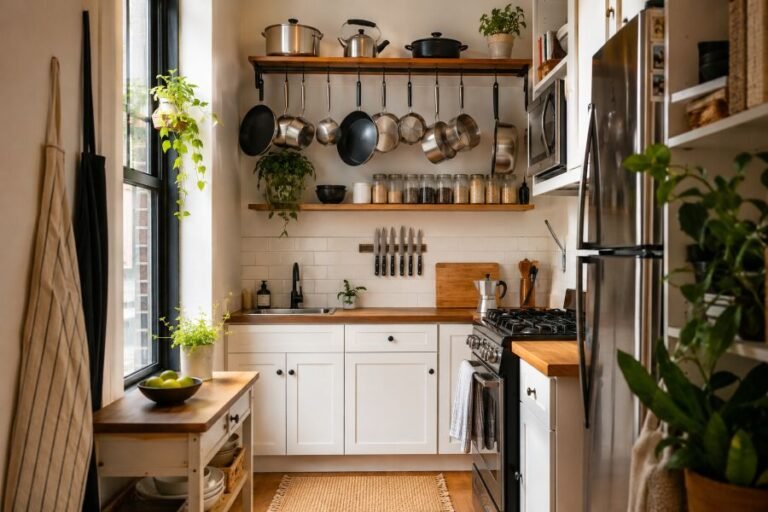
Before diving into organizing your pantry, take time to evaluate every available space in your kitchen. Look beyond obvious cabinet areas. Many small kitchens have untapped potential hiding in plain sight. Examine the space above cabinet tops, inside cabinet doors, under the sink, above the refrigerator, and even narrow gaps between appliances. These overlooked areas often become perfect spots for specialized storage solutions.
Walk through your kitchen at different times of day to observe lighting patterns and traffic flow. This helps you determine which storage areas are most accessible and which work better for items you don’t need frequently. Understanding your kitchen’s unique layout allows you to place frequently used items in the most convenient locations and relegates seasonal or backup supplies to less accessible spots.
Measuring and Documenting Your Space
- Measure cabinet dimensions, shelf heights, and door spaces with a tape measure for accurate planning.
- Take photos of your current setup to visualize different organization possibilities.
- Make a list of items you currently store and estimate quantities to determine storage capacity needs.
- Identify any dead space or awkwardly shaped areas that could benefit from specialized organizers.
Choose Vertical Storage Solutions to Maximize Small Pantry Space
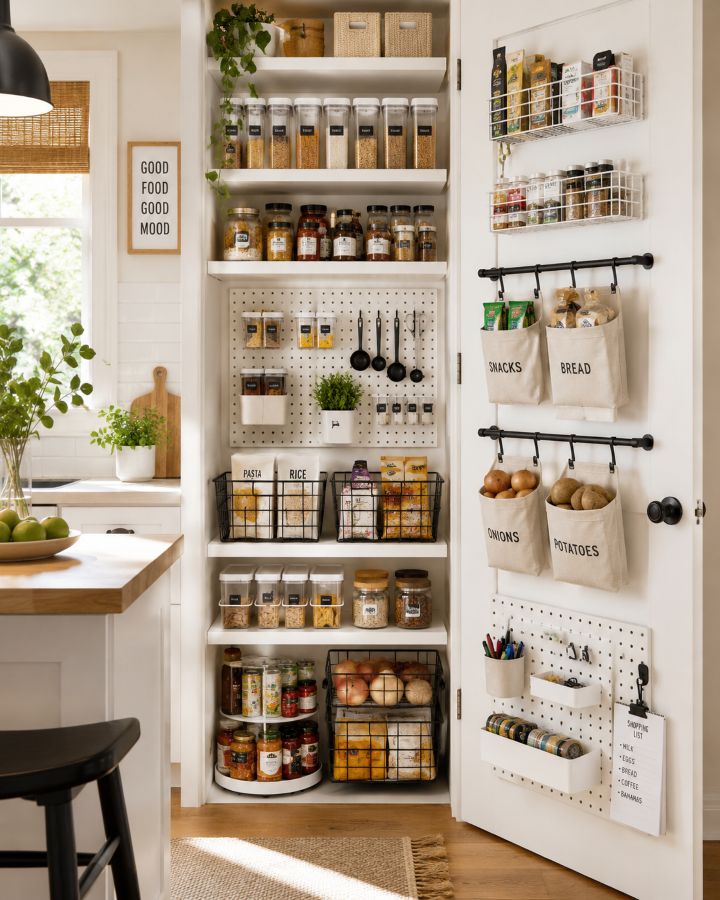
Vertical storage is absolutely essential when working with limited square footage. Instead of spreading items horizontally across limited shelf space, thinking vertically allows you to create multiple storage levels and dramatically increase your storage capacity. Wall-mounted shelves, hanging organizers, and tall narrow cabinets transform your small pantry from cramped and chaotic to organized and spacious.
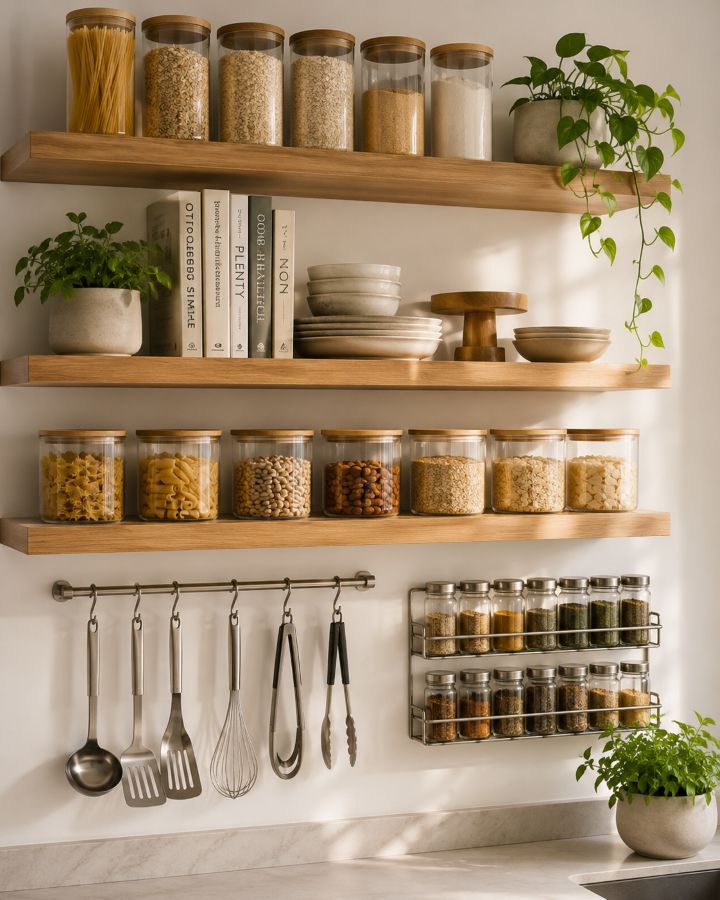
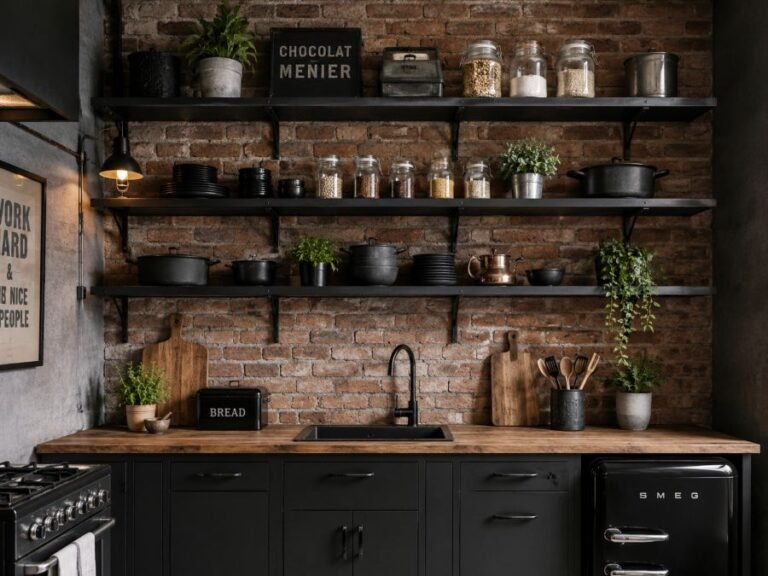
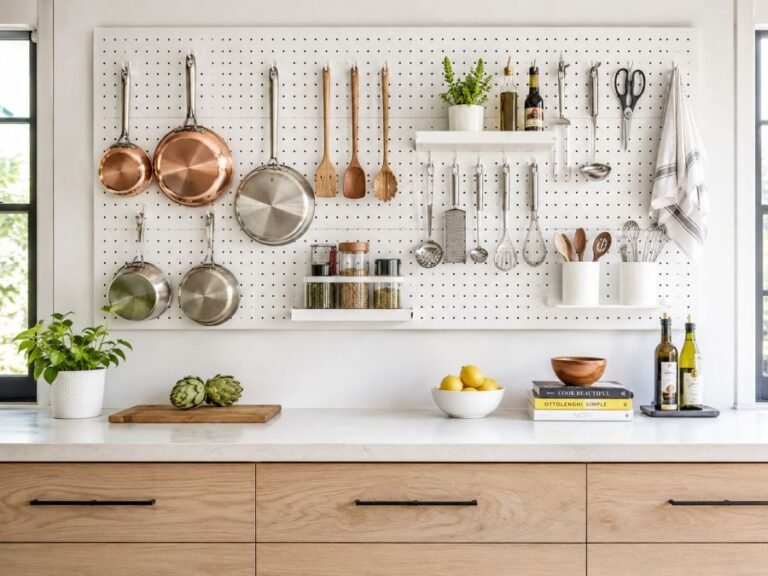
Floating shelves installed above kitchen counters, near the sink, or even above the stove area provide excellent additional storage without consuming floor or counter space. These versatile shelves work beautifully for storing cookbooks, frequently used oils and vinegars, or decorative storage containers that contribute to your kitchen’s aesthetic while serving practical purposes.
Implementing Effective Vertical Storage Systems
- Install floating shelves at varying heights to accommodate different container sizes and create visual interest.
- Use tension rods inside cabinets to create hanging spaces for bags, spice packet organizers, or lightweight containers.
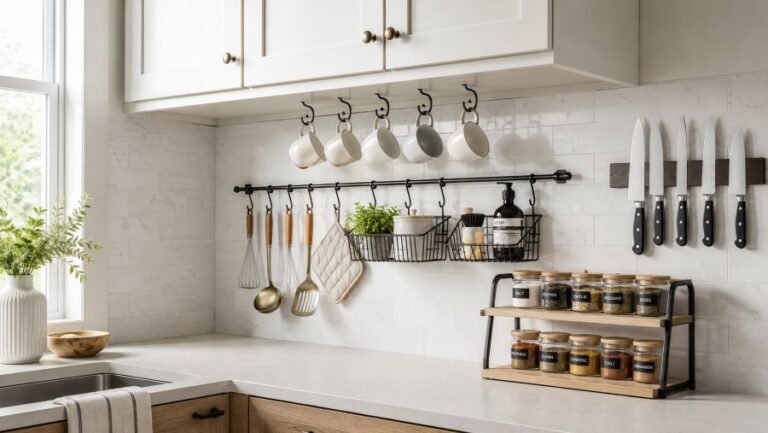
- Hang wire baskets on walls or inside cabinet doors to store produce, bread, or grab-and-go snacks.
- Install pegboards above your kitchen counter to hang frequently used tools and small containers.
- Consider narrow, tall cabinets or bookcases specifically designed for small spaces that deliver massive storage capacity.
Invest in Smart Storage Containers and Organizational Tools
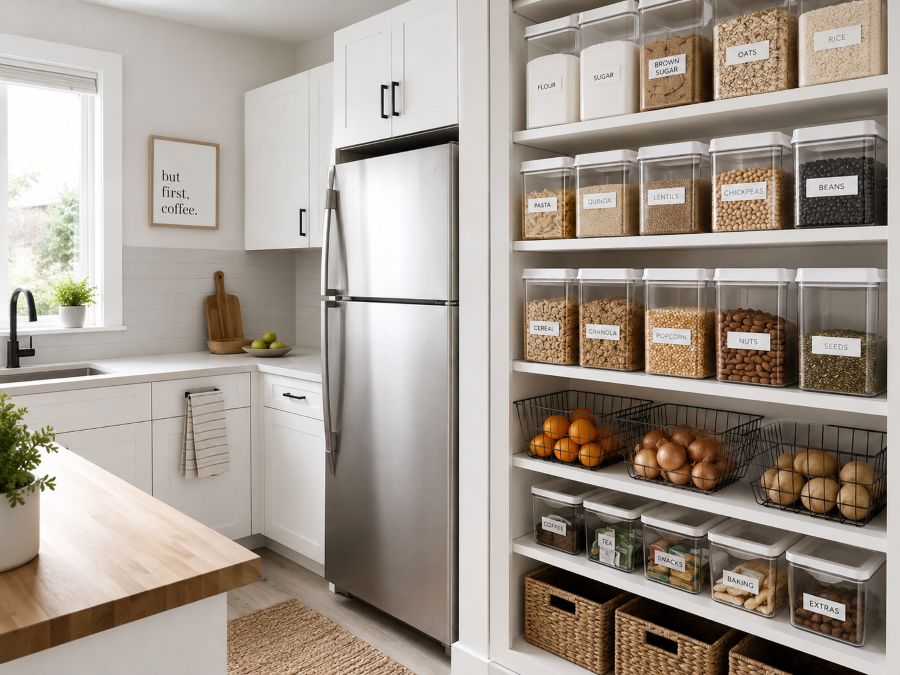
The right containers transform chaotic pantries into organized spaces. Clear containers serve a dual purpose: they make it easy to see contents at a glance, reducing waste from forgotten items, while creating a unified, streamlined appearance that makes even small spaces feel more spacious. Investing in quality storage containers is one of the best decisions you can make for small kitchen pantry organization.
Stackable containers work beautifully in small spaces because they maximize vertical space while maintaining easy access to items. Look for containers with uniform dimensions that nest together, reducing clutter when they’re not in use. Airtight containers keep dry goods fresher longer while preventing spillage and pest issues. Choose containers in a consistent color palette to create a cohesive, intentional look throughout your pantry.
Smart Small Space Tip: Label everything clearly with a label maker or waterproof marker. Include the item name and expiration date to prevent food waste and ensure you’re using items before they expire. Clear labels also help household members find items quickly and maintain your organizational system.
Utilize Cabinet Doors and Interior Spaces Strategically
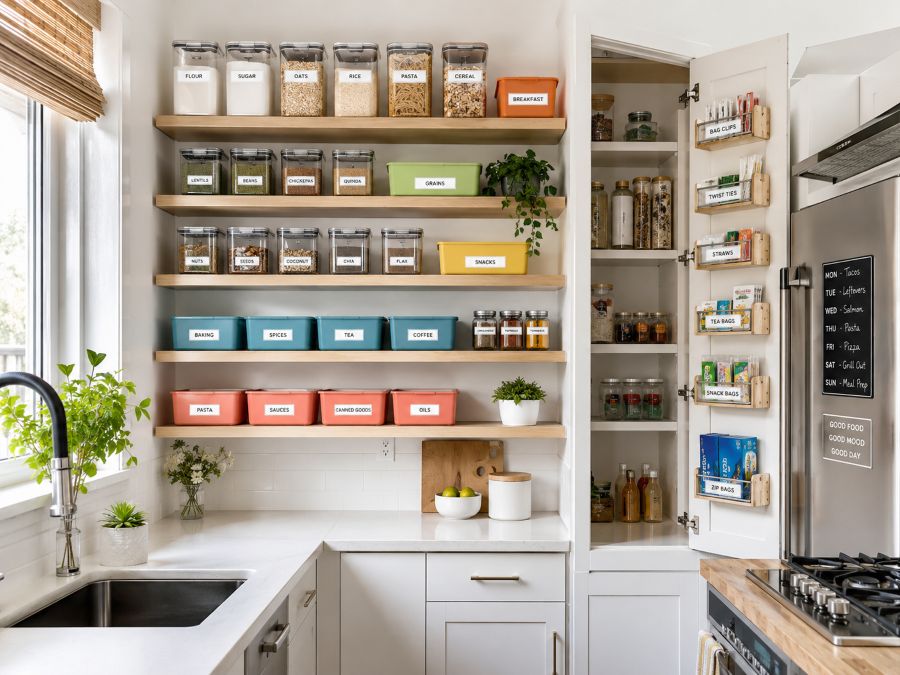
The inside of cabinet and closet doors represents prime real estate in small kitchens. These vertical surfaces often go unused despite offering tremendous storage potential. Over-the-door organizers, adhesive hooks, and slim shelving units transform interior door surfaces into valuable storage areas. This strategy is particularly effective for small, lightweight items that you access regularly but don’t require a permanent home on your main shelves.
Door-mounted storage works beautifully for spice collections, plastic wrap and foil storage, kitchen towels, cleaning supplies, or pantry staples that need convenient access. Ensure that anything stored on interior doors doesn’t interfere with cabinet closure and doesn’t weigh so much that it stresses the door hinges. Keeping the weight distribution balanced prevents premature wear on your cabinet hardware.
Organize by Category and Frequency of Use
Creating zones within your small pantry space helps you find items quickly and maintain organization over time. Group similar items together—all baking supplies in one area, breakfast items in another, snacks in a designated spot, and cooking ingredients on separate shelves. This categorical approach not only makes your kitchen more functional but also prevents confusion when searching for specific items.
Within each category, organize by frequency of use. Daily essentials occupy the most accessible, eye-level spots. Weekly-use items go on secondary shelves. Backup supplies, seasonal ingredients, and rarely used specialty items migrate to harder-to-reach upper or lower shelves. This frequency-based system ensures you’re not struggling to reach your most-used items or wasting prime real estate on things you use just twice a year.
| Storage Category | Ideal Location | Recommended Containers |
|---|---|---|
| Daily-Use Ingredients | Eye-level shelves or counter-adjacent storage | Small clear containers with easy-open lids |
| Baking Supplies | Dedicated cabinet or section with grouping | Airtight containers with clear labels |
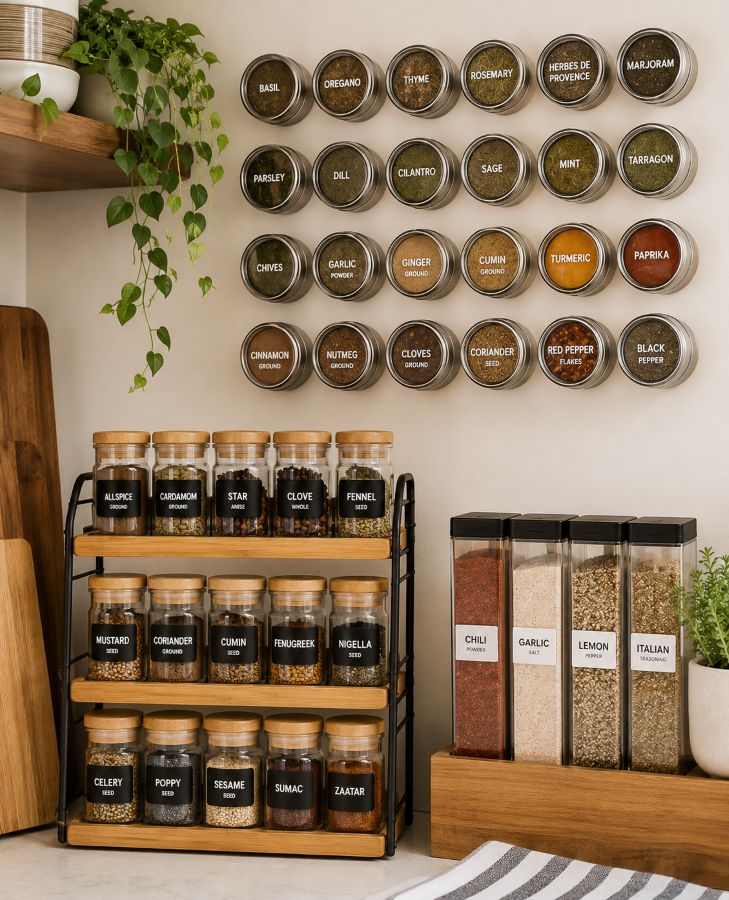
| Spices and Seasonings | Interior cabinet door or narrow shelf | Uniform spice containers or tiered racks |
| Breakfast Items | Accessible shelf at average user height | Cereal dispensers or open baskets |
| Snacks | Lower shelves for grab-and-reach access | Clear plastic bins or tiered organizers |
| Backup/Bulk Items | Upper shelves or storage closet | Large stackable containers or bins |
| Small Appliances | Dedicated shelf or upper cabinet | Vertical magazine holders or slim shelves |
Create a Pantry Inventory System for Better Management
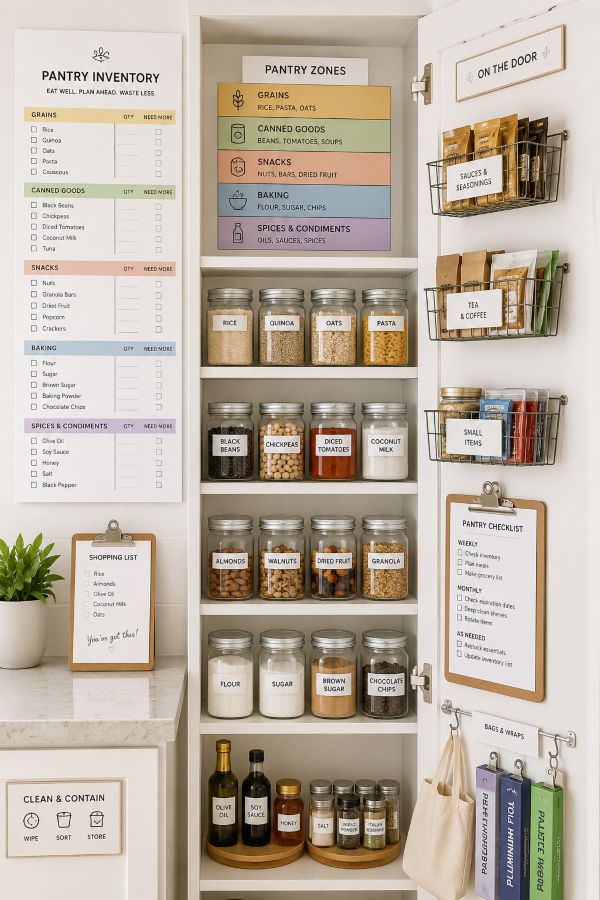
Small kitchens benefit tremendously from inventory systems because limited space makes it even more critical that you avoid overbuying and food waste. A simple inventory system helps you know exactly what you have, preventing duplicate purchases and ensuring nothing expires forgotten in the back of a shelf. Whether you prefer a paper checklist, a spreadsheet, or a smartphone app, maintaining a pantry inventory keeps your organization system functioning smoothly.
Taking inventory monthly doesn’t require much time. Simply walk through your pantry, check expiration dates, and note quantities of items running low. This quick audit prevents emergency runs to the store for items you might already have forgotten about, saves money through reduced waste, and helps you menu plan based on what you actually have on hand.
Building an Effective Pantry Inventory System
- Create a master list of items you typically stock, organized by category for quick reference.
- Note quantities and preferred brands to ensure consistent purchasing and prevent running short on essentials.
- Set monthly reminders to walk through and update your inventory list.
- Use your inventory as a shopping list to prevent impulse purchases and ensure intentional buying.
- Share your pantry inventory with household members so everyone knows what’s available and can note when items run low.
Explore Creative Storage Solutions Beyond Traditional Cabinets
Small kitchens often require thinking creatively about storage locations. If you lack a dedicated pantry closet or cabinet space is severely limited, consider alternative solutions. Rolling carts, stackable drawer organizers, corner shelf units, and narrow bookcases all provide effective pantry storage without requiring permanent installation. These flexible solutions work beautifully in small spaces because they adapt to your needs and can be adjusted or relocated as your kitchen requirements change.
A decorative rolling cart stored against an unused wall or in a corner provides surprisingly substantial storage capacity. Corner shelf units take advantage of frequently wasted corner spaces. Slim floor-standing cabinets fit into awkward spaces while delivering multiple shelves of storage. These alternative solutions work particularly well for people renting their homes or those who prefer flexible, non-permanent storage arrangements.
Maintain Your Organized Pantry System Long-Term
Creating an organized pantry is one thing; maintaining that organization over time is another challenge entirely. Successful long-term pantry management requires establishing habits that reinforce your organizational system. Implement simple rules: items returned immediately after use, expired products discarded promptly, new purchases integrated into the existing system, and items returned to their designated spots consistently.
Dedicate fifteen minutes monthly to straightening shelves, checking expiration dates, and restocking as needed. This brief maintenance session prevents the gradual creep of clutter that slowly undoes even the most well-planned organization system. Involve all household members in maintaining the system by keeping rules simple and clearly communicated. When everyone understands the organizational logic and embraces the habits that maintain it, your pantry stays functional indefinitely.
FAQ: Small Kitchen Pantry Storage
How do you organize a small kitchen pantry with limited space?
Organize a small pantry by using vertical storage solutions like wall-mounted shelves, stackable containers, and door organizers. Implement a labeling system, use clear containers for visibility, and group similar items together. Make use of every inch by utilizing shelf risers and hooks on the back of cabinet doors to maximize your available space.
What are the best storage containers for small kitchen pantries?
The best containers for small pantries are clear, stackable plastic or glass containers that allow you to see contents at a glance. Airtight containers preserve freshness while saving space. Look for containers that nest together and have similar dimensions to maximize shelf space efficiency. Uniform containers create a cohesive, organized appearance.
Can you create pantry storage without a dedicated pantry closet?
Absolutely! You can create pantry storage in small kitchens using cabinet organizers, pull-out drawers, floating shelves on unused wall space, corner shelving units, or even a stylish rolling cart. Vertical storage solutions and under-counter storage are excellent alternatives to traditional pantry closets.
What items should be prioritized in small kitchen pantry storage?
Prioritize storing frequently used items like cooking oils, spices, and baking essentials at eye level for easy access. Keep dry goods, canned items, and backup supplies on upper or lower shelves. Store heavy items at waist height and reserve convenient spots for daily-use ingredients you access multiple times weekly.
How often should you reorganize a small kitchen pantry?
Reorganize your small pantry every one to three months, depending on your usage patterns. A quick monthly audit helps you remove expired items and maintain organization. After grocery shopping, spend five minutes restocking and straightening to prevent clutter accumulation and ensure your system remains functional.
Transform Your Small Kitchen Into a Pantry Paradise
Creating an organized pantry in a small kitchen isn’t about having more space—it’s about using what you have strategically and intentionally. By implementing vertical storage solutions, investing in the right containers, and establishing maintenance habits, you can develop a pantry system that’s both functional and beautiful. Your small kitchen pantry can become a source of pride rather than frustration, making meal preparation more efficient and enjoyable every single day. Start with one section, perfect your system, then expand your organization throughout the kitchen. Within weeks, you’ll wonder how you ever managed without your newly optimized pantry setup.
ADeL A.A
ADeL A.A is a home décor and space optimization writer who believes every square foot matters. He spends his time researching, testing, and comparing smart storage ideas, multi-functional furniture, and practical layout solutions — always searching for the best ways to make compact homes feel bigger, brighter, and better organized.
View all articles by ADeL A.A →