Best Compact Speakers for Apartments (Neighbor-Friendly)

Living close to others means every beat you love can quietly become someone else’s complaint. The good news is that enjoying warm, room-filling sound in a compact home does not require thin walls to betray you. With the right speaker and a handful of clever habits, you can fill your space with music, podcasts, and films while keeping the peace on the other side of the wall.
This guide breaks down what actually makes a speaker neighbor-friendly, the compact options that shine in shared buildings, and the placement and listening tricks that stop sound from leaking through floors and walls. Whether you rent a studio or own a snug flat, you will leave with a clear plan for great audio that stays politely on your side of the wall.
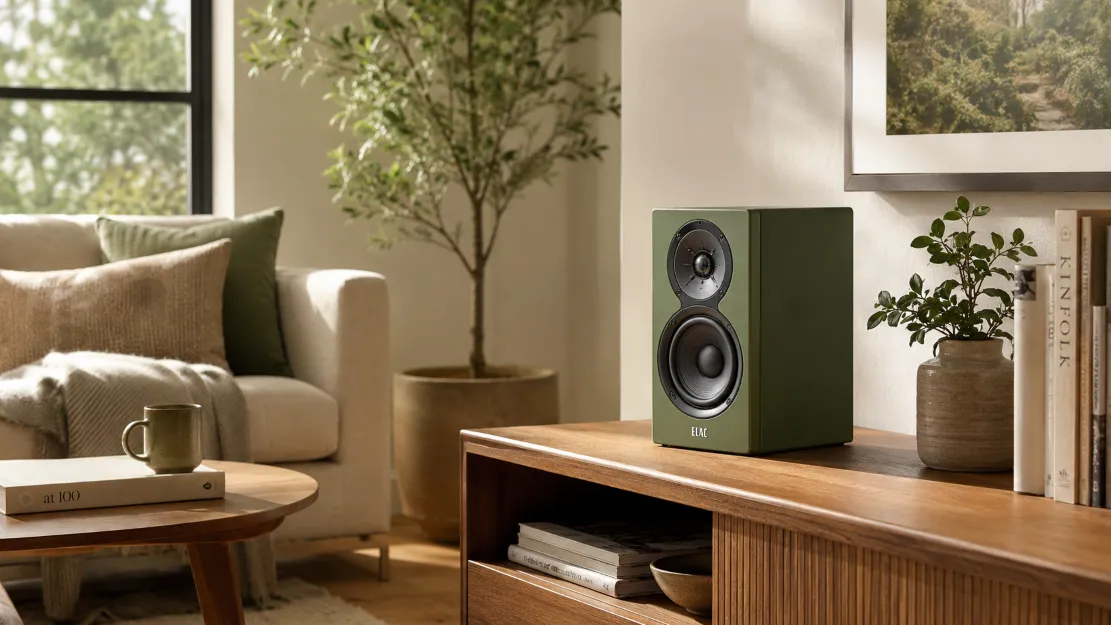
The frustration is familiar. You finally sit down to relax with your favorite album, only to wonder whether the person on the other side of the wall is rolling their eyes — or worse, reaching for something to bang against it. In dense buildings, sound becomes a shared resource whether we like it or not. Yet the solution is rarely “play everything quietly and miss half the detail.” Instead, the trick is choosing equipment designed for intimate, near-field listening and understanding how sound truly moves through a home. Once you grasp that, you can build a setup that sounds wonderful to you and nearly invisible to everyone around you.
How Sound Really Travels in a Shared Building
Before you shop for anything, it helps to understand why some speakers cause complaints while others never do. Sound reaches your neighbors in two very different ways, and only one of them is solved by simply turning the volume down. The first is airborne sound — the music you hear in the room, which weakens steadily as it passes through a wall. The second, and far more troublesome, is structure-borne sound, where vibrations travel directly into the floor, the shelf, or the wall itself and then radiate out the other side.
Here is the part most people miss: low frequencies are the real culprits. Deep bass carries enormous energy and long wavelengths that slip through building materials with ease, which is exactly why you can often hear a neighbor’s thumping bass line but not the vocals or guitar layered on top. High and mid frequencies, by contrast, are far more directional and lose energy quickly as they bounce around a room. This single fact reshapes everything about choosing a compact speaker for shared living. A small unit that produces clear mids and crisp highs but only modest, controllable bass will almost always be kinder to your neighbors than a tiny speaker engineered to “punch above its size” with exaggerated low end.
The Bass Problem Most People Underestimate
When shoppers compare compact speakers, they often gravitate toward whichever one feels the most powerful in the demo. That instinct works against you in a shared building. Consider these realities before you commit to a model:
- Bass passes through walls more easily than any other frequency. The deeper the note, the further it travels and the harder it is to contain in a typical apartment.
- Vibration is separate from volume. A bass-heavy speaker resting on a hollow shelf or thin floor can transmit noise even at a moderate listening level, because the surface itself becomes part of the speaker.
- “Big sound from a small box” usually means tuned-up bass. Manufacturers exaggerate low end to impress in stores, but that same boost is what your downstairs neighbor will feel at night.
- Adjustable bass is a feature, not a luxury. The ability to dial low frequencies up for the daytime and down after dark is one of the most valuable tools you can own.
What Makes a Compact Speaker Neighbor-Friendly
With the physics in mind, the shopping criteria become refreshingly clear. The best speakers for considerate listening are not necessarily the loudest or the most bass-forward; they are the ones that sound complete and satisfying at low volumes and give you control over how much energy leaves the room. As you browse, weigh each option against the qualities below rather than raw wattage or marketing buzzwords.
First, prioritize clarity at quiet levels. Many speakers only “come alive” once you push them, which forces you to choose between dull sound and disturbed neighbors. A well-designed compact unit reveals detail, separation, and warmth even at a gentle whisper, so you never feel the urge to crank it. Second, look for a built-in EQ, a night mode, or a dedicated bass control — anything that lets you reshape the low end on the fly. Third, favor sealed cabinet designs over heavily ported ones when possible, since sealed enclosures tend to produce tighter, more controlled bass that lingers less in the room and travels less through structures.
Finally, think about dispersion and placement flexibility. Speakers that throw sound in a focused, near-field pattern direct more of their energy at you and less at the walls. Pair that with a compact footprint that fits on a desk, a shelf, or a slim console, and you have a unit that can be positioned thoughtfully rather than crammed into a corner where bass tends to build up.
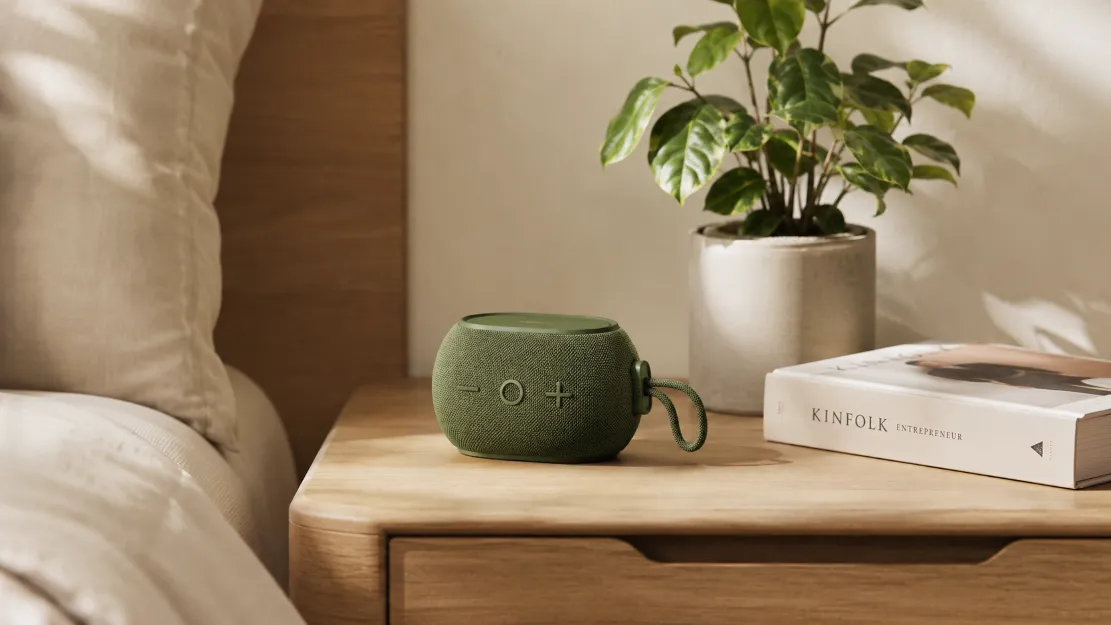
Smart Small Space Tip: When auditioning a speaker, test it at the volume you will actually use most evenings, not at showroom level. A unit that sounds rich and detailed at a quiet, conversational volume is far more valuable in a shared building than one that only impresses when it is loud.
Compact Speaker Types That Excel in Quiet Homes
There is no single “best” category, because the right choice depends on your room, your habits, and what you listen to most. That said, a few types consistently perform well for considerate listeners. Powered bookshelf speakers reward you with full, balanced sound and usually include tone or bass controls, making them a superb choice for a desk or a low shelf. Portable Bluetooth speakers offer unmatched flexibility, letting you carry the sound from kitchen to bedroom and keep it close so you can listen softly.
Compact soundbars are excellent for film and television, especially the models that skip a separate subwoofer, because they keep most of their energy in the mids and highs that do not travel far. Smart speakers can be convenient and surprisingly capable, though their bass tuning varies widely, so testing matters. Finally, near-field desktop monitors — the small speakers favored by home creators — are arguably the unsung heroes of quiet listening, since they are built to sound accurate up close at modest volume. The comparison below summarizes how these categories stack up.
| Speaker Type | Best For | Neighbor-Friendliness | Footprint |
|---|---|---|---|
| Powered bookshelf speakers | Music lovers wanting balanced, detailed sound | High (with bass control) | Small to medium |
| Portable Bluetooth speakers | Flexibility and casual, room-to-room listening | High at low volume | Very small |
| Compact soundbar (no subwoofer) | TV, films, and dialogue clarity | Very high | Slim and wide |
| Smart speakers | Voice control and everyday convenience | Moderate (varies by model) | Very small |
| Near-field desktop monitors | Focused, accurate listening at a desk | Very high | Small |
Smart Placement to Stop Sound From Leaking
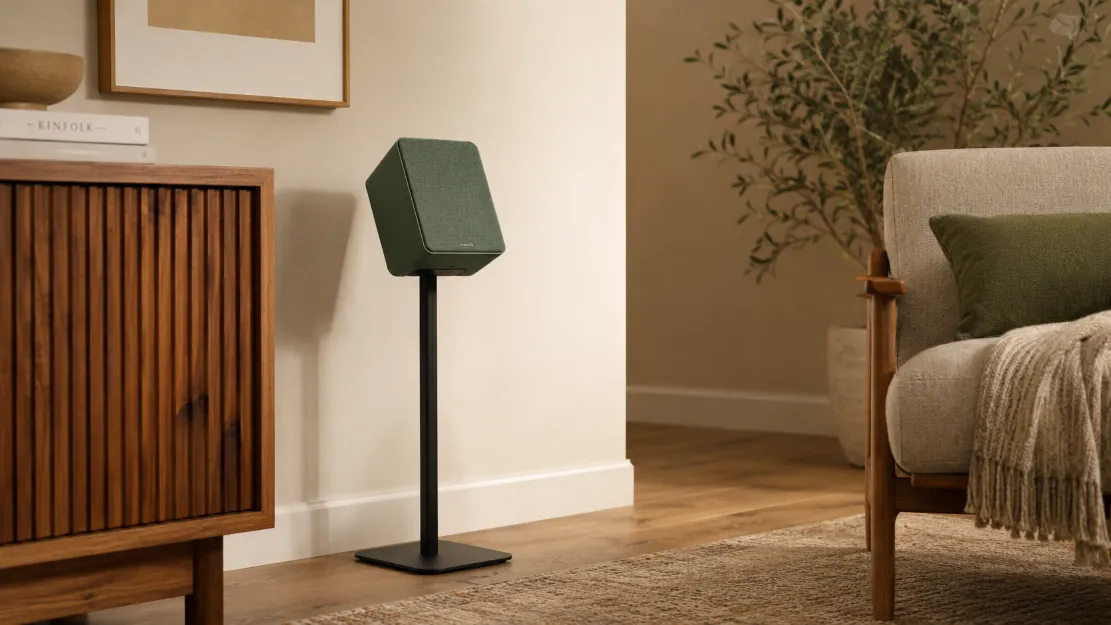
The most underrated upgrade is free: where you put the speaker matters as much as which one you buy. Even a modest unit, positioned thoughtfully, can sound better to you and quieter to everyone else. Start by pulling the speaker away from corners. Corners reinforce and amplify bass, the exact frequency you want to keep contained, so a corner placement is the fastest way to turn a polite speaker into a problem one.
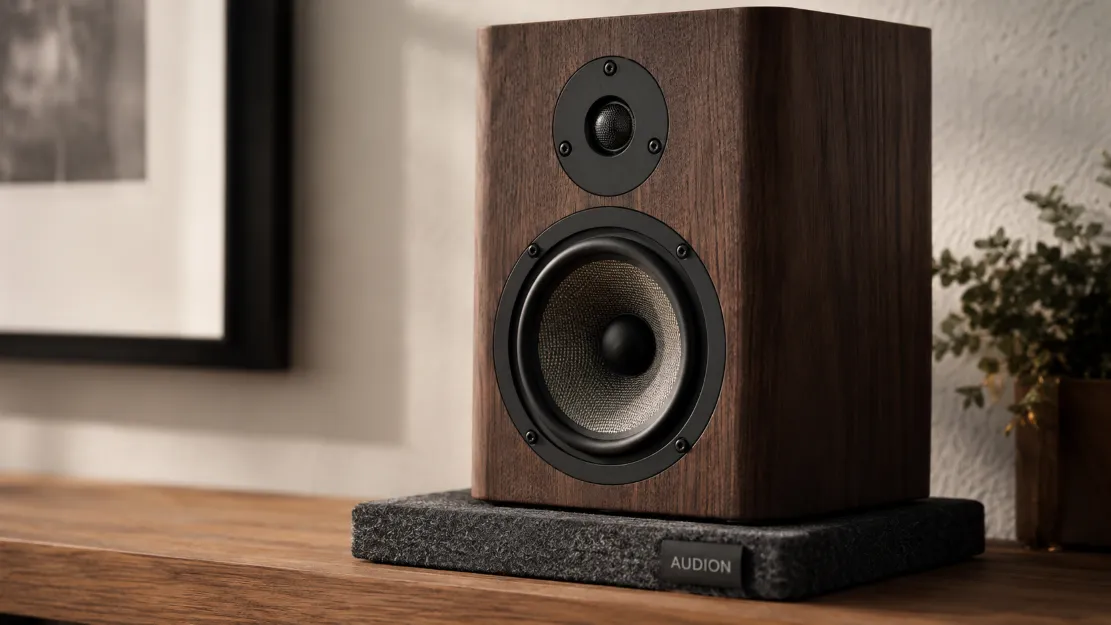
Next, decouple the speaker from the surface beneath it. A thin felt pad, a dedicated isolation foam, or even a folded towel under a portable unit breaks the path that vibrations use to travel into shelves, desks, and floors. This single step dramatically reduces structure-borne sound, especially in older buildings with creaky wooden floors. Whenever you can, place the speaker on a solid, heavy piece of furniture rather than a hollow particleboard shelf that acts like a drum. And if you share a wall with a neighbor’s bedroom, keep the speaker on the opposite wall and angle it toward your listening spot rather than pointing it straight at the shared boundary.
Quick Placement Checklist
- Keep speakers a few inches off the wall and well out of corners to tame bass buildup.
- Set every speaker on an isolation pad or foam to stop vibration from traveling into furniture.
- Choose solid, heavy surfaces over hollow shelving that resonates.
- Place units against an exterior wall when possible, not the wall you share with a neighbor.
- Angle the speaker toward your seat so more sound reaches you and less reaches the walls.
Listening Habits That Keep the Peace
Even the perfect speaker benefits from considerate habits, and these cost nothing. The most powerful one is using a night or low-volume EQ setting after dark. Many speakers and streaming apps include a loudness curve that lifts vocals and detail while trimming the deepest bass, so your late-night listening stays clear and enjoyable without the boom that travels furthest. If your device lacks one, simply lower the bass control a notch or two in the evening.
Timing also goes a long way. Saving your fuller, more energetic listening for daytime hours — when ambient noise in the building naturally masks more sound — lets you enjoy richer playback without anyone noticing. For very late sessions or films with heavy effects, a good pair of headphones remains the kindest option of all, and a compact speaker setup pairs perfectly with that flexibility. Lastly, consider setting a maximum volume limit on your device if it allows one. A gentle cap removes the temptation to nudge the dial higher and higher as your ears adjust, which is how most accidental disturbances begin.
Put these pieces together and a pattern emerges. The best compact speakers for considerate apartment living are not defined by sheer power but by control, clarity, and thoughtful placement. When your gear sounds wonderful at a low level, you simply never need the volume that creates conflict. That is the quiet luxury at the heart of small-space audio: a room that feels full of music to you and perfectly calm to everyone around you.
FAQ: Compact Speakers for Considerate Apartment Living
What is the quietest type of speaker for apartments?
Compact powered bookshelf speakers and near-field desktop monitors are usually the most neighbor-friendly options. They are designed to sound full and detailed at close range and low volume, so you rarely need to push them loud enough to disturb anyone through the walls. Pair either one with a bass control and an isolation pad and you have an exceptionally considerate setup.
Do soundbars disturb neighbors less than regular speakers?
A compact soundbar without a separate subwoofer is typically gentle on shared walls because most of its energy sits in the mid and high frequencies, which fade quickly and are easy to contain. The moment you add a subwoofer, however, deep bass starts traveling through floors and walls — and that is precisely the sound neighbors complain about most.
How can I reduce bass without losing sound quality?
Use a night or low-volume EQ mode that gently lifts mids and highs while trimming the deepest bass, move the speaker away from corners, and set it on an isolation pad so vibrations do not pass into furniture and floors. You keep clarity, warmth, and detail while losing only the booming low end that travels the furthest.
Are smart speakers a good choice for shared walls?
They can be, but bass tuning varies dramatically between models, so it pays to test before committing. Look for a smart speaker with adjustable EQ or a dedicated bass setting, place it on a solid surface with an isolation pad, and keep it off any wall you share with a neighbor’s living or sleeping space.
Bringing It All Together
Great sound in a compact home is entirely achievable without becoming the neighbor everyone whispers about. Choose a speaker that sounds rich at low volume, give yourself control over the bass, and place it with intention — away from corners, off shared walls, and resting on something that absorbs vibration rather than amplifying it. Layer in a few considerate listening habits, and you transform a potential source of tension into a daily pleasure. The reward is a space that sounds beautifully alive to you and reassuringly quiet to everyone else.
ADeL A.A
ADeL A.A is a home décor and space optimization writer who believes every square foot matters. He spends his time researching, testing, and comparing smart storage ideas, multi-functional furniture, and practical layout solutions — always searching for the best ways to make compact homes feel bigger, brighter, and better organized.
View all articles by ADeL A.A →